

Tackling an entire home all at once is the quickest route to moving-day exhaustion. Real moving success doesn't come from packing random cupboards whenever inspiration strikes; room-by-room packing succeeds only when items match specific box strengths and chronological order. If you're feeling disorganised amidst growing clutter, or worrying about fragile glassware and electronics breaking in transit, you aren't alone. Most movers struggle when using mismatched carton sizes and hauling overloaded containers. This room by room packing guide shows you how to pack methodically, pairing proper double wall boxes and protective wrapping with each distinct space.
You'll discover a clear, sensible sequence that takes you from neglected lofts and spare rooms straight through to your final moving-day essentials. We'll outline precisely which packaging supplies belong in each room, ensuring your cartons stay intact, easy to lift, and simple to unpack at your new front door.
Key Takeaways
- Follow this room by room packing guide chronologically, beginning in spare rooms and lofts to keep your everyday living spaces functional.
- Protect fragile crockery and glassware by packing heavy items vertically inside double wall Small Moving Boxes to avoid base collapses.
- Shield screens and large media units using fitted Extra Large TV Moving Boxes and padded Furniture Removal Blankets before transport.
- Keep suits and dresses crease-free on their original hangers using specialist tall or short Wardrobe Boxes.
- Assemble a dedicated essentials carton containing your kettle, mugs, chargers, and key paperwork to keep moving day completely stress-free.
How to Plan Your Room-by-Room Packing Schedule
Jumping between rooms without a timeline creates domestic chaos. When you pack arbitrary items from the kitchen before clearing the loft, you quickly find yourself living out of taped boxes weeks before moving day. A practical room by room packing guide relies on chronological sequencing: clearing the least-used zones first so your everyday living spaces remain fully operational until the very end.
Before assembling a single box, walk through each space to declutter. Disposing of unwanted items beforehand saves considerable effort, ensuring you never waste time packing things you no longer need. Set up a central packing station in an empty spare room or quiet corner. Keep your tape guns, marker pens, and protective wrap organised in one spot so packing sessions run smoothly without constant searching.
Establishing the Correct Order of Rooms
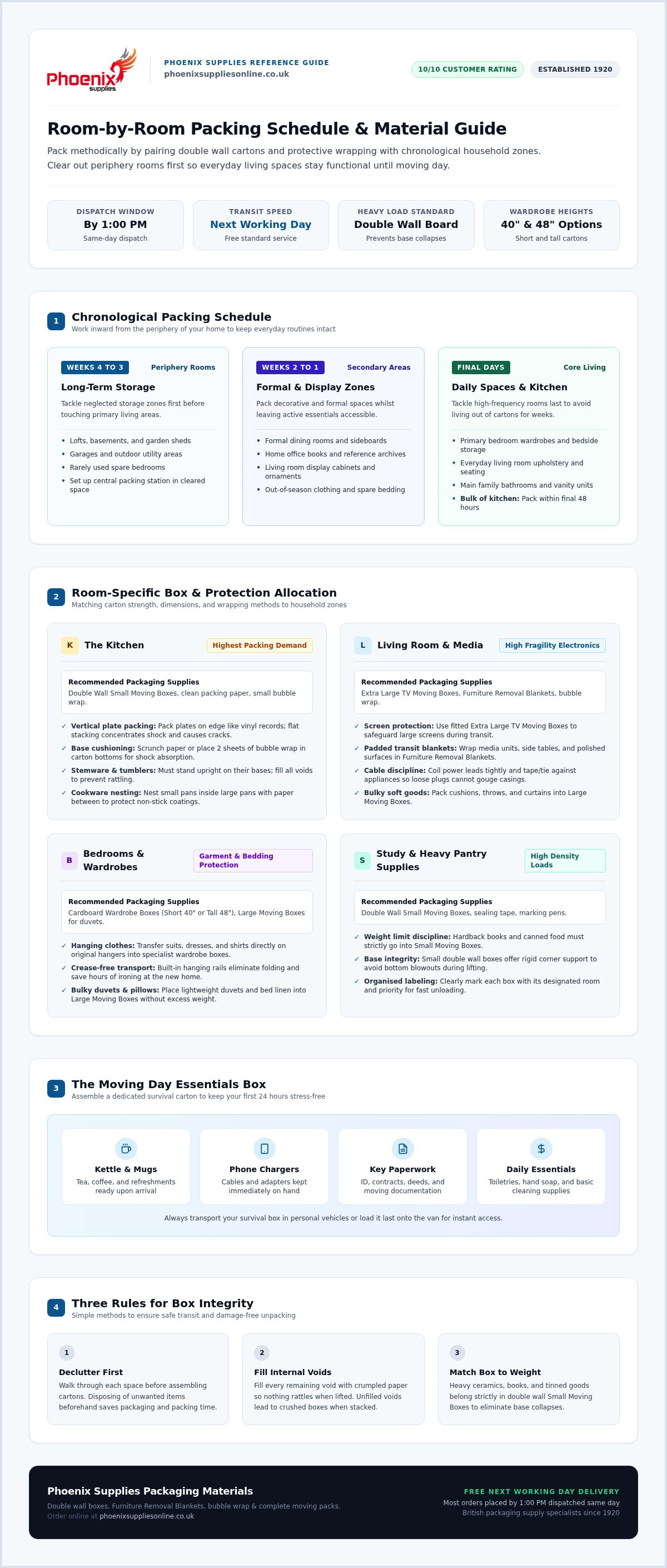
Work inward from the periphery of your home. Follow this practical schedule to stay organised:
- Weeks 4 to 3: Clear out long-term storage zones, including lofts, garages, basements, and rarely used spare bedrooms.
- Weeks 2 to 1: Tackle formal dining rooms, study spaces, decorative living room display cabinets, and out-of-season clothing.
- Final days: Pack primary bedroom wardrobes, daily living room furniture, and main family bathrooms. Leave the bulk of your kitchen until 48 hours before moving day.
Stocking Up on Room-Specific Packaging Materials
Different household zones place unique physical demands on cartons. Heavy goods such as hardback books, canned pantry supplies, and kitchen crockery belong strictly in double wall Small Moving Boxes to stop bottoms collapsing. Bulky but lighter items, from duvets to living room cushions, fit comfortably into Large Moving Boxes. To ensure you have every specific box grade and roll of protective bubble wrap ready before you begin, consult the ultimate packing materials list for moving house in 2026. By preparing room-specific packaging materials early, you avoid frustrating work stoppages and protect your belongings from start to finish.
Packing the Kitchen: Handling Crockery, Glassware, and Appliances
The kitchen invariably demands the most packing time of any room in the house. Every cupboard holds fragile ceramic items, irregular glassware, and sharp utensils that cannot simply be tipped into a container. In any practical room by room packing guide, the kitchen is where box selection matters most. Stacking heavy ceramic dinner sets into large cartons is a recipe for disaster; the weight rapidly becomes unmanageable, risking bottom blowouts during transport. Instead, pack your kitchen using double wall Small Moving Boxes, which limit overall weight and offer rigid corner support.
Always build a protective base before inserting items. Scrunch packing paper or lay two sheets of small bubble wrap across the bottom of each carton to form a shock-absorbing cushion. When following standard planning advice like an official moving checklist, methodical preparation of delicate goods is vital to avoid transit damage. If you need reliable double wall cartons and protective cushioning dispatched swiftly, explore packaging materials from Phoenix Supplies to keep your kitchenware safe.
Protecting Plates, Bowls, and Stemware
Wrap each plate individually in clean packing paper or bubble wrap, securing the edges with a short tab of tape. Crucially, pack plates vertically on their edges, exactly like vinyl records in a crate, rather than stacking them flat. Flat plates concentrate downward road shock onto the bottom pieces, causing cracks, whereas vertical alignment distributes pressure evenly across rims. Stemware and tumblers must stand upright on their bases. Once your items are inside, fill every remaining void with crumpled paper so nothing rattles when lifted.
Boxing Pots, Pans, and Small Electrical Goods
Cookware and electrical items pack efficiently when nested together correctly:
- Saucepans and frying pans: Nest smaller pans inside larger ones, placing sheets of packing paper between cooking surfaces to stop non-stick coatings scratching.
- Small benchtop appliances: Wrap blenders, toasters, and food processors in shock-absorbing bubble wrap, ensuring fragile glass jugs are packed separately.
- Cable management: Coil electrical power leads tightly and secure them with cable ties or tape against the appliance body, preventing loose plugs from gouging plastic casings.
Packing the Living Room: Safeguarding Electronics, Media, and Furniture
Living rooms house a tricky mix of high-value screens, sentimental collections, and heavy furniture. A successful room by room packing guide treats these valuable items with deliberate preparation rather than hasty boxing. Taking the time to photograph connection ports on consoles and television units before unplugging anything saves hours of frustration later. When disassembling flat-pack side tables or bookshelves, seal the small fixings, bolts, and shelf pegs into a labelled zip-lock bag, then tape that bag securely to the underside of the main timber panel.
Packing Televisions, Gaming Consoles, and Sound Systems
Modern screens are exceptionally vulnerable to pressure damage and chassis warping. Never transport a flat screen loose or resting flat on van floors. Review how to choose the best TV moving box in the UK before tackling your display units. Pack your display vertically inside dedicated Extra Large TV Moving Boxes, protecting the corners with fitted foam blocks. Cushion your soundbars and gaming consoles individually using antistatic wrap or bubble wrap, packing them upright inside Medium Moving Boxes surrounded by void fill.
Protecting Books and Media Collections
Paper adds up quickly. A cardboard carton crammed with hardcovers can easily exceed safe handling limits and split along the centre seam. Consult practical advice on small moving boxes for books to prevent back strains and container failures. Lay heavy books flat on their covers to keep spines from breaking under pressure. For framed photography and glass art prints, wrap each frame in bubble wrap and secure it with tape crossed diagonally across the face for added surface support.
Wrapping Upholstery and Wooden Tables
Avoid expensive scuffs, fabric tears, and water ingress by shielding your living room furniture properly:
- Wooden coffee and dining tables: Cover polished wooden tops with thick Furniture Removal Blankets to shield against scratches, securing the material in place with Webbing Straps. Never stick adhesive parcel tape directly onto varnished surfaces.
- Fabric sofas and armchairs: Slip heavy-duty polythene covers over couches to stop dust and vehicle grime ruining upholstery. Leading insurer guides detailing practical packing tips for moving consistently recommend durable outer covers to protect fabric fibres from transit moisture.
Packing Bedrooms and Bathrooms: Clothing, Mattresses, and Toiletries
Bedrooms and bathrooms combine hanging fabrics, bulky bedding, and liquid toiletries that require very different handling techniques. Shoving suits into thin plastic refuse sacks often causes rips, crushed collars, and dust stains before you even arrive. Following a methodical room by room packing guide keeps your everyday clothes presentable and eliminates the risk of shampoo leaking into bedroom linens. For step-by-step garment folding systems, explore how to pack clothes for moving in boxes.
Transferring Clothes with Wardrobe Boxes
Transfer hanging suits, dresses, and coats directly from your fitted wardrobe onto the hanging rail of dedicated tall or short Wardrobe Boxes. Your clothes remain unwrinkled on their original hangers throughout the journey. Fold casual knitwear, jeans, and cotton shirts neatly inside Medium Moving Boxes lined with clean paper. Use the empty space at the base of your wardrobe cartons to stack lightweight, clean footwear wrapped in tissue paper.
Protecting Mattresses and Bulky Bedding
Mattresses are difficult to manoeuvre through narrow hallways and stairwells without brushing against skirting boards. Slip heavy-duty polythene mattress covers over single, double, and king mattresses before lifting them off their frames. Compress bulky feather duvets, pillows, and winter quilts into Large Moving Boxes, taping the top seams securely. Pack one set of clean sheets, duvet covers, and pillowcases into a clearly labelled carton so you can make your beds quickly on arrival night.
Organising Bathroom Essentials and Medicines
Before packing bathroom cabinets, systematically sort through all bottles and jars:
- Clear out unwanted containers: Discard half-empty lotions, dried-out cosmetics, and expired prescriptions before assembling your boxes.
- Prevent liquid spills: Unscrew bottle caps, place a small square of cling film over the neck, and screw the lid back down. Place all liquid toiletries inside grip-seal bags before storing them inside small, plastic-lined cartons.
- Separate daily items: Pack toothbrushes, daily face wash, and prescription medications into an accessible washbag that travels directly with you.
Ensure your bedroom and bathroom textiles arrive clean and completely dry. Order your wardrobe cartons and protective mattress covers directly when you shop bedroom packaging supplies at Phoenix Supplies for fast nationwide UK delivery.
Packing Storage Areas and Assembling Your Moving Day Survival Box
Storage spaces present an entirely different physical challenge compared to domestic living areas. Garages, lofts, and garden sheds gather awkward, sharp, and weighty equipment over years of occupancy. Wrapping up your relocation journey with a structured room by room packing guide means clearing these challenging peripheral zones well ahead of time, while preparing a dedicated survival carton that remains instantly accessible when you arrive at your new address.
Tackling the Garage, Garden Shed, and Loft
Hazardous garden machinery and loose workshop items demand careful preparation before loading:
- Drain engine fluids: Empty fuel tanks completely from petrol mowers, strimmers, and chainsaws. UK removal firms are legally prohibited from carrying flammable liquid fuels and pressurised gas bottles due to transport safety laws.
- Wrap edged blades: Bundle garden shears, axes, and hedge cutters inside heavy-duty Furniture Removal Blankets. Secure the wrapping with tape to prevent sharp edges piercing through cardboard boxes or damaging adjacent cargo.
- Pack heavy tools: Place loose hand tools inside compact, double wall Small Moving Boxes, or pack power tools within their moulded hard cases. Keep heavy iron tools spread across several small cartons rather than overloading a single crate.
Building Your First-Night Essentials Box
Nothing creates more exhaustion on arrival night than tearing through dozens of taped cartons looking for a mug or a phone lead. Your essentials box solves this problem entirely. Assemble this box during the final 24 hours so everyday items stay on hand right until you lock the front door.
Pack the following essentials together:
- Refreshments: The kettle, tea bags, coffee, long-life milk, biscuits, mugs, and a teaspoon.
- Tools and utility items: A utility knife cutter for opening tape, a torch, spare lightbulbs, bin liners, and hand soap.
- Personal necessities: Device charging leads, essential prescriptions, wash supplies, toilet rolls, and a basic first-aid kit.
- Vital documentation: Passports, property deeds, tenancy agreements, and physical keys.
Seal this survival carton with high-visibility coloured tape or write "OPEN ME FIRST" in large marker pen across the sides. Keep this carton with you in your car rather than placing it onto the back of the moving van. For double wall cartons, furniture covers, and heavy-duty transit supplies delivered nationwide, order directly from Phoenix Supplies UK to ensure every room in your home is packed securely.
Master Your Household Move with Confidence
Moving house doesn't need to be an overwhelming ordeal. Following a structured room by room packing guide ensures your daily living spaces remain completely functional right up until moving day. By pairing kitchen crockery with double wall boxes, protecting furniture with padded transit blankets, and assembling a dedicated survival box, you save countless hours of frustration when you arrive at your new address.
Phoenix Supplies UK is a family-run British packaging business trusted since 1920. We supply durable double wall cardboard boxes engineered specifically for domestic moves, alongside protective bubble wrap and furniture covers. With helpful customer support and free next working day delivery across the UK on orders placed by 1pm, getting prepared is simple and dependable. Get your quality moving boxes and packing supplies from Phoenix Supplies UK today and start packing your home with total confidence.
Frequently Asked Questions
Which room should you pack first when moving house?
Start with your least-used storage areas, such as lofts, garden sheds, basements, and spare bedrooms. These spaces contain non-essential possessions, seasonal sporting gear, and archives that you won't need in daily life. Tackling these rooms first gets cumbersome belongings boxed up early while leaving your main kitchen, family bathroom, and primary bedrooms fully functional until the final days.
How many boxes do I need for a three-bedroom house?
A typical three-bedroom UK house generally requires between 60 and 80 cardboard cartons. A sensible mix consists of approximately 30 Small Moving Boxes for heavy books and crockery, 30 Medium Moving Boxes for toys and kitchen gadgets, and 15 Large Moving Boxes for duvets and cushions. Adding three to four tall wardrobe cartons ensures your hanging garments remain protected.
Can I leave clothes inside chest of drawers when moving?
Empty all drawers before moving timber furniture. While leaving soft clothing inside might seem convenient, the added weight places heavy strain on drawer runners and joint glue during lifting. Shifting weight can cause solid timber frames to warp or collapse inside transport vehicles. Pack folded clothing into Medium Moving Boxes instead to keep your furniture lightweight and undamaged.
What items should you never pack in removal cartons?
Never pack hazardous, explosive, or flammable goods inside moving cartons. UK transport rules prohibit the carriage of petrol, gas cylinders, paint thinners, fireworks, and weed killers. Additionally, keep valuable personal documents, cash, designer jewellery, and everyday medications out of general boxes. Carry these essential personal items with you in your own vehicle on moving day.
How do I prevent bathroom liquids from leaking onto other belongings?
Prevent leaks by placing a small layer of cling film under bottle caps before screwing them shut tightly. Group your toiletries together inside zip-lock plastic bags, then place them upright inside a plastic-lined small carton. Any reliable room by room packing guide treats liquids with caution; upright containment prevents stray shampoo or cleaning fluid from ruining surrounding cardboard cartons.
How far in advance should I start packing each room?
Begin packing roughly four to six weeks before your expected moving date. Start decluttering and boxing up the loft and garage during the first fortnight. Pack decorative living room items and out-of-season wardrobes two weeks out. Reserving the final two to three days for your kitchen, bathroom, and daily bedding keeps the final week organised without disrupting your routine.
What is the safest way to label boxes room by room?
Label the top and two opposite sides of every carton using a thick permanent marker pen. Mark the intended destination room clearly, such as "Kitchen" or "Master Bedroom", followed by a brief inventory of contents. Incorporating colour-coded adhesive tape for each room makes it easy for helpers to deposit boxes straight into correct doorways without needing a printed room by room packing guide.


