

The greatest moving day disaster rarely stems from paperwork; it usually happens when a cheap box splits across the driveway. You have likely spent weeks coordinating dates and sorting utility transfers, yet the physical reality of packing up your life is where the real anxiety kicks in. If you are worried about bottoms falling out of cartons or unboxing shattered crockery, following a dependable moving house essentials list UK movers can rely on makes all the difference.
You shouldn't have to guess what supplies to order or spend your first evening rifling through dozens of sealed packages just to find a kettle, a mug, and clean bedding. Here, you will discover the exact packing supplies, protective wrapping, and moving day kit you need to transport your home without breakages. We will guide you through the essential packaging materials and a sensible first-night plan, ensuring you can settle into your new property comfortably and without the usual chaos.
Key Takeaways
- Keep a dedicated first-night survival box separate from the main removal van so essentials like toiletries, bedding, and a kettle are immediately accessible.
- Follow a practical moving house essentials list UK checklist to select trade-quality double wall boxes that will not buckle or crush under weight.
- Wrap wooden items in Furniture Removal Blankets and slip polythene covers over sofas and mattresses to guard against dirt, damp, and transit scuffs.
- Work room by room starting with out-of-season storage areas, making sure to declutter thoroughly before sealing any cartons.
- Pack an accessible toolkit for prompt furniture reassembly and photograph all utility meters at both addresses on the day of the move.
Your Moving Day Survival Kit: The First-Night Essentials Box
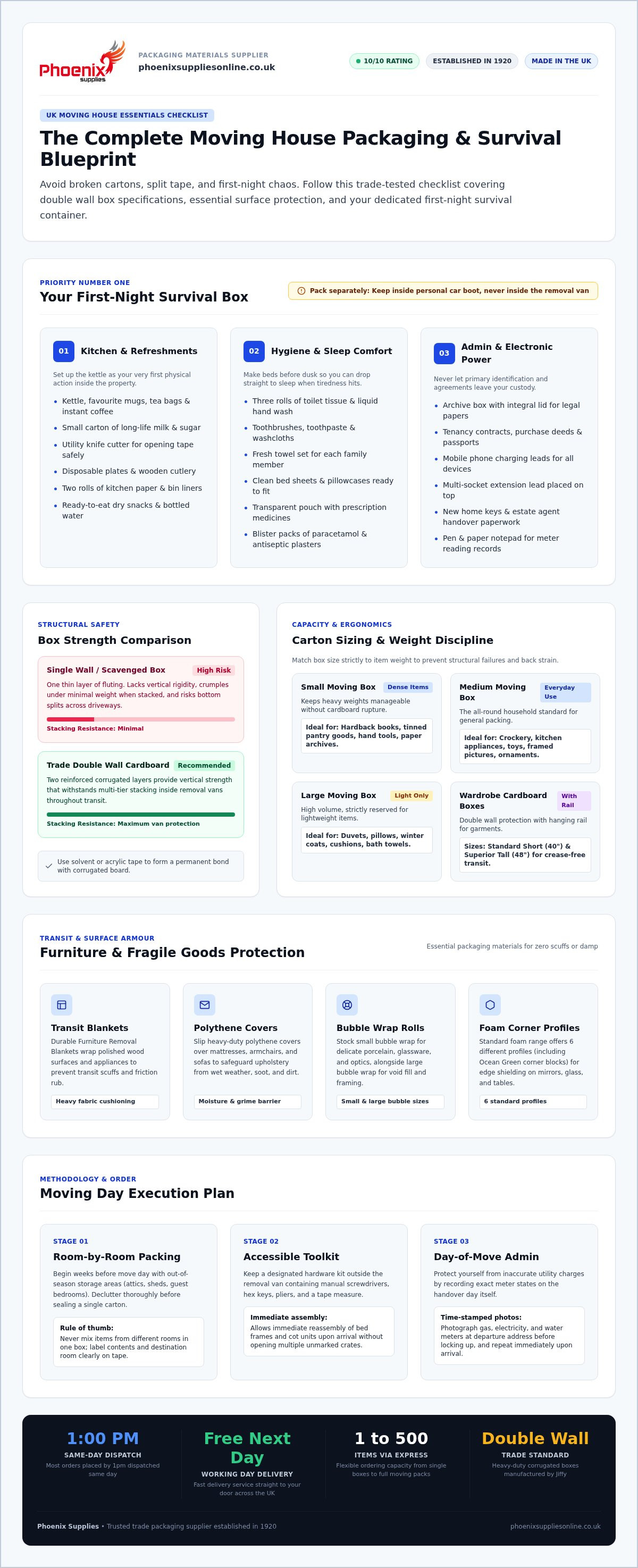
The wider process of moving house involves dozens of logistical hurdles, but the first two hours in your new home determine your comfort for the rest of the evening. That is why the single most important entry on any moving house essentials list UK homeowners compile is a separate first-night survival box. Pack this container intending to keep it entirely apart from the main removal van. It should travel on the back seat or inside the boot of your personal car, ensuring immediate access the moment you receive the keys.
Arriving exhausted to a sea of taped cartons without knowing where your bed linen or a hot drink is located creates needless stress. Planning ahead keeps moving night orderly, clean, and restful.
Kitchen and Refreshment Necessities
Setting up your kettle should be the first physical job you do after stepping inside. Make sure this dedicated kit contains:
- A kettle, favourite mugs, tea bags, instant coffee, sugar, and a small carton of long-life milk.
- A dependable utility knife cutter to slice through parcel tape without damaging carton contents.
- A supply of disposable plates, wooden cutlery, two rolls of kitchen paper, and a couple of heavy-duty bin liners for prompt rubbish disposal.
- Ready-to-eat dry snacks, bottled water, and provisions for a straightforward first meal that requires zero cooking utensils.
Personal Hygiene and First-Night Comfort
Searching through unmarked stacks for soap while tired is an easy mistake to avoid. Keep these personal items packed together inside the same survival carton:
- Hand wash, three rolls of toilet tissue, individual toothbrushes, toothpaste, and washcloths.
- A set of fresh towels and clean bed sheets for every person in the household. Making the beds before dusk means you can drop straight to sleep when tiredness sets in.
- A transparent pouch containing daily prescription medicines, blister packs of paracetamol, plasters, and antiseptic cream for minor cuts.
Vital Documents and Electronic Charging
Never let core administrative records leave your custody during transit. Use secure archive boxes with integral lids to safely store tenancy agreements, purchase deeds, identification documents, and family passports. Place phone charging leads and a multi-socket extension lead on top of these files so everyone can plug in phones immediately without searching behind heavy furniture.
The Core Packaging Materials Checklist for Every UK Home
Relying on scavenged supermarket crisp boxes is an easy way to damage your possessions. Single wall grocery cartons lack rigidity and crumple under minimal weight. Any reliable moving house essentials list UK movers follow must begin with trade-standard double wall cardboard boxes. Two layers of fluting create vertical strength that withstands stacking inside a removal van, protecting your valuables across every mile.
Matching box size directly to item weight protects both your goods and your lower back. Quality packing tape is equally critical; acrylic or solvent tapes bond permanently to corrugated board, ensuring carton bottoms never drop open during lifting. If you are gathering supplies for your move, ordering trade-standard Packaging Materials online ensures you have durable cartons delivered directly to your doorstep.
Choosing the Right Box Sizes and Strengths
Overfilling large cartons with dense items leads to tears and muscle injuries. Follow a practical sizing discipline:
- Reserve small moving boxes for heavy items like hardbacks, tinned pantry goods, and hand tools. Review our advice on small moving boxes for books to pack home libraries without risking structural failure.
- Use medium moving boxes for everyday crockery, small kitchen appliances, toys, and framed pictures.
- Keep large moving boxes exclusively for lightweight, bulky items such as duvets, pillows, winter coats, and cushions.
Specialist Boxes for Garments and Television Screens
Delicate furnishings require purpose-built protection. Transporting suits, dresses, and coats on hangers inside standard double wall cardboard wardrobe boxes keeps fabrics crease-free and clean; discover more in our guide on how to pack clothes for moving in boxes. For costly flatscreens, dedicated television boxes provide rigid outer shells that cushion delicate LED panels against side impacts. Read through our tips on best TV moving box UK options to avoid screen cracks.
Cushioning and Surface Protection Supplies
Never pack empty gaps; void spaces allow contents to shift and shatter during braking. Consult our packing materials list for moving to calculate the quantities you will need. Pair small bubble wrap for delicate stemware with large bubble wrap for ceramics and vases. Corner protectors made from recyclable PE foam safeguard framed artwork, whilst Biodegradable Bin Bags handle soft linen transfers and post-unpacking cleanup cleanly.
As you finalise your supplies, remember to keep administrative tasks on track; for instance, make sure you Update your driving licence online with the DVLA so your official records match your new address from day one.
Furniture and Mattress Protection: Transit Essentials
Most transit damage does not happen while driving down the motorway; it happens when unpadded furniture rubs together in the back of the van or scrapes against narrow stairwells. While a practical moving checklist helps you schedule your dates, physically safeguarding your bulky possessions requires the right protective coverings. Incorporating dedicated textile wraps and tailored covers into your moving house essentials list UK strategy prevents costly gouges, fabric tears, and water damage.
Taking ten minutes to wrap a piece of furniture properly saves hours of repair or French polishing later. Simple techniques ensure your highest-value items reach the new property in the exact state they left.
Using Furniture Removal Blankets and Textile Covers
Drape thick Furniture Removal Blankets across polished dining tables, antique sideboards, and painted wardrobe doors to absorb road vibrations. These heavy-duty woven textiles stop sharp edges from grinding together during transit. Wrap your washing machine and fridge-freezer in blankets as well, securing the fabric tightly with packing tape or stretch wrap. This padding protects internal mechanisms from sudden jolts and prevents metal corners from chipping doorways.
Shielding Sofas and Mattresses Against Grime
Rain, oily van walls, and dusty doorways can quickly ruin porous upholstery. Heavy-duty polythene covers provide an essential moisture barrier:
- Slide armchair and sofa covers over suites before carrying them outside, especially if bad weather is forecast.
- Encase mattresses inside thick polythene bags before dragging them around stair landings. Tightly tape the open ends to prevent pavement dirt or staircase dust from reaching the sleeping surface.
- Roll out self-adhesive carpet film across hallways and stair runners at both addresses. It stays flat under heavy foot traffic, protecting your flooring from muddy footprints.
Securing Loads Inside the Moving Van
Unsecured loads shift rapidly during cornering. Anchor large units like wardrobes and bookcases securely against the internal van batten rails using wide cotton-rich webbing removal van straps. For weighty machinery or heavy display cabinets, ratchet tiedown straps fitted with claw hooks provide maximum tension without slipping. Always position the heaviest furniture against the bulkhead directly behind the cab to keep vehicle handling balanced and predictable throughout your journey.
Room-by-Room Packing Guide: Organise by Priority
Packing an entire property feels overwhelming when you treat every room with equal urgency. A structured schedule breaks the job into manageable phases, saving you from living out of cardboard for weeks. As you work through your moving house essentials list UK plan, always clear spaces in reverse order of how frequently you use them. Decluttering each cupboard thoroughly before packing ensures you never waste time or packing supplies boxing up items destined for disposal.
Mark every carton clearly on the side panels rather than the top flap; box tops get covered when stacked, hiding vital details. Write the destination room, a brief item summary, and clear "FRAGILE" warnings with a thick black marker. Always stack the heaviest cartons directly on the floor of the room or van to prevent crushing lighter containers beneath them.
Step 1: Attics, Spare Rooms, and Garages
Begin with out-of-the-way storage areas at least three to four weeks before completion day. Pack holiday decorations, spare luggage, camping gear, and archived files first. Organise heavy garage hand tools, power tools, and sports equipment into small moving boxes so they remain manageable to carry. Donate unwanted furniture, sell duplicate tools, or recycle broken items now to cut your total haul volume significantly.
Step 2: Living Areas and Bedrooms
Two weeks before moving, dismantle non-essential display shelving, guest beds, and bookcases. Pack framed pictures, decorative ornaments, and entertainment media into medium cartons padded with packing paper. Transfer suits, dresses, and coats straight from the rails into wardrobe boxes on their hangers, keeping them clean and unwrinkled. Place small dowels, shelf pegs, and bed bolts into clear sandwich bags, tape them securely to the matching furniture frame, and label them clearly.
Step 3: Kitchens and Daily Bathrooms
Save your primary kitchen and family bathroom until the final forty-eight hours. Pack dinner plates vertically on edge like vinyl records inside bubble wrap; storing them flat increases the risk of cracking under downward pressure. Fill all internal voids with crumpled paper to stop items rattling. Keep your daily toiletries, two saucepans, basic cutlery, and cleaning supplies unpacked until the final morning.
Ready to start organising your home room by room? Order your moving boxes and packing supplies to get trade-standard cartons delivered straight to your door with fast nationwide dispatch.
Essential UK Moving Admin and Day-of-Move Tools
Completing a relocation without hitches requires practical mechanical readiness alongside statutory paperwork. Many movers become absorbed in packing and forget the physical tools needed to dismantle bed frames or shut off stopcocks on completion morning. Adding hand tools and key administrative tasks to your moving house essentials list UK planner keeps you entirely in control of both your physical space and your legal responsibilities.
Take clear digital photographs of the gas, electricity, and water meters at your old address before handing over the keys. Repeat this exact process the second you step inside your new home. Having date-stamped photographic proof avoids billing disputes with previous suppliers or outgoing occupants.
Practical Moving Day Tool Bag
Keep a separate tool bag with you in the front of your car so you never need to rummage through stacked boxes. Your kit should contain:
- Cross-head and flat-head screwdrivers, an adjustable spanner, pliers, and a comprehensive metric Allen key set.
- Two spare rolls of packing tape, a tape measure, and a durable utility knife cutter for opening cartons safely.
- A bright LED torch or headlamp for inspecting unlit under-stair spaces, basements, and utility meters.
- A written sheet listing emergency contact numbers, estate agents, solicitors, and removal van drivers in case mobile batteries fail.
Administrative Checkpoints and Key Notifications
Remember that notifying one government department does not automatically update other public records; each service requires separate notification. Contact your local council to close your old council tax account and register at the new address. Organise a Royal Mail redirection service at least ten days ahead of completion day so correspondence is not delivered to your old doorstep. Additionally, remember that failing to update your address on your driving licence with the DVLA is an offence that can carry a fine of up to £1,000, so update your licence, notify your GP surgery, and re-register on the electoral roll promptly.
Sourcing Your Moving Supplies in Advance
Running short of cartons or tape on moving eve forces expensive, rushed purchases of unsuitable packaging. Read our guide on moving house packing kits UK to calculate the exact quantities of cartons, bubble wrap, and tape required for your specific property size. For dependable protection, you can order double wall cartons, furniture blankets, and transit covers directly from Phoenix Supplies UK. Orders placed before 1pm dispatch the same day with free next working day delivery nationwide, giving you trade-standard materials delivered without delay.
Get Set for a Seamless Moving Day
A successful relocation boils down to methodical preparation rather than frantic last-minute packing. By keeping a dedicated first-night box in your car, protecting furniture with transit blankets, and working from a dependable moving house essentials list UK movers can trust, you will safeguard your possessions and your peace of mind. Taking control of both your physical packing materials and day-of-move admin turns what could be an overwhelming experience into an organised, calm transition.
As a family-run packaging specialist serving the UK since 1920, Phoenix Supplies UK helps you prepare with trade-grade protection. Choose heavy-duty double wall boxes designed specifically for house removals, protective furniture covers, and durable transit blankets delivered directly to your door. Place your order before 1pm for free next working day delivery across the UK. Order your moving boxes and packing essentials with next working day UK delivery today, and enjoy an easy, comfortable start in your new home.
Frequently Asked Questions
What should you pack in an essentials box when moving house?
Pack the immediate supplies your household needs to get through the first 24 hours without opening sealed cartons. This essentials box should contain your kettle, mugs, tea, coffee, long-life milk, a utility knife cutter, toilet paper, hand soap, phone chargers, daily medications, and fresh bed linen. Keep this box in your personal vehicle so you don't have to search through a packed removal van late at night.
How many cardboard moving boxes do I need for a 3-bedroom house in the UK?
A typical three-bedroom home in the UK generally requires between 60 and 80 cardboard cartons. A practical packing split includes 20 to 25 small boxes for dense items like books, 30 to 40 medium boxes for crockery and kitchenware, and 10 to 15 large boxes for bedding and towels. Adding four or five wardrobe boxes keeps your hanging garments protected and organised during transit.
Why should you choose double wall moving boxes over single wall boxes?
Double wall boxes feature two layers of corrugated fluting, providing substantial vertical strength and puncture resistance. Single wall boxes are designed for lightweight parcel post and quickly crush under moderate loads when stacked inside a van. Double wall cardboard distributes stacking weight evenly across the edges, preventing cartons from collapsing onto fragile belongings underneath during sudden braking or cornering on transit routes.
When should I start packing before moving house?
You should start packing approximately four weeks before completion day. Begin with storage spaces you use infrequently, such as the loft, garage, garden shed, and spare bedrooms. Packing out-of-season clothing, spare linens, and books early gives you time to declutter thoroughly. Clearing unwanted items well ahead of moving week reduces the total volume of goods and prevents frantic last-minute packing.
What tools do I need on moving day?
Keep a dedicated tool bag handy containing screwdrivers, an adjustable spanner, pliers, a tape measure, and a full set of Allen keys for dismantling bed frames. You should also pack a reliable utility knife cutter for slicing through heavy parcel tape, spare tape rolls, and a bright torch to read water and electric meters inside dark under-stair cupboards on arrival.
How do I protect my furniture during a UK house move?
Shield valuable pieces using Furniture Removal Blankets and fitted polythene covers. Wrapping sideboards and tables in thick textile blankets cushions surfaces against road vibrations and prevents timber edges from rubbing against van panels. Polythene covers protect mattresses and upholstered sofas from dirt, scuffs, and wet weather. As outlined in any moving house essentials list UK homeowners follow, anchor these pieces with webbing straps to stop shifts.
Can I pack clothes directly on their hangers when moving?
Yes, you can pack hanging clothes directly on their hangers using purpose-made cardboard wardrobe boxes. These tall, rigid cartons contain an internal hanging rail, letting you lift garments straight from your bedroom wardrobe directly into the carton. This approach protects coats, suits, and dresses from wrinkles, dust, and handling damage, which makes completing your moving house essentials list UK tasks much quicker.


