
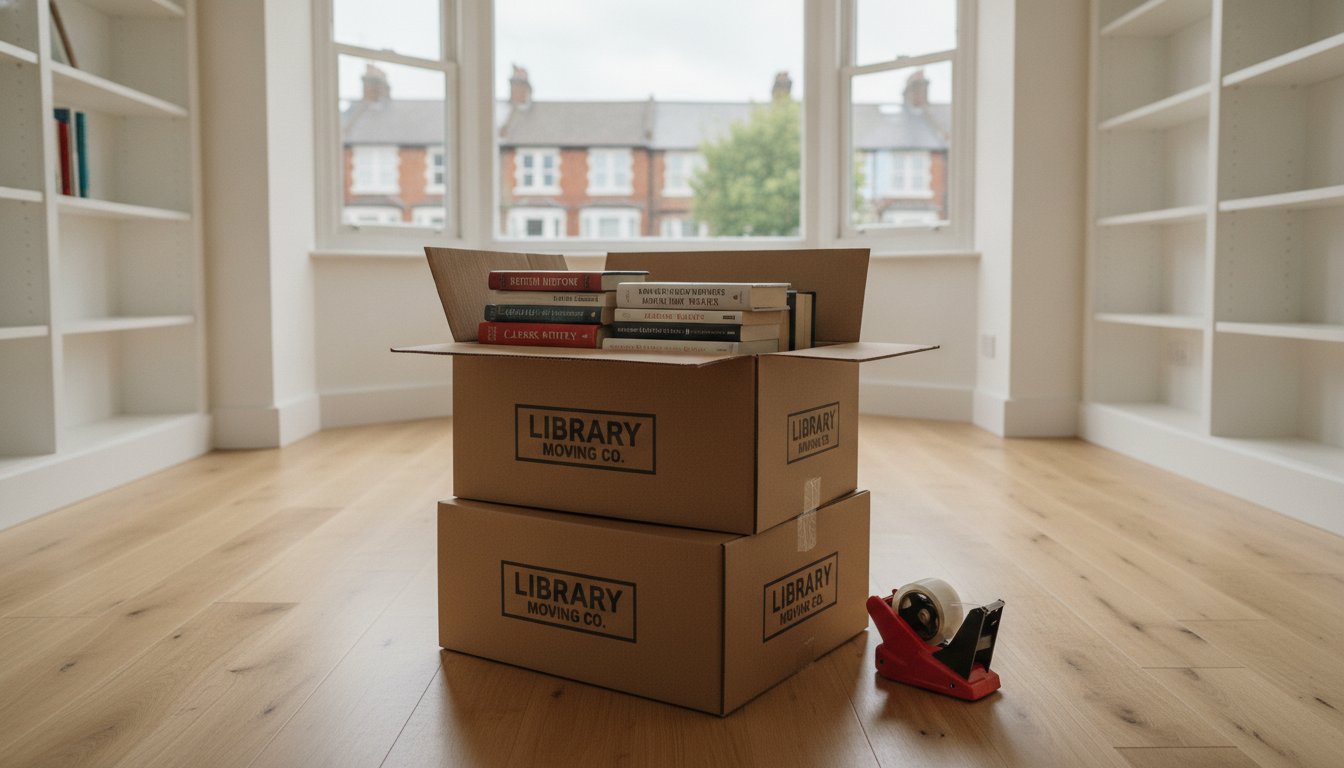
Have you ever considered that the most dangerous item in your home to move isn't the fragile china or the mirrors, but your collection of novels? It's a common mistake to think that a bigger box is better for a large library. However, filling a large container with heavy hardbacks often leads to a box that's impossible to lift or, even worse, one that splits across the bottom. Finding the right small moving boxes for books is the most important step you can take to protect your library and your physical health during a house move.
We understand how much your books mean to you, from well-loved childhood classics to essential professional reference texts. This guide will help you choose the correct box strength and size to ensure your collection stays safe and easy to carry. You'll learn how to identify durable double-walled cardboard and how to calculate the exact quantity of supplies you need so you don't end up with wasted materials. We'll cover everything from packing techniques that protect delicate spines to the best ways to organise your boxes for a smooth, damage-free transition to your new home.
Key Takeaways
- Understand why standardised dimensions are essential for managing the deceptively heavy weight of a home library.
- Learn the difference between single and double-wall fluting to ensure your containers can withstand the pressure of being stacked.
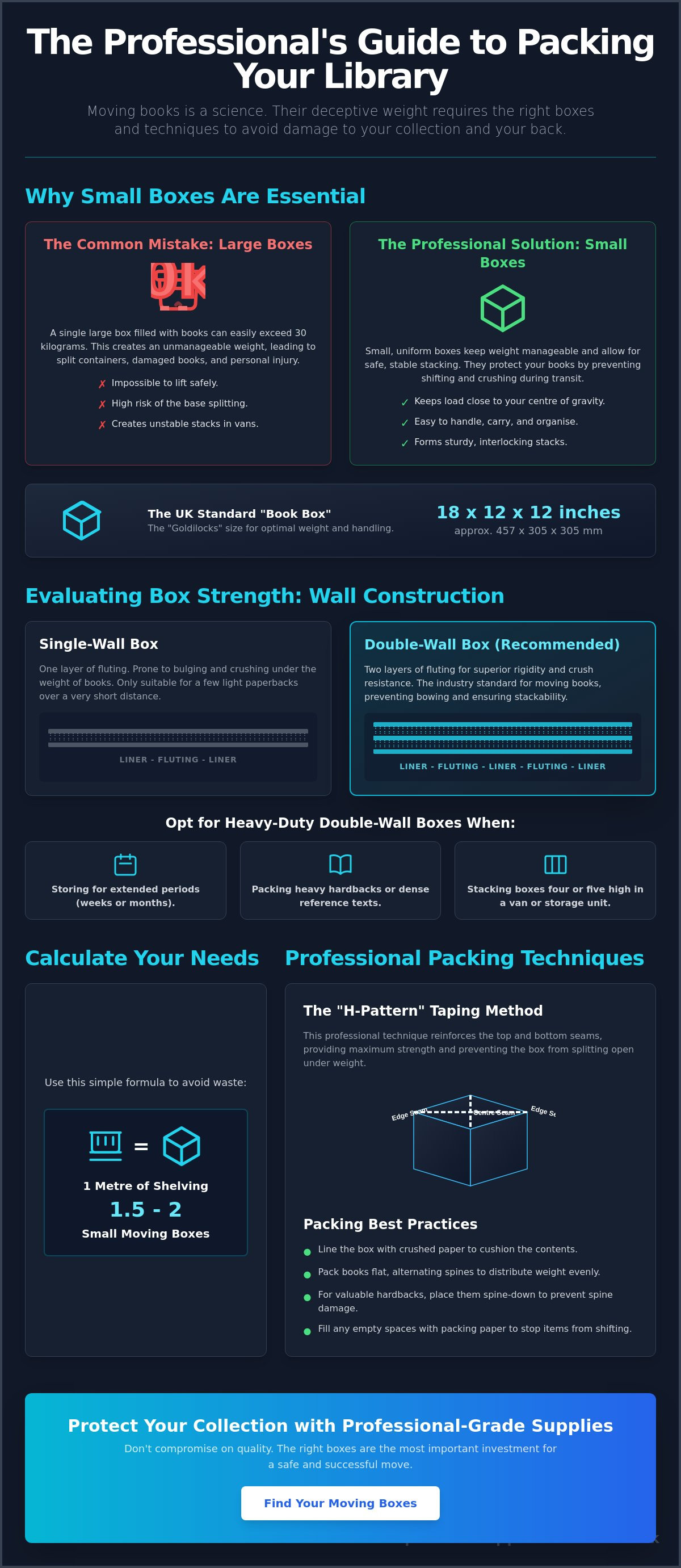
- Calculate your requirements accurately using a simple formula of 1.5 to 2 small moving boxes for books for every metre of shelving.
- Master professional packing techniques, including the "H-pattern" taping method, to ensure your boxes never split at the base.
- Discover how to protect book spines and corners from transit damage with proper lining and internal support.
Why Small Moving Boxes are Essential for Books
Books are deceptively heavy. While a single paperback feels light in your hand, a collection of fifty volumes creates a massive, concentrated load. This is why using small moving boxes for books is a non-negotiable rule for professional removals. It's a matter of physics. Most household items, like kitchenware or clothing, have a high volume but low density. Books are the opposite. They are essentially solid blocks of wood pulp. When you pack them into a container that is too large, you create a weight that is nearly impossible to manage safely. You aren't just moving paper; you're moving weight that can easily reach thirty kilograms in a single large container.
Small boxes keep the centre of gravity manageable. When a load is compact, you can hold it closer to your torso. This reduces the mechanical leverage against your spine and makes it easier to navigate narrow hallways or steep stairs. Beyond your own physical safety, uniform small boxes are much easier to stack in a removal van. They act like sturdy building blocks, creating a stable wall of cargo that won't shift or lean when the van turns a corner. This level of organisation prevents the "leaning tower" effect that often leads to crushed corners and damaged covers.
The Danger of Over-Packing Large Boxes
Many people try to save time by throwing their entire library into a few large tea chests. This shortcut often leads to disaster. The structural integrity of any container depends heavily on Corrugated box design principles, specifically how the fluting layers handle vertical pressure. In a large box, the weight of the books pushes outward and downward on the bottom flaps with immense force. Eventually, the packing tape or the cardboard itself will succumb to this pressure. You don't want to be the person left with a split box and damaged book spines scattered across the pavement. Two small boxes are always easier to organise, lift, and carry than one massive, unstable crate.
Standard Dimensions for UK Book Boxes
In the UK, the standard "book box" typically measures 18x12x12 inches, which is approximately 457x305x305mm. We often call this the "Goldilocks" zone for packing. A 305mm width is wide enough to accommodate most hardback sizes but narrow enough to prevent the books from sliding around or shifting during transit. These dimensions aren't random; they are designed to be compatible with standard removal trolleys and webbing straps. If you choose boxes that are too wide, they won't sit securely on a trolley, which increases the risk of the whole stack toppling over. Sticking to these proven dimensions ensures every box is easy to handle and fits perfectly alongside your other belongings in the van.
Evaluating Box Strength: Double Wall vs Single Wall
Understanding the anatomy of your packaging is the first step in protecting your library. Every cardboard box consists of two main components: the flat outer liners and the wavy corrugated fluting inside. A single-wall box has one layer of fluting, whilst a double-wall box features two layers sandwiched between three liners. This extra layer of fluting provides a significant boost in crush resistance and structural integrity. For anyone moving a substantial collection, Double Wall boxes are the industry standard for professional removals.
The density of books creates a specific type of pressure called "bowing." When you fill a container with heavy items, the weight pushes against the side walls. Single-walled cardboard often bulges outward, which makes the box unstable and difficult to stack safely in a van. High-quality small moving boxes for books use double-wall construction to maintain a rigid, rectangular shape even under heavy loads. This rigidity ensures that the box at the bottom of a stack won't buckle under the weight of those above it.
When to Choose Heavy-Duty Double Wall Boxes
Standard single-wall options might work for light household items, but certain scenarios demand the extra strength of a double-walled container. You should opt for heavy-duty options in these situations:
- When storing books for more than a few weeks, as cardboard can soften over time in humid environments.
- If you are moving heavy hardbacks, dense encyclopaedias, or specialised law journals.
- When boxes will be stacked four or five high in a storage unit or removal van.
The double-wall design also acts as a better buffer against external impacts and moisture. It provides a thicker barrier that helps keep your pages dry and your covers pristine during the transition.
Is Single Wall Ever Enough for Books?
You might consider single-wall boxes if you are only moving a few lightweight children's paperbacks or if the transit distance is very short. However, you must perform a quick risk assessment. The cost of a damaged first edition or the time spent repacking a split box far outweighs the small price difference of an upgrade. We always suggest that you choose durable small moving boxes to give yourself peace of mind. Following professional packing techniques for books starts with selecting the right materials. Phoenix Supplies UK recommendation is simple: always prioritise durability for heavy-load items to ensure your library arrives in the same condition it left.
Calculating Your Requirements: How Many Boxes Do You Need?
Estimating your supplies is often the most stressful part of preparing for a move. You don't want to run out of tape halfway through a Sunday afternoon, but you also don't want a garage full of unused cardboard once the job is done. A reliable rule of thumb is that one standard shelf metre of books requires approximately 1.5 to 2 small moving boxes for books. This ratio helps you maintain a manageable weight, ensuring you don't overfill the containers and put unnecessary strain on the cardboard or your back.
Your specific library will dictate the exact number of containers you need. Hardbacks take up more depth and width, whilst paperbacks are more compact and allow for tighter rows. If your collection includes thick reference books or heavy law journals, you should lean towards the higher end of our estimate. We always suggest ordering 10% more than your final calculation. This buffer covers "overflow" items like magazines, catalogues, or those stray volumes tucked away in bedside drawers. Buying in bulk packs is a sensible way to manage this, as it reduces the per-unit cost and ensures you have a uniform set of containers for better stacking in the van.
The Bookshelf-to-Box Framework
Measuring by linear metres is far more accurate than trying to count individual volumes. A single shelf that is 80cm wide is a different beast if it's full of thin poetry books versus thick coffee table editions. These larger books often disrupt standard stacking patterns, so you might need extra space to lay them flat. Don't forget to account for other heavy media in your count. Everything from vinyl records to CD collections thrives in these smaller containers. They share the same high-density characteristics as books and benefit from the same rigid support provided by a smaller frame.
Organising by Weight, Not Just Subject
It's tempting to pack your library strictly by genre, but practical efficiency often requires a different approach. We recommend a "mix and match" strategy to keep loads balanced. If a box is getting too heavy but still has a few inches of space at the top, fill the gap with lighter materials like bubble wrap or small offcuts of removal blankets. You should never leave empty space at the top of a book box. If the container is hollow, the lid can cave in when another box is placed on top, which risks damaging the books inside.
Managing these loads correctly is essential for safe lifting and preventing long-term injury. By keeping the weight distributed across multiple small units, you protect your body from the sudden strain of oversized loads. Once packed, label every box clearly on the side rather than just the top. This helps you ensure that the heaviest items are always placed at the bottom of the stack in the removal van, creating a solid and secure foundation for the rest of your belongings.
Professional Packing Techniques for a Safe Transit
Once you have your small moving boxes for books ready, the packing process begins with a solid foundation. Proper technique ensures that your library stays organised and arrives at your new home without a single bent corner or cracked spine. From the heaviest encyclopaedias to the lightest novellas, every volume requires a specific approach to handle the rigours of the removal van. Follow these steps to pack like a professional:
- Step 1: Tape the bottom of the box using the "H-pattern" method. This involves sealing the middle seam and then applying tape across the two side edges. This reinforcement is vital for preventing the flaps from giving way under heavy loads.
- Step 2: Line the bottom with a protective layer. Use crumpled packing paper or a sheet of bubble wrap to act as a shock absorber against vibrations during transit.
- Step 3: Place your heaviest hardbacks at the base. You should always lay these flat rather than upright. Stacking them flat distributes the weight evenly and prevents the pages from "dropping" away from the binding.
- Step 4: Fill any side gaps with smaller paperbacks or protective void-fill. If books shift during the move, they are more likely to suffer impact damage.
- Step 5: Perform a final seal and add clear labelling. Mark each container with "BOOKS - HEAVY - BASE LOAD" to guide the removal team.
If you want to ensure your collection is fully protected, you can order high-quality small moving boxes for books today. Having the right tools makes these professional techniques much more effective.
Protecting Spines and Corners
A common mistake is packing books with the spines facing upwards. Whilst this makes titles easy to read, it places the entire weight of the book on the delicate glue and stitching of the binding. Over time, this causes the spine to warp or detach completely. For paperbacks of a similar size, you can use the "spine-to-spine" method. This involves standing them vertically but alternating the direction of the spines so they support each other. If you have antique or sentimental volumes amongst your standard stock, wrap them individually in acid-free paper to prevent ink transfer or yellowing.
Sealing and Reinforcing for Heavy Loads
The quality of your tape is just as important as the strength of the cardboard. Avoid standard stationery tape; it lacks the adhesive strength to hold heavy-duty cardboard under tension. Use professional-grade packing tape and pay particular attention to the vertical seams. This reinforcement prevents the box from "parallelogramming," which is when a box leans or twists into a diamond shape under weight. To secure your library further, use webbing straps to tie down stacks within the van. This prevents the boxes from sliding, ensuring your carefully packed foundation remains stable throughout the journey.
Sourcing Premium Moving Supplies from Phoenix Supplies UK
Phoenix Supplies UK is more than just a packaging supplier; we are a family-run team dedicated to making your move as straightforward as possible. We understand the stress of packing a lifetime of memories, which is why we prioritise professional-grade durability in every product we stock. Whether you are moving a small collection of novels or a massive home library, our commitment to personal service remains the same. We take pride in being a reliable partner for our customers across the country, offering national UK delivery to ensure you have the right supplies exactly when you need them.
Finding high-quality small moving boxes for books is just one part of a successful move. We provide a complete ecosystem of supplies designed to protect everything from your most delicate paperbacks to your bulky furniture. By sourcing your materials from a specialist, you ensure that every item in the van is supported by the correct level of cardboard thickness and structural strength. Our range spans from these compact book containers to specialised wardrobe boxes and heavy-duty removal blankets, allowing you to coordinate your entire packing process through a single, trusted source.
Complete Your Packing Kit
A safe move requires more than just the boxes themselves. To build a truly secure packing kit, you should consider essential add-ons that reinforce your library. We provide everything from heavy-duty packing tape and bubble wrap to protective mattress and furniture covers. If your home move involves a home office, our archive boxes are an excellent companion to your book boxes. They offer the same rigid support but are specifically sized for A4 folders and sensitive documents. For those planning a large family relocation, ordering in bulk is often the most cost-effective way to prepare. It ensures you have a consistent supply of materials and avoids the frustration of running out of containers at the last minute.
The Phoenix Supplies UK Difference
What sets us apart is our focus on the human element of business. We aren't a faceless e-commerce giant; we are a local specialist with the expertise to guide you through your requirements. If you aren't sure which box strength is right for your specific collection, our team is always available to offer honest, practical advice. We maintain competitive pricing without ever compromising on the quality or thickness of our cardboard. We believe that everyone deserves access to professional-grade supplies that protect their belongings and their physical health. You can order your heavy-duty book boxes today from the Phoenix Supplies UK homepage and take the first step towards a calm, organised, and damage-free move.
Prepare for a Successful Move Today
Protecting your library is about more than just finding enough space; it's about using the right tools to prevent damage and injury. By opting for small moving boxes for books, you effectively manage the heavy weight of wood pulp while ensuring your containers remain easy to handle. Remember that double-walled cardboard is essential for safe stacking, and using professional techniques like the H-pattern tape method provides the necessary reinforcement for a secure transit.
We are a family-run UK business that understands the value of personal service and reliable materials. Our professional-grade double-walled cardboard is designed to meet the demands of any relocation, and we provide free national delivery to simplify your preparations. We are here to support you at every stage of the process, from choosing the right box strength to calculating your final quantities.
Browse our range of heavy-duty small moving boxes for books and give your collection the protection it deserves. With the right approach and high-quality supplies, you can look forward to unpacking your favourite volumes in your new home with total peace of mind.
Frequently Asked Questions
How many books can I fit in a small moving box?
You can typically fit between 20 and 30 average-sized books in a standard small moving box. This number varies depending on whether you're packing thick hardbacks or thin paperbacks. The aim is to keep the total weight between 15kg and 20kg so the container remains manageable and safe to lift without assistance.
Why shouldn’t I use large boxes for my books?
Large boxes are unsuitable for books because they quickly become too heavy to lift safely. A large tea chest filled with books can easily exceed 40kg, which puts immense pressure on the bottom flaps and your own back. Using smaller containers ensures the load stays compact and prevents the cardboard from splitting during the transition.
Is it better to pack books flat or upright?
Packing books flat is the best method for heavy hardbacks as it prevents the weight of the paper from pulling away from the binding. For paperbacks, you can stand them upright as long as you use the spine-to-spine method to keep them supported. You should never pack books with the spines facing upwards, as this often leads to structural damage over time.
Do I need double-walled boxes for a local move?
Yes, you should always use double-walled small moving boxes for books even for short-distance moves. The primary concern isn't the distance travelled but the stacking strength required inside the removal van. Double-walled cardboard provides the rigidity needed to stop the bottom boxes in a stack from buckling under the weight of those above.
How do I stop my book boxes from breaking at the bottom?
The most effective way to prevent breakage is to use the H-pattern taping method on all base seams. This involves sealing the middle join and both side edges with high-quality packing tape. You should also ensure there are no empty voids inside the box, as shifting contents can create sudden bursts of pressure that force the flaps open.
Can I use archive boxes for moving heavy books?
Archive boxes are an excellent choice for moving books because they are designed for heavy, dense loads like paper files. Their built-in handles make them particularly easy to carry between the house and the van. Just ensure they are made from double-walled cardboard to provide the same level of protection as a dedicated book box.
What is the best way to pack valuable or first-edition books?
Valuable books should be wrapped individually in acid-free paper before being placed in the box to prevent ink transfer or scuffing. You can add a layer of bubble wrap for extra cushioning against impacts. Always place these volumes flat at the very bottom of the box to ensure they have a stable foundation and aren't crushed by other items.
How many rolls of tape will I need for 20 book boxes?
You will generally need one full 66-metre roll of tape for every 20 to 25 boxes. Since packing books requires extra reinforcement on both the top and bottom seams, you'll use more tape than you would for lighter items. It's always a good idea to have a spare roll nearby to avoid any interruptions to your packing schedule.


