
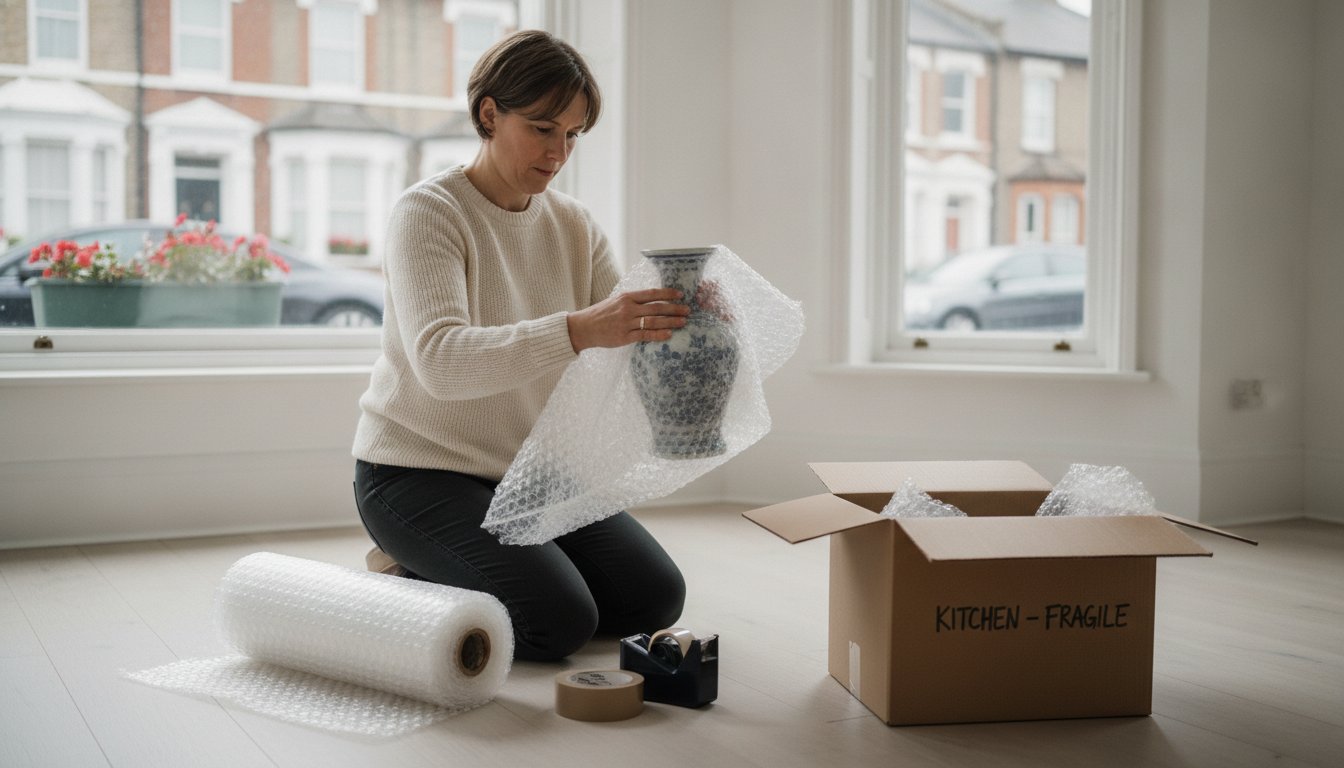
What if the secret to keeping your grandmother's heirloom china safe isn't how many times you wrap it, but the specific size of the bubbles you choose? Most of us have felt that sinking feeling when opening a box to find a shattered plate, even after we thought we'd used enough protection. Choosing the right bubble wrap roll is about more than just grabbing the first one you see. It's about matching the cushion to the weight and fragility of your items to prevent any nasty surprises on moving day.
We understand that moving house is a huge task, and you want to feel sure that your favourite possessions are secure. You shouldn't have to waste money on thin, poor-quality wrap that pops before it even hits the removal van. This guide will help you master the technical details of different bubble sizes and roll lengths to ensure everything arrives in perfect condition. We'll show you how to estimate your needs accurately and share the best ways to wrap everything from delicate glassware to heavy mirrors.
Key Takeaways
- Learn why small bubbles are best for surface protection whilst large bubbles provide the heavy-duty cushioning needed for heavier items.
- Understand how to select the right width and length for your bubble wrap roll, choosing from standard 300mm to 750mm widths to match your specific needs.
- Discover the professional secret regarding which way the bubbles should face to ensure a secure grip and maximum shock absorption.
- Find out how to prevent "bottoming out" by choosing the correct bubble size for the weight of your possessions.
- Gain confidence in your packing by learning how to double-wrap high-value items for long-distance journeys.
What is a Bubble Wrap Roll and How Does it Work?
At its heart, Bubble wrap is a flexible and transparent plastic material that has become an essential part of any house move. It isn't just a fun material to pop; it's a carefully engineered solution designed to keep your belongings safe. The magic happens through the science of trapped air. Each bubble wrap roll is covered in hundreds of small, sealed hemispheres of air. These air pockets act as a continuous shock-absorbing buffer, spreading the force of an impact across a wider surface area rather than letting it hit your fragile items directly.
Most high-quality wrap is made from low-density polyethylene (LDPE). This specific type of plastic is chosen because it's incredibly durable whilst remaining flexible enough to wrap around awkward shapes. It's the industry standard for a reason. It doesn't tear easily and provides a reliable barrier against the bumps and scrapes of a typical journey in a removal van. This combination of strength and lightness is why it remains the UK's favourite choice for both domestic removals and commercial shipping alike.
The Anatomy of a Bubble
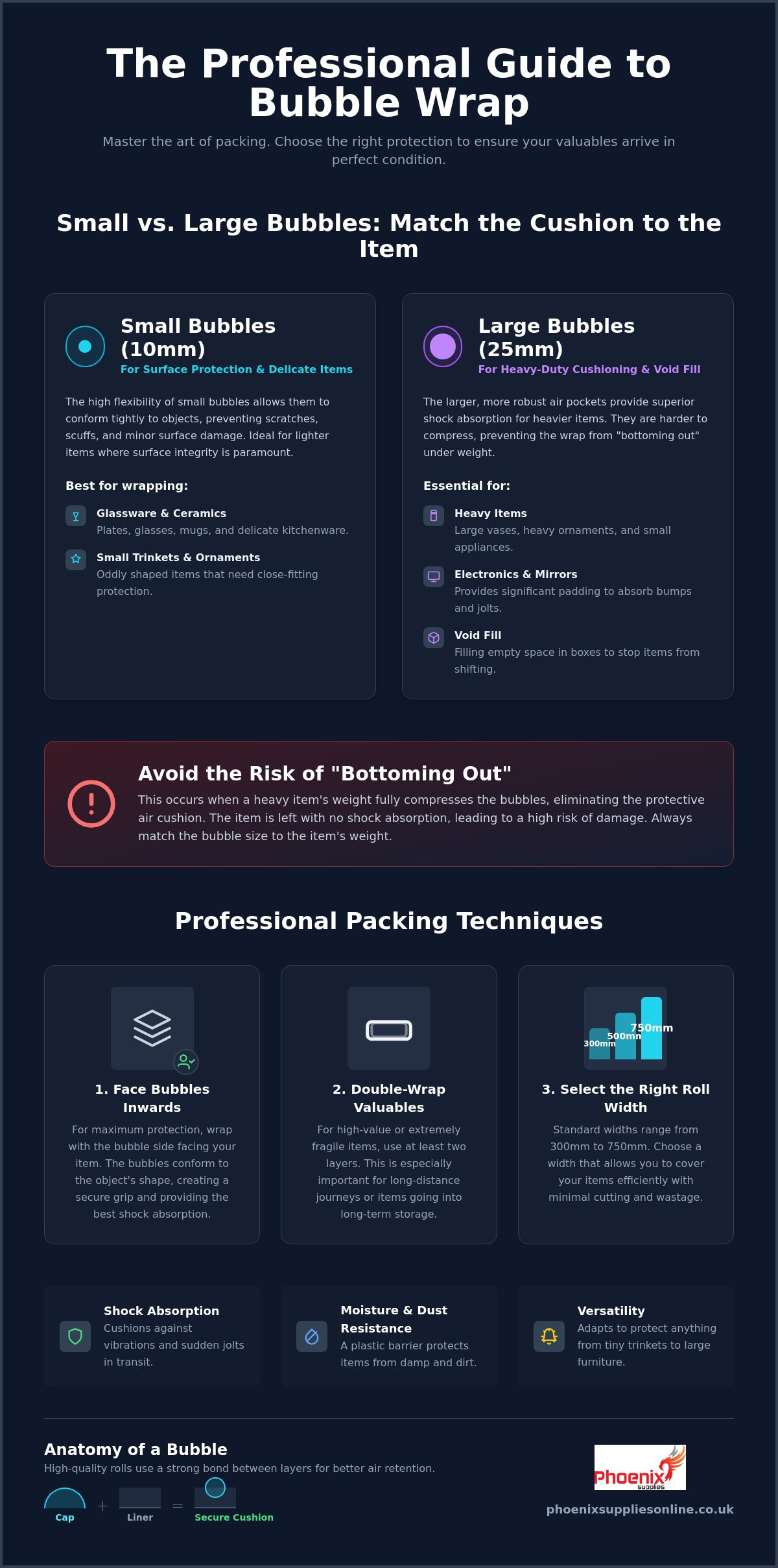
A single bubble is actually more complex than it looks. It's usually made of two layers: the "cap," which forms the raised bubble shape, and the "liner," which is the flat backing that seals the air inside. When these layers are bonded together properly, they create a secure pocket that won't easily deflate. High-quality rolls focus on this bond to ensure better air retention than cheaper, budget alternatives. Air retention refers to the ability of the sealed bubbles to remain fully inflated and provide consistent cushioning throughout the entire duration of a move or long-term storage period.
Key Benefits for House Movers
When you're packing up your life into boxes, you need materials that can handle different types of stress. A bubble wrap roll offers several layers of protection that other materials like packing paper simply can't match:
- Shock absorption: It cushions your goods against the constant vibrations and sudden jolts that happen inside a moving vehicle.
- Moisture and dust resistance: Because it's made of plastic, it creates a waterproof barrier that protects your items from dampness or dust whilst they're in the back of a van or sitting in a storage unit.
- Versatility: You can use it for almost anything. From wrapping tiny, delicate trinkets and jewellery to providing a protective layer for large furniture items and electronic screens, it adapts to your needs.
By choosing a specialist supplier, you ensure that the plastic is thick enough to do its job without popping under the weight of your heavier items. It's a simple tool, but when used correctly, it's the best insurance policy your fragile belongings can have.
Small vs Large Bubble Wrap: Which One Do You Need?
Choosing between different types of protection can feel like a guessing game. Many people assume that more layers of any wrap will do the job, but the effectiveness of your packing actually relies on matching the bubble size to the weight of the object. Since its accidental invention as a failed attempt at 3D wallpaper, this material has evolved into two distinct categories: standard 10mm small bubbles and heavy-duty 25mm large bubbles.
The fundamental rule is straightforward. Small bubbles are for surface protection, whilst large bubbles are for heavy-duty cushioning. If you use the wrong size, you risk a phenomenon known as "bottoming out." This happens when a heavy item puts too much pressure on small bubbles, causing them to fail or flatten completely. Once the air is squeezed out, there's nothing left to absorb the shock. Picking the right bubble wrap roll from the start prevents this costly mistake and ensures your items don't hit the side of the box with zero protection.
When to Use Small Bubble Wrap (10mm)
Small bubble wrap features 10mm diameter bubbles, making it incredibly flexible. This flexibility is its greatest strength. It is ideal for:
- Delicate surface protection: Glassware, ceramics, and intricate kitchen gadgets.
- Scratch prevention: Wrapping polished wood, metal, or glass surfaces.
- Oddly shaped items: It hugs contours closely, making it the best choice for small trinkets or dinner sets.
When to Use Large Bubble Wrap (25mm)
For your heavier possessions, a bubble wrap roll with 25mm diameter bubbles is essential. These larger air pockets are much harder to compress. Use them for:
- Heavy items: Large vases, ornaments, and heavy electronics.
- Void fill: Filling extra space in a box to stop items shifting during transit.
- Furniture protection: Cushioning the sharp corners of heavy tables or chests of drawers.
Matching the bubble size to the item weight is the most cost-effective way to pack. You'll find you need fewer layers of the correct size than you would if you tried to over-wrap with the wrong one. If you're ready to start organising your supplies, you can browse our full range of bubble wrap to find the perfect fit for your specific belongings.
Choosing the Right Width and Length for Your Move
Once you've decided on the bubble size, the next step is to figure out the physical dimensions of the bubble wrap roll you'll need. It's a common mistake to buy several small rolls from a local supermarket, only to find they're too narrow for your larger items. In the UK, professional rolls generally come in three standard widths: 300mm, 500mm, and 750mm. Picking the right width from the start doesn't just save you time; it also ensures your items are wrapped in a single, secure layer rather than a patchwork of taped-together scraps.
Buying in bulk is almost always the more cost-effective choice. A single 100-metre roll is usually much cheaper than buying ten 10-metre rolls. It also gives you the peace of mind that you won't run out of supplies late on a Sunday evening when the shops are closed. Whilst we focus on providing local expertise, we often look at international standards for best practice. For example, the USPS packing guidelines emphasise that the goal of cushioning is to eliminate all internal movement within a box, which is much easier to achieve when you have a continuous, appropriately sized roll of wrap.
Width Guide: Matching the Roll to the Object
Matching the roll width to your items makes the packing process much smoother. You can think of it in these three categories:
- 300mm rolls: These are the small-item specialists. They're perfect for wrapping mugs, side plates, and small collectibles without having to trim away excess plastic.
- 500mm rolls: This is the versatile all-rounder. It's the ideal size for most kitchenware, small electronics, and medium-sized ornaments.
- 750mm rolls: You'll need these for the big stuff. They're essential for protecting larger paintings, mirrors, and televisions, as they allow you to cover the entire surface area in one go.
Estimating Quantity for Your House Move
Estimating how much wrap you'll need can be tricky, but a room-by-room framework helps. For a typical 1-bedroom flat, you'll usually require between 20 and 30 metres of standard wrap to cover the basics. If you're moving a 3-bedroom house, we always suggest looking for 100-metre bulk rolls. You'd be surprised how quickly you go through it, especially if you have a high volume of books, antiques, or general "clutter" that needs extra care. Factors like having a large collection of glassware or several sets of fine china will naturally increase your requirements, so it's always better to have a bit extra than to risk a breakage because you tried to stretch your last few metres too thin.
Advanced Packing Techniques Using Bubble Wrap
Once you've selected the right bubble wrap roll, the way you apply it is just as important as the material itself. One of the most frequent questions we hear is whether the bubbles should face inwards or outwards. The answer is simple: keep the bubbles facing the item you are wrapping. This provides a better grip on the surface and ensures the air pockets are in direct contact with the object to absorb any shocks. The flat, smooth side on the outside is much easier to tape and resists snagging whilst you move boxes around.
For high-value or exceptionally fragile items, we recommend a "double-wrap" technique. This involves using a layer of small bubble wrap for surface protection, followed by a layer of large bubble wrap for heavy-duty cushioning. It's a professional method that provides the best of both worlds. However, be careful not to over-tape. You only need enough tape to keep the wrap secure. Using too much can make the package rigid and difficult to unpack, and you should never apply tape directly to the item's surface, as it can leave a sticky residue or damage delicate finishes.
Combining materials often yields the best results. For example, wrapping an antique in packing paper first prevents the plastic from "sweating" or sticking to certain varnishes. You can then add the bubble wrap and finally wrap the entire bundle in one of our removal blankets for a final layer of security. This layered approach is especially useful for long-distance moves where items will be in transit for several hours.
Step-by-Step: Wrapping a Fragile Mirror
Mirrors require a specific approach to prevent them from cracking under pressure. Start by creating a "cushioning cross" by placing two long strips of masking tape in an 'X' shape across the glass. This helps to absorb vibrations and keeps the glass in place if an accident does occur. Next, wrap the mirror in a layer of small bubble wrap to protect the surface. Follow this with a layer of large bubble wrap, paying extra attention to the corners. Secure the entire bundle with tape, making sure the tape only touches the plastic and never the glass or the frame.
Protecting Electronics and Screens
When it comes to computer components or motherboards, standard plastic can be a risk. Standard bubble wrap can generate static electricity in dry environments because the friction between the plastic and the device creates an imbalance of electrons. For these items, you should use anti-static wrap. For flat-screen TVs, a wide bubble wrap roll is your best friend if you've lost the original box. Wrap the screen in multiple layers and consider placing a piece of cardboard over the front for added rigidity before securing it with a removal blanket.
If you need to stock up on professional-grade supplies before you start, you can order your bubble wrap rolls and packing materials here for reliable protection.
Quality Sourcing and Environmental Responsibility
Not all protection is created equal. When you're standing in a shop looking at a bubble wrap roll, it's easy to assume the cheapest option will suffice. However, budget wrap is often a false economy. Thin plastic and poorly sealed bubbles offer very little actual protection for your belongings. If the air escapes before your items even reach the removal van, the wrap becomes nothing more than a layer of waste plastic. Choosing professional-grade materials ensures that the cushion remains intact throughout the entire moving process.
Whilst plastic is a concern, you can extend the life of your materials through reuse and responsible disposal. We always suggest keeping your wrap for seasonal storage or future moves. If it's time to let it go, remember that standard polyethylene wrap, marked with recycling code #4, shouldn't go in your household recycling bin. It can jam sorting machinery. Instead, take it to designated plastic film drop-off locations, which are now common at most major UK supermarkets. Globally, only about 9% of plastic waste is recycled, so making that extra effort to drop it at the right collection centre makes a real difference.
Spotting Professional-Grade Bubble Wrap
A simple way to check quality is the "Pop Test". Professional-grade bubbles shouldn't burst under light finger pressure. They should feel firm and resilient. This strength is dictated by the GSM, which stands for Grams per Square Metre. A higher GSM indicates a thicker, stronger plastic that can withstand more weight and friction. For house movers, the convenience of free delivery on bulk orders is also a major factor, as it removes the hassle of trying to fit large rolls into a standard car.
The Phoenix Supplies Difference
At Phoenix Supplies UK, we pride ourselves on being more than just an online shop. As a family-run specialist, we value personal connection over automated systems. You can always speak to our office team to get advice on exactly how much you need for your specific move. We are committed to providing competitive pricing for both domestic customers and commercial professionals. We believe that every customer deserves the same level of care and high-quality supplies to ensure their move is as stress-free as possible.
If you're ready to secure your belongings with the right protection, you can browse our full range of bubble wrap rolls and packing supplies to find exactly what you need for a successful move.
Secure Your Belongings with Confidence
Packing up your home is a major milestone. You've now mastered the technical side of protection, from understanding the science of air retention to choosing the right roll width for your televisions and mirrors. Selecting the perfect bubble wrap roll is the first step toward a successful, stress-free move where every heirloom and everyday essential arrives in one piece. By following these professional techniques, you can stop worrying about breakages and focus on the excitement of settling into your new home.
As a family-oriented team, we provide the personalised support and accountability that large corporations often lack. We offer competitive prices on bulk moving packs to help keep your costs down, and our service includes national UK delivery for your convenience. Order your high-quality bubble wrap rolls from Phoenix Supplies UK today and give your belongings the professional protection they deserve. We're looking forward to helping you make your next move your most successful one yet.
Frequently Asked Questions
Can I recycle bubble wrap rolls in the UK?
Standard polyethylene wrap is recyclable, but you cannot put it in your household recycling bin. Most municipal curbside programmes in the UK consider it a contaminant because it tangles in sorting machinery. You should instead take your clean, dry wrap to plastic film collection points, which are often found at major supermarkets and retailers across the country.
Is it better to use bubble wrap or packing paper for glasses?
Using a combination of both provides the highest level of protection. Use packing paper as a first layer to fill the inside of the glass and prevent scratches on the surface. You can then wrap the outside in a small bubble wrap roll to provide the shock absorption needed to prevent breakage if the box is jolted during the move.
How much bubble wrap do I need for a 3-bedroom house move?
A typical 3-bedroom house usually requires at least one 100-metre bulk roll. This provides enough material to protect your kitchenware, ornaments, and larger electronics. If you have a large collection of antiques or particularly high volumes of glassware, you might find it safer to have an extra 50-metre roll on hand to avoid running out mid-pack.
Should the bubbles face in or out when wrapping an item?
The bubbles should always face inwards towards the object you are protecting. This allows the air pockets to cushion the item directly and provides a better grip on the surface. The flat side on the outside is much easier to secure with tape and won't snag on other items inside your moving box.
What is the difference between standard and anti-static bubble wrap?
Standard wrap can generate static electricity through friction, which can damage sensitive computer components. Anti-static wrap is specially treated to prevent this discharge and is usually pink in colour. It is the only safe choice for motherboards, graphics cards, and other internal electronic parts that are vulnerable to static shock.
Can I use bubble wrap to insulate my greenhouse in winter?
Yes, large bubble wrap is a very effective and affordable way to insulate a greenhouse. The trapped air pockets act as a thermal barrier that helps to maintain a steady temperature for your plants during the colder months. It is easy to secure to the inside of the glass using clips or suction pads. For gardeners looking to further optimise their growing space, Discount Hydro offers a range of specialist supplies to help your plants thrive year-round.
How do I stop bubble wrap from sticking to my furniture?
You should never wrap plastic directly against polished wood or leather for long periods, as it can trap moisture or leave patterns on the finish. The best solution is to use one of our removal blankets as a base layer. This provides a soft, breathable barrier between the furniture surface and the outer bubble wrap roll.
Is there an eco-friendly alternative to plastic bubble wrap?
There are several sustainable options available, including biodegradable wraps made from corn starch and paper-based alternatives. These materials are designed to break down in composting facilities rather than sitting in a landfill for hundreds of years. Reusing your existing plastic wrap as many times as possible is also a great way to reduce your environmental impact.


