

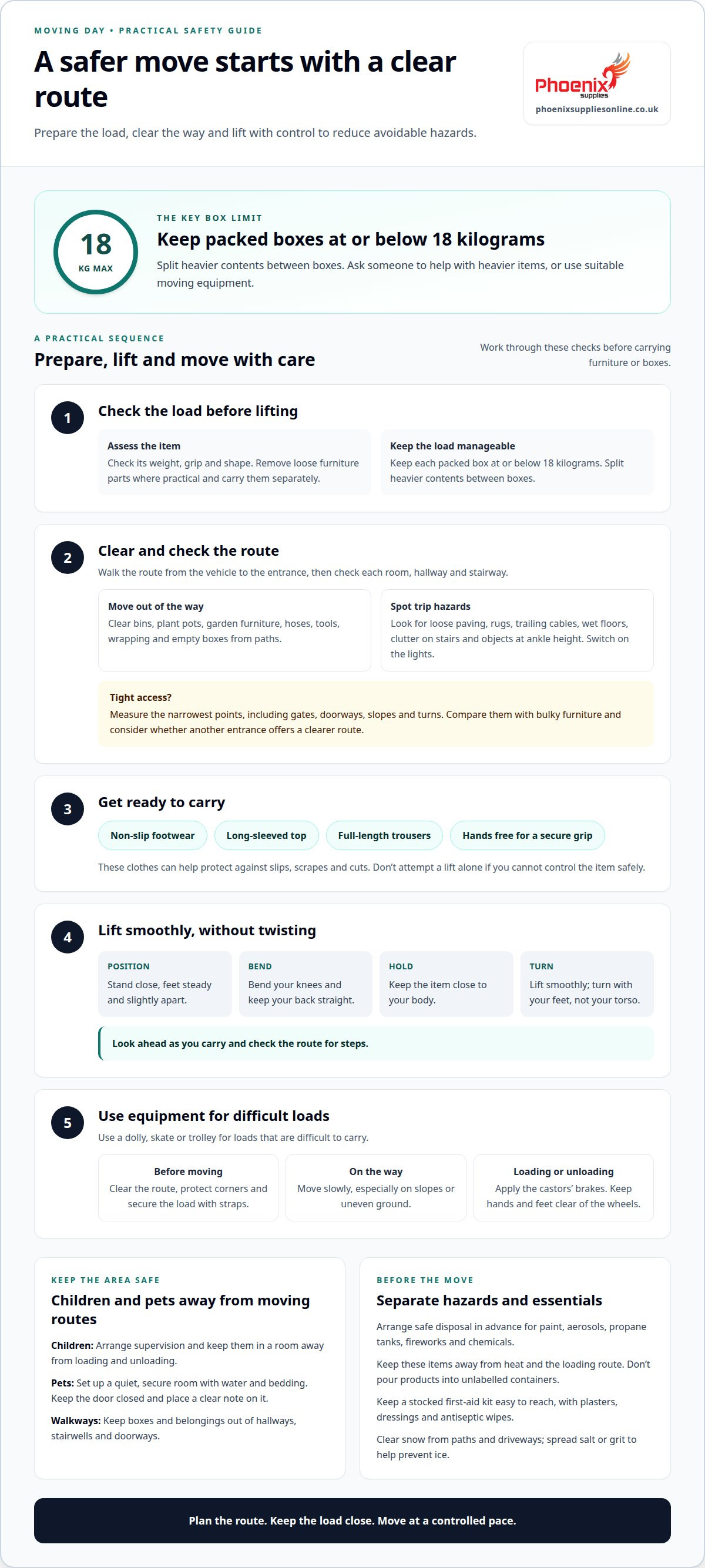
What keeps a heavy sofa safe in motion is a clear route and a controlled lift, not a rushed effort. Keep the load close to your body, keep your back straight and avoid twisting as you carry it. For packed boxes, aim to keep each one at or below 18 kilograms; ask someone to help with heavier items or use suitable moving equipment.
Moving day can feel hectic, but a little preparation makes lifting and carrying easier to manage. These moving house health and safety tips explain how to handle furniture more safely and reduce avoidable lifting and trip hazards around your home.
Find practical guidance on lifting, clearing access routes, spotting hazards and keeping children and pets away from moving areas. Planning ahead helps everyone move through the day more carefully and confidently.
Key Takeaways
- Plan the route before moving furniture, and clear outdoor paths of bins, plant pots and garden furniture.
- Check hallways, stairs and floors for trip hazards, and keep packed boxes out of shared walkways.
- Make moving areas off-limits to children and pets, and arrange someone trusted to look after them if possible.
- Choose lifting methods to suit the item, and take extra care when moving bulky furniture through narrow spaces or around corners.
1. Safe manual handling and lifting techniques
Keep each packed box at or below 18 kilograms, and split heavier contents between boxes. Before lifting, check the item’s weight, grip and shape. Remove loose parts from furniture where practical, and carry them separately.
Stand close to the load with your feet steady and slightly apart. Bend your knees, keep your back straight and hold the item close to your body. Lift smoothly, without jerking, and turn with your feet rather than twisting your torso. Look ahead to check your route and spot any steps.
Wear non-slip footwear, a long-sleeved top and full-length trousers. These can help protect you from slips, scrapes and cuts while carrying furniture or handling boxes. Keep your hands free so you can maintain a secure grip.
Is it safer to hire professional movers or move house yourself? Professional movers may be better suited to bulky or awkward furniture, while a DIY move can work for manageable loads and a clear route. Don’t attempt a lift alone if you cannot control the item safely.
Use a dolly, skate or trolley for loads that are difficult to carry. Plan the route first, clear clutter, protect corners and secure the load with straps. Move slowly, especially on slopes or uneven ground. Apply the castors’ brakes when loading or unloading, and keep your hands and feet clear of the wheels.
What personal protective equipment should you wear when moving house? Choose non-slip shoes, full-length trousers and a long-sleeved top to help reduce the risk of slips and minor scrapes. In cold weather, clear snow from paths and driveways, then spread salt or grit to help prevent ice.
What health and safety checks should you make when choosing a UK removal company? A pre-move survey can assess access, stairs, hallways, parking and potential hazards at both properties. Discuss awkward loads and access problems so they can be factored into the moving plan.
2. Clearing outdoor access and pathways
Good moving house health and safety tips start with a clear route from the vehicle to your entrance. Walk it before moving day and remove bins, plant pots and garden furniture. Check the whole path, including space beside gates, steps and shared entrances. Look for loose paving, hoses, low branches and narrow turns that could catch someone’s foot or snag an item.
If access is tight, arrange a pre-move survey and measure the narrowest points along the route. Note gate openings, doorways, slopes and turns, then compare them with bulky furniture. A tape measure and simple sketch can help you plan how an item will turn, or whether another entrance offers a clearer approach. Include the distance from the vehicle to the door.
Keep the outdoor route clear during packing and loading. Put tools, discarded wrapping and empty boxes in a designated spot away from the path. Ask someone to watch the entrance while larger items pass, especially if the route crosses a shared driveway or pavement. Secure gates open where it is safe, rather than letting them swing into the path.
Check the route again when the vehicle arrives. A parked vehicle, open boot or equipment may change the available space, so agree on the carrying path before loading begins. Check again as the move progresses, since items waiting outside can quickly narrow the way. These moving house health and safety tips help keep the route clear from the first trip to the last.
What first-aid supplies should you have on moving day? Keep a stocked first-aid kit easy to reach, not inside a packed box or vehicle. Plasters, dressings and antiseptic wipes are useful for minor cuts or scrapes. Store packing supplies away from the route too, and use moving-day packing supplies to prepare boxes for the move.
3. Identifying hazards around the home
Walk through each room before moving furniture and look for hazards that may be easy to miss while carrying a load. Loose rugs, trailing cables, wet floors and objects at ankle height can catch feet or obstruct a trolley. Check stairs for clutter, switch on the lights and look for self-closing doors that could shut during a carry.
Keep boxes and belongings out of hallways, stairwells and doorways. Store them inside rooms, leaving a clear route between the furniture and the exit. Look ahead as you move, and pause if someone enters the carrying path. At your new home, check the route into each room before bringing in bulky furniture.
Check ventilation and room conditions before cleaning. Keep vents clear, follow the product label and avoid mixing household cleaners. Put cleaning materials away before moving begins so bottles cannot be knocked over or mistaken for packed belongings. Keep people off a wet floor until it has dried.
Separate hazardous household items before packing. Paint, aerosols, propane tanks, fireworks and chemicals should be disposed of safely in advance, as movers will not take them. Keep these items apart from ordinary boxes and away from heat and the loading route while arranging disposal. Don’t pour products into unlabelled containers, where their contents could be mistaken.
What are the rules for moving gas appliances and electrical equipment in the UK? Treat gas appliances as a separate part of the move, rather than grouping them with ordinary furniture or unplugged electrical items. Properly disconnect computers, printers, phones, microwaves and kettles before moving. Keep their leads with the relevant equipment, and check each room for cables or small items left behind before it is cleared.
4. Keeping children and pets away from moving areas
Arrange childcare or ask someone you trust to supervise children during loading and unloading. Open doors, carried furniture and stacked boxes create changing hazards around the property. Choose a room away from the main route and have an adult stay there with the children while items are carried. Explain which areas are out of bounds before work begins.
Set up a quiet, secure space for your pet before the removal team arrives. A familiar room with water, bedding and a closed door can keep them away from open exits. Put a clear note on the door so nobody opens it by mistake. If noise distresses your pet, ask someone you trust to care for them elsewhere.
At both properties, agree how children and pets will be kept away from the loading route. Keep them away from vehicles, staircases, doorways and areas where furniture is being carried. Don’t rely on a quick warning: doors may stay open during repeated trips, and a curious child or animal could follow someone outside.
Include these arrangements in your moving-day plan and any pre-move assessment. Tell everyone in the household who is supervising, where children and pets will stay, and who can answer questions. If you’re moving with children, pack a small bag of familiar books, snacks and activities, and leave it with their caregiver rather than in the moving area.
England’s home-moving guidance advised household members to stay at least 2 metres from removers where possible. Use that space as a practical reminder to keep children and pets well clear while lifting, loading and unloading. Once the vehicle leaves, check each room and outdoor area before allowing them back.
Keep furniture covered while children and pets are nearby. Choose mattress and furniture covers to help protect items during the move.
Phoenix Supplies UK: Small Moving Boxes
Phoenix Supplies UK sells Small Moving Boxes for books, kitchen items and other belongings, helping you pack manageable loads. Choose a box suited to its contents, and avoid overfilling it so it is easier to lift and carry.
For a mix of belongings, choose Medium Moving Boxes, Large Moving Boxes or Extra Large TV Moving Boxes. Match each box to its contents, keep heavier items low and distribute the weight evenly to help keep the load steady.
Once packed, close and label each box so its contents are clear during loading and unpacking. Keep boxes out of hallways and doorways until they are ready to move, so the route through your home stays clear.
Contact Phoenix Supplies UK to discuss moving boxes for your house move.
Make your moving-day plan work for you
A move doesn’t end when the last item leaves the van. Think ahead to your first evening in your new home: decide which belongings you’ll need straight away and make time to check that essential rooms are ready to use. This small shift in focus can make settling in feel more manageable after a busy day.
Use these moving house health and safety tips as part of a wider plan for settling in, not just for lifting day. Once the move is complete, note what would make unpacking easier, such as which room to tackle first or what needs attention before arranging the furniture. A clear next step helps you get started at your own pace.
If you’re preparing for a move and need boxes for your belongings, contact Phoenix Supplies UK to discuss your requirements. With a little preparation, you can look forward to making your new place feel like home.
Frequently Asked Questions
What are the most common injuries when moving house?
Back and other manual-handling injuries are a key concern during a move. Poor lifting and carrying can also cause bruises, cuts or trapped fingers, especially when hands are close to furniture edges or doorframes. If a lift feels painful or unstable, stop and set the item down safely. Don’t try to finish carrying it through discomfort.
What are the main health and safety risks when moving house?
The main risks include lifting injuries, trips over clutter or cables, slips on wet or icy surfaces, and collisions in narrow spaces. Fatigue can make it harder to judge a load or spot an obstacle, so take breaks and avoid rushing. Keep a clear line of sight while carrying, and make sure everyone knows when a large item is about to move.
How can you lift and carry heavy furniture safely when moving?
Before lifting, check whether drawers, shelves or detachable parts can be removed to make furniture easier to handle. Agree who will lead and when to lift, turn and lower the item. Use short, clear instructions such as “stop” or “down” so everyone responds together. If the item is too awkward to grip or control, use a trolley or get extra help.
How can you prevent trips, slips and falls while packing and moving?
Keep a torch handy if you’ll be moving through a dim hallway or entrance, and switch on lights before carrying anything. Move loose cables away from walking routes, wipe up spills promptly and keep footwear off the stairs. Ask someone to manage doors during a large carry, so they don’t swing shut or leave you negotiating a tight space with an obstructed view.
How should you safely pack and transport hazardous household items in the UK?
Don’t pack paint, aerosols, propane tanks, fireworks or chemicals with ordinary household goods. Movers won’t take these items, so arrange their safe disposal before moving day. Keep them separate from boxes being loaded, and don’t pour products into unlabelled containers. This helps prevent hazardous materials from being mistaken for everyday belongings or leaking among packed items.
How can you protect children and pets during a house move?
Give one trusted adult clear responsibility for children or pets during loading and unloading. Agree on a simple signal for when they must stay in their safe room, and keep them away from vehicle access and open exits. At the new home, wait until carrying is finished and doors are secure before bringing them into rooms where boxes or furniture are being moved.


