

Could the most awkward items in your garage cause the biggest problems on moving day? Power tools, lawnmowers and garden equipment can be heavy, sharp or difficult to wrap, while leftover paint and fluids need careful attention. Knowing how to pack a garage for moving helps you protect your belongings and keep the move organised from the start.
It’s natural to worry about damaging expensive tools or packing hazardous items with everyday household goods. Sorting and preparation make the job easier. Set aside anything that needs special disposal, group similar items and choose packaging suited to the weight and shape of what you’re packing.
This guide takes you through the process, from clearing and sorting the garage to securing tools and wrapping bulky garden equipment. You’ll learn why double-wall cardboard boxes are a sensible choice for heavy tools, how Furniture Removal Blankets can help protect machinery, and what to consider when loading the van. With a clear plan, you can pack safely and move with greater confidence.
Key Takeaways
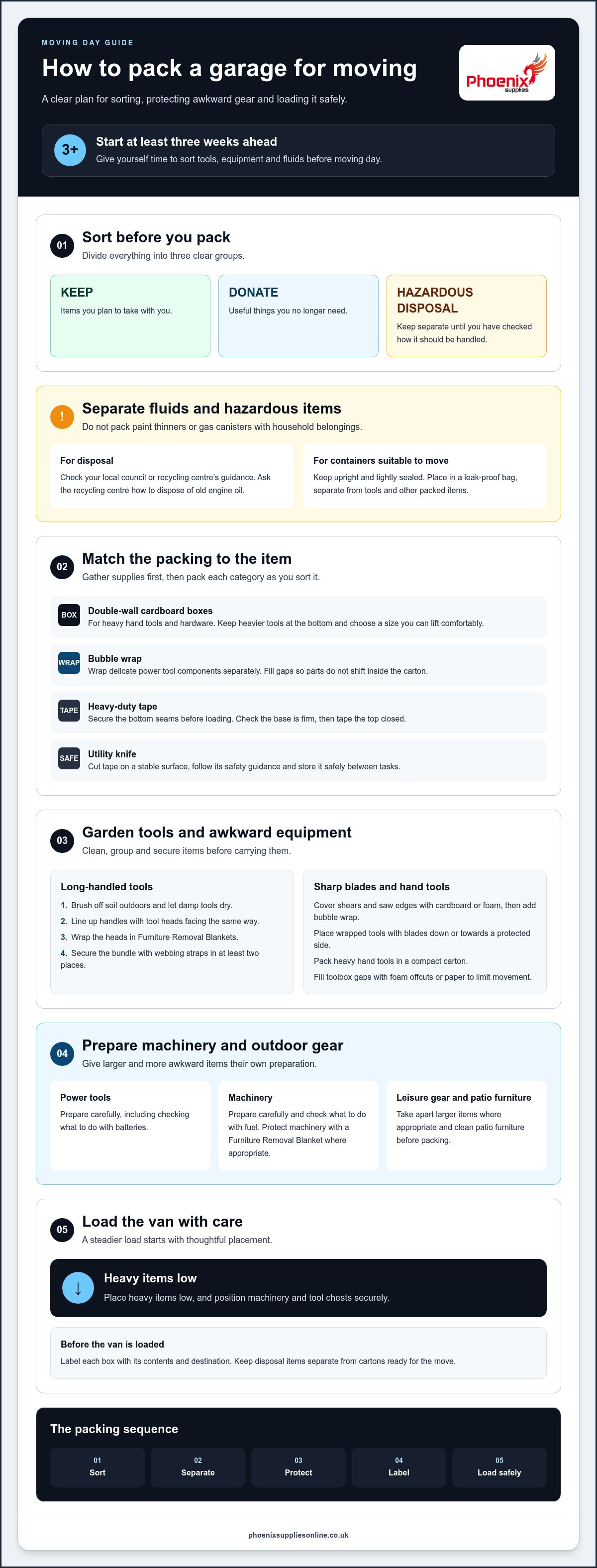
- Start sorting at least three weeks before moving day and separate items you’ll keep, donate or arrange for hazardous disposal.
- Learn how to pack a garage for moving by cleaning garden gear outdoors and grouping long-handled tools together.
- Prepare power tools and machinery carefully, including checking what to do with batteries and fuel.
- Get leisure gear and outdoor furniture ready by taking apart larger items where appropriate and cleaning patio furniture.
- Plan a steadier van load by placing heavy items low and positioning machinery and tool chests securely.
How to Pack a Garage for Moving: Sorting and Essential Supplies
Start at least three weeks before moving day. Garages often hold a mix of useful tools, unwanted equipment and fluids that need separate handling, so give yourself time to sort rather than packing everything in a rush. Divide items into three groups: keep, donate and hazardous disposal. Set aside anything you’re unsure about until you’ve confirmed how it should be handled.
As you sort, identify heavy tools and hardware. Double-wall cardboard boxes are a better choice than standard single-wall cartons for weighty hand tools, as the extra layer helps the box hold its shape during handling. Avoid overfilling: a box that’s too heavy can be difficult to lift safely. Keep your utility knife and any relevant safety guidance close by, and use the knife carefully on a stable surface.
Dealing with Hazardous Materials and Fluids
Don’t pack paint thinners or gas canisters with your household belongings. Keep them separate from items you’re moving and check your local council or recycling centre’s guidance for safe disposal. Ask your local recycling centre how to dispose of old engine oil. For containers that are suitable to move, make sure each is upright and tightly sealed, then place it in a leak-proof bag, separate from tools and other packed items.
The Garage Packing Supplies Checklist
Gather supplies before you begin so you can pack each category as you sort it. You’ll need sturdy cartons for heavy items, cushioning for delicate parts and tape to secure the box bases. For guidance on choosing materials for different belongings, see the ultimate packing materials list for moving house.
- Double-wall cardboard boxes: Use these for heavy hand tools and hardware. Choose a size you can lift comfortably once filled, and keep heavier tools at the bottom.
- Bubble wrap: Wrap delicate power tool components separately to help protect them from knocks and scratches. Fill gaps so parts don’t shift inside the carton.
- Heavy-duty tape: Secure the bottom seams of every carton before loading it. Check the base is firm before adding tools, then tape the top closed once packed.
- Utility knife: Keep it handy for cutting tape and opening packaging. Follow its safety guidance, and store it safely between tasks.
A clear sorting system and suitable supplies make how to pack a garage for moving more manageable. Label each box with its contents and destination, and keep disposal items separate from cartons ready for the move.
How to Pack Garden Tools and Awkward Equipment
Garden tools can be dirty, sharp and awkward to fit into cartons. Clean them outside before packing, while you can brush off soil and debris without bringing it into the house. Let damp tools dry, then group similar items together. This keeps loose dirt away from your other belongings and makes each tool easier to find when you arrive.
For long-handled tools such as rakes, spades and shovels, line up the handles and keep the heads facing the same way. Check that the tools sit together neatly, without sharp edges pressing against neighbouring handles. Wrap the heads in a Furniture Removal Blanket, then secure the bundle with webbing straps in at least two places. This helps stop the tools sliding apart as they’re carried.
Packing Sharp Blades and Hand Tools
Cover the sharp edges of shears and saws with cardboard or foam before wrapping them in bubble wrap. Keep the cutting edges pointed away from your hands as you work, and secure the wrapping so it can’t slip off. Place wrapped tools in a box with blades facing down or towards a protected side, rather than loose with other items.
Small hand tools need care too. Put trowels and other heavy pieces in a compact carton rather than adding them to a large box that could become difficult to lift. Pack heavy tools in small moving boxes to help reduce the risk of box failure.
If you’re packing a toolbox, fill gaps around the tools with foam offcuts or paper. This limits movement in transit and helps prevent metal edges from knocking into delicate parts. Keep tools with sharp ends together, and label the carton clearly so you know to handle it with care.
- Clean first: Remove garden dirt and debris before tools enter the house.
- Bundle securely: Group long handles together, cover the heads with a Furniture Removal Blanket and strap the bundle in at least two places.
- Cushion sharp items: Cover blades with cardboard or foam, then add bubble wrap.
- Choose a compact box: Pack heavy hand tools in small moving boxes and fill empty spaces to limit shifting.
These steps make how to pack a garage for moving safer and more organised, especially when the contents don’t fit neatly into standard cartons. For wrapping garden machinery and protecting larger equipment, browse Removal Blankets and Webbing Straps.
Moving Power Tools and Large Machinery
Power tools and garden machinery need preparation before they’re packed. Remove batteries from cordless tools to reduce the risk of accidental activation, and pack batteries separately so they can’t knock against the tool or one another. Keep each tool’s parts together and label them clearly, so you can find what you need when unpacking.
For lawnmowers and hedge trimmers that use petrol or oil, check the manufacturer’s instructions before draining fluids. Work outdoors in a well-ventilated area, away from flames and other ignition sources, and let hot machinery cool first. Collect drained fluids in suitable sealed containers and check local guidance for disposal. Don’t pour them down a drain or put them in with ordinary household rubbish.
Preparing Petrol-Powered Machinery
If the manufacturer recommends it, run the engine outdoors until it stops to clear fuel from the lines. Disconnect the spark plug only as directed in the manual, and only if you’re confident doing so safely. Wipe the machine’s exterior after draining to remove dirt and oil residue. If you’re unsure about any step, ask a suitably qualified person for help.
Remove detachable parts, such as mower blades or grass catchers, where the manufacturer’s instructions allow. Wrap and pack them separately, protecting sharp edges so they can’t damage the machine or other belongings. Cover the main body with a Furniture Removal Blanket to help prevent scuffs and knocks during handling and transit.
Securing Power Tools in Boxes
Use original cases where available. Otherwise, wrap each tool in bubble wrap and place it in a double-wall cardboard box suited to its size. Put heavier tools at the bottom, with lighter items above. Fill the gaps with cushioning so tools and parts don’t shift when the box is moved. The contents should stay still when the sealed carton is gently tilted.
- Before packing: Remove cordless batteries and separate detachable machine parts.
- For petrol machinery: Follow the maker’s instructions for draining fuel and oil, then clean the exterior.
- For protection: Wrap power tools and cover bulky machinery with Furniture Removal Blankets.
- For cartons: Use double-wall boxes and pack heavier tools at the bottom, filling gaps to limit movement.
These steps help protect valuable equipment and keep your packing organised. They’re a practical part of how to pack a garage for moving, especially when machinery has heavy parts, fluids or sharp components.
Protecting Leisure Gear and Outdoor Furniture
Outdoor items often have exposed surfaces, detachable parts and dirt that can mark other belongings. Clean patio furniture thoroughly before packing, including underneath cushions and around joints, to avoid carrying garden debris or pests into your new home. Let everything dry before wrapping it.
Take apart large items such as trampolines and swing sets where the manufacturer’s instructions allow. Keep related parts together, and place small fixings in a labelled bag. Use webbing straps to secure loose components to the main frame or bundle, so they stay together amongst larger loads. Avoid strapping across delicate surfaces or tightening so firmly that parts are bent or marked.
Using Furniture Removal Blankets Correctly
Drape Furniture Removal Blankets over tabletops, chair legs and other surfaces that could be scratched in transit. Fold the blanket around edges and corners, then secure it with tape or webbing straps so it stays in place while items are carried and loaded. These transit blankets provide a protective layer between outdoor furniture and other objects, helping prevent scuffs and scratches during the move.
For chairs, cover the legs as well as the seat and back. For tables, protect the top and any exposed corners. Check that the blanket doesn’t hide a loose part or prevent you from carrying the item securely.
Packing Bicycles and Sports Equipment
Prepare bicycles to make them easier to position and protect. Remove the pedals if you’re comfortable doing so, and turn the handlebars sideways to reduce the space they take up. Wrap the frame in a Furniture Removal Blanket, taking care around the chain and gears. Add bubble wrap or foam around these parts to help prevent grease marks and damage to nearby belongings.
Put removed pedals, bolts and other small parts in a labelled bag, then attach it securely to the bicycle frame. Keep the bag visible and avoid placing it where it could rub against or scratch the frame. Check the bicycle is stable before loading it, and keep it separate from sharp tools or heavy items that could press against it.
- Take apart carefully: Disassemble larger play and garden equipment as directed, and keep its fixings together.
- Wrap contact points: Cover furniture tops and legs with Furniture Removal Blankets, then secure the covering.
- Protect the bicycle: Turn the handlebars sideways, remove pedals if suitable, and cushion the chain and gears.
- Gather loose parts: Label small bags and attach them to the related item. Use webbing straps to keep larger bundles together.
For outdoor furniture and leisure gear, explore Furniture Removal Blankets and Webbing Straps from Phoenix Supplies UK.
Loading the Van: Safety and Weight Distribution
A stable load starts with the heaviest items. Place tool chests and machinery on the van floor, keeping weight low and distributing it evenly across the load area. Position lawnmowers and tool chests against the bulkhead where practical, so they’re less likely to shift forwards. Check your van’s weight limits before loading, and don’t assume a load is safe simply because everything fits inside.
Arrange boxes and equipment so the load sits securely without putting pressure on fragile belongings. Use Furniture Removal Blankets to fill gaps between items and protect surfaces from rubbing. Keep blankets clear of the doors and any equipment needed to secure the load. Before you set off, check that the doors can close properly and that nothing can roll, tip or slide.
Securing the Load with Webbing Straps
Use webbing straps to secure tall or heavy items to suitable tie-down points in the van. Position each strap so it holds the item firmly, but doesn’t press directly against a delicate surface or damage a control, handle or exposed component. A Furniture Removal Blanket between the strap and the item can help protect it. Check each strap’s tension before departure and again if you adjust the load.
Secure machinery as well as boxes. A lawnmower that can roll or a tool chest that can tip may shift during travel, even if other items are packed tightly around it. Straps should hold the load in place, while soft items fill remaining gaps rather than acting as the only restraint.
Final Garage Checklist Before Departure
Before closing the van, take a final look through the garage. Check high rafters, shelves, benches and corners for tools or small items left behind. Make sure cartons are labelled with their contents and, where useful, whether they’re heavy. This helps you handle and unload them with care.
- Check the load: Keep heavy items low, distribute them evenly and secure machinery and tool chests against movement.
- Check the van: Confirm the load is within the vehicle’s weight limits and that doors close without obstruction.
- Check your labels: Mark box contents clearly and flag heavy cartons.
- Check hazardous items: Leave aside fluids or other items that aren’t suitable to transport, and follow local disposal guidance.
- Check the garage: Look over rafters, shelves and work surfaces before you leave.
A final check brings the packing process together. If you’re learning how to pack a garage for moving, test the load for movement before departure. Reposition or secure anything that shifts.
Put Your Garage Packing Plan into Action
A well-packed garage starts with sorting early, setting aside items that need safe disposal and choosing boxes that can handle heavy tools. Clean and wrap awkward garden equipment, protect machinery with Furniture Removal Blankets, and secure the load low and evenly in the van. These steps make how to pack a garage for moving safer and more organised.
Choose packaging that suits your belongings to protect each item. Phoenix Supplies UK is a family-run business offering a range of moving boxes, wardrobe boxes, removal blankets and protective wrapping materials. You can shop online for individual products or moving packs, with free delivery included. The dedicated office team can also provide personalised customer service if you need help choosing supplies.
Browse moving boxes, removal blankets and protective supplies at Phoenix Supplies UK to get your garage ready for moving day.
Frequently Asked Questions
Can I move paint and garden chemicals in the removal van?
Don’t assume paint or garden chemicals are suitable for transport with your household belongings. Paint thinners, fuel and other hazardous fluids may need specialist disposal rather than moving. Keep them separate, in their original sealed containers where possible, and check your local council or recycling centre’s disposal guidance. If you’re unsure whether an item can travel, ask the company responsible for transporting your belongings before moving day.
What is the best way to pack a lawnmower for moving?
Prepare a lawnmower according to its manufacturer’s instructions before packing it. Let the machine cool, remove grass and dirt, and deal with petrol and oil as directed. Take off detachable parts, such as the grass catcher, if the instructions allow, and keep them together. Once dry, cover the mower with a Furniture Removal Blanket and secure it in the van so it can’t roll or shift during transit.
How do I protect my bicycle during a house move?
Protect the frame with a Furniture Removal Blanket, and add bubble wrap or foam around parts that could scratch nearby belongings. Turn the handlebars sideways and remove the pedals if you can do so safely. Keep the chain and gears covered to prevent grease marks. Put small fittings in a labelled bag attached to the bicycle, then position it where heavier items can’t press against it during the journey.
Do I need special boxes for heavy garage tools?
Use double-wall cardboard boxes for heavy hand tools and hardware. Choose a compact box so it’s easier to lift, and don’t fill it beyond what you can carry safely. Place the heaviest tools at the bottom and cushion gaps to limit movement. If you’re working out how to pack a garage for moving, remember that a stronger box helps, but it doesn’t make an overloaded carton safe to lift.
How do I secure large items in the van so they do not slide?
Place heavy items low on the van floor and distribute their weight evenly. Use webbing straps attached to suitable tie-down points to secure machinery and tall or heavy items. Tighten straps enough to prevent movement, without pressing hard against delicate surfaces. Furniture Removal Blankets can protect items from rubbing and fill small gaps, but shouldn’t replace straps. Check the load and strap tension before setting off.
Should I take the petrol out of my garden machinery before moving?
Follow the manufacturer’s instructions for petrol-powered machinery before moving it. The guidance may require you to drain the fuel, but the safe method depends on the machine. Don’t attempt a procedure you’re unsure about. Keep petrol and drained fluids away from household belongings, and check local guidance for safe disposal. If you can’t prepare the machinery safely, ask a suitably qualified person for advice before moving day.
What are Furniture Removal Blankets and do I really need them?
Furniture Removal Blankets are transit blankets used to protect furniture and appliances during moves. They’re useful for covering exposed surfaces on garden machinery, bicycles, tables and chairs, helping to reduce scuffs and scratches. You don’t need to wrap every item, but use them where surfaces could rub against the van or other belongings. Secure each blanket with tape or webbing straps so it stays in place.
How can I pack oddly shaped garden tools like rakes and hoes?
Clean and dry the tools outside, then line up their handles with the heads facing the same way. Cover sharp or pointed edges with cardboard or foam, and wrap the heads in a Furniture Removal Blanket. Secure the bundle with webbing straps in at least two places to stop the tools sliding apart. Keep the bundle stable and separate from fragile belongings when loading the van.


