

What makes the best archive box? It’s one that suits your paperwork and makes it easier to find what you need later. Choosing by size alone can leave you with a box that’s awkward to label, store or search through. Whether you’re sorting household paperwork or workplace records, plan how you’ll retrieve documents before you start packing.
This guide explains how to choose an archive box, then pack and label your documents so you can identify them more easily in future. You’ll find practical ways to group records, note what’s inside and keep frequently needed paperwork accessible. We’ll also cover what to check in a product listing and the current delivery terms. Phoenix Supplies UK’s confirmed option is an archive box with an integral lid, in a standard size. With a clear system in place, storing records can be simpler, whether you’re organising a home filing cupboard or business paperwork.
Key Takeaways
- Choose storage around how often you’ll need to retrieve documents, not just where the box will sit.
- Check the listed dimensions against your paperwork and available storage space before ordering.
- Sort records into clear groups, label each box and keep a matching index to make future searches easier.
- Compare an archive box with a general moving box or storage you already have, based on the records and how you’ll retrieve them.
- Check the live product listing for current details and availability, and review delivery terms before placing an order.
What is an Archive Box and When is it Best to Use One?
An archive box is a container for grouping and storing paper documents so they can be put away and found again when needed. It’s intended for records rather than the mixed household belongings you might pack for a move. Homeowners can use one to sort household paperwork, offices can group completed files, and small businesses can keep records together by subject or year.
The name can also refer to specialist enclosures made for long-term preservation. For example, the Hollinger box is a type of archival box associated with document preservation. Don’t assume every product described as an archive box uses the same materials or offers the same preservation qualities. Phoenix Supplies UK lists an archive box with an integral lid, in a standard size. If your documents need specialist protection, check the product details and seek advice suited to those requirements.
What Do People Commonly Store in an Archive Box?
Everyday uses include paper records, completed files, old invoices, household paperwork and reference documents that you don’t need on your desk but may need to retrieve. Grouping related papers together makes it easier to locate a file than searching through a box packed with unrelated items.
Routine storage is different from specialist preservation. For valuable, fragile or historically significant documents, don’t rely on the general category name alone. Check whether the box is suitable for the protection required. This guide covers organising ordinary records, not document lifespan or protection from storage conditions.
When Is a Dedicated Archive Box Helpful?
A dedicated container can help when you’re clearing filing space, keeping completed paperwork together or organising records you’ll need to retrieve later. A lid, where included, helps keep documents together while the box is stored. Add a clear label and you can identify the contents without opening each box.
General moving boxes have a different purpose: they’re commonly used to pack a range of belongings for a move. You can use one for paperwork, but it may be harder to identify its contents if it’s packed alongside household items. Choose according to what you’re storing and how you plan to find it again. For more selection guidance, see our archive boxes buying guide.
How to Choose an Archive Box Around Your Records and Storage Routine
Start with the documents and how you’ll use them, then check the product listing against your needs. An archive box isn’t a one-size-fits-all choice: consider what you’re storing, how often you’ll retrieve it and where it will sit.
What Should You Check Before Choosing a Box?
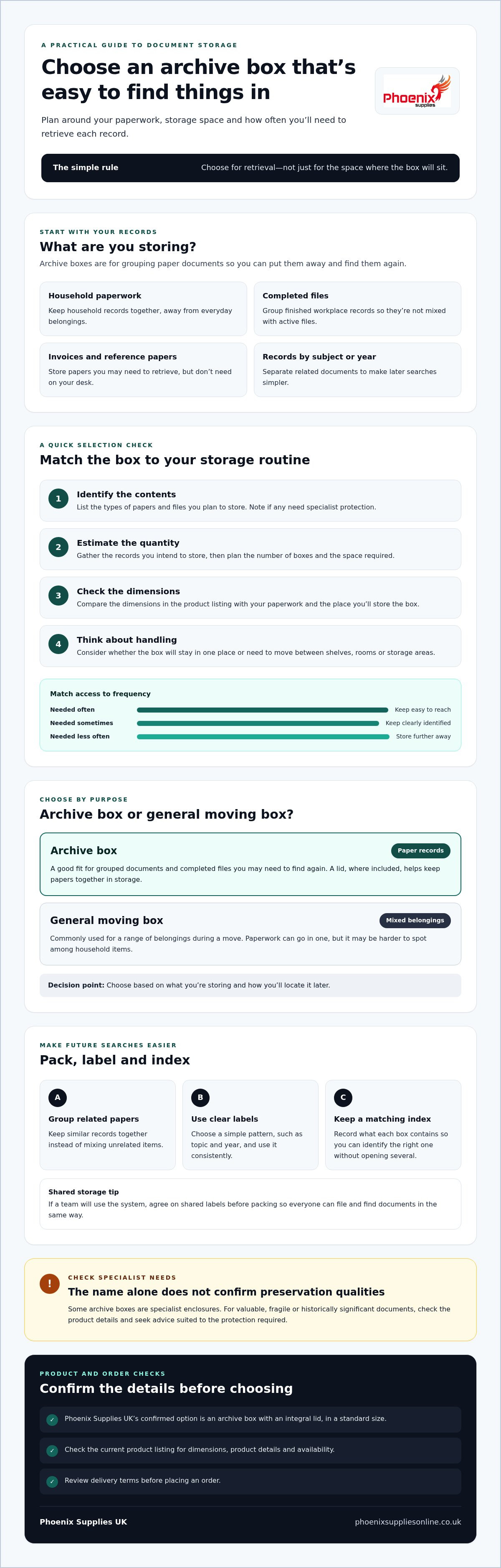
- Identify the contents. Note what types of files or papers you’re storing and whether any need specialist protection. The Society of American Archivists definition can help explain how an archives box may differ from an ordinary records box. Check product information carefully if preservation requirements matter.
- Estimate the quantity. Gather the documents and completed files you plan to store before deciding how many boxes you need. This helps you plan the order and storage space around your actual records.
- Check the dimensions. Compare the listed product dimensions with your documents and the space where you intend to store the box. Check the current listing rather than assuming a paper format or internal measurement.
- Think about handling. Will the box stay in one place, or will you move it between shelves, rooms or storage areas? Consider how accessible its location will be and whether you’ll need to lift it regularly.
How Should You Match a Box to Retrieval Frequency?
Keep records you refer to often somewhere easy to reach, and make their labels clear at a glance. Less frequently needed paperwork can be stored further away, provided you can still identify the right box without opening several.
Choose a simple labelling pattern, such as topic and year, then use it consistently. For example, keep household paperwork separate from business files. If you’re setting up storage for a team, agree on shared labels before packing so everyone can file and find documents in the same way. Our office archive boxes guide offers more advice on planning a system.
Once you’ve checked your contents, access needs and available space, compare them with the product listing. Phoenix Supplies UK’s confirmed option is an archive box with an integral lid, in a standard size. Review the archive box product details before choosing.
Archive Boxes Compared with General Moving Boxes and Other Storage Choices
Choose a container to suit its job. Paperwork you’ll need to find again calls for a different organising approach from household items packed temporarily for a move. An existing cupboard or storage container may also work if it fits your records and routine.
| Option | Intended use | Lid arrangement | Labelling and retrieval |
|---|---|---|---|
| Archive box | Keeping grouped documents and completed files together. | Phoenix Supplies UK’s confirmed option has an integral lid. Check other listings for their details. | Can suit a consistent filing system, with labels that identify contents and dates. |
| General moving box | Packing household belongings, which may include paperwork during a move. | Check the specific product listing for how it closes. | Consider clear labelling if you’ll need to find documents amongst other packed items. |
| Existing storage option | Using a container or cupboard you already have for records. | Depends on the option you have. | Consider whether you can mark it clearly and reach the records when needed. |
This comparison covers intended use and organisation, not strength or protection. Check the product details for any feature that matters to your situation.
When Does an Archive Box Suit Document Storage Better?
A dedicated box can make it easier to keep records in a consistent arrangement, especially if you’re storing several groups of paperwork. Using the same type of box and a shared filing approach can help you see which records belong together. Phoenix Supplies UK’s confirmed archive box has an integral lid. That describes its lid arrangement, not specialist archival protection. If your papers need specific preservation conditions, check the product information and seek suitable advice.
When Might a General Moving Box Be Enough?
A general moving box may suit temporary packing, such as gathering paperwork with other belongings while you move home or office. If you’ll need to retrieve a particular file during or after the move, keep records grouped and make their location easy to identify. For boxes intended mainly for household contents, see the cardboard moving boxes guide.
Think about what’s inside, how often you’ll access it, whether the box will be moved and where it will be stored. Those needs can help you decide between a document-focused box, a general moving box or storage you already own. To check the confirmed archive-box option, visit Phoenix Supplies UK’s online store.
How to Pack, Label and Find Documents in Archive Boxes
A simple system makes stored paperwork easier to locate later. Work through each group in order: sort, group, place, label and record. Pack manageable amounts so you can handle each box comfortably, without assuming a particular box has a set weight limit.
How Should You Group Documents Before Packing?
Start by sorting papers into useful categories, such as household records, invoices, completed project files or business departments. Keep documents you often refer to separate from paperwork intended for less frequent access. This lets you put frequently used files somewhere convenient and avoid searching long-term storage for them.
Keep related papers together, but don’t mix unrelated topics just to fill a box. Before setting documents aside or removing them from your filing system, check your own requirements. This guide isn’t a records-retention checklist.
What Information Should an Archive-Box Label Include?
Choose a label format and use it consistently. A practical label can include:
- Category: for example, household paperwork or sales records.
- Date range: the years covered, if that helps you identify the contents.
- Box reference: a short code or number that links to your index.
Avoid putting sensitive personal details on the outside of a box, where they may be visible to other people. Use a broad category on the label and keep more specific descriptions in a suitable private record.
How Can You Make Boxes Easy to Search?
Once you’ve packed and labelled a box, add it to a simple index. A notebook or spreadsheet can record the box reference, general contents and storage location. Make sure the reference in your index matches the one on the box. For instance, an entry might show “B03, household bills, study cupboard”. That gives you a clear starting point without opening each box.
Keep the index somewhere you can find it, and update it whenever you add or move a box. If you’re organising records for a team, agree who will maintain the list so it stays useful.
To compare the available option with your storage needs, browse archive boxes and check the current product details.
Ordering an Archive Box from Phoenix Supplies UK: Product and Delivery Checks
Before ordering, use the live product listing to confirm the details that matter for your requirements. Check the quantity you need, review the available product information and read the delivery terms shown at checkout. This gives you a clear basis for your decision without relying on assumptions about product features or order timing.
What Is Confirmed About the Phoenix Supplies UK Archive Box?
The confirmed product description is archive box with integral lid, standard size. Check the current listing for any additional specifications and availability. Dimensions, materials, capacity, colour and strength aren’t confirmed here. If a particular feature is essential, make sure it’s stated on the listing before ordering. Contact the Phoenix Supplies UK office team if you need clarification.
What Should You Check Before Placing an Order?
Before you complete your order, check:
- Quantity: Make sure the number selected matches your requirements.
- Product details: Review the current listing for confirmed specifications and availability.
- Delivery terms: Read the current conditions and any exclusions, including whether they apply to your order.
Delivery terms can depend on the product and order. Read the information shown on the listing and at checkout before placing your order, and contact the team if anything is unclear.
Online ordering lets you review the listing and delivery information before proceeding. For help with a product detail or delivery question, contact the team.
Browse archive boxes at Phoenix Supplies UK and check the current listing before you order.
Put Your Document Storage Plan into Action
Good document storage starts with a clear plan: choose a box to suit your records and space, keep related paperwork together, and use labels that match a simple index. That gives you a clearer route to the files you need, whether you’re organising records at home or at work.
Phoenix Supplies UK is a family-run business. Its confirmed option is an archive box with an integral lid, in a standard size. Check the live listing for current product details and availability before ordering. The business offers packaging and moving supplies, with a dedicated office team available to help with questions.
With a suitable box and a consistent filing routine, you can make stored paperwork easier to manage and find. Browse archive boxes at Phoenix Supplies UK and review the current product details before choosing.
Frequently Asked Questions
What is an archive box?
An archive box is a box intended for storing and organising documents or records. It can keep related paperwork together and give you a place to label the contents for easier retrieval. Check the product listing for exact details before choosing, as specifications can vary. An archive box is for storage and organisation. Don’t assume it offers specialist protection for valuable, fragile or sensitive documents.
What is the difference between an archive box and a moving box?
An archive box is intended for grouping and storing documents, while a general moving box can hold a wider mix of household belongings. Either may suit paperwork, depending on your plans. Consider how often you’ll need to find the documents and whether they’ll be stored or packed temporarily for a move. Check each product listing for confirmed details rather than assuming the boxes share dimensions, construction or capacity.
How should I label archive boxes?
Use a consistent label that tells you what’s inside without revealing private details. A broad category, date range and box reference can help, if those details suit your records. Keep a matching index in a separate place, such as a notebook or spreadsheet, and make sure its box references match the labels. Avoid writing sensitive personal information on the outside, where it could be seen by others.
Can I use an archive box for moving house?
You can consider using an archive box to keep documents grouped during a move, but check the product details and intended use first. Keep paperwork separate from heavier or bulky household items, and label the contents so you can identify them later. A simple inventory can help you track which box holds which records. Don’t assume an archive box has a particular weight limit or suits every item.
What should I check before buying an archive box?
Start with what you plan to store, how many documents you have, how often you’ll need them and where the box will go. Check the listed dimensions against both your records and available storage space. Read the product description for confirmed details, and don’t assume a particular capacity, material or level of protection. If a feature matters to your needs, check the listing or ask the supplier before ordering.
When will my archive box be dispatched?
Dispatch and delivery arrangements can depend on the product and order. Check the current listing and delivery information before ordering, and contact Phoenix Supplies UK if you need clarification about the timing or terms that apply.


