

A bigger box isn’t always the safest choice for plates, glasses and ceramics. If fragile items can shift or press against one another, even careful handling may not be enough to protect them in transit.
It’s understandable to worry about breakages when you’re moving house, especially if you’re unsure which wrapping to use or how much to fit in each box. Packing fragile kitchen items is more manageable when you work in a clear order and match the method to each item’s shape and fragility.
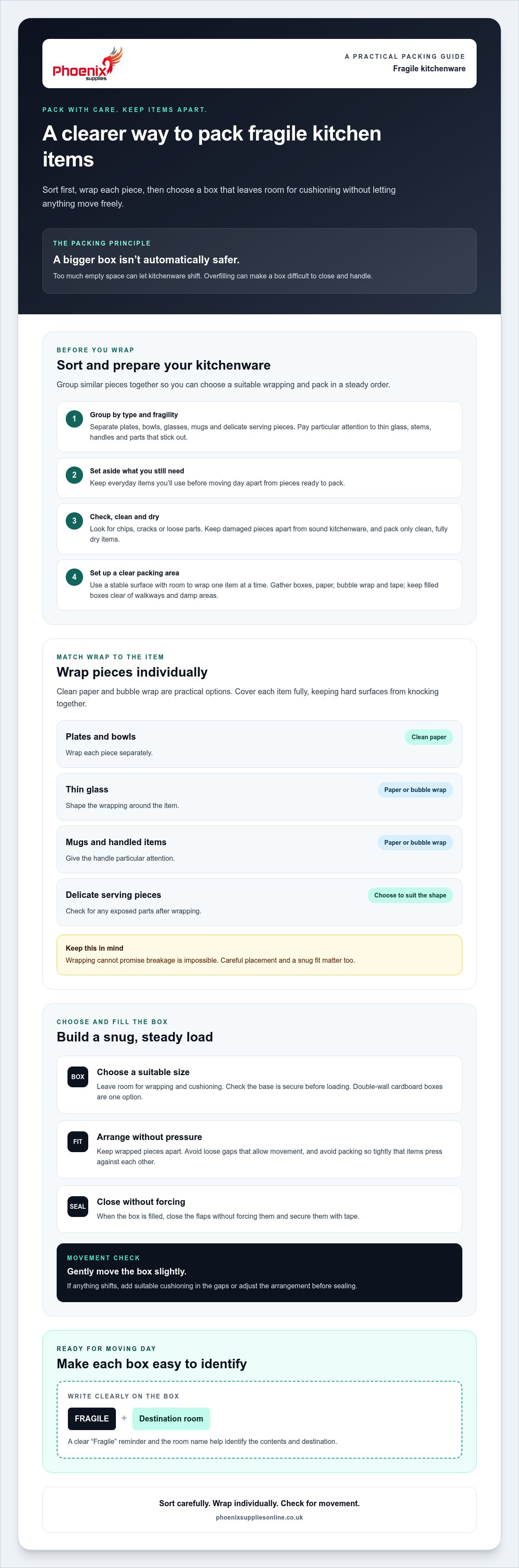
This guide explains how to sort kitchenware before packing, wrap plates, glasses and other delicate pieces individually, and choose suitable boxes with room for cushioning. You’ll learn how to fill boxes without leaving items loose or making them too heavy, and how to place heavier pieces beneath lighter ones. We’ll also cover clear labels, including the room each box belongs in and a “Fragile” reminder, so boxes are easier to identify and handle carefully on moving day. With a little planning and the right materials, you can pack kitchenware with greater confidence and make unpacking easier at the other end.
Key Takeaways
- Make packing fragile kitchen items easier by sorting crockery and glassware before choosing what to pack.
- Match box size to the contents, leaving room for protective wrapping without overfilling.
- Use a simple wrapping and packing sequence to keep plates, bowls and crockery apart.
- Give glasses, mugs and awkward shapes care suited to their handles, stems and forms.
- Check boxes for movement, close them securely and label the contents and destination room clearly.
Packing fragile kitchen items starts with sorting and preparation
Breakage is a common worry when you’re getting a kitchen ready for a move. Sorting before you start packing fragile kitchen items helps you choose the right approach for each group, rather than rushing to wrap everything at once.
Separate kitchenware by type, fragility and whether you’ll need it before moving day. Keep everyday pieces you’ll still use to one side, and set aside clean, dry items that are ready to pack. Check each piece as you sort. Note chips, cracks or loose parts, and keep damaged items apart from sound kitchenware. Don’t treat a damaged piece as safe to transport with the rest.
Which kitchen items need the most care?
Make separate groups for plates, bowls, glasses, mugs and delicate serving pieces. Thin glass needs careful handling, as do stems, handles and parts that stick out. These areas are exposed to knocks, so give them particular attention when wrapping and placing items in the box. Keeping similar pieces together also makes it easier to choose suitable boxes and pack in a steady order.
How to prepare a kitchen packing area
Choose a clear, stable surface with enough room to wrap one item at a time. Gather boxes, bubble wrap, tape and any other materials you plan to use before starting. For an overview of standard moving boxes and packing materials, see the Wikibooks packing guide. Keep completed boxes away from walkways, damp areas and surfaces where they could tip or become unstable.
Use this short checklist before packing:
- Sort items into groups by type and fragility.
- Set aside anything you’ll need before moving day.
- Check pieces for chips, cracks or loose parts.
- Make sure items are clean and fully dry.
- Clear a stable work surface and gather boxes, bubble wrap and tape.
- Choose a safe spot for filled boxes, clear of walkways and damp surfaces.
This preparation gives you a clear starting point. Once your kitchenware is sorted, match box size and wrapping to the contents, then pack each group without mixing delicate pieces in a hurry.
Choose boxes and wrapping for fragile kitchen items
The right box should fit the kitchenware and leave space for wrapping and cushioning. Too much empty space can let items shift; an overfilled box may be difficult to close and handle. Choose a box you can lift steadily once packed, and make sure no fragile item can move freely inside. Double-wall cardboard boxes are one option. Whichever box you choose, check that its base is secure before loading it.
Match the wrapping to the item
Wrap each piece separately so hard surfaces don’t knock together. Clean paper is easy to shape around plates and bowls, while bubble wrap is another practical option for fragile kitchenware. Use either material or combine them when an item’s shape calls for it. No wrapping material can promise that breakage is impossible, so careful placement and a snug fit matter too.
| Item | Wrapping to consider |
|---|---|
| Plates and bowls | Clean paper, wrapped around each piece separately |
| Thin glass | Bubble wrap or clean paper, shaped around the item |
| Mugs and items with handles | Clean paper or bubble wrap, paying attention to the handle |
| Delicate serving pieces | Choose paper or bubble wrap to suit the shape, then check for exposed parts |
Use the table as a starting point, not a fixed rule. Cover each item fully and add enough material around the packed group to limit movement. Keep the box base flat and stable as you load it. Once it’s filled, close the flaps without forcing them and secure them with tape so they stay shut during handling.
Check the fit before sealing
Gently move the box slightly to check whether anything shifts. If it does, add suitable cushioning in the gaps or adjust the arrangement. Avoid packing so tightly that items press against each other. For further guidance on standard moving boxes and packing materials, see the Wikibooks guide.
For packing fragile kitchen items, a well-sized box and thoughtful choice of wrapping work together. If you’re gathering supplies, you can look at moving boxes and bubble wrap from Phoenix Supplies UK.
How to wrap plates, bowls and crockery for moving
Work through plates, bowls and similar crockery one piece at a time. Individual wrapping keeps hard surfaces apart, while a steady arrangement in the box limits movement. When packing fragile kitchen items, don’t rush the final check: make sure the contents sit securely before closing the box.
Wrap each piece separately
- Prepare the box. Add a layer of clean, soft packing material across the base.
- Wrap one plate. Place it on clean paper or bubble wrap and cover it fully, including the rim and exposed edges.
- Secure the wrapping. Use a small piece of tape if needed to keep the paper in place. Don’t tape directly onto the crockery.
- Wrap bowls individually. Cover the rim and outer surface. If nesting similar bowls, place a layer of soft packing material between each one and don’t force them together.
- Check each piece. Make sure no ceramic or glass surface is left touching another unwrapped item.
There’s no set wrapping thickness that can guarantee protection. Cover each piece and its vulnerable edges, then arrange the crockery so the wrapping stays in place during handling.
Arrange the box to limit movement
Place wrapped items carefully in the prepared box. Plates can sit on their edges in a stable row, with cushioning between them and around the row. Set bowls in a way that supports them rather than pressing them tightly against each other. Add soft packing material to gaps at the sides and above the group. This helps reduce shifting without forcing items into place.
If the box contains pieces of different weights, put heavier items lower and lighter ones above only if the arrangement remains stable. Don’t let a heavy piece rest on a delicate rim or protruding edge. If the box feels unbalanced, adjust the contents rather than trying to compensate by packing it more tightly.
Before closing, gently check for movement. Add cushioning where you find a gap, then close the flaps without pressing down on the crockery. The contents should feel settled, not compressed, and the box should remain steady when lifted carefully.
Separate, cushion and prevent movement. Keep those three rules in mind as you pack each group of crockery.
Pack glasses, mugs and awkward kitchen items without avoidable movement
Glasses and mugs need a different approach from flat crockery. Their rims, handles and stems can be exposed, while unusual shapes may leave awkward gaps in a box. Wrap each piece separately, then arrange it so it’s supported and won’t knock against other items. Careful packing can reduce movement, but no method can guarantee that breakage won’t happen.
Wrap and place glasses and mugs
- Tumblers: Wrap each one in clean paper or bubble wrap, covering the rim and sides. Place them upright if they sit securely, with cushioning between each glass.
- Mugs: Wrap the body first, then give the handle attention with folded paper or wrap shaped around it. Don’t place mugs so their handles press against neighbouring items.
- Stemmed glasses: Wrap the bowl and stem separately, taking care not to put pressure on the stem. Position each glass upright where it can sit steadily, and add cushioning around it.
- Unusual shapes: Build the wrapping around the item’s outline. Check that protruding parts are covered and that the piece can sit without leaning on delicate glassware.
Once the items are wrapped, add soft packing material between them and around the outside of the group. Keep pieces upright where their shape allows, but don’t rely on position alone to keep them safe. Check for contact points, especially where a handle or stem might touch another item.
Empty spaces can let items move and knock together during handling. Fill gaps with suitable soft material, but avoid pressing it so tightly that it strains the contents. If an item still shifts, rearrange the box or choose one that fits better.
Keep sharp and awkward items apart
Pack knives separately from unpackaged crockery and glassware. Handle them carefully, and make sure sharp edges can’t come into contact with fragile items. Keep bulky or irregular kitchen pieces separate if they could press against a glass, handle or stem. A crowded box is harder to arrange well, so use another box when the shapes don’t sit safely together.
For packing fragile kitchen items, finish by gently checking whether anything moves when the box is shifted slightly. Adjust the cushioning before closing it. If you need supplies for your move, browse moving boxes and bubble wrap from Phoenix Supplies UK.
Check, label and prepare your fragile kitchen boxes for moving
A final check helps you spot loose contents or unclear labels before boxes are moved. Review each one, especially if you’ve packed several types of kitchenware together. A clear label and a manageable load make it easier to place and handle the box carefully.
What to check before sealing a box
- Check for movement. Gently shift the box. If you can feel items moving, open it and add suitable soft cushioning to the gaps.
- Check the closure. Close the flaps without pressing down on the contents. Secure them with tape so the box stays shut during handling.
- Check the load. Lift carefully, supporting the base where practical. If the box feels too heavy or awkward to carry steadily, divide the contents between boxes.
- Mark it clearly. Write “Fragile” where it can be seen, along with the room it belongs in, such as “Kitchen”. Add “This Way Up” only if the contents need to stay in a particular position.
Keep the label simple and easy to read. Use the same room names across your boxes so each one can be put in the right place without guesswork. Put labels on a visible side rather than relying on writing that may be hidden when boxes are set down.
Prepare boxes for moving day
Keep fragile kitchen boxes accessible and separate from heavier household items. Don’t stack them carelessly or place a heavy, unstable box on top. If boxes need to be grouped together, keep fragile labels visible and avoid putting weight on the contents. Store them on a dry, stable surface until they’re ready to be moved.
Before you finish packing fragile kitchen items, use this quick final check: contents don’t shift, the flaps close securely, the label names the contents and destination room, and the box is comfortable to lift. If any check gives you pause, adjust the load or cushioning before moving on.
For a broader checklist of supplies, see The Ultimate Packing Materials List for Moving House in 2026. Then take the move one box at a time. If you need suitable boxes or bubble wrap, explore Phoenix Supplies UK moving boxes and bubble wrap.
Pack with care and move with confidence
Fragile kitchenware is easier to prepare when you sort it first, choose boxes that suit the contents and wrap each piece separately. Keep plates, glasses and awkward shapes from knocking together by filling gaps with soft packing material, then check for movement before closing each box. Clear labels showing “Fragile” and the destination room help keep your packed kitchen organised for moving day.
With a little preparation, packing fragile kitchen items can feel far more manageable. Work through one group at a time and make sure each box is stable and comfortable to lift. Phoenix Supplies UK is a family-run business with moving boxes in a range of sizes, as well as bubble wrap and other protective packing materials.
Ready to prepare your supplies? Explore Phoenix Supplies UK moving boxes and bubble wrap and take the next step towards a well-organised move.
Frequently Asked Questions
How do you pack fragile kitchen items for moving?
Sort kitchenware by type and fragility, then wrap each item separately in clean paper or bubble wrap. Choose a box that leaves space for cushioning but isn’t so large that the contents shift freely. Place items carefully, fill gaps with soft packing material and check for movement before sealing. Keep the load manageable, then label the box with its fragile contents and destination room.
How do you pack plates so they do not break?
Wrap each plate separately, covering its face, rim and edges with clean paper or bubble wrap. Place wrapped plates on their edges in a stable row, with cushioning between them and around the group. Avoid pressing them tightly together or putting weight on delicate rims. Fill any gaps so plates can’t shift, then gently check the box before closing it. No packing method can guarantee a plate won’t break.
Should glasses be packed upright or on their side?
Pack glasses upright if they sit securely in that position, with cushioning between each glass and around the group. Wrap them individually, paying attention to the rims and any stems or handles. If a particular glass shape won’t rest steadily upright, arrange it so it’s supported and can’t roll or knock against other items. Check for movement before sealing the box, and adjust the packing if anything shifts.
Can you use bubble wrap for kitchen items?
Yes, bubble wrap is a suitable wrapping option for many fragile kitchen items, including glasses, mugs and delicate serving pieces. Wrap each item separately and cover exposed areas such as rims, handles and stems. Clean paper is another option, and the two materials can be used as needed for different shapes. Add cushioning between wrapped items, as wrapping alone won’t stop loose contents from moving inside a box.
What is the best box for fragile kitchen items?
Choose a box that suits the size and amount of kitchenware, leaves room for cushioning and can be lifted steadily once filled. The contents shouldn’t move freely, but avoid packing so tightly that fragile pieces press against one another. Check that the base is stable and the flaps close securely. Phoenix Supplies UK offers small, medium and large moving boxes to suit different packing needs.
How do you stop items moving inside a moving box?
Use soft packing material to fill gaps around and between wrapped items. Arrange the contents so they’re supported, with no loose space that lets them slide or knock together. If you feel movement when you gently shift the box, open it and adjust the cushioning or arrangement. Don’t force extra items into a full box. The contents should feel settled, not compressed, when you close the flaps.
How should you label boxes containing fragile kitchenware?
Write “Fragile” clearly on a visible side of the box, along with the room it belongs in, such as “Kitchen”. Keep wording consistent across your boxes so they’re easy to identify and place in the right room. Add “This Way Up” if the contents need to remain in a set position. Make sure labels aren’t hidden by tape or another box, and keep the load manageable for careful lifting.


