

The best-packed duvet isn’t necessarily the one squeezed into the smallest space. If you’re working out how to pack bedding and duvets, the main challenges are managing their bulk and keeping them clean and dry in transit. Choosing between a box and a bag can feel like one more decision during a busy move.
A little preparation makes bedding easier to carry and quicker to find when you arrive. This guide explains how to check care labels, make sure items are fully dry, fold or roll them neatly and choose suitable packaging. You’ll also learn how to label each package and set aside the bedding you’ll need on your first night. With a clear plan, your duvets, pillows and sheets can be ready to use without a search through every box.
Key Takeaways
- For how to pack bedding and duvets, start by making sure every item is clean and completely dry.
- Fold sheets into matching sets, then fold or roll bulky bedding to suit its shape without overfilling the package.
- Choose a bag or box based on the bedding, available space and the packaging instructions.
- Label each package with its contents and the room or bed it belongs to, then keep first-night bedding easy to reach.
- Before making the bed, check that the package and bedding are clean and dry.
How to Pack Bedding and Duvets: Start with Clean, Dry Items
Bulky bedding can be awkward to prepare and pack, especially when duvets and pillows take up space before you’ve started. Begin by sorting each item, checking its care label and making sure it’s clean and completely dry. This makes it easier to choose the right packaging and avoids sealing moisture inside.
Care labels are your guide. Check them before washing, drying, folding or compressing bedding, as different fabrics and fillings may need different treatment. Wash an item only if its label allows it, and follow the stated drying instructions. If something needs specialist care, set it aside rather than guessing. Keeping it separate also makes it easier to track during the move.
What should you do before packing bedding?
Sort bedding into useful groups before choosing a bag or box. Separate duvets, pillows, sheets and blankets, then organise them by room, bed or intended use. Keep each sheet set together so you’re not trying to match individual pieces later. For example, group the sheets and pillowcases for one bed and label them for that room.
Set aside the bedding you’ll need on your first night. Keep it in a separate, clearly marked package so it’s easy to find when you arrive. This might include a duvet, pillows and a clean sheet set. Pack the remaining bedding with the room or bed it belongs to, rather than mixing several sets together without a plan.
Why does bedding need to be fully dry?
Textiles packed while damp can develop stale smells, and trapped moisture may affect the bedding during the move. Don’t rely on the outer fabric feeling dry. Check thick duvet fillings, pillow seams and the inside of folded layers, where moisture can linger. If any part still feels damp, leave the item out to dry further before packing it.
Once everything is dry, fold or roll it and place it in your chosen container. Wait until bedding is fully dry before sealing a bag or closing a box. This helps you avoid trapping moisture and gives you a clean, fresh start when it’s time to unpack.
These checks are a useful foundation for how to pack bedding and duvets. Sorting first keeps sets together, helps prevent damp items from being packed and makes it easier to choose a suitable package for each one.
How to Fold, Roll and Pack Duvets Without Overfilling
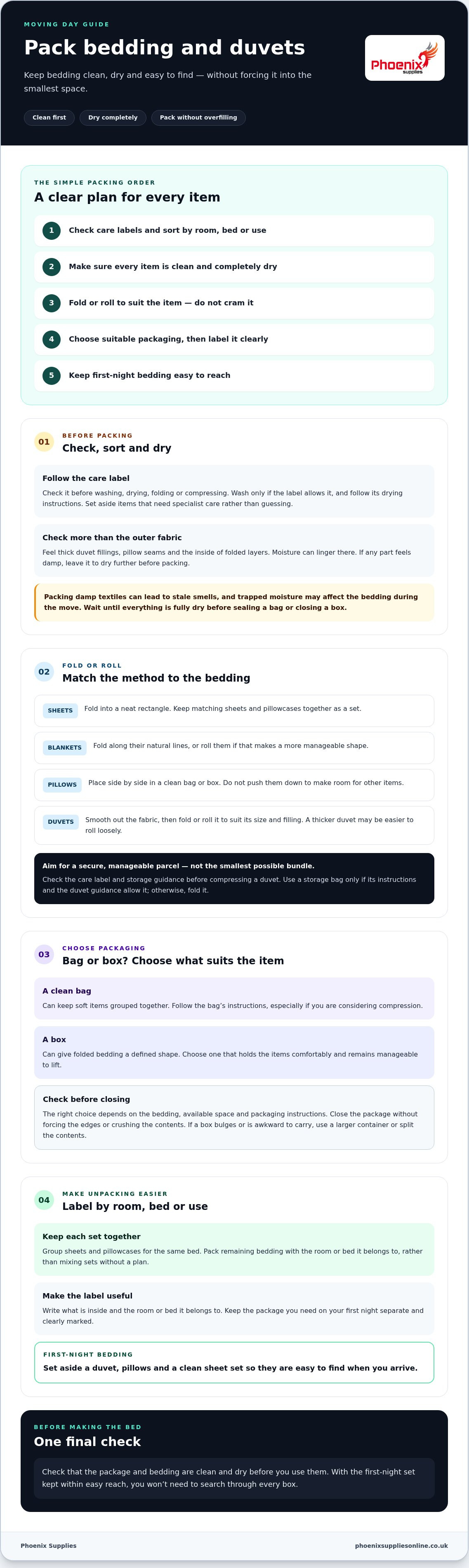
Once your bedding is ready, pack each item so it stays tidy without forcing it into a container. Choose clean packaging that suits the item, then fold or roll it to make a manageable parcel. The aim is a secure package that closes easily, not the smallest possible bundle.
- Sheets: Fold them into a neat rectangle. Keep matching pieces together so the set is easy to identify.
- Blankets: Fold along their natural lines, or roll them if that creates a more manageable shape.
- Pillows: Place them side by side in a clean bag or box, without pushing them down to make room for other items.
- Duvets: Smooth out the fabric, then fold or roll to suit its size and filling.
Pack similar items together where practical, but don’t fill a package just because there’s room. Leave enough space to close it without forcing the edges or putting unnecessary pressure on the contents. A moving box can work well if it holds the folded bedding comfortably and remains manageable to lift. If the box bulges or is awkward to carry, use a larger container or split the contents.
How should you fold a duvet for moving?
Lay the duvet flat and smooth it out first. Fold it into sections that fit your chosen clean packaging, adjusting the number and direction of folds to suit its size and thickness. A lighter duvet may fold neatly into a compact shape, whilst a thicker one may be easier to roll loosely. There’s no single fold that suits every duvet. Aim for an even package that fits without force and is easy to handle.
Can you compress a duvet before packing it?
Check the duvet’s care label and any storage guidance before compressing it. Use a storage bag only if its instructions and the duvet guidance allow it. If they don’t clearly permit compression, fold the duvet instead. Don’t assume that every filling can be compressed in the same way.
Place bedding inside its package without cramming it or forcing it into corners. Close the bag or box securely, following its instructions, but don’t pull a closure so tight that the contents are crushed. Keep each parcel manageable to lift and carry. A short packing plan can help you stay organised, as part of planning a move.
If you need a suitable container for folded bedding, you can explore moving boxes from Phoenix Supplies UK. Choose a size that lets you close and carry the package without forcing the contents inside.
Bags or Boxes for Bedding? Choose What Suits Each Item
The best container depends on what you’re packing, the space available and any instructions for the packaging or bedding. A clean bag can keep soft items grouped together, whilst a box gives bedding a defined shape that may be easier to stack. Neither option suits every item, so check the fit before you start packing.
Use this comparison to help you decide:
| Option | Useful for | Access | Handling |
|---|---|---|---|
| Clean bag | Grouping dry sheets, blankets or other soft items | Can be convenient to open and unpack | May be flexible, but can be awkward to stack |
| Moving box | Keeping folded bedding together, including with other household items | Contents are easy to find when the box is labelled | Holds a defined shape, but should stay manageable to lift |
When deciding how to pack bedding and duvets, consider where each package will travel and how soon you’ll need its contents. Keep first-night bedding separate, and don’t mix it into a package you expect to unpack later. If you’re carrying bedding alongside other belongings, choose packaging that can be placed securely without making the load awkward.
When is a bag useful for bedding?
A bag can be handy for grouping clean, dry soft items, such as a folded blanket or matching pillowcases. Before using one, check that it’s clean, dry and undamaged. Don’t pack bedding in a bag with damp patches, dirt or tears. If you’re considering a vacuum storage bag, first check the bedding care label and the bag’s instructions. Only use it if both allow it.
When should you pack bedding in a moving box?
A moving box can suit folded sheets, blankets or bedding you want to keep together with other household items. Choose one that fits the contents without needing to force the bedding down. It should close without bulging or putting pressure on the items. A box that’s too full can be harder to close and carry; one that’s too large may leave the contents shifting around.
Before choosing containers, make a packing materials list for moving house so you can plan what you need for bedding and the rest of your belongings. If you’re weighing up box options, refer to a guide to buying moving boxes online in the UK. Phoenix Supplies UK sells moving boxes for household packing. Browse moving boxes when deciding what may suit your items.
How to Keep Packed Bedding Clean, Dry and Easy to Find
Once bedding is packed, clear labels and careful placement make a real difference. You’ll be able to find the right set quickly and keep soft items away from belongings that could leave them dirty, damp or damaged. These steps turn how to pack bedding and duvets into a practical plan, not just a way to fit everything into a package.
How should you label bedding boxes and bags?
Mark each package with both its contents and where it belongs. “Main bedroom, duvet and pillows” tells you more than “bedding” alone. If a set is for a particular bed, include that too, such as “spare room, double bed sheets”. Use a label that’s easy to read and place it where it can be seen when packages are stacked.
Set aside your first-night bedding and label it clearly, for example, “Open first, main bedroom”. Keep matching sheets and pillowcases together where practical. This avoids opening several packages to find a complete set when you’re ready to make the bed.
Where should packed bedding go during the move?
As you load the vehicle, keep bedding apart from items that may be wet, dirty or sharp. Place it in a clean, dry area and avoid putting it beside anything that could leak or soil the packaging. Don’t stack heavy or sharp belongings on top of bags or boxes containing duvets and pillows. Soft contents can become misshapen, and sharp edges may damage their covering.
Think about unloading as well as loading. Put first-night bedding where you can reach it without moving less urgent packages. Other sets can go with the belongings for their destination room. If you’re packing clothes as well, the same room-based approach can help; see a guide to packing clothes in boxes for moving for related soft-item tips.
Before loading, check that labels are secure and packages are properly closed. Keep the first-night parcel distinct from the rest, and tell anyone helping with the move which package should stay accessible. A clear plan makes it easier to take bedding straight to the right room rather than leaving it mixed in with general boxes.
For moving boxes and protective covers, explore moving supplies from Phoenix Supplies UK.
Unpack Bedding First and Prepare a Comfortable First Night
After a long moving day, having a clean bed ready can make your new home feel more settled. Start with the bedding package you labelled for the first night, rather than opening several boxes to find the essentials. A simple unpacking order helps you get the bed ready before sorting through the rest of the room.
What bedding should you unpack first?
Bring the clearly labelled first-night set to the bedroom and check the package before unpacking it. Look for signs of dirt or moisture on the outside, then check the bedding itself. If everything is clean and dry, make up the bed with the sheet, duvet and pillows you set aside. If an item feels damp or looks soiled, keep it separate until you can deal with it, rather than putting it straight onto the bed.
Keep spare pillows and blankets together until you need them. Place them in a clean, suitable space in the bedroom, ready to use without unpacking every bedding parcel. Once the bed is made, unpack only what you need for the next part of settling in. The remaining sets can wait until you’re ready to organise each room.
Where can you find packing supplies for your move?
For the rest of your bedding, follow the labels to take each package to the room or bed it belongs to. Check that bags and boxes are still clean and dry before putting their contents away. If a package has become damp, open it and check the bedding rather than storing it out of sight. Let any affected items dry fully before putting them into storage or onto a bed.
A clear unpacking order follows on from taking care over how to pack bedding and duvets. Prepare the bed first, put spare bedding away next, then leave other rooms’ sets together until needed. This keeps your immediate essentials to hand and makes it easier to avoid mixing clean bedding with items still waiting to be unpacked.
Phoenix Supplies UK is a family-run business offering moving boxes, protective materials and house moving packs for domestic and commercial customers. These supplies can help you organise belongings for a move. Browse Phoenix Supplies UK’s moving boxes and Packaging Materials when planning what you’ll need for packing.
Make Your First Night More Comfortable
A little care before moving day makes bedding easier to protect and find. Check care labels, pack only clean, fully dry items, and choose a bag or box that suits each set without forcing it inside. Clear labels showing the contents and destination room help you unpack in the right order.
Set aside the bedding you’ll need first and keep it accessible during the move. Once you arrive, check that the package and its contents are clean and dry before making up the bed. The rest can be unpacked and organised when you’re ready.
These steps make how to pack bedding and duvets less of a puzzle, even when bulky items are involved. Phoenix Supplies UK offers moving boxes, protective materials and house moving packs to help you prepare your belongings. Browse moving boxes and Packaging Materials to plan your packing supplies.
Frequently Asked Questions
How do you pack a duvet for moving?
Lay the duvet flat, smooth it out and fold or roll it to fit clean packaging without forcing it inside. The best shape depends on its size and filling, so there isn’t one fold for every duvet. Check its care label before folding or compressing it. Aim for a parcel that closes securely and stays manageable to lift.
Can you put a duvet in a vacuum storage bag for moving?
Use a vacuum storage bag only if the duvet’s care guidance and the bag’s instructions permit it. Take extra care with down or feather duvets, as prolonged compression can affect the filling. If using a vacuum bag, avoid removing all the air and don’t leave the duvet compressed for long periods. If you’re unsure, fold it into a clean bag or box instead.
Should bedding be washed before moving house?
Wash bedding before moving if it needs cleaning and its care label allows it. Follow the label’s washing and drying instructions, as different fabrics and fillings may need different care. Make sure each item is completely dry before packing, including thick duvet fillings and folded layers. If an item requires specialist care, set it aside rather than washing it without checking its instructions.
How do you keep bedding clean when moving?
Pack only clean, fully dry bedding in a clean, dry bag or box, then close it securely. Label the package so it’s easy to identify, and keep it away from wet, dirty or sharp belongings during loading and transport. Avoid placing heavy items on top of duvets or pillows. On arrival, check the package and its contents are clean and dry before unpacking.
Is it better to pack bedding in boxes or bags?
Choose a bag or box based on the bedding, available space and the packaging instructions. A clean bag can group soft items together, whilst a moving box gives folded bedding a defined shape that can be easier to stack. Either way, don’t overfill it. The package should close without force and remain manageable to carry. Label it clearly so you can find the right set.
How do you pack pillows for moving?
Make sure pillows are clean and completely dry, then place them in a clean bag or a box with enough room to fit without forcing them down. Pack matching pillows together where practical, and avoid putting heavy or sharp items on top. Close the package securely and label it with the contents and destination room. This makes the pillows easier to locate and unpack at your new home.
What bedding should I unpack first after moving?
Unpack the bedding set you labelled for your first night. Check that the package and its contents are clean and dry before making up the bed with the sheets, duvet and pillows. Keep spare pillows and blankets together until you need them. Once the bed is ready, unpack other bedding according to its room or bed label, rather than opening every package at once.


