

A box can look firmly shut and still split open when you lift it. The difference often comes down to preparing the flaps properly and sealing the right seams. If you’re wondering how to properly tape a moving box, start by checking that the cardboard is sound, the flaps meet neatly and the tape covers the main opening lines.
A secure seal doesn’t need to be complicated. With a repeatable taping pattern and a few simple checks, you can close the base and top so they’re ready to handle. This guide takes you through each step, from folding the flaps and applying an H-shaped seal to checking for loose edges and gaps.
You’ll also learn how to avoid common mistakes, such as relying on one strip across the middle or applying tape to a dusty, uneven surface. Whether you’re packing a few household items or preparing a stack of boxes for a move, these practical steps will help you check each carton before lifting or carrying it.
Key Takeaways
- Learn how to properly tape a moving box with a step-by-step sealing routine you can repeat as you pack.
- Find out why sound cardboard and sensible packing matter as much as the tape you apply.
- See when adding extra tape won’t solve a box that’s overloaded or weakened.
- Know what to check on different carton styles before you lift or carry them.
- Keep your labels clear and easy to read without covering the sealed edges.
How to properly tape a moving box: start with the right preparation
Sound cardboard and correctly folded flaps give tape a reliable surface to hold. Before you think about how to properly tape a moving box, check that the carton suits what you’re packing and is in good condition. Tape secures the base and top flaps against opening, but it can’t restore weakened cardboard or make an overloaded box safe to carry.
Box size, condition and contents all affect how you should prepare it. A carton that’s too small may have flaps forced apart; one that’s too large can leave contents shifting inside. The box’s construction matters, too. Corrugated box design explains how the material’s structure supports containment and stacking, which is why damaged panels or corners shouldn’t be treated as a minor issue.
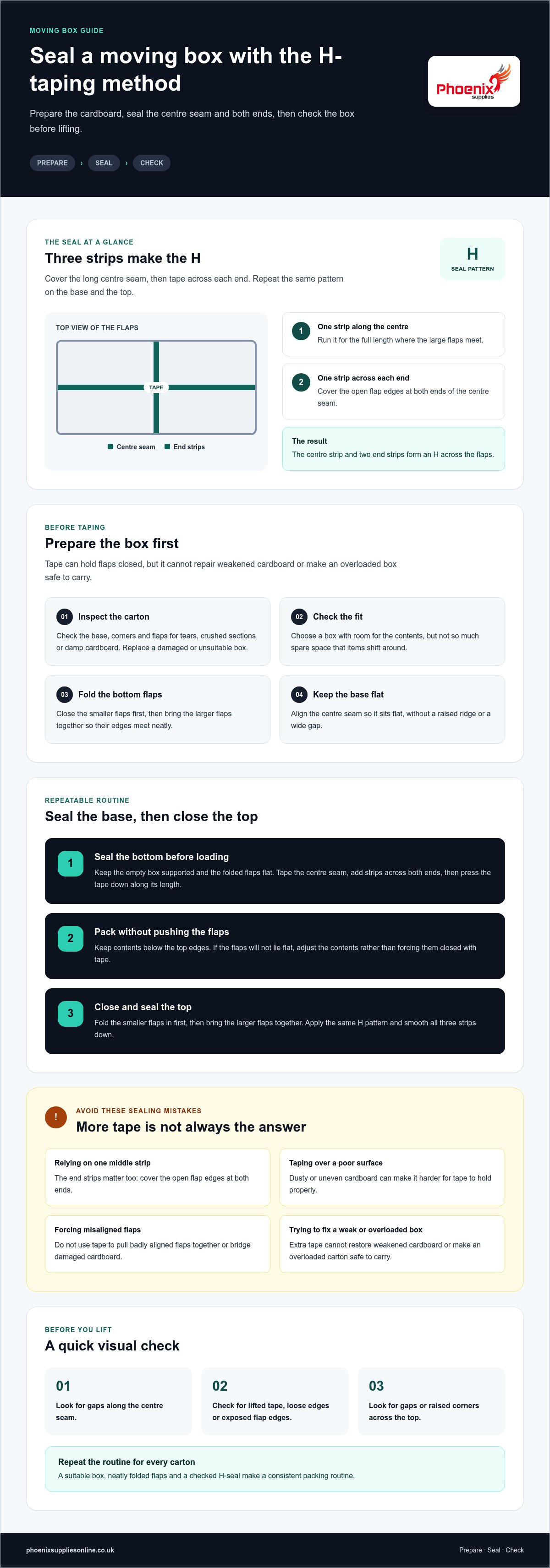
The H-taping method seals the centre seam and both open edge seams, creating an H-shaped pattern across the flaps. It’s a practical way to secure a standard carton, but the tape is only as dependable as the surface beneath it. Check the box first, then fold the flaps so they meet neatly.
Check the box before you reach for the tape
Inspect the base, corners and flaps for tears, crushed sections or damp cardboard. Check that the box holds its shape and that the flaps meet without being pushed or pulled into place. Choose a carton with enough room for its contents, but not so much spare space that items shift around. If the cardboard is damaged or the box is unsuitable, replace it rather than trying to fix it with extra tape.
Fold the bottom flaps into a flat base
Set the empty box upright and support it while you work. Close the smaller bottom flaps first, then bring the larger flaps together over them. Align their edges so the centre seam runs straight and sits flat, without a raised ridge or a wide gap. A level base makes it easier to apply tape evenly and helps the flaps stay in position.
Once the base is prepared, you’re ready to apply the seal. Don’t use tape to pull badly misaligned flaps together or bridge a damaged area. If the box only closes when you force it, check its size and contents before continuing. A neat fit gives the seal a better chance of staying in place as you handle the box.
How to tape a moving box step by step using the H-seal
Once the box is ready, use the same pattern to seal its base and top. The H-seal covers the centre opening and the two flap edges at either end. These are the main lines where the box can open, so sealing all three helps hold the flaps closed. The H-Tape Method is also shown in U-Haul’s box-taping guide.
Seal the bottom before loading the box
Keep the empty box supported, with the folded flaps flat. Apply tape in a continuous strip where practical, pressing it down as you go. Smooth it along its length, especially where it meets the cardboard edges, so it doesn’t lift or leave a flap edge exposed.
- Cover the centre seam. Run tape along the full length of the line where the two large flaps meet.
- Seal the ends. Add a strip across each end of the centre seam, covering the open flap edges. These two strips and the centre strip form the H pattern.
- Check the base. Press along the tape and look for gaps, lifted sections or exposed edges before loading the box.
Close and tape the top after packing
Keep the contents below the top edges so the flaps can meet without pressure. Fold the smaller flaps in first, then bring the larger ones together, as you did for the base. If the flaps won’t lie flat, adjust the contents rather than forcing them closed with tape.
- 4. Tape the centre seam. Apply a continuous strip along the full length where the large top flaps meet.
- 5. Complete the H. Tape across both ends of the seam, then smooth all three strips down. Check that the tape meets the cardboard cleanly and that no part is peeling away.
- 6. Give the box a visual check. Look across the top for gaps or raised corners before you lift it.
That’s how to properly tape a moving box: cover the centre seam, secure both ends and press the tape firmly into place. Repeat the pattern on the base and top. If you’re preparing several cartons, choosing suitable moving boxes for their contents can make the packing routine more straightforward.
Does more tape make a moving box safer? Avoid these sealing mistakes
Adding more tape doesn’t make every box safer. A tidy H-seal gives the main seams a clear, consistent covering. Wrapping the whole carton in overlapping strips may use more tape without fixing a weak base, damaged cardboard or contents pushing the flaps apart. When considering how to properly tape a moving box, focus on sound cardboard, flaps that meet neatly and tape that has made good contact.
Small details affect how well tape sticks. Uneven flaps can leave gaps or create raised edges. Dust on the cardboard can stop the tape bonding properly, while loose ends and lifted corners can catch as you handle the box. Press the tape down smoothly, especially where it meets the edges, and inspect the seal instead of layering tape over a problem you haven’t corrected.
When the seal needs attention
Before lifting, look along the seams for gaps, lifted corners or areas where tape hasn’t bonded to the cardboard. If a flap is loose because it wasn’t folded into place, open the box and refold it correctly before resealing. Don’t rely on extra tape to hold a flap that sits out of line.
Check the box itself as well. If the cardboard is torn, damp or crushed, transfer the contents to a sound box. Tape can hold flaps together, but it can’t restore the box’s shape or strength. A quick check can help you avoid carrying a carton that isn’t fit for its contents.
Why extra tape is not a substitute for a suitable box
Overfilled contents can press against the flaps, push them apart or strain the box walls. If the top won’t close without force, take out some items and divide them between suitable boxes. This is especially useful for heavy belongings: spreading the contents can make each box easier to manage and reduce pressure on its seams. For books, see this guide to small moving boxes for books.
There’s no single tape quantity that suits every carton. Box size, condition and contents all matter, so follow any closure instructions supplied with a specialist box. For an ordinary carton, aim for a neat, secure seal over the main opening lines. If you’re covering a lifted edge with more strips, pause and check whether the flap, surface or box itself needs attention first.
How to tape different moving boxes and check them before lifting
The same seam-first approach works for many standard cardboard moving boxes: secure the centre seam and the open edges, then check the finished seal. But not every box closes in the same way. Some have integral flaps, lids or specific closure instructions, so follow the guidance supplied with that box rather than forcing a standard H-seal onto it.
Adapt the method to the box and its contents
If the flaps don’t meet evenly, check how the contents are arranged. Remove or reposition items so the top sits flat, rather than pulling the flaps together with tape. Fragile belongings need careful packing inside the box as well as a secure closure. For broader preparation, see the moving-house packing materials list.
Boxes with unusual shapes or closures may need a different approach. Check their instructions and make sure the closure suits the design. The aim is a box that stays closed without putting strain on the flaps, walls or base.
Complete a safe final check
A sealed box should have closed flaps and no visibly loose tape edges. Before lifting, check that the base and side walls are intact and the box still feels manageable for you to carry. Don’t lift it by its taped flaps or treat the tape as a handle. Hold the box from underneath and at its sides.
- Check that the flaps are closed and meet neatly.
- Look along the seams to confirm they’re covered.
- Press down any tape edges that have lifted.
- Make sure the cardboard is intact, without crushed or torn areas.
- Check that the contents haven’t shifted enough to make the box awkward to handle.
If anything looks strained, set the box down and address the cause before moving it. A sound seal can’t compensate for damaged cardboard, an unsuitable closure or contents that make the carton difficult to manage.
If you’ll open the box later with a utility knife, cut carefully, keeping the blade pointed away from your hands and the contents. For your next move, browse moving boxes to find a box suited to what you’re packing.
A simple moving-box taping routine you can use for every room
A consistent order makes packing easier to manage, whether you’re moving home or preparing goods for a business. Keep the routine simple: inspect the box, fold the base, seal it, pack, close the top, seal it and check the finished carton. This gives you the same practical steps for how to properly tape a moving box, even when you’re working through several rooms or packing areas.
Keep the same order as you pack
Where practical, prepare and seal the bases of several empty boxes before filling them. Pack each box so its contents sit securely and don’t press against the top flaps. Close and check one box at a time, rather than leaving a number of open cartons to seal later. That makes it easier to spot a missed seam or a flap that won’t sit flat.
- Inspect: Check the cardboard and choose a box that suits its contents.
- Fold: Bring the bottom flaps together neatly and keep the empty box supported.
- Seal the base: Cover the centre seam and both open edges.
- Pack: Arrange the contents so they don’t force the flaps apart.
- Close and seal: Fold the top flaps in the same order and repeat the seam-first pattern.
- Check and label: Look for gaps or loose tape, then add a clear label away from the sealed seams.
A label placed on a flat panel is easier to read and won’t cover an edge you need to inspect. For a room move, you could note the room and a brief description of the contents. For business goods, use a labelling method that helps you identify the box later.
Know when to seek product guidance
Not every carton closes like a standard box. If a box has a specific closure design, check the maker’s instructions before taping it. If you’re unsure which size or style suits the items you’re packing, ask the supplier’s team for guidance. For broader box-selection tips, read buying moving boxes online in the UK.
Once your packing list is ready, you can explore moving boxes and packing supplies to find options for your move. Phoenix Supplies UK offers small, medium and large moving boxes, along with wardrobe boxes and protective materials such as bubble wrap and furniture covers. A steady inspect, fold, seal, pack and check routine helps you finish each box with care, from the first room to the last.
Pack with confidence for your move
A secure box starts with sound cardboard and flaps that meet neatly. Use the H-seal across the centre seam and both open edges, then press the tape down and check for gaps or loose corners. Remember, extra tape won’t fix a damaged box or contents that are forcing the flaps apart. This simple routine is the key to how to properly tape a moving box and preparing it for careful handling.
Phoenix Supplies UK is a family-run supplier of packaging and moving supplies for household movers and businesses. Its range includes moving boxes in different sizes, wardrobe boxes, removal blankets and protective wrapping materials, with support from a dedicated office team.
Explore moving boxes and packing supplies to find boxes and protective materials for your move. Choose cartons that suit what you’re packing, then follow the same checks as you seal each one.
Frequently Asked Questions
What is the best way to tape the bottom of a moving box?
For a standard cardboard box, fold the smaller flaps in first, then bring the larger flaps together so their edges meet in a straight line. Apply tape along the full centre seam, then add a strip across each end to form an H-seal. Press the tape down along its length and check for gaps or lifted edges. This is a reliable starting point for how to properly tape a moving box.
Should you tape a moving box in an H pattern?
Yes, an H-seal is a practical method for many standard cardboard moving boxes. It covers the centre seam where the main flaps meet and both open edges at the ends, helping keep those opening lines closed. Use it on the base and top, provided the box’s design doesn’t require a different closure. If the carton includes instructions, follow those rather than forcing an H pattern onto it.
How many strips of tape should you use on a moving box?
There isn’t one tape quantity for every box, as size, condition and closure design vary. For a standard carton, an H-seal uses a strip along the centre seam and a strip across each end. Check that the tape covers the seams and lies flat. If you feel you need lots of extra overlapping strips, inspect the box and contents first. Extra tape won’t repair damaged cardboard or correct flaps that don’t meet.
Why does tape keep coming off my moving box?
Tape may lift if the cardboard surface is dusty, damp, damaged or uneven, or if the flaps aren’t sitting flat. Loose tape ends can also catch during handling. Check that the box is dry and in good condition, then align the flaps and press the tape down firmly, especially along the edges. If the cardboard is torn, crushed or damp, transfer the contents to a sound box instead of adding more tape.
Can I use masking tape to seal a moving box?
It’s better to use tape made for packing boxes than masking tape. Masking tape isn’t designed for sealing a loaded cardboard carton, so it may not hold the flaps securely during handling. Avoid relying on household tape for a moving box, particularly if the contents are heavy. Check the box maker’s closure instructions and choose suitable packing tape for the surface and task.
Can I put heavy items in a moving box if I use extra tape?
Extra tape doesn’t make an overloaded box safe to carry. Heavy contents can press the flaps apart or strain the base and side walls, even if the seams are covered. Choose a box that suits the items, distribute heavy belongings across suitable boxes and keep each carton manageable to lift. If the flaps bulge or won’t close without force, remove some contents and repack rather than trying to hold them down with more tape.


