

Knowing how to pack a living room in the right order can make moving feel more manageable. It can be hard to know where to begin, what to group together and how to protect delicate belongings such as a television or ornaments.
This guide takes you through the process step by step, from sorting and planning to packing electronics and furniture. Start with items you rarely use, keep everyday essentials accessible and choose boxes and protective materials to suit what you’re packing.
You’ll also find practical tips for cushioning breakables, keeping cables with their devices, protecting furniture with removal blankets or covers, and labelling boxes clearly. A simple sequence helps you keep track of what’s packed and what still needs attention.
Key Takeaways
- List your furniture, electronics and smaller belongings before you start packing.
- Check manufacturer guidance before disconnecting electronics, and keep loose parts with the item they belong to.
- Choose boxes and wrapping to suit the contents, and make sure you can lift each box comfortably when it’s packed.
- Pack in stages, starting with display items and books before everyday belongings.
- Check for loose items and unlabelled boxes, and set aside essentials for your first hours in the new home.
How to pack a living room: start with a simple room plan
Packing feels more manageable when you tackle the living room in stages instead of trying to clear it all at once. Begin with a quick inventory of furniture, electronics, ornaments, books, media and soft furnishings. This helps you see what needs packing, which items need extra care and what you’ll want to keep within reach.
Before packing, sort belongings into four groups: keep, donate, recycle and discard. This avoids packing things you no longer need and gives you a better idea of the boxes and protective materials to gather. Your plan can be as simple as an inventory paired with the order you’ll pack each group.
For an overview of general packing principles, see the Wikibooks guide. Then tailor your list to your own room, noting anything that needs special attention.
What should you sort before packing the living room?
Separate everyday essentials from belongings you can pack well before moving day. Group similar items, such as ornaments, books, media and cushions, and set fragile keepsakes and electronic equipment aside so they don’t get mixed in with general items.
Make a note of unusual or easily misplaced parts, such as a device’s remote or a small ornament stand. When you pack, you can keep each part with its matching item or in a clearly labelled container beside it.
How can you make a realistic packing order?
Start with rarely used ornaments and stored belongings, then work towards the things you use every day. Leave essential seating, lighting and entertainment items available until you’re ready to pack them. The aim is to make progress without making the room difficult to use too soon.
Keep a short checklist nearby. Tick off each group as you pack it and note what is still in use. For example:
- Display items packed
- Books and media packed
- Everyday belongings still in use
- Fragile items set aside for careful packing
This record helps you pick up where you left off and spot anything you’ve overlooked. It’s a practical first step in how to pack a living room, giving you a clear order to follow through the rest of the process.
Prepare living-room furniture and electronics before boxing them
Prepare larger items before packing so you can protect their surfaces and keep loose parts with the right furniture or device. Set aside anything that needs careful handling, and check the manufacturer’s instructions before disconnecting or preparing electronic equipment. Guidance can vary between models, so follow the instructions for your own television, speakers and other devices.
For television-specific advice, read our TV moving box packing guide. You can also refer to United Van Lines’ advice on how to pack your living room for further ideas on preparing room contents.
How should you prepare a television and other electronics?
Take a photo of the cable connections before disconnecting anything. It gives you a visual reminder of where each lead belongs when you set the equipment up again. Group the leads and label them by device, rather than leaving an unidentified bundle to sort out later.
Check each item’s instructions before preparing it for the move. Keep remotes, leads and small accessories together in a labelled container, then place it with the matching equipment so it’s easy to find. If you’re unsure how to prepare a particular item, consult its manufacturer guidance instead of guessing.
How can you protect furniture and soft furnishings?
Remove loose cushions where practical and pack them separately. This keeps them together as soft furnishings and makes it easier to prepare larger furniture for moving. If you remove small fittings, such as screws or brackets, keep them together in a clearly labelled container and identify the furniture they belong to.
Use removal blankets to help protect furniture and appliances during a move. Secure the covering so it stays in place, but don’t put materials directly against a delicate finish unless you’ve checked they’re suitable. If an item has a care guide, consult it before applying a protective covering. You can also browse moving boxes and protective materials online.
These preparation steps make the next stages easier to manage. With fewer loose parts to misplace, your furniture and electronics will be ready for careful packing.
Choose boxes and wrapping for living-room belongings
Choose packaging to suit each item. This helps you avoid combining too many heavy or fragile belongings in one box. Think about the size and weight of the contents, then check that you can lift the box comfortably when it’s packed. Keep heavy items in manageable groups and leave enough room to cushion delicate pieces.
This guide is a starting point for choosing supplies. Adjust it to suit the belongings in your room.
| Living-room item | Suitable packaging |
|---|---|
| Books and media | Moving boxes, packed in manageable groups |
| Ornaments and fragile keepsakes | Moving boxes with bubble wrap around individual items |
| Television | Extra Large TV Moving Boxes, where suitable for your equipment |
| Furniture and appliances | Furniture Removal Blankets |
| Cushions and soft furnishings | Moving boxes or furniture covers, depending on the item |
Which packing materials suit different living-room items?
Use moving boxes to group belongings such as books, media and smaller household items. Bubble wrap can cushion ornaments and other fragile pieces individually. Furniture Removal Blankets can help protect furniture and appliances during a move. Choose a box that fits the item and leaves enough room for suitable cushioning.
If you’re planning supplies for more than one room, see this packing materials list for moving house. For electronic equipment, Colonial Van Lines also shares advice on packing electronics for moving.
How should you pack fragile ornaments and books?
Wrap each fragile piece separately before placing it in a box. Add cushioning around the items and fill empty gaps to reduce movement. Keep similar ornaments together where practical, and label the box clearly so it can be handled with care.
Books can make a box heavy, so pack them in manageable amounts rather than filling a box until it’s difficult to lift. For more detailed advice, read our guide to packing a library safely. If you need boxes or protective materials for your move, you can browse moving boxes and packing supplies online.
Choosing suitable materials is a practical part of how to pack a living room. Careful grouping and cushioning help keep belongings easier to handle and simpler to unpack.
Pack the living room in a clear, step-by-step order
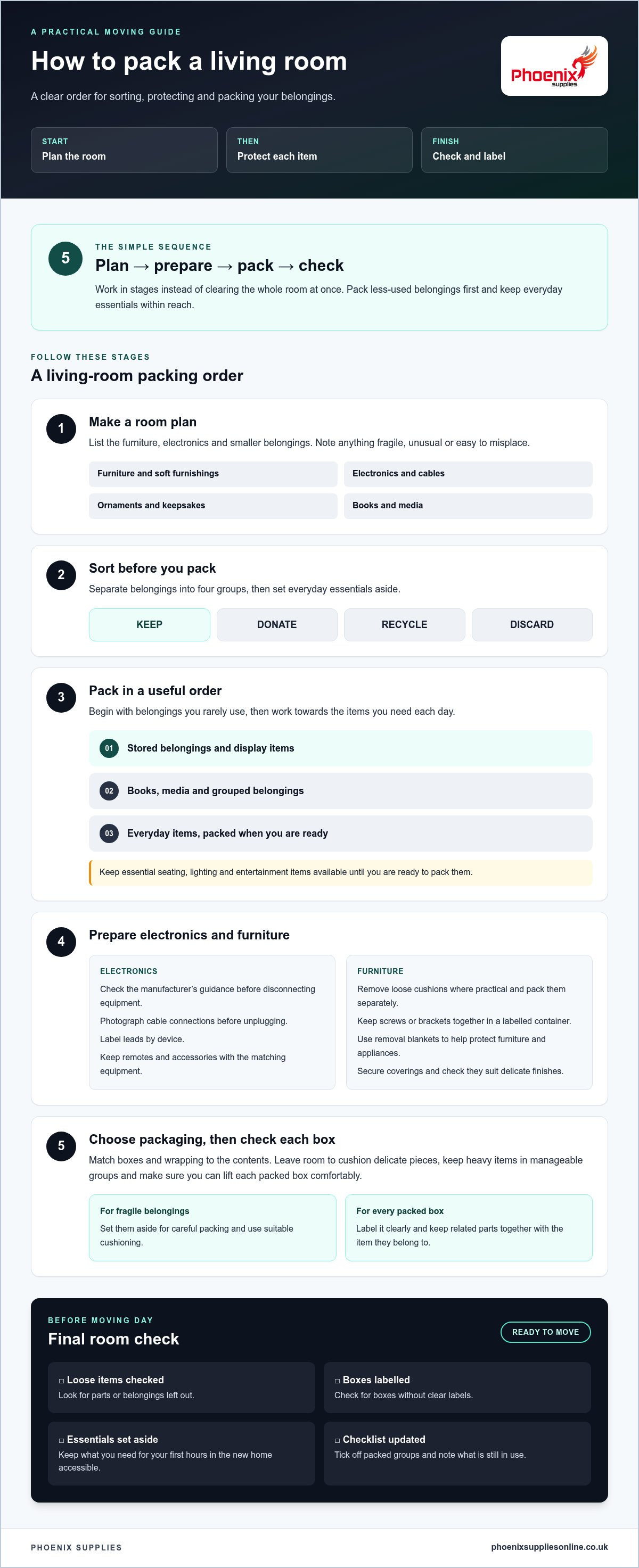
Once your belongings are sorted and your packing materials are ready, follow a sequence that keeps the room usable for as long as possible. Start with items you rarely need, then work towards the things you use each day. This makes how to pack a living room easier to manage and helps you avoid searching through sealed boxes for essentials.
What order should you pack living-room items in?
Work through the room in groups, finishing one before moving to the next. A practical order is:
- First: Pack decorative pieces and stored items, wrapping fragile belongings individually before placing them carefully in boxes.
- Next: Pack books and media, followed by entertainment items you won’t need before moving day.
- Last: Pack remaining daily-use belongings, leaving a small group of useful items accessible until this final stage.
Place items carefully as you fill each box. Don’t force in extra contents or leave large gaps around fragile belongings. Add suitable cushioning to help limit movement, then close the box securely. Keep the contents manageable to lift rather than making a box too heavy or awkward to handle.
How do you label boxes for easier unpacking?
Write the destination room and a brief description of the contents on each box. Clear labels help you direct boxes to the right place and find particular belongings when you start unpacking.
- Write “Living Room” and a brief contents description, such as “books” or “ornaments”.
- Mark boxes containing fragile belongings clearly so they’re easy to identify.
- Where practical, write the label on more than one side so it’s visible when boxes are stacked.
Keep descriptions specific enough to be useful, but short enough to read at a glance. If a box contains mixed items, list the main contents instead of writing only “miscellaneous”.
Before moving on, check that each packed box is closed securely and labelled. If you need boxes or protective materials for this stage, browse Phoenix Supplies UK moving boxes and packing materials.
Finish packing and prepare living-room boxes for moving day
Before you leave the living room, take a few minutes to check what’s packed and what still needs attention. This final review can catch small belongings left behind and make important items easier to find after you arrive. It’s the last step in packing the room in an organised, practical way.
What should you check before leaving the living room?
Look over shelves, drawers and storage areas, including spaces behind or beside furniture. Check for small items such as charging leads, remote controls, ornaments and loose fittings. Then review each box to make sure it’s closed, labelled and grouped with the other living-room boxes.
Some belongings may still be in use until you leave. Keep them separate from sealed boxes and make a note to pack them at the right time. This checklist can help:
- Check shelves, drawers and storage spaces for loose belongings.
- Confirm every box is closed and labelled with its contents and destination room.
- Set aside last-use essentials so they don’t get packed too early.
- Keep fragile or high-priority boxes easy to identify.
How can you make unpacking the living room easier?
Keep a short note of boxes containing fragile or high-priority belongings. For example, record which box holds the television accessories, a favourite ornament or items you’ll want soon after arrival. This gives you a quick reference without opening boxes to check what’s inside.
Set aside belongings you expect to need first, such as a remote, a lamp or a few everyday items. Keep them clearly identified and separate from boxes that can wait. When boxes are moved, handle them carefully and pay attention to labels and fragile contents. Follow any handling guidance for particular items, and avoid placing boxes where they could be knocked or block access.
Once the room is clear, do one last sweep and compare the remaining belongings with your checklist. This helps you see what’s ready to go and what still needs packing.
Make your living-room move easier to manage
A clear plan makes how to pack a living room less daunting. Sort belongings, prepare furniture and electronics, then pack rarely used items before everyday essentials. Choose suitable boxes, keep them manageable to lift and label them clearly for unpacking.
A final checklist helps you catch loose belongings, unlabelled boxes and items you’ll need soon after arriving. Work through the room one step at a time, at a pace that suits your routine.
Phoenix Supplies UK is a family-run business offering moving boxes in different sizes, wardrobe boxes, removal blankets, bubble wrap and other packaging supplies. If you’re getting ready to pack, browse Phoenix Supplies UK’s moving boxes and protective packaging.
Frequently Asked Questions
What should I pack first when moving a living room?
Start with belongings you rarely use, such as decorative ornaments, stored items and media you won’t need before moving day. Then pack books and non-essential entertainment items, leaving everyday belongings until later. This is a helpful order for packing the room without making it difficult to use too soon. Keep a short checklist of packed groups and anything still waiting to be boxed.
How do I pack fragile ornaments for a house move?
Wrap each ornament separately in bubble wrap or suitable protective wrapping, then place it carefully in a box. Add cushioning around the pieces and fill empty spaces to reduce movement. Avoid packing fragile items loosely together, where they could knock against one another. Close the box securely and label it clearly as fragile, with “Living Room” and a short description of the contents.
Should I pack books in large or small moving boxes?
Choose a box that lets you pack books in manageable groups without making it difficult to lift. Books can become heavy when packed together, so avoid filling a large box with books alone if it becomes awkward to handle. Keep similar books together where practical, and fill gaps to limit movement. A clear label such as “Living Room, books” will make the box easier to identify later.
How should I pack a television for moving?
Check the manufacturer’s instructions before preparing or disconnecting your television, as guidance can differ between models. Photograph the cable connections, then group and label the leads and remote so they stay with the correct set. Use a suitable box, such as an Extra Large TV Moving Box if it fits your television, and cushion the item carefully. Follow any specific preparation advice from the manufacturer.
How do I stop items moving around inside boxes?
Pack items closely enough to limit empty spaces, but don’t force them in or overload the box. Wrap fragile belongings individually and add suitable cushioning around them. Fill gaps to reduce movement, then close the box securely. Before sealing it, check that the contents are settled and the box remains manageable to lift. Mark fragile contents clearly so they’re easy to recognise.
When should I pack the living room before moving house?
Begin once your move is planned, starting with items you don’t use often. This gives you time to sort belongings and pack in stages rather than leaving the whole room until the last moment. Keep furniture and everyday essentials available for as long as you need them, then pack them nearer moving day. Use a checklist to track what’s done and choose a pace that suits your routine.
What should I keep out until moving day?
Keep aside the living-room items you’ll still need before you leave, such as essential seating, lighting, a television remote or chargers. Set these apart from sealed boxes and make a note to pack them during your final check. You may also want to keep a few useful items accessible for your first hours at the new home. Label them clearly so you can find them without opening every box.


