
Imagine the frustration of reaching your new home, exhausted and ready for a fresh start, only to find your favourite wool coats and silk dresses crushed at the bottom of a collapsed carton. It's a common worry for many people, especially when you're facing a mountain of laundry and wondering how to pack clothes for moving in boxes without spending an entire week folding. You want your wardrobe to arrive in the same condition it left, but the fear of delicate fabrics getting ruined or heavy winter gear breaking through thin cardboard is a genuine concern during a busy move.
We understand that your clothes are more than just fabric; they're an investment in your personal style and daily comfort. This guide will show you exactly how to pack clothes for moving in boxes to ensure a smooth, stress-free transition to your new home. You'll discover the most efficient ways to organise your wardrobe, from choosing the right heavy-duty boxes to using specialised wardrobe rails that keep garments crease-free. We'll walk you through a simple process that maximises your van space whilst ensuring your finest items stay protected from the moment they leave the rail until they're hung up in your new bedroom.
Key Takeaways
- Learn how using specialised wardrobe boxes with integrated rails can save you hours of tedious post-move ironing and dry cleaning.
- Master the most efficient way how to pack clothes for moving in boxes by categorising your items by season and fabric weight before you begin.
- Discover why double-wall cardboard is a non-negotiable requirement for safely transporting heavy winter coats and bulky formal wear without the box collapsing.
- Find out which box sizes work best for different items, from small boxes for heavy denim to tall carriers for full-length dresses and suits.
- Get expert tips on securing your boxes with high-quality tape and protective covers to ensure every garment stays clean and protected during transit.
Understanding the Challenges of Packing Clothes for a House Move
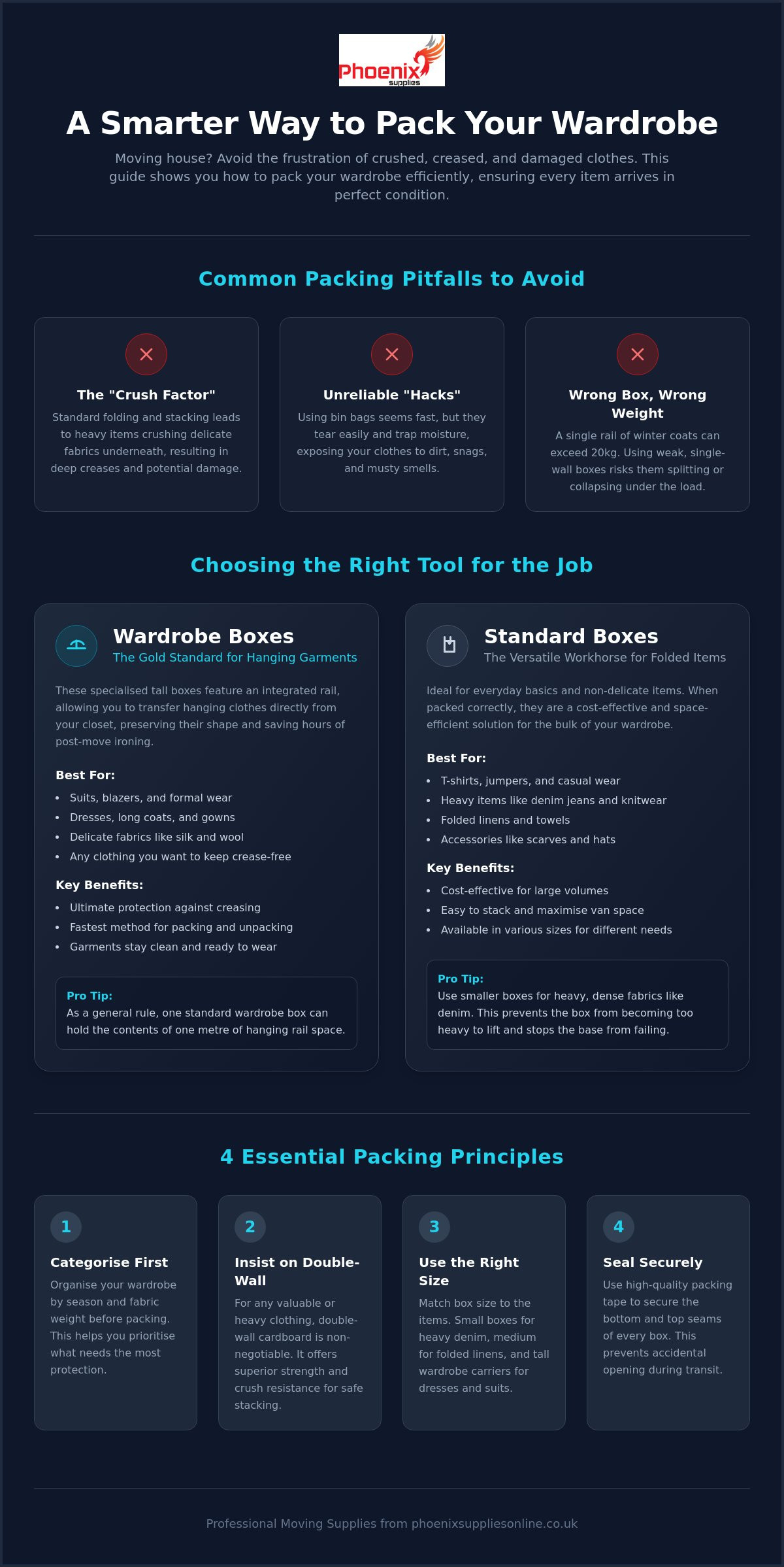
Packing up a home involves hundreds of small decisions, but few areas are as deceptive as your wardrobe. Most people assume that folding shirts into a pile and throwing them into a carton is the quickest route. However, this often results in a "crush factor" where the weight of the top layers ruins the items underneath. When you finally arrive at your new house, you're faced with hours of ironing or expensive dry-cleaning bills for suits and dresses that have lost their shape. Learning how to pack clothes for moving in boxes correctly isn't just about tidiness; it's about protecting the longevity of your garments and your sanity during the first week in a new home.
Beyond creases, you have to consider the environment of a moving van. Even the cleanest vehicles can harbour dust or small amounts of dampness during a rainy British move. Without proper protection, delicate fabrics are vulnerable to snags from nearby furniture or moisture that can lead to musty smells. This is why categorising your wardrobe is a vital first step. By separating your high-value silks and wools from everyday items like gym gear, you can decide which pieces need heavy-duty protection and which can be organised using a packing cube or similar compression tool for the journey.
The Problem with "Quick Fix" Packing Hacks
Social media is full of "hacks" like pulling a bin bag over a group of hanging clothes. Whilst it looks fast, it's often a recipe for disaster. Bin bags tear easily, leaving your clothes exposed to the floor of a van. They also trap moisture, which can be devastating for natural fibres. If a bag snags on a piece of furniture, you could end up with a ruined coat that costs more to replace than the price of proper packing supplies. Investing in professional materials like wardrobe boxes provides a reassuring layer of security that "quick fixes" simply can't match.
Assessing Your Wardrobe Volume and Weight
A common mistake is underestimating the sheer weight of a full wardrobe. A single rail of winter coats can easily exceed 20kg, which is enough to make a standard single-wall box buckle or split at the seams. You need to identify these heavy-hitters early. As a general rule, one metre of hanging space usually requires one standard wardrobe box. If you're using standard cardboard boxes for folded items like jeans or knitwear, keep the boxes small. Dense fabrics are heavy, and overfilling a large box makes it nearly impossible to lift safely without risking injury or box failure. Always opt for heavy-duty moving boxes for these weightier collections to ensure the base stays secure during transit.
Comparing Packing Methods: Wardrobe Boxes vs Standard Cardboard Boxes
Choosing the right container is the foundation of a successful move. Whilst suitcases might work for a quick weekend away, they lack the volume and structure needed for a full household transition. Understanding the technical differences between your options is key to mastering how to pack clothes for moving in boxes. Most standard boxes come in single-wall or double-wall cardboard. For lightweight items like t-shirts, single-wall is fine, but for anything you value, double-wall cardboard offers the crush-resistance needed to stack boxes safely in the van.
Standard Cardboard Boxes: Best for Basics
Standard boxes are perfect for your everyday basics. For heavy items like denim jeans or thick winter jumpers, it's actually better to use small moving boxes for books. These smaller containers prevent the weight from becoming unmanageable and stop the bottom of the box from bowing under pressure. For your casual wear, try the "bundle wrapping" technique. By wrapping smaller items around a central core of larger ones, you reduce creases and save space. Medium boxes serve as the perfect all-rounder for bulkier but lighter items like folded linen and towels.
Wardrobe Boxes: The Gold Standard for Hanging Garments
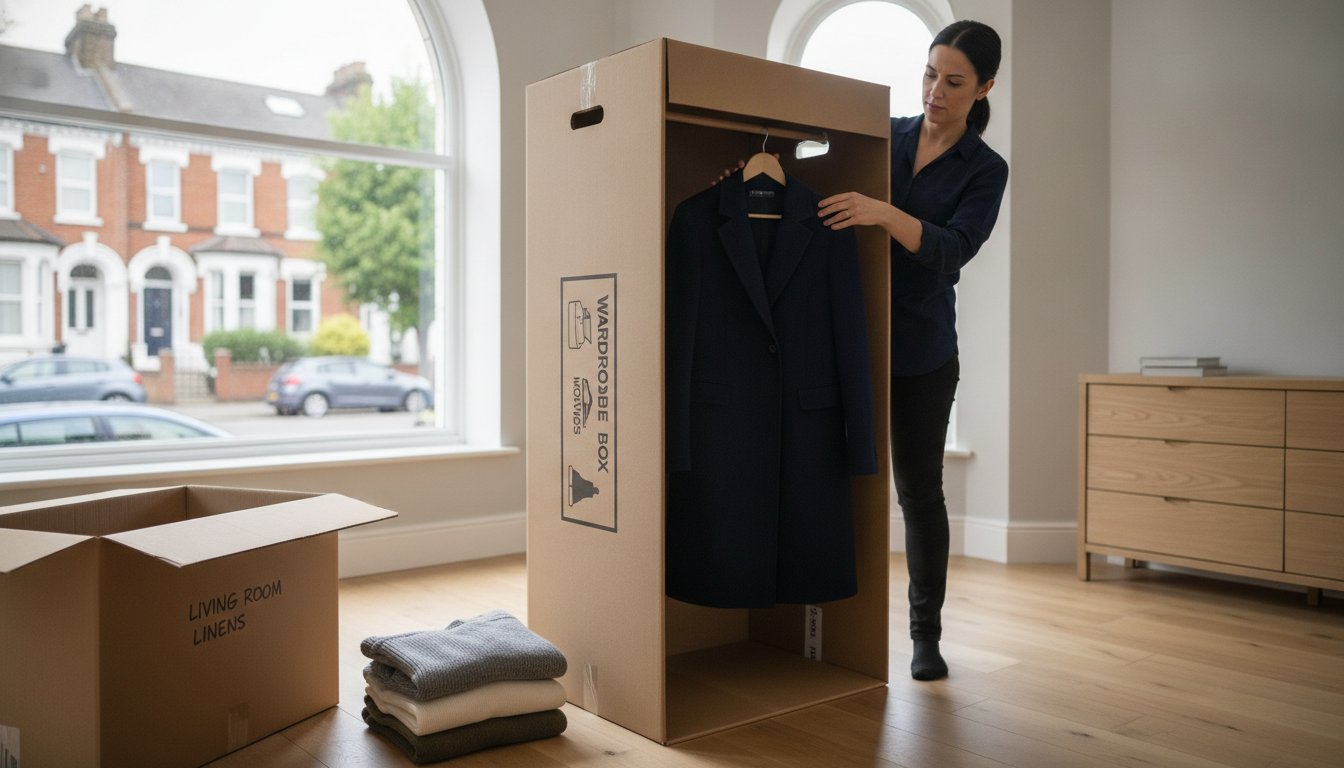
For your finest garments, Wardrobe Boxes are the gold standard. They feature an integrated hanging rail that allows you to move clothes directly from your closet to the box in seconds. This is a game-changer for tailored suits, silk dresses, and delicate evening wear that would otherwise require hours of professional pressing. A clever tip is to use the empty space at the bottom of these tall boxes for light items like pillows or cushions. This provides extra cushioning for the hanging hems and maximises your van space. If you're looking for professional-grade protection, you can find a wide range of Wardrobe Boxes designed specifically for the rigours of a British house move.
The choice between these methods often comes down to a simple cost-benefit analysis. It's tempting to save a few pounds by using whatever containers are lying around. However, consider the time spent folding, the risk of fabric damage, and the inevitable ironing marathon at the other end. Professional supplies are an investment in your time and the longevity of your favourite pieces. When you factor in the cost of dry cleaning a single ruined suit, the value of a dedicated wardrobe box becomes very clear.
Step-by-Step Guide: How to Pack Clothes for Moving in Boxes
Mastering how to pack clothes for moving in boxes requires a methodical approach that prioritises both protection and efficiency. Start by decluttering your wardrobe. It's tempting to just throw everything into a container and sort it later, but this only creates chaos on moving day. Group your items by season and garment type. By separating your summer linens from your heavy winter knits, you can decide which boxes need to be opened first at your new home and which can stay sealed in the attic for a few months.
When considering how to pack clothes for moving in boxes, the way you secure the base is just as important as what you put inside. Assemble your boxes using the "H-tape" method, running high-quality packing tape across all seams to create a sturdy foundation. Once your boxes are ready, begin layering your folded items. Place heavier fabrics like denim at the bottom and lighter, more delicate pieces on top. This prevents the weight of your jeans from crushing your favourite cotton shirts. For hanging items, simply transfer them directly from your closet rail to the integrated rail in your wardrobe box. Finally, seal each box and label it clearly with the room and the contents, such as "Master Bedroom - Winter Coats."
Folding Techniques for the Perfect Pack
For items destined for standard boxes, the "file folding" method is a game-changer. Instead of stacking shirts on top of each other, fold them into small rectangles and stand them upright. This keeps every item visible and prevents the bottom layer from being crushed. If you have garments with delicate buttons or sharp embellishments, use small pieces of bubble wrap rolls to pad these areas and prevent them from snagging other fabrics. Rolling your t-shirts and casual wear instead of folding them flat can save up to 30% more space in a standard box whilst reducing deep creases.
Packing Shoes and Accessories Safely
Shoes and accessories often get overlooked, yet they require specific care to avoid damage. Always pack shoes at the bottom of your boxes or in separate archive boxes to ensure their weight doesn't damage lighter garments. Use acid-free tissue paper to wrap leather items, which prevents them from sticking together or transferring colour during transit. Handbags should be stuffed with light layers of bubble wrap or clean paper to help them maintain their structure. This simple step prevents expensive bags from being flattened and developing permanent cracks in the leather whilst they are tucked away in the moving van.
Buying Guide: What to Look for in High-Quality Wardrobe Boxes
Choosing the right equipment is a vital part of learning how to pack clothes for moving in boxes. When you're browsing for supplies, the first detail to examine is the material strength. For a wardrobe box, double-wall cardboard is a non-negotiable requirement. This double layer of internal fluting provides the structural integrity needed to support a rail full of heavy coats without the sides buckling under the pressure. It also ensures that if another container is placed on top in the removal van, your garments stay protected rather than being crushed.
The hanging rail is the heart of the box. Whether it's made of reinforced plastic or metal, it must be designed to handle the weight of multiple suits or heavy woollen jumpers. High-quality rails lock into the cardboard sides with a notched system, which prevents the rail from slipping or falling during transit. Size is also a major consideration. Whilst a standard tall box is perfect for long evening dresses and overcoats, a "short" wardrobe box is often a better choice for shirts, jackets, and trousers. Using the correct height prevents your clothes from pooling at the bottom of the box, which is the main cause of deep creases. Finally, look for boxes with integrated hand-holes. These small cut-outs are a lifesaver for whoever is carrying the boxes, providing a secure grip whilst navigating narrow stairs or hallways.
For those relocating with specialised professional attire, such as healthcare or salon wear, visit The Staff Uniform Company to see how modern uniforms can maintain their professional look even after a busy transition.
Assessing Box Durability and Reusability
A professional-grade box is an investment that can often be used more than once. High-quality boxes typically use a kraft paper exterior, which is much tougher than the paper found on standard shipping cartons. This material offers better resistance to the damp or misty conditions we often face during a British house move. One of the biggest benefits of these boxes is that they can be flat-packed and stored in a dry place for future use. Whilst it's tempting to grab "free" boxes from a local supermarket, they usually lack the strength to protect heavy garments. When you consider the value of your wardrobe, spending a few pounds on a dedicated box is far cheaper than paying to repair or replace damaged items.
Essential Accessories for Your Clothes Boxes
Even the sturdiest box needs the right accessories to perform its best. Heavy-duty packing tape is a must-have for securing the base and preventing "bottom-bursting" when the box is lifted. You should also keep a full set of packing materials on hand, including thick marker pens. Clearly labelling your boxes with the room and the specific contents will save you a lot of time when you're tired and trying to find your work clothes on Monday morning. If your move involves a period in long-term storage, think about adding moisture-absorbent sachets to each box. These help protect natural fabrics like wool and silk from mildew whilst they are tucked away. To ensure your move goes smoothly, you can order our range of heavy-duty wardrobe boxes and packing supplies today.
Streamlining Your Move with Professional Supplies from Phoenix Supplies UK
Moving house is one of life's most significant transitions, but it doesn't have to be a source of constant worry. We've explored the technical side of how to pack clothes for moving in boxes, from the structural benefits of double-wall cardboard to the time-saving efficiency of integrated rails. Now, it's about putting those plans into action with supplies you can trust. At Phoenix Supplies UK, we specialise in providing the heavy-duty materials required to protect your wardrobe during transit. Our focus is on ensuring that your favourite outfits arrive at your new home in the same condition they left your old one.
Our range is specifically curated to meet the needs of British homes and removal standards. Whether you're moving a few streets away or relocating across the country, our moving house packing kits offer a convenient way to get everything you need in one go. These kits take the guesswork out of your preparations, providing a balanced mix of wardrobe boxes, standard cartons, and protective wraps delivered directly to your doorstep. By having the right tools from the start, you can focus on the excitement of your new home rather than worrying about box failure or creased garments.
Why Choose a Family-Run Specialist?
As a family-run business, we pride ourselves on a level of personalised service that larger corporations often struggle to match. When you're unsure about the specifics of how to pack clothes for moving in boxes or how many containers you need for a four-bedroom house, you can speak to a real person for honest advice. We don't hide behind automated systems or complex call centres. Our commitment to quality means we only stock supplies we'd be happy to use for our own moves. This focus on reliability ensures your belongings are supported by specialist expertise and transparent pricing from start to finish.
Ready to Start Packing?
Starting your packing journey early is the best way to ensure a calm moving day. Once you've decluttered and categorised your items as discussed in our guide, you can easily order your wardrobe boxes online. Before you checkout, run through a final checklist: do you have enough heavy-duty tape? Have you accounted for your shoes, handbags, and bulky winter coats? Having a complete set of essentials on hand prevents stressful last-minute trips to the shops. You can view our full range of wardrobe boxes and moving supplies at Phoenix Supplies UK to find exactly what you need for a seamless, professional-standard transition to your new home.
Ready for a Fresh Start in Your New Home?
Moving house is a major milestone, and your wardrobe shouldn't be a source of stress during the process. By choosing the right materials and following a methodical order, you've already simplified the most time-consuming part of the move. Remember that using double-walled cardboard is essential for protecting heavy winter coats, whilst wardrobe boxes with integrated rails eliminate the need for an ironing marathon once you arrive. You now have a clear, professional plan for how to pack clothes for moving in boxes that keeps your finest garments safe and your unpacking experience straightforward.
As a family-run business, we're here to support you with expert advice and the highest quality supplies. Our boxes are built for maximum protection, and we provide free UK delivery on all orders to help keep your moving preparations as simple as possible. With the right tools and a bit of preparation, you'll be settled into your new bedroom and hanging up your favourite outfits in no time; you might even take the opportunity to refresh your space with a bespoke design from Wardrobe Door Studio.
If you're a student preparing for a move, you can check out Unipad for luxury student accommodation in Lancaster that provides the perfect setting for your newly organised wardrobe.
Browse our heavy-duty wardrobe boxes for a crease-free move
Good luck with your move. We're confident that these steps will help you enjoy a smooth transition to your next chapter.
Frequently Asked Questions
How many wardrobe boxes do I need for a standard 2-door wardrobe?
A standard 2-door wardrobe typically requires two wardrobe boxes to ensure your clothes aren't crushed. This allows enough space for the hangers to slide easily along the rail without forcing the garments together. If your wardrobe is particularly full of bulky items like winter overcoats, you might find that a third box is necessary to keep everything completely crease-free.
Is it better to fold or hang clothes for a house move?
Hanging is the superior choice for tailored items, whilst folding is the most efficient method for casual basics. You should hang suits, dresses, and shirts in wardrobe boxes to avoid an exhausting ironing marathon at your new home. For items like jeans, t-shirts, and knitwear, folding them into standard cardboard boxes saves significant space in the moving van and keeps the weight manageable.
Can I leave my clothes in the dresser drawers instead of using boxes?
You can leave lightweight items like socks and underwear in dresser drawers, provided the furniture is sturdy and the drawers are secured. However, leaving heavy items in drawers can put immense pressure on the furniture's frame during transit, potentially causing permanent damage. It's usually safer and easier for the lifting process to pack most drawer contents into medium moving boxes.
What is the best way to pack delicate fabrics like silk or lace?
The best way to protect silk or lace is to wrap each garment in acid-free tissue paper before hanging it in a wardrobe box. This extra layer prevents the delicate fibres from snagging on nearby hangers or embellishments. Avoid using plastic covers for long periods, as natural fabrics need to breathe to stay in peak condition during a move.
How do I prevent my clothes from smelling musty inside cardboard boxes?
Preventing musty smells starts with ensuring every item is completely dry before you begin the process of how to pack clothes for moving in boxes. You can also place a few cedar blocks or silica gel sachets at the bottom of the box to absorb any lingering moisture. This is a simple but effective way to keep your wardrobe smelling fresh, especially if your belongings will be in transit for more than a day.
Can I reuse wardrobe boxes for long-term storage in a loft or garage?
You can certainly reuse these boxes for loft storage, as the breathable cardboard is often better for natural fabrics than airtight plastic bins. However, avoid using them in damp garages or cellars. Cardboard is a porous material that can absorb moisture from the air, which might lead to the box softening and losing its ability to protect your clothes over several months.
What should I do with my empty moving boxes after the move is finished?
Once you've finished unpacking, you can flat-pack the boxes and store them in a dry place for a future move or pass them on to a neighbour. If the boxes have seen better days, they are fully recyclable through your local council's kerbside collection. Many people also find that keeping one or two wardrobe boxes is perfect for storing out-of-season coats in the attic.
How do I pack heavy winter coats without the box becoming too heavy to lift?
Pack heavy winter coats in "short" wardrobe boxes to keep the weight concentrated and the centre of gravity low. If you're using standard containers for non-hanging coats, always opt for small moving boxes. This limits the number of heavy items you can fit into a single space, ensuring the box remains safe for one person to lift without risking injury or the cardboard splitting.


