

What if packing for your move didn't mean living amongst chaotic towers of cardboard for weeks on end? If you're wondering when to start and what to tackle first, you aren't alone. Most moving stress comes from packing the wrong rooms too early or leaving delicate items to a frantic final weekend. Following a structured packing timeline for moving house changes everything, because a calm move simply depends on matching your packing stages to room usage frequency.
We understand the frustration of rummaging through sealed cartons for a tea mug or worrying about running out of supplies at the eleventh hour. You deserve a smooth move that keeps daily home life running normally while ensuring your belongings stay thoroughly protected. This practical week-by-week guide gives you manageable targets to pack calmly, safely, and without last-minute panic. Here is your clear roadmap to discovering precisely which spaces to clear first, how to safeguard fragile valuables, and how to organise an essentials kit for a stress-free moving day.
Key Takeaways
- Following a structured packing timeline for moving house keeps your home functional by tackling low-use zones like lofts and spare rooms first.
- Decluttering your cupboards well before ordering boxes and protective materials ensures you only pack items you actually need.
- Wrapping non-essential decor, books, and spare bedding two to three weeks early prevents delicate belongings from being rushed or damaged.
- Keeping a dedicated daily essentials box aside during the final week stops you from rummaging through sealed cartons on your first night.
- Protecting carpets and loading heavy double wall cartons into the van first ensures a safe, efficient moving day from start to finish.
Why You Need a Structured Packing Timeline for Moving House
Spreading physical effort across several weeks makes changing address genuinely manageable. Research on the psychological stress of moving shows that lack of control and time pressure drive most relocation anxiety. Adopting a sensible packing timeline for moving house restores that control, turning an overwhelming project into straightforward, bite-sized tasks.
Starting six weeks ahead keeps your daily routine intact. You avoid living out of half-taped cartons or eating dinner off packing crates weeks before moving day. By sorting rooms based on how often you use them, you protect everyday living spaces while systematically clearing out the rest. Early planning also ensures you have enough time to order quality packaging materials, such as double wall boxes and protective wrap, well before the final rush begins.
The Hidden Risks of Packing at the Last Minute
Leaving everything until moving week creates predictable problems. Hurried packing leads to cracked crockery, crushed cartons, and exhausted movers. Grabbing mismatched, flimsy grocery boxes makes stacking inside your removal transport unstable and dangerous. In the panic to finish, clear labelling gets abandoned, leaving you searching through dozens of mystery parcels just to locate the kettle and a clean towel on your first evening.
How to Calculate Your Moving Schedule Based on Property Size
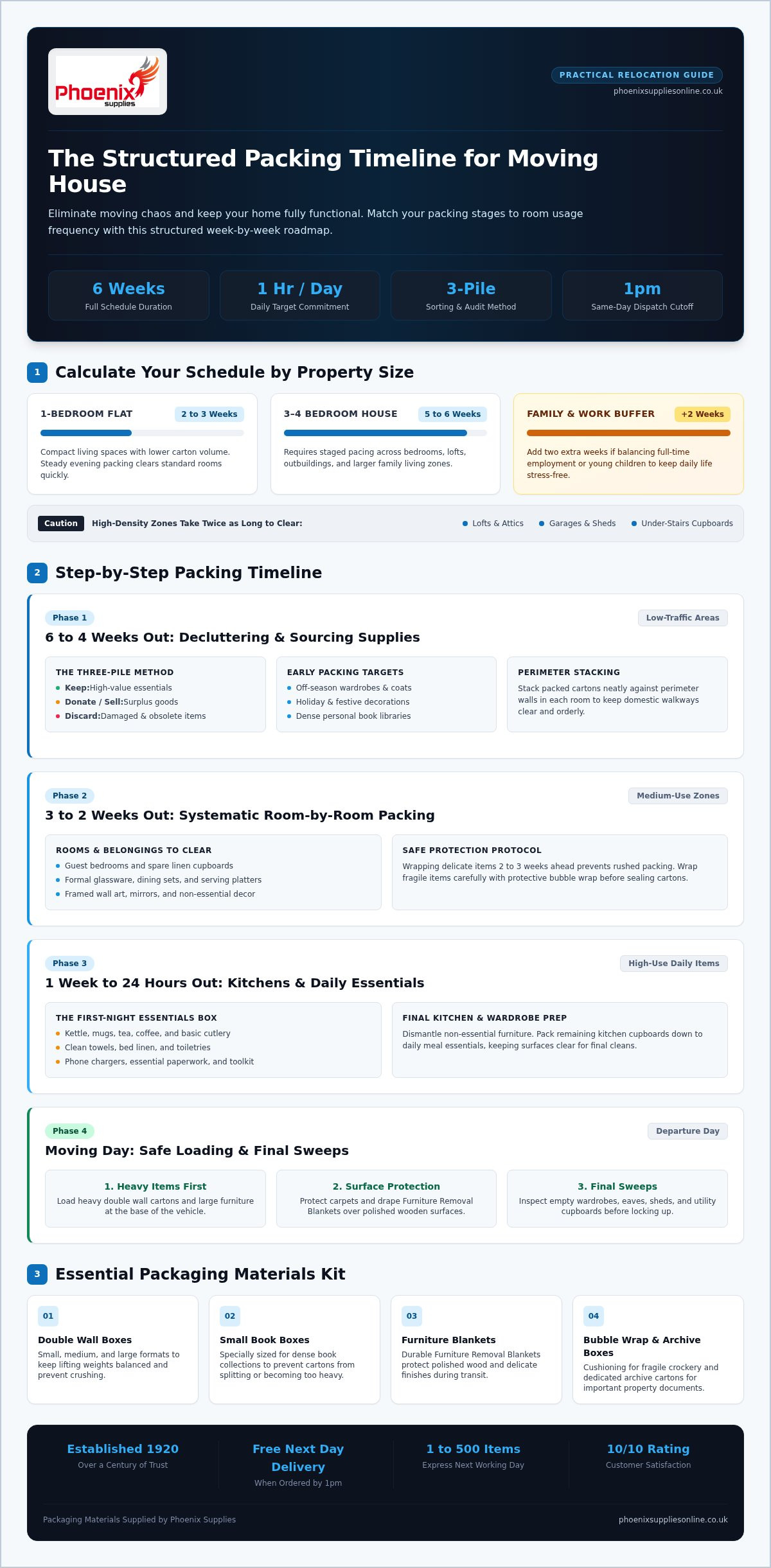
Every home requires a slightly different approach. While a compact one-bedroom flat often takes two to three weeks of steady work, a three or four-bedroom home easily requires five to six weeks. To calculate your schedule accurately, account for high-density storage zones that take twice as long to clear:
- Lofts, attics, and eaves storage
- Garages, workshops, and garden sheds
- Under-stairs cupboards and deep utility wardrobes
If you balance full-time employment or have young children, add a two-week safety buffer to your schedule. Committing an hour each evening alongside dedicated weekend sessions keeps your packing timeline for moving house on track without disrupting family life.
Six to Four Weeks Out: Decluttering and Sourcing Packaging Materials
The first active phase of your packing timeline for moving house centres on reduction and preparation. Before taping up your first carton, you need an honest inventory of what you actually own. Starting four to six weeks in advance gives you space to audit your belongings, assess room volumes, and consult the ultimate packing materials list for moving house to calculate exact carton counts without guesswork.
The Three-Pile Method for Sorting Long-Term Storage
Tackle low-traffic zones first, focusing on the loft, garage, and spare bedroom. Sort every item into three distinct piles: keep, donate or sell, and discard. Moving broken tools, outgrown clothes, or obsolete paperwork wastes time and vehicle space. Establishing a clear inventory at this stage mirrors practical consumer principles highlighted in the FMCSA Protect Your Move guidelines, helping you monitor high-value possessions before they are sealed out of sight.
Assembling Your Core Packaging Materials Kit
Gather your supplies before dismantling rooms. Flimsy secondhand grocery boxes buckle under pressure and risk transit damage. Instead, equip yourself with double wall cardboard boxes in small, medium, and large formats to keep lifting weights balanced. You will also need archive boxes for property paperwork, rolls of protective bubble wrap, and Furniture Removal Blankets for polished wood surfaces. Ordering early from Phoenix Supplies UK ensures your Packaging Materials arrive promptly with free next working day delivery when you order before 1pm.
Boxing Up Low-Frequency Items Ahead of Time
With your supplies stacked and ready, pack possessions you will not need over the coming month. This includes holiday decorations, formal glassware, framed prints, and off-season wardrobes. Pack dense personal libraries into small moving boxes for books to prevent cartons from splitting or becoming too heavy to carry. Stack packed cartons neatly against perimeter walls in each room. This keeps domestic walkways clear and keeps your packing timeline for moving house calm and orderly.
Three to Two Weeks Out: Systematic Room-by-Room Packing
With long-term storage zones cleared, weeks three and two of your packing timeline for moving house shift toward main living areas. This phase requires a structured approach. You aren't stripping the house bare yet; instead, you're packing away non-essential layers of day-to-day life. It is also the ideal window to finalise administrative tasks like address updates, reflecting official advice such as the GOV.UK moving home guide and arranging mail redirection via Royal Mail to avoid administrative delays later.
Work through these five practical steps during this fortnight:
- Step 1: Pack living room decorative displays, picture frames, and ornaments with bubble wrap.
- Step 2: Box up secondary bedrooms, guest bedding, and infrequently used hobby gear.
- Step 3: Transfer hanging suits, dresses, and winter coats directly into specialist wardrobe boxes.
- Step 4: Box non-essential kitchenware, including cake tins, blenders, and formal dinnerware.
- Step 5: Label every carton on multiple sides with its contents and destination room.
Protecting Delicate Mirrors, Artwork, and Consumer Electronics
Wrap framed prints, mirrors, and canvases in generous layers of bubble wrap, shielding vulnerable edges with protective corners. When preparing screens, check our detailed advice on how to choose the best TV moving box to cushion displays against transit vibrations. Place power leads, HDMI cables, and remote controls into labelled grip-seal bags taped directly to the corresponding appliance carton.
Packing Wardrobes and Linen Cupboards Without the Fuss
Leave garments on their hangers and transfer them straight into tall or short wardrobe cardboard boxes. This prevents creases and saves hours of re-ironing later. Follow our practical steps on how to pack clothes for moving to protect fabrics against moisture and friction. Cushion empty gaps inside clothing cartons using spare towels, folded sheets, and spare linen to stop loads shifting.
Implementing a Clear Colour-Coded Labelling System
A reliable packing timeline for moving house relies on clear identification at the other end. Assign a distinct colour code or tape roll to each room in your new home. Write the room name and handling notices like "Fragile" or "Heavy" in bold marker on the top and two sides of every box. Always mark which edge faces upward so stacked cartons stay secure.
One Week to 24 Hours Out: Kitchens, Furniture, and Daily Essentials
Entering the final seven days requires precision. You've cleared the storage zones and spare rooms; now you must tackle the functional core of your home without disrupting basic routines. Following this stage of your packing timeline for moving house ensures your kitchen is packed securely, your heavy furniture is protected, and you aren't left searching for a toothbrush on your first evening in the new property.
The High-Risk Kitchen: Wrapping Crockery and Glassware Safely
Pare your kitchen down to an absolute survival set: one plate, bowl, mug, and cutlery set per person. Pack everything else. Wrap plates individually with clean paper or bubble wrap and pack them vertically on their edges, exactly like vinyl records. Stacking plates flat invites cracks under transit pressure. Wrap wine glasses and tumblers carefully, filling internal voids with paper to absorb shocks. Remember to empty, defrost, and dry your fridge-freezer at least 24 hours before loading day to prevent water leaks inside the vehicle.
Preparing Large Furniture and Mattresses for Transit
Dismantle flat-pack wardrobes, bed frames, and dining tables during these final days. Place small hardware components, screws, and wooden dowels into clear sandwich bags, then tape each bag directly to the matching furniture piece. Protect mattresses from road dirt, stairwell scuffs, and sudden rain showers using thick polythene mattress covers. Wrap dining tables, dressers, and armchairs with durable Furniture Removal Blankets secured with webbing straps. To keep your surfaces pristine on moving day, order protective mattress covers and removal blankets directly from Phoenix Supplies for dependable protection.
Building Your Essential First-Night Moving Day Box
Your first-night survival box is the single most important container you will pack. Set aside a dedicated carton for immediate essentials and transport it in your personal car rather than the removal van. Pack the following items together:
- The kettle, mugs, tea bags, coffee, and a pack of biscuits
- Prescription medications, a basic first-aid kit, and everyday toiletries
- Mobile phone chargers, power banks, and essential paperwork
- Fresh bed linen, pillows, and a set of towels for each family member
- A utility knife, a roll of tape, and basic cleaning wipes
Maintaining discipline in your packing timeline for moving house right up to the final 24 hours means you can settle into your new home with your essentials immediately to hand.
Moving Day Checklist: Loading, Final Sweeps, and Safe Delivery
Execution day has arrived. Because you followed a structured packing timeline for moving house, your belongings are boxed, labelled, and ready to go. Moving day itself comes down to disciplined physical handling, vehicle loading, and closing down the property cleanly. Work through these sequential checks to ensure a calm transition from door to door:
- Step 1: Protect hallway floors, door frames, and stair carpets with durable self-adhesive film.
- Step 2: Load heavy furniture and double wall base cartons into the vehicle first.
- Step 3: Secure tall items, wardrobe boxes, and loose goods using strong webbing van straps.
- Step 4: Conduct a final room-by-room sweep across built-in wardrobes, lofts, and sheds.
- Step 5: Record final utility meter readings and secure all keys for handover.
Protecting Floors, Doorways, and Banisters During Loading
High footfall quickly wears down carpets, especially when loading in unpredictable British weather. Roll self-adhesive polythene floor protector film across entrance halls, high-traffic corridors, and stairs before shifting bulky items. Drape padded transit blankets over staircase bannisters and narrow internal door frames to stop gouges from passing table legs. Keep corridors completely clear of discarded tape, scissors, or loose packaging to prevent trips and slips during heavy lifts.
Strategic Van Stacking to Prevent Transit Movement
A well-packed removal vehicle prevents shifting and crushing during sudden braking. Place your heaviest white goods, dismantled timber frames, and uniform double wall boxes directly against the vehicle bulkhead and floor. Stack lighter, medium-sized boxes on top of these solid foundations. Anchor tall wardrobe cartons and appliances securely against wall rails using cotton-rich webbing removal straps to stop sudden lateral sliding on roundabouts.
The Final Property Walkthrough Before Key Handover
Take twenty minutes for an uninterrupted final check before handing over the keys. Open every high kitchen cabinet, inspect beneath bathroom sinks, and shine a torch into the loft and eaves. Check the garden shed and outbuildings for garden tools or forgotten tins of paint. Before locking up, take dated photographs of your gas, electricity, and water meters to ensure your final utility bills remain accurate. When preparing for future relocations or projects, explore the dependable packaging supplies at Phoenix Supplies UK for everything you need to keep moves organised and safe.
Take the Stress Out of Your Upcoming Move
A calm, organised relocation is entirely within your reach. By sticking to a structured packing timeline for moving house, you protect your daily routine, prevent eleventh-hour panic, and ensure your belongings travel safely. Decluttering storage zones early, working methodically through living spaces, and keeping your essentials separate makes all the difference when moving day arrives.
Having dependable supplies on hand from day one gives you total peace of mind. As a family-run UK packaging specialist established in 1920, Phoenix Supplies provides industry-standard double wall cardboard boxes for dependable stacking strength, alongside bubble wrap, transit blankets, and protective covers. Orders placed before 1pm dispatch the same day with free next working day delivery, so you never have to pause your preparations. Order heavy-duty moving boxes and protective packing supplies online today, and step into your new home feeling prepared, relaxed, and completely in control.
Frequently Asked Questions
How many weeks before moving should I start packing?
You should start packing roughly four to six weeks before moving day. This window allows ample time to declutter lofts, garages, and spare bedrooms without turning your daily routine upside down. For larger properties or busy households, following an eight-week packing timeline for moving house gives you a comfortable safety cushion to pack steadily without late-night panics.
What should I pack first when moving house?
Pack the rooms and items you use least often first. Begin with storage spaces like the attic, basement, garden shed, and spare bedrooms. Next, box up off-season clothing, spare bedding, formal dining sets, and decorative wall art. Saving everyday living areas and high-use kitchen utensils until the final week ensures your home stays comfortable and functional until moving day.
How many boxes do I need to pack a three-bedroom house?
A typical three-bedroom house generally requires between 60 and 80 cardboard boxes. It is best to mix sizes: around 20 to 30 small boxes for heavy items like books and pantry goods, 30 to 40 medium boxes for kitchenware and toys, and 10 to 15 large boxes for bedding and towels. Adding specialist wardrobe cartons keeps your clothes neat without taking up standard box capacity.
Can I pack clothes while they are still on their hangers?
Yes, using cardboard wardrobe boxes allows you to move clothes directly on their hangers. These tall cartons feature an internal hanging rail, keeping suits, coats, and delicate garments crease-free during transit. This saves hours of folding before the move and ironing afterwards. Simply lift clothes straight out of your bedroom wardrobe and drop them directly into the carton, filling the base space with folded knitwear.
What should go into a first-night essentials moving box?
Pack items you need immediately upon arrival without unpacking main cartons. Include a kettle, mugs, tea, coffee, snacks, phone chargers, toiletries, prescription medicines, and a fresh change of clothes. Add bed sheets, pillows, towels, a torch, and a utility knife cutter to open sealed boxes. Keep this box in your personal vehicle so it remains instantly accessible when you unlock the front door.
How do I prevent breakages when packing fragile kitchenware?
Always pack plates vertically on their rims rather than stacking them flat on top of each other. Wrap every ceramic plate and bowl individually in packing paper or bubble wrap, lining the carton base with crumpled paper for shock absorption. Wrap wine glasses and mugs carefully, padding delicate stems and handles. Pack them snugly into double wall cartons so nothing shifts, and clearly label the boxes as fragile.
Should I buy single wall or double wall boxes for moving house?
You should always choose double wall boxes for a house move. Single wall cartons lack the structural rigidity required for heavy home contents and often crush when stacked in a transit van. Double wall cardboard boxes feature two layers of corrugated fluting, providing superior stacking strength. Integrating double wall boxes into your packing timeline for moving house protects fragile valuables and prevents sudden base collapses during lifting.


