

Imagine finally getting the keys to your new home, only to find your expensive mattress covered in grey road grime and damp patches from the floor of the removal van. It's a frustrating situation that many people face because they didn't realise that high-quality mattress bags for moving are essential for a clean transition. We know that your bed is one of the most personal items you own, and the thought of it getting ruined by moisture, dust, or dirt is genuinely stressful.
Using the right protection is about more than just hygiene; it's about peace of mind during a busy move. In this 2026 guide, we'll help you select the correct thickness and material to ensure your bed stays spotless, dry, and free from accidental damage. We'll also clear up the confusion between standard UK mattress sizes and generic bag dimensions to ensure you get a snug fit. From understanding the difference between temporary moving covers and heavy-duty storage bags to tips on handling heavy mattresses without the struggle, you'll find everything you need to protect your sleep environment for the journey ahead.
Key Takeaways
- Learn why professional-grade covers are the best way to shield your mattress from dust, moisture, and road grime during transit.
- Discover how to accurately measure your bed to select the perfect mattress bags for moving, ensuring a secure fit that won't tear.
- Compare the benefits of waterproof polythene covers against reusable fabric options to find the right level of protection for your specific journey.
- Master professional "slide and glide" techniques to move heavy mattresses safely and efficiently without causing damage to the fabric.
- Understand why sourcing specialist supplies from a dedicated UK provider offers better reliability and protection than general retail alternatives.
Why Mattress Bags are Essential for a Stress-Free Move
Professional removal companies rely on heavy-duty polythene sleeves because they understand that a mattress is an investment in your health. These aren't simple plastic wraps; they're specifically engineered mattress bags for moving that act as a total hygiene barrier. From shielding against the soot found in removal vans to preventing damp from a rainy driveway, these covers provide a reliable barrier that keeps your bed in showroom condition. They are designed to withstand the rigours of transit, providing a thick layer of protection that stops snags, rips, and tears on the delicate outer fabric of your bed.
Moisture is perhaps the biggest threat during a UK move. Even a few minutes of exposure to a light drizzle can lead to dampness being trapped within the fibres, which eventually causes mould. High-quality polythene is vital because it's completely waterproof. It ensures that your mattress stays dry from the moment it leaves your old bedroom until it's safely positioned in your new home.
The Risks of Moving Unprotected
Many people try to save time by leaving a fitted sheet on the bed or wrapping the mattress in old duvets. This provides almost zero protection. Fabric doesn't stop moisture, and it certainly won't prevent oil or grease from a van floor from soaking through. Consider these common risks:
- Permanent Staining: Once road grime or oil touches a mattress, it's incredibly difficult to remove without professional help.
- Odour Absorption: Mattresses act like giant sponges. Without a sealed bag, they can easily pick up the stale smells of a moving van or previous loads.
- Hidden Costs: The price of a professional deep clean or a total replacement far outweighs the small investment in a dedicated cover.
Investing in proper mattress bags for moving is a simple way to avoid these headaches. It's a straightforward solution that ensures you can sleep in a clean, fresh bed on your very first night in the new house.
Moving vs. Storage: Different Levels of Protection
The level of protection you need often depends on how long the mattress will be out of use. For a quick move across town, the focus is primarily on puncture resistance and keeping dust at bay. However, if your items are heading into a container or a garage for several weeks, you need a more robust approach. Whether you're protecting traditional pocket springs or modern memory foam types of mattresses, the goal remains the same: preserving the structural integrity and cleanliness of your sleep surface.
Long-term storage requires a heavy-duty option that can be taped completely shut to create an airtight seal. This is your best defence against pest infestations and the "musty" smell that often develops in storage units. A well-sealed bag acts as a steady guide for your mattress's health, keeping it fresh for months at a time.
UK Mattress Size Guide: Finding the Right Fit for Your Bed
Choosing the correct dimensions is the most important part of your preparation. Many people assume that a "double" bag will fit any double bed, but modern manufacturing has introduced a huge variety of depths and styles. If you choose mattress bags for moving that are too small, the plastic will be under constant tension. This makes it far more likely to snag or split the moment a removal person tries to lift it. On the other hand, an oversized bag can leave loose plastic trailing on the floor, which is a significant trip hazard.
Standard UK Dimensions Breakdown
To get the fit right, it helps to start with the basics. The UK market follows specific standards that differ from European or American sizes. You can refer to this UK mattress size guide to confirm your bed's footprint before ordering. Generally, you'll be choosing from:
- Single (3ft) and Small Double (4ft): These are common in guest rooms and for children. A small double requires a specific bag to avoid excess bunching or empty corners that can get caught during transit.
- Double (4ft 6in) and King Size (5ft): These are the standard for most households. Ensure you check if your King Size is a standard UK 150cm width rather than a slightly different European model.
- Super King (6ft): These mattresses are exceptionally heavy. We always recommend using extra-thick polythene for these to ensure the bag doesn't stretch or tear under the mattress's own weight.
Measuring Depth and Allowance
The "footprint" of the bed is only half the story. You must measure the depth of your mattress, especially if you have a pillow-top model or an integrated memory foam topper. A standard mattress might be 20cm deep, but luxury models can easily exceed 35cm. We always suggest adding 5-10cm of "wiggle room" to your measurements. This extra allowance makes the packing process much easier and reduces the risk of the bag tearing whilst you're trying to slide the mattress inside. A professional-grade mattress bag typically features a thickness of 200 to 400 gauge, providing the necessary puncture resistance for removal vans.
If you have a zip-and-link bed, it's often easier to use two separate single bags rather than one giant cover. This makes the individual sections much lighter and easier to carry through tight hallways. Before you finalise your order, it's a good idea to check The Ultimate Packing Materials List for Moving House in 2026 to ensure you haven't missed any other essentials. If you're ready to secure your bed, you can browse our range of professional covers for national UK delivery.
Comparing Materials: Polythene vs. Heavy-Duty Reusable Covers
Selecting the right material for your mattress bags for moving depends entirely on the logistics of your journey and the weather on the day. Whilst many high-street retailers offer thin, "crinkly" plastic that tears at the slightest tug, professional-grade protection relies on much thicker materials. The industry standard for a safe move is a minimum of 200-gauge (50 micron) polythene. This thickness provides the necessary puncture resistance to survive being slid across a wooden van floor or leaned against other furniture without failing.
One critical factor often ignored in generic guides is the issue of breathability. Polythene is a total moisture barrier, which is its greatest strength during a rainy UK move. However, this also means it is non-breathable. If you seal a mattress that is even slightly damp from recent cleaning or high humidity, that moisture becomes trapped. Over several weeks in storage, this can lead to mould growth. To avoid this, we always suggest leaving your mattress in a dry, heated room for at least 24 hours before you seal it for long-term storage.
When to Choose Heavy-Duty Polythene
Thick polythene is the favourite choice for most domestic moves because it offers a 100% waterproof seal. If you are facing a long-distance haul or a rainy moving day, polythene is the only material that guarantees your bed stays bone dry. Professional removal companies amongst the UK prefer this material because it is transparent. Being able to see the mattress through the bag allows the moving team to identify the top and bottom easily, ensuring it is positioned correctly in the van. It is also the most budget-friendly option for DIY movers who still want professional-level security.
Zipped Bags with Handles
Reusable fabric bags, often made from woven polypropylene, are an alternative that many people consider for heavy memory foam mattresses. These usually feature zips and integrated handles, which can make a heavy Super King much easier to manoeuvre through tight corridors. However, there are trade-offs to consider:
- Water Resistance: Most fabric bags are only "water-resistant" rather than fully waterproof. Moisture can often seep through the seams or the zip line if it's raining.
- Zip Reliability: A cheap zip is a major weak point. If a zip "blows out" whilst the team is lifting the mattress by the handles, it can lead to accidental drops and injuries.
- Cost: These are significantly more expensive than polythene and are usually only worth the investment if you plan to move frequently.
Once your move is complete, you don't need to worry about your polythene covers ending up in a landfill. Most mattress bags for moving are made from LDPE (Low-Density Polyethylene), which is widely recyclable. You can simply take them to the soft plastic recycling points found at most large UK supermarkets or your local household waste recycling centre.
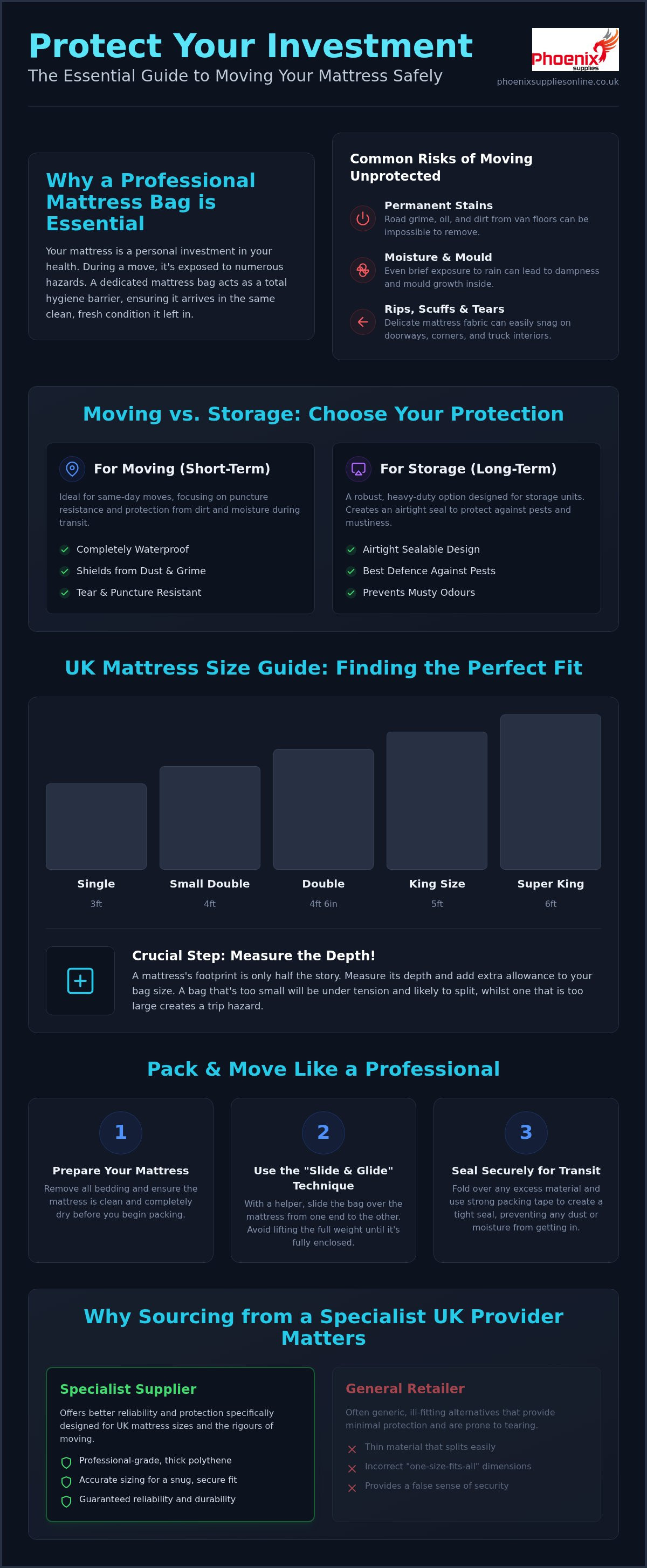
How to Pack and Move Your Mattress Like a Professional
Wrestling a heavy, floppy mattress into a van is often the most dreaded part of any house move. Without a plan, you'll likely end up with a strained back and a dirty bed. Professional removal teams avoid this by using specific techniques that prioritise safety and cleanliness. Before you even reach for your mattress bags for moving, it's vital to prepare the surface. Strip away all sheets, protectors, and electric blankets. Take a moment to inspect the mattress for any dampness; if you've recently deep-cleaned it, ensure it's had at least 24 hours to air out in a warm room. Trapping even a tiny amount of moisture inside a sealed plastic bag is a recipe for mould growth during transit.
Step-by-Step: Bagging the Mattress
Don't try to bag a mattress while it's lying flat on the bed frame. Instead, clear some floor space and stand the mattress on its long side against a sturdy wall. This position uses gravity to your advantage and provides much better stability. With one person on each end, slide the bag over the top and pull it down toward the floor in a smooth, even motion. As the bag goes on, give it a gentle shake to remove trapped air pockets that can cause the plastic to "balloon" and make the mattress harder to grip.
Once the mattress is fully encased, you need to seal the entry point. Fold the excess plastic over tightly, much like you would wrap a parcel, and secure the entire seam with several layers of heavy-duty packing tape. This creates the moisture-proof seal you need to survive a rainy UK moving day. A neat, taped finish also ensures there are no loose flaps of plastic that could snag on door handles or van ramps as you move through the house.
Handling and Van Loading Tips
When it's time to move the bed to the van, use the "slide and glide" technique on carpeted or smooth floors to save your strength. However, you must never drag a bagged mattress across abrasive surfaces like gravel driveways or rough concrete paths. Even the thickest polythene can puncture if it's dragged over sharp stones, which immediately compromises the hygiene barrier. For the best protection, lift the mattress clear of the ground when outside.
Inside the removal van, the way you position the mattress is critical for its long-term health. You should always store mattresses on their side, leaning against the van wall. Never lay them flat with heavy boxes stacked on top, as this can permanently damage the internal spring structure or cause memory foam layers to shift and lose their shape. Use webbing straps to secure the mattress firmly against the side of the vehicle so it doesn't bow or slide during the journey. If you're still organising the rest of your supplies, you might find our guide on How to Buy Moving Boxes Online in the UK: The 2026 Guide to Packing Kits helpful. To ensure your bed arrives in perfect condition, order your professional-grade mattress covers today for reliable national delivery.
Sourcing Quality Mattress Protection in the UK
When you're organising a house move, it's tempting to pick up all your supplies from a general supermarket or a giant online marketplace. However, mattress bags for moving sourced from non-specialist retailers often fall short when it comes to material thickness. Many of these generic covers are made from thin plastic that's more suited to keeping dust off a sofa during a quick paint job than surviving a cross-country removal. By choosing a dedicated packaging specialist, you're investing in the same professional-grade polythene that removal firms use to protect their insurance liabilities and their customers' belongings.
Ordering your supplies online allows you to tick one major task off your list whilst you focus on the logistics of the move. National UK delivery means you don't have to spend your weekend driving to industrial estates to find the right sizes. Instead, your protective covers and boxes arrive at your door, ready for you to start packing at your own pace. Many of our customers find it efficient to buy in bundles, combining their mattress protection with other essentials like small moving boxes for books to ensure every part of their home is correctly shielded.
The Phoenix Supplies UK Advantage
As a family-run business, we take a great deal of pride in the quality of the materials we stock. We don't just sell these products; we understand the stress of a moving day and only provide covers that we'd be happy to use for our own families. This personal touch means you get the reliability of a specialist with the warmth of a dedicated office team who are always ready to help. Our mattress and furniture covers are selected for their durability and puncture resistance, ensuring they don't fail when you're halfway through a narrow hallway or loading a damp van in the rain.
Next Steps for Your Move
Before you place your order, do a final walkthrough of your home. It's easy to remember the main King Size bed but forget the guest room single or the children's bunk beds. Creating a simple checklist of every mattress in the house ensures you have the right protection for every sleeper. If you're managing a larger project or a commercial move, our team can provide advice on bulk orders to ensure you have exactly what you need without overspending.
Getting your mattress bags for moving sorted early is a small step that makes a huge difference. It's the best way to guarantee a damage-free arrival and a clean, fresh bed to fall into on your first night in the new house. You can browse our full range of professional covers online and have them delivered anywhere in the UK, giving you one less thing to worry about during your transition.
Secure Your Best Night's Sleep in Your New Home
Moving house is a major undertaking, but protecting your most personal furniture doesn't have to be a source of worry. By choosing the correct size and opting for professional-grade 200-gauge polythene, you ensure your bed stays dry and hygienic from the moment it leaves your old bedroom until it's unpacked. We've seen how the right mattress bags for moving prevent the common pitfalls of moisture damage and road grime, letting you focus on the excitement of your new start.
As a family-run UK business, we take pride in supporting your journey with the same quality materials used by professional removal firms. We make the process straightforward by including free national delivery on our supplies, so you can organise your move without any hidden costs. Whether you're moving a single guest bed or a heavy Super King, having the right protection in place is the final step toward a stress-free transition.
Browse our range of heavy-duty mattress and furniture covers today to secure your belongings. We're here to help you get every detail right, ensuring you arrive at your new front door with total peace of mind. Good luck with your move!
Frequently Asked Questions
Do I need a different bag for a memory foam mattress?
You don't need a specific material, but you must account for the extra depth and weight. Memory foam mattresses are often deeper than traditional springs, sometimes reaching 30cm or more. They are also much floppier, making them harder to handle. Ensure you choose a bag with a high gauge to prevent the plastic from stretching or tearing under the weight of the foam during the move.
What is the best thickness for a mattress bag for moving?
The best thickness for standard UK removals is 200-gauge (50 micron) polythene. This provides a professional-grade barrier that is puncture-resistant and waterproof. If you are moving a particularly heavy Super King or a luxury pillow-top model, you might prefer a 400-gauge cover. This extra thickness offers peace of mind when sliding the mattress across van floors or navigating tight staircases where snags are more likely.
Can I reuse my mattress bag for storage in a garage?
You can use a heavy-duty bag for garage storage, but you must ensure it's completely airtight. Garages are prone to temperature fluctuations and dampness, which can lead to condensation inside the plastic. If you're storing the bed for more than a few days, make sure the mattress is bone dry before sealing. It's also wise to check the bag periodically for any signs of moisture or pest activity.
How do I stop moisture from getting trapped inside the bag?
To prevent moisture from being trapped, you should strip the bed and let the mattress air out for at least 24 hours before packing. Never bag a mattress that has been recently steam cleaned or used in a humid room without thorough drying. As you seal the bag with tape, try to press out as much air as possible. This reduces the chance of condensation forming inside the bag during the journey.
Will a king-size mattress bag fit a double bed?
A king-size bag will technically fit a double bed, but the excess plastic can be dangerous. Loose material creates a significant trip hazard for the people carrying the mattress. If you have to use a larger size, you must fold the spare plastic tightly against the side of the mattress and secure it firmly with heavy-duty packing tape. This keeps the package neat and much safer to handle.
How do I move a heavy mattress once it is inside the bag?
Moving a heavy mattress requires two people and a clear path. Once it's inside the bag, you can use the "slide and glide" technique on carpets, but you should lift it clear of the ground on rougher surfaces. For the best control, use webbing straps to create handles or secure the mattress against the side of the van. Never drag the bag across gravel, as sharp stones will puncture the plastic.
Are mattress bags for moving recyclable in the UK?
Yes, most professional mattress bags for moving are made from LDPE (Low-Density Polyethylene), which is widely recyclable in the UK. Once your move is finished, you can take the clean, dry plastic to soft plastic recycling points at large supermarkets. Alternatively, check with your local household waste recycling centre. It's a simple way to ensure your moving supplies don't end up in a landfill after their job is done.
Should I vacuum-seal my mattress for a house move?
We don't recommend vacuum-sealing your mattress for a domestic move. Whilst it saves space, the intense pressure can permanently damage the internal spring structure or cause memory foam layers to lose their resilience. It is much safer to use standard mattress bags for moving that maintain the mattress's natural shape. This ensures your bed remains comfortable and supportive when you finally unpack it in your new bedroom.


