
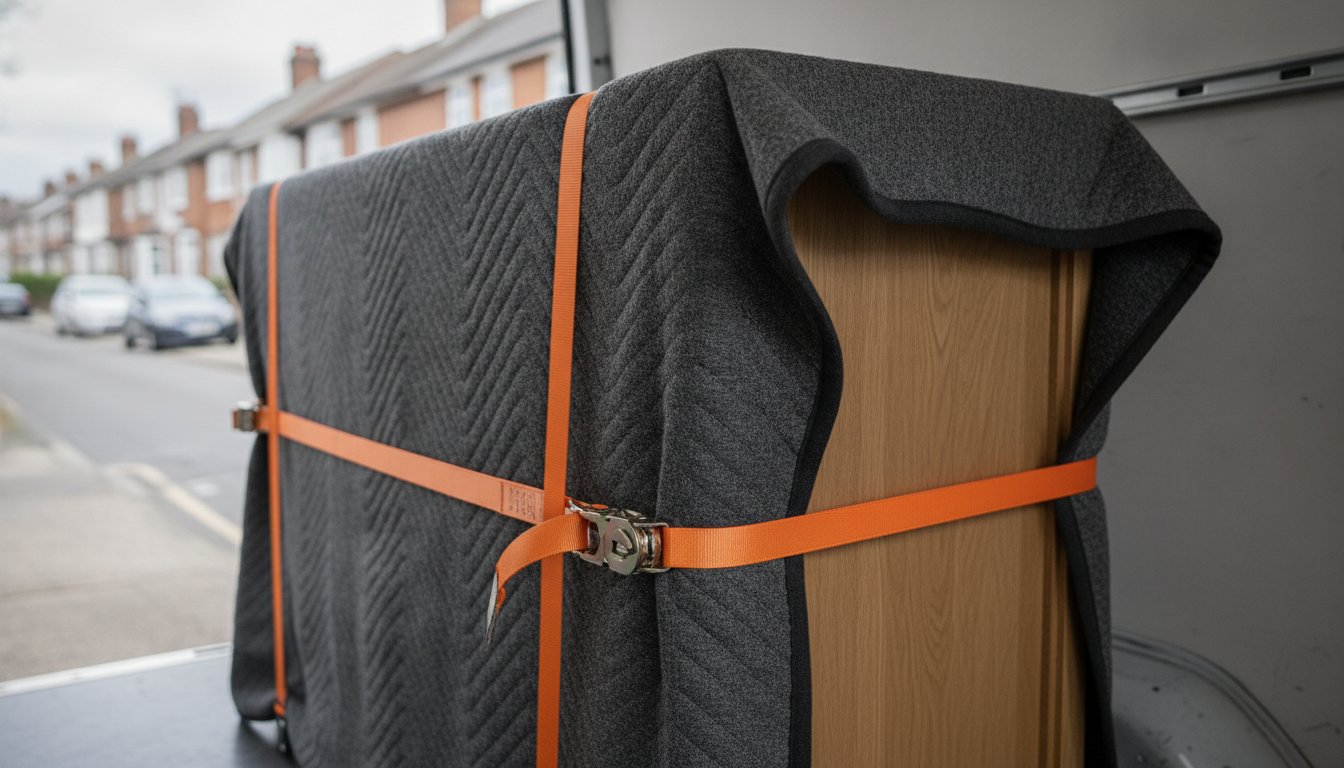
Did you know that damaged furniture is officially the most common "moving fail" reported by people across the UK? It's a frustrating moment when you open the van doors only to find your favourite oak sideboard has a deep gouge because it shifted during a sharp turn. Learning how to secure heavy furniture in a moving van isn't just about heavy lifting; it's about mastering the science of the "friction barrier" and the anchor point.
We understand that the fear of your belongings clashing together can make the night before a move feel incredibly stressful. You might be wondering if those old duvets in the cupboard are really enough, or how many straps you actually need to keep a wardrobe from toppling. This guide will help you master the "Wrap and Strap" technique to ensure your heaviest furniture arrives at your new home without a single scratch or dent.
You'll gain the confidence to use professional webbing straps and learn why heavy-duty blankets are the secret to a damage-free arrival. We'll walk you through the essential kit and the professional methods used to keep every load stable, secure, and ready for the road.
Key Takeaways
- Understand why preventing both horizontal and vertical movement is essential to stop heavy items from rubbing together and causing permanent damage.
- Learn how to secure heavy furniture in a moving van by using professional removal blankets as a high-friction barrier between polished surfaces.
- Use the "Rule of Two" to calculate exactly how many blankets and webbing straps you need, helping you avoid the danger of running out mid-move.
- Master the professional "Wrap and Strap" technique to anchor heavy loads securely whilst protecting delicate wood and upholstery from tape marks.
- Discover the importance of choosing cross-stitched, professional-grade textiles over old duvets to ensure consistent protection throughout your journey.
Why Securing Heavy Furniture is Critical for a Damage-Free Move
When we talk about load securing, we aren't just discussing how to stop a wardrobe from falling over. True load securing is the process of preventing both horizontal and vertical movement while your vehicle is in motion. If you haven't mastered how to secure heavy furniture in a moving van, your items effectively become free-floating objects that react to every bump, turn, and stop. This is why understanding the principles of load securing is vital for anyone tackling a DIY move across the UK.
The most common cause of damage isn't actually a major crash; it's the "clash risk." Even on a smooth motorway, a van creates constant micro-vibrations. If two heavy pieces of furniture are touching without a proper friction barrier, these vibrations cause them to rub together. Over a two-hour drive, this constant friction can sand through wood stain or tear delicate upholstery. Without professional textiles to provide grip and cushioning, your furniture is essentially being sanded down by its neighbours in the van.
There are also serious legal implications to consider. In the UK, the Driver and Vehicle Standards Agency (DVSA) updated its guidance in December 2024, placing a heavy emphasis on documented risk assessments for loads. Under the Road Traffic Act 1988, both the driver and the person who loaded the van can be held responsible for an insecure load. Penalties can include fines of up to £5,000 and points on your licence, especially if the way you've packed poses a danger to other road users.
Many people try to save money by using old household duvets, but these often fail under pressure. A duvet is designed for comfort, not friction. They are often too slippery, allowing furniture to slide underneath them. Professional removal blankets are cross-stitched specifically to provide puncture resistance and a "grip" that keeps the fabric in place against the furniture surface.
The Physics of the Removal Van: Why Weight Matters
Heavy furniture acts as a projectile during sudden braking. If a 100kg sideboard isn't anchored, a sudden stop at 30mph can cause it to shift with incredible force, easily crushing smaller boxes or even denting the van's bulkhead. Top-heavy items like wardrobes or larder units are particularly risky because their high centre of gravity makes them prone to tipping during cornering. Before you start loading, it's helpful to review a packing materials list for moving to ensure you have the webbing straps and blankets required to manage these forces.
Common DIY Mistakes: Wedging vs. Securing
A frequent mistake is "wedging" items together with sofa cushions or spare pillows. While this might feel snug in the driveway, cushions compress over time. After ten miles of road vibration, those cushions lose their volume, creating gaps that allow furniture to begin shifting. Another hazard is using thin plastic wrap directly on wood without a layer of padding. Plastic can trap moisture or even melt onto polished surfaces in a warm van. We define transit-grade protection as the combination of thick padding and consistent tension; you need the blanket to absorb the shock and the strap to provide the anchor.
The Role of Professional Removal Blankets in Furniture Protection
When you're figuring out how to secure heavy furniture in a moving van, the first line of defence is always the textile layer. Removal blankets UK professionals use aren't just thick cloths; they're engineered tools designed to absorb impact and prevent surface friction. The quality of these blankets is measured in GSM, or Grams per Square Metre. For heavy items like solid oak dining tables or mahogany wardrobes, you should aim for a weight between 300 and 500 GSM. This density provides enough "loft" to cushion against the metal walls of the van whilst remaining flexible enough to wrap around corners tightly.
While UK regulations focus on the end result of a secure load, looking at international professional protection standards highlights just how critical the right materials are for preventing cargo shift. A thin blanket simply won't offer the resistance needed to stop a heavy object from sliding.
The distinctive cross-stitch pattern on professional blankets isn't for decoration. It locks the internal fibres in place. Without this stitching, the padding would bunch up at one end of the blanket after a few uses, leaving you with thin patches where you need protection most. If your move involves a period of storage, wool-mix blankets are the best choice. Their natural breathability prevents moisture from becoming trapped against the wood, which is a common cause of cloudy "blooming" on French-polished or waxed finishes.
Standard Wool-Mix vs. Premium Padded Transit Blankets
Standard wool-mix blankets are reliable workhorses for chairs and side tables. However, for high-gloss finishes or delicate antiques, premium padded versions offer a smoother inner lining to prevent microscopic scratches. You can find a more detailed material breakdown in our furniture transit blankets guide. If you're unsure which weight is right for your specific pieces, our team at Phoenix Supplies UK is always happy to offer personal advice based on your inventory.
Protecting Large Upholstered Items
Using the right textiles is a core part of how to secure heavy furniture in a moving van properly. For sofas and armchairs, blankets serve a dual purpose. We recommend the "sandwich" technique: place a blanket against the van wall, load the sofa, and then drape another blanket over the top before adding a couch cover for moving. This layers the protection, ensuring the sofa frame doesn't rub against the vehicle's ribbing. During the height of a UK summer, this also prevents "rub marks" where heat and pressure can cause leather or synthetic fabrics to stick to plastic covers.
Calculating Your Supplies: How Many Blankets and Straps Do You Need?
One of the biggest hurdles in planning how to secure heavy furniture in a moving van is simply knowing how much kit to buy. We often see DIY movers underestimate the sheer surface area of their belongings. To keep things simple, we recommend following the "Rule of Two." This means having at least two professional blankets for every large piece of furniture. One blanket rarely provides full 360 degree coverage for a bulky item; having that second layer allows you to double up on vulnerable corners or polished tops where the risk of impact is highest.
Under-ordering is a common trap that leads to "risky shortcuts." When you run out of blankets halfway through loading a 3.5 tonne Luton van, it is tempting to leave the back of a wardrobe exposed or use a thin household bedsheet. These shortcuts are almost always where the damage occurs. For families tackling a large 4-5 bedroom house move, we provide bulk pallet options. This ensures you have a consistent supply of professional grade textiles without the stress of running short at the last minute. Similarly, webbing straps should always be ordered in pairs. Using a single strap creates lopsided tension, which can cause a heavy item to pivot or twist during transit. Two straps allow you to create a balanced anchor that distributes the load evenly across the van's internal fixing points.
Room-by-Room Supply Estimates for a Standard UK Home
To help you plan your purchase, we have put together these estimates based on a typical UK household inventory:
- Living Room: 8-10 blankets. This covers a three-seater sofa, a TV unit, a sideboard, and a coffee table.
- Bedroom: 6 blankets. This is usually sufficient for a headboard, a double wardrobe, and a large chest of drawers.
- Dining Room: 6-8 blankets. This allows you to wrap the dining table top thoroughly and protect each chair individually to prevent legs from clashing together.
Standard UK Dimensions: Ensuring Full Coverage
Our standard removal blankets measure 150cm x 200cm. This specific size is chosen because it works perfectly with the internal heights of common UK rental vehicles, from short-wheelbase Transits to high-roof Lutons. When you are wrapping your items, always aim for a 20cm overlap between blankets. This ensures that even if the load shifts slightly during the journey, no part of the furniture surface is exposed to the bare van walls. A professional tip we always share is to use a few extra blankets to line the floor of the van before you start. This creates a soft landing for furniture legs and prevents road grit or damp from reaching the feet of your tables and chairs.
The "Wrap and Strap" Technique: Securing Your Load Like a Pro
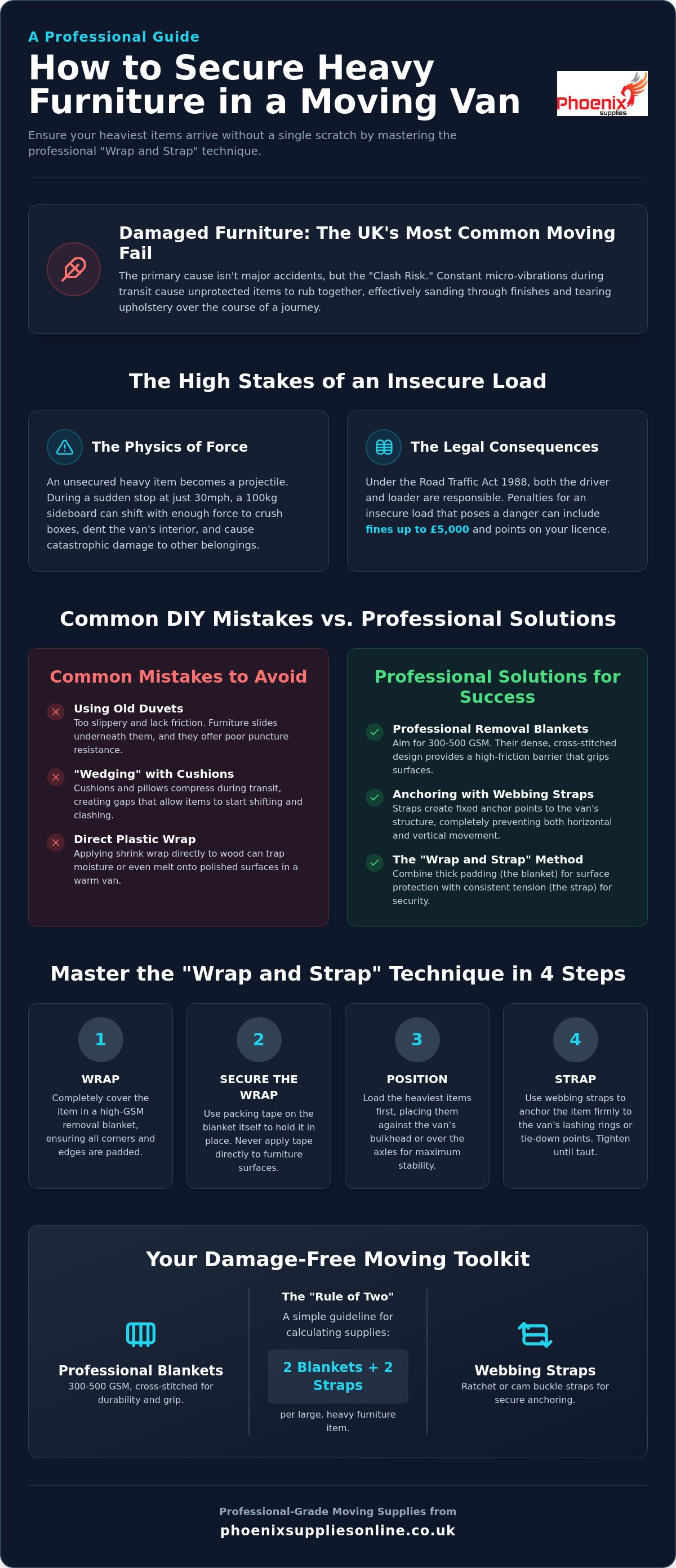
Mastering the "Wrap and Strap" method is the final step in learning how to secure heavy furniture in a moving van. This isn't just about throwing a blanket over a chest of drawers; it's a deliberate system that turns a heavy object into a stable, cushioned package. One of the most effective ways to handle tall items like wardrobes is the "Centre-Out" wrapping technique. By starting your wrap in the middle of the height of the item and working your way up and down, you ensure the padding is most concentrated where the item is likely to bump against the van walls or other furniture.
A common mistake we see is the misuse of packing tape. You should never apply tape directly to wood finishes, veneers, or leather upholstery. The adhesive can leave permanent sticky marks or strip away the polish when you try to remove it later. Always ensure the tape only touches the removal blanket itself. If you need to keep a blanket tight against a large surface, industrial stretch wrap is a safer alternative that clings to itself rather than your furniture. Once your item is fully wrapped, you need to anchor it. Using webbing straps for moving is the only way to safely tie furniture to the internal rails of a van. These straps provide the heavy-duty tension needed to prevent a 100kg wardrobe from shifting during transit.
Step-by-Step: Securing a Heavy Wardrobe
To ensure your heaviest items stay put, follow this professional sequence for every tall piece of furniture:
- Step 1: Drape the first blanket over the top of the wardrobe, ensuring it reaches the floor on both sides to protect the feet.
- Step 2: Use a second blanket to wrap around the middle section, overlapping the first blanket by at least 20cm to cover any gaps.
- Step 3: Secure the blankets with tape (applied only to the fabric) or stretch wrap to keep the padding tight and prevent it from slipping down.
- Step 4: Position the item flat against the van wall and apply webbing straps at 1/3 and 2/3 of the height to provide two solid points of contact.
Using Webbing Straps vs. Bungee Cords
We strongly advise against using bungee cords for heavy furniture. Bungees are designed to stretch, which means they allow for "rebound." If you hit a bump or take a corner, a bungee cord can snap or allow the furniture to bounce, whereas webbing straps offer zero-stretch security. To check if your strap is tight enough, use the "guitar string" test. Pluck the strap once it is tightened; it should feel firm and produce a low "thrum" rather than having any slack. For more advanced load-balancing tips, see our guide on moving blankets for van loads.
If you are ready to start packing, you can find our full range of professional-grade webbing straps and blankets on our main shop page.
Sourcing Professional-Grade Moving Supplies from Phoenix Supplies UK
When you are planning how to secure heavy furniture in a moving van, the quality of your materials is just as important as your technique. Many people turn to large online marketplaces, only to find the "heavy-duty" blankets they ordered are actually thin, single-use sheets that tear at the first sign of a sharp corner. At Phoenix Supplies UK, we operate as a family-run specialist. We take pride in being a dependable partner for your move, offering the kind of personal support and accountability that a faceless corporation simply cannot provide.
By buying direct from us, you're guaranteed the consistent GSM quality we've discussed throughout this guide. Whether you need a small pack for a studio flat or bulk moving packs for a large commercial relocation, our textiles are designed to withstand the rigours of the road. There are several benefits to choosing a specialist over a general retailer:
- Consistent 300 to 500 GSM quality across our entire heavy-duty textile range.
- Expert advice from a UK-based team that understands the practicalities of house moves.
- National UK delivery included to ensure your supplies arrive well before your move date.
We see ourselves as your "helpful neighbour" in the industry. Our office team is always within reach to answer questions, whether you're unsure about the number of straps needed or how to protect a specific family heirloom. We are here to support your move, not just sell you boxes.
The Phoenix Supplies UK Quality Guarantee
Our commitment to quality is built into every cross-stitched seam. These blankets are designed for durability; they can be used for multiple moves or repurposed for long-term storage once you've settled in. We also stock small moving boxes for books to complete your kit. These boxes provide the stable, heavy base you need at the bottom of your van load before you begin the "Wrap and Strap" process for your larger furniture items.
Ready to Secure Your Move?
We encourage you to browse our full range of removal blankets and webbing straps before your move date arrives. It's helpful to remember that professional-grade protection is a small investment compared to the cost of repairing or replacing a damaged antique or a beloved sofa. Taking the time to learn how to secure heavy furniture in a moving van is the best way to ensure a stress-free transition to your new home.
Shop our professional removal blankets and webbing straps
Move with Confidence and Professional Protection
Moving your heaviest belongings doesn't have to be a source of stress. By creating a solid friction barrier with high-density textiles and using a balanced anchor system, you can ensure your furniture arrives in the same condition it left. You now have the professional knowledge of how to secure heavy furniture in a moving van, from calculating your blanket counts to testing strap tension with the guitar string method.
As a family-run UK business, we take pride in providing the personalised service and professional-grade cross-stitched textiles you need for a successful move. We include free national delivery on all orders to help you get organised well in advance of your move date. Investing in the right kit now is much simpler and more cost-effective than dealing with the heartbreak of a damaged heirloom later.
Shop our professional removal blankets and webbing straps to complete your toolkit and protect your home's most valuable pieces. We're here to help you every step of the way. Good luck with your move!
Frequently Asked Questions
How many removal blankets do I need for a 3-bedroom house move?
For a typical 3-bedroom house move, you will usually need between 25 and 30 removal blankets. This quantity allows you to follow the "Rule of Two" for larger items such as sofas, dining tables, and bed frames whilst leaving enough spares to protect smaller pieces like bedside cabinets. Having a surplus is always better than running out, as extra blankets can be used to line the van floor or fill gaps between items to prevent shifting.
Are removal blankets better than bubble wrap for heavy furniture?
Yes, removal blankets are significantly better than bubble wrap for protecting heavy items. Whilst bubble wrap is excellent for small, fragile goods, it can pop under the weight of a heavy wardrobe and trap moisture against wood finishes. Blankets provide much thicker impact cushioning and allow the furniture to breathe. This breathability is essential for preventing the cloudy "blooming" marks that can appear on polished wood during temperature changes.
What is the best way to secure a blanket to a wardrobe without tape?
The best way to secure a blanket without using tape is to use industrial stretch wrap. This wrap clings only to itself, providing a tight and secure fit without leaving any sticky residue on your furniture. It is a much safer alternative for polished veneers or delicate leather. Simply wrap the blanket around the wardrobe and then apply several layers of stretch wrap to hold the padding firmly in place before you begin the process of how to secure heavy furniture in a moving van.
Can I use webbing straps in a standard rental Transit van?
Yes, almost all standard rental vans in the UK, including Transits and Lutons, are equipped with internal tie-rails or lashing points. Webbing straps are specifically designed to hook into these rails to provide a secure anchor point. They are far more reliable than bungee cords because they do not stretch, ensuring your heavy furniture remains exactly where you positioned it throughout the entire journey.
Are these removal blankets thick enough for long-term storage?
Professional-grade removal blankets with a weight of 300 to 500 GSM are ideal for long-term storage. Their cross-stitched durability ensures they won't thin out over time, and the wool-mix material provides a consistent thermal barrier. Unlike plastic covers, these blankets allow air to circulate, which is vital for protecting antiques and solid wood pieces from dampness or mould whilst they are stored in a garage or storage unit.
How do I stop heavy furniture from tipping over in the van?
To stop heavy furniture from tipping, you must anchor it at two different heights using webbing straps. Positioning your straps at roughly one-third and two-thirds of the item's height prevents it from pivoting or sliding at the base. Always place the heaviest side of the furniture against the van wall and check that it is perfectly upright before you tighten the straps to ensure the load remains balanced.
What is the standard size for a UK removal blanket?
The standard size for a professional UK removal blanket is 150cm by 200cm. This specific dimension is the industry favourite because it is large enough to cover the height of most wardrobes whilst remaining easy to handle. When learning how to secure heavy furniture in a moving van, you will find this size provides the perfect amount of fabric to overlap corners without creating bulky bunches that make it difficult to strap the item flat against the wall.
Can I wash removal blankets after my move is finished?
We do not recommend machine washing removal blankets as the agitation can damage the cross-stitched fibres and cause the internal padding to bunch up. The best way to maintain them is to shake them out thoroughly or use a vacuum to remove any dust and road grit. If they happen to get damp during your move, ensure they are air-dried completely before you fold them away to prevent any mildew from forming.


