
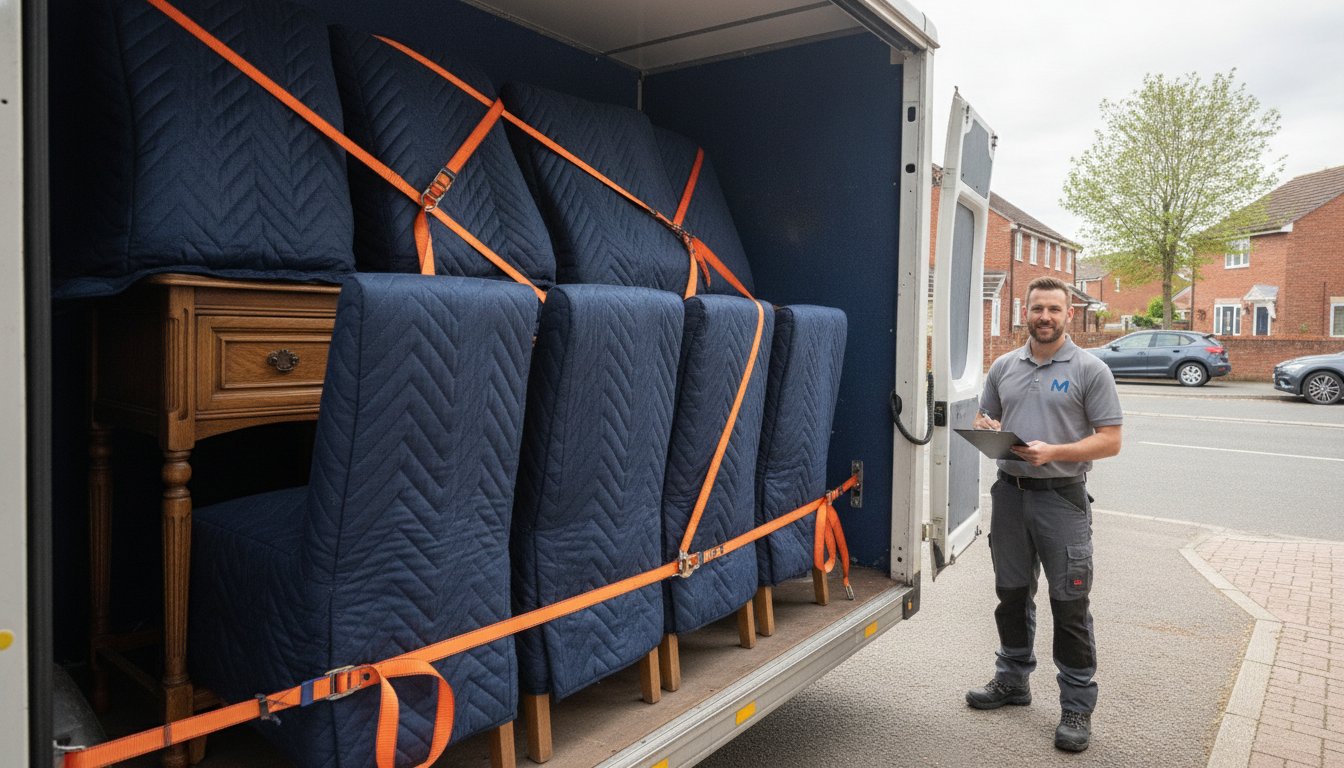
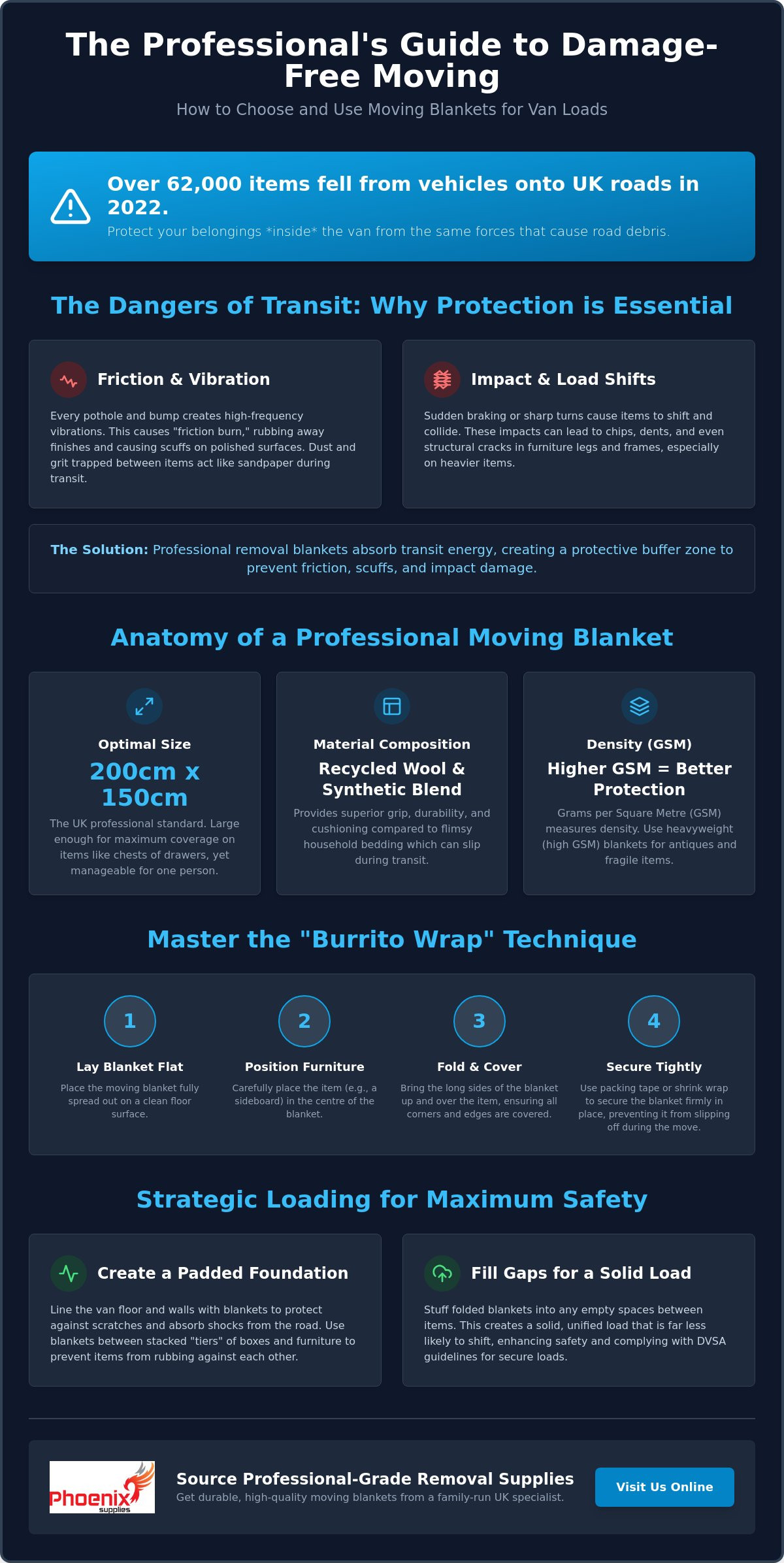
Did you know that over 62,000 items were reported to have fallen from vehicles onto the UK's strategic road network in 2022? Even if your belongings stay safely inside the vehicle, that same kinetic energy causes the shifts and slides that lead to heart-breaking scratches on your favourite sideboard or dining table. Choosing the right moving blankets for van loads isn't just about covering surfaces. It's about creating a reliable system to absorb transit energy and stop friction damage before it starts.
We know how stressful it feels to watch your hard-earned furniture disappear into a dark van, wondering if it'll survive the journey. This guide will show you how to expertly wrap, layer, and secure your items using professional techniques to ensure a completely damage-free transit. You'll learn exactly how many blankets your move requires, how to wrap corners like a pro, and how to load your van to stay on the right side of DVSA safety regulations. We're here to help you move with total confidence, knowing every piece of furniture is tucked in and secured for the road ahead.
Key Takeaways
- Learn why heavy-duty quilted covers are essential for absorbing road vibrations and protecting your belongings from speed bumps during transit.
- Discover why the 200cm x 150cm size is the professional favourite when selecting moving blankets for van loads to ensure maximum coverage.
- Master the "Burrito Wrap" technique to provide full protection for furniture legs and delicate corners from the bottom up.
- Understand how to use blankets as protective floor liners and integrate them into "tier loading" strategies for a stable, legal load.
- Find out how to source professional-grade removal blankets from a family-run UK specialist focused on durability and personal service.
The Role of Moving Blankets in Preventing Transit Damage
When you're preparing for a move, it's easy to focus on the heavy lifting and forget about what happens once the van door shuts. Moving blankets for van loads, often called removal blankets or transit pads, are heavy-duty quilted covers designed specifically to withstand the unique stresses of a journey. These aren't just simple pieces of fabric; they're engineered textiles built to protect your most prized possessions from the moment they leave your home until they're safely placed in your new one.
Unlike household duvets or old bedding, professional removal blankets are made from a dense blend of recycled wool and synthetic fibres. This composition provides a level of durability and grip that thin domestic fabrics simply can't match. Whilst a duvet might slide off a mahogany table during a sharp turn, a proper transit pad stays put, providing a consistent layer of cushioning. The Role of Moving Blankets in professional transport is to provide a removable, reusable shield that handles the mechanical energy of the road so your furniture doesn't have to.
Protection Against Friction and Vibration
British roads are rarely perfectly smooth. Every pothole and speed bump sends a shockwave through the van, causing your furniture to vibrate at high frequencies. This movement leads to "friction burn," a common type of damage where the finish of a piece of furniture is literally rubbed away by contact with another surface. Transit friction is the primary cause of surface scuffs in van loads.
The quilted texture of a professional blanket does more than just provide padding. It's designed to trap tiny particles of dust and grit within its stitches, preventing these abrasive materials from being ground into your polished surfaces. By creating a thick "buffer zone" between heavy items like wardrobes or washing machines, these blankets ensure that even if items touch, they only press against soft, forgiving fabric rather than hard wood or metal.
Preventing Load-Shift Impact
Even the best-packed van can experience slight shifts when you're navigating roundabouts or braking suddenly. When an item tilts, the resulting impact against a neighbouring box or the van's internal wall can cause chips and structural cracks. Using moving blankets for van transit allows you to soften these blows. A thick, folded blanket acts as a shock absorber, catching the weight of a shifting item and dispersing the force across a wider area.
These blankets also serve as excellent "gap fillers." By stuffing folded blankets into the small voids between loosely packed items, you create a solid, unified load that's much less likely to move. This doesn't just protect your belongings; it also protects the internal walls of the van from being dented by heavy furniture. It's a simple, methodical way to ensure that everything arrives in the same condition it was in when you started the day.
Choosing the Best Moving Blankets for Van Loads
Selecting the right moving blankets for van transit is about matching the protection level to your specific belongings. In the UK, the standard professional size is typically 200cm x 150cm. This size has become the favourite amongst removal experts because it's large enough to cover a chest of drawers or a dining chair in one go, yet manageable enough for one person to handle without tripping over excess fabric. When you're choosing your supplies, look for blankets made from a blend of recycled wool and synthetic fibres. This specific mix provides the "loft" or springiness required to absorb shocks whilst remaining tough enough to resist tearing on sharp corners.
One technical term you'll encounter is GSM, which stands for Grams per Square Metre. This is simply a measure of the blanket's density. A higher GSM means a thicker, more cushioned pad. For most domestic moves, a mid-to-high GSM blanket provides the best balance of protection and flexibility. You should also decide between woven and non-woven options. Woven blankets are the heavy-duty, reusable workhorses of the industry. They're designed for multiple moves and offer superior durability. Non-woven blankets are often thinner and better suited for light, short-term protection or as disposable liners for very dirty items.
Weight and Material Density
Not every item in your van requires the same level of padding. Choosing the Best Moving Blankets involves assessing the vulnerability of your cargo. Premium heavyweight quilted pads are essential for antiques, polished wood, and glass-fronted cabinets. Conversely, lightweight economy blankets are perfectly adequate for plastic garden furniture or metal bed frames. Regardless of the weight, ensure your blankets feature tight cross-stitching. This zig-zag pattern is vital because it prevents the internal cushioning fibres from bunching up or shifting, which would otherwise leave your furniture exposed at the most critical points.
Size and Quantity Calculation
A common mistake is underestimating how many blankets you'll actually need. As a reliable rule of thumb, a standard 3-bedroom house move usually requires between 24 and 30 blankets to ensure everything is covered properly. Larger items, such as three-seater sofas or king-size headboards, often benefit from extra-large blankets to avoid having to tape multiple smaller pads together. It's always a good idea to keep a few "spare" blankets on hand. These are incredibly useful for stuffing into unexpected gaps in the van load to stop items from shifting during transit. If you're planning a move soon, stocking up on professional removal blankets early will give you one less thing to worry about on the big day.
How to Wrap Furniture: A Step-by-Step Technique
Having the right tools is only half the battle; knowing how to use them is what truly protects your investment. When you're preparing moving blankets for van transport, the way you secure the fabric is just as important as the fabric itself. One of the most effective techniques used by professionals is the "Burrito Wrap." This method involves placing the item on a diagonal across the blanket and folding the corners in sequence to create a tight, cushioned seal. We always recommend wrapping from the bottom up. By starting at the base or the legs and working your way to the top, you ensure that the most vulnerable parts of the furniture are fully covered and that the blanket won't ride up during the lifting process.
Securing the blanket requires a bit of care. You should use professional packing tape or stretch wrap, but never apply adhesive tape directly to the furniture's surface. Tape can leave a sticky residue or even pull off delicate veneers and French polish. Instead, wrap the tape around the blanket itself to create a snug fit. For high-value antiques or glass-fronted cabinets, don't be afraid to use the "double-blanket" technique. Applying a second layer of moving blankets for van loads provides an extra level of insurance against heavy impacts, effectively doubling the buffer zone between your furniture and the van walls.
The Envelope Wrap for Flat Surfaces
For items like mirrors, tabletops, or large picture frames, the envelope wrap is the most secure approach. It's a simple, methodical process that ensures every edge is protected:
- Step 1: Lay the blanket completely flat on a clean floor or a large table.
- Step 2: Place your item, such as a tabletop or mirror, exactly in the centre of the blanket.
- Step 3: Fold each of the four edges over the item so they meet in the middle, then secure the fabric with moving tape. Ensure the tape only touches the blanket to keep your belongings safe from adhesive damage.
Protecting Corners and Delicate Legs
Corners are the most frequent points of failure during a move. To prevent sharp edges from piercing through the fabric, you can fold the blanket over itself several times to create "thick pads" before securing it. This extra bulk acts as a dedicated corner protector. When it comes to chairs, it's often best to wrap each leg individually. This prevents the legs from rubbing together and causing the friction burns we mentioned earlier. If the legs of a table or sofa are removable, we strongly advise taking them off and wrapping them together in a single blanket. This makes the main piece of furniture much easier to load and significantly reduces the risk of a leg snapping off during a sharp turn.
Loading the Van: Strategically Placing Blankets and Securing the Load
Once your furniture is wrapped, the next challenge is organising the space inside the vehicle. Professional movers use a technique called "tier loading" to maximise space and safety. This involves packing the van in vertical sections, or "tiers," from the floor to the ceiling and from one wall to the other. Moving blankets for van loads are critical here. You should start by laying blankets on the van floor. This simple step acts as a clean floor liner, protecting your furniture from the grit and moisture often found in rental vans.
Tier loading is essentially building a wall of items that fills the entire width and height of the van. By placing heavier items like appliances at the bottom and lighter boxes on top, you create a low centre of gravity. Moving blankets for van transit act as the mortar between these blocks, filling the tiny voids that would otherwise allow for movement. When you place a blanket on the floor, you're not just keeping things clean. You're also providing a slight friction surface that helps prevent the feet of heavy furniture from sliding across the metal floor of the van.
If you have a stack of boxes that doesn't quite reach the roof, don't leave that space empty. Placing a few "top-loading" blankets over the final layer of boxes helps to stop them from rattling or bouncing when you hit a bump. This simple trick turns a loose stack into a solid unit. For the most secure setup, you'll want to use these blankets in conjunction with webbing straps for moving. These two tools work together to ensure your load stays exactly where you put it, even on winding British country roads.
Layering and Stacking in the Van
When you're stacking items, always place a "buffer" blanket between them. This prevents the weight of the top item from causing scuffs or pressure marks on the one below. For example, if you're placing a smaller chest of drawers on top of a larger one, a folded blanket between them will disperse the weight and protect both finishes. If you're transporting mattresses, use the "vertical stack" technique. Stand them on their long edge against the van wall and drape blankets over the corners to protect the fabric from snagging on the van's tie-down points. You can also use folded blankets to level out uneven loads on the van floor, creating a flat, stable base for your next tier of boxes or furniture.
Integrating Blankets with Webbing Straps
The interaction between your straps and your padding is where many DIY movers make mistakes. You should always place a folded blanket between the webbing strap and the furniture surface. Without this layer, the high tension of the strap can "bite" into the wood or leave permanent indentations in soft upholstery. This is particularly important for items like sofas or armchairs where the strap might otherwise crush the padding. It's a small detail that makes a massive difference to the final result. Webbing straps provide the tension, whilst blankets provide the cushion. If you're looking for reliable protection, you can browse our range of removal blankets and accessories to find everything you need for a damage-free move.
Sourcing Professional-Grade Moving Supplies from Phoenix Supplies UK
When you are preparing for a significant life event like a house move, you need more than just a supplier; you need a dependable partner who understands the stakes. Phoenix Supplies UK is a family-run business built on the foundation of personal service and straightforward honesty. We take pride in being a reliable local specialist that treats every customer like a neighbour. Whether you are an individual tackling a personal project or a large organisation managing high-volume requirements, we provide the same level of personal accountability and expert guidance to ensure your belongings are protected.
Our commitment to quality is evident in the specific removal blankets we provide. We understand that moving blankets for van transit need to be tough enough to handle the rigours of multiple journeys whilst remaining soft enough to cradle delicate finishes. By focusing on professional-grade textiles rather than flimsy alternatives, we help you avoid the frustration of torn covers or damaged furniture. We believe in providing value through durability, ensuring that our supplies stand up to the demands of the road time and time again.
Quality You Can Trust
The durability of our blankets comes from a meticulous cross-stitched design that prevents the internal padding from shifting or bunching. This ensures that the protection remains consistent across the entire surface of the fabric, even after heavy use. Our range caters to a broad spectrum of needs, from domestic movers looking to protect a single heirloom to professional removal companies that require hundreds of blankets for daily operations. We don't hide behind automated systems or corporate jargon; instead, we offer clear, practical advice to help you choose the right moving blankets for van loads based on your specific inventory.
Reliable National Delivery
We make it easy to get the professional tools you need with our reliable national delivery service across the UK. You don't have to worry about the logistics of transporting bulky supplies yourself. We deliver our full range of boxes, covers, and blankets directly to your doorstep, saving you time and effort during an already busy period. For those looking for a complete solution, our "moving packs" are an excellent choice. These bundles conveniently combine blankets, various sized boxes, and high-quality tape into one simple order, ensuring you have everything required for a methodical and organised packing process.
For commercial van operations or larger house moves, buying in bulk offers significant value and ensures you never run short of padding during a critical loading phase. We are here to act as your steady guide, helping you calculate exactly what you need so you can move with total peace of mind. Explore our range of professional removal blankets and webbing straps today and see the difference that family-run service and professional-grade quality can make to your next move.
Moving with Confidence and Care
Moving house is a significant task, but it doesn't have to be a gamble with your furniture's safety. By mastering the bottom-up wrapping technique and using tier loading to fill every gap, you've already taken the biggest steps towards a damage-free arrival. Remember that the right moving blankets for van loads provide more than just a cover; they offer the essential buffer your belongings need against the vibrations and shifts of the British road network. Using professional-grade materials ensures that even the most delicate polished surfaces remain pristine throughout the journey.
As a family-run UK business, we take pride in supporting your move with the same professional-grade materials used by removal experts across the country. Whether you need a few pads for a personal project or a full set for a commercial operation, we are here to act as your steady guide. Order your heavy-duty removal blankets from Phoenix Supplies UK today and enjoy the convenience of free delivery included on all orders. You've got the knowledge and the plan in place; now it's time to get moving with total peace of mind.
Frequently Asked Questions
Can I wash moving blankets after use?
Woven moving blankets can generally be washed on a cool, gentle cycle to remove dust and grit. It is best to avoid high heat in the tumble dryer, as this can damage the synthetic fibres or the recycled wool blend within the quilting. We recommend air-drying them across a line to maintain their shape and thickness, ensuring they are ready for your next project or storage needs.
How many moving blankets do I need for a transit van?
For a standard short-wheelbase transit van, you typically require between 15 and 20 blankets to cover a basic load. If you are using a long-wheelbase or high-roof van, we suggest increasing this to 25 or 30 blankets. This ensures you have enough to wrap large furniture pieces whilst leaving spares for floor protection and filling gaps between items to prevent shifting.
Should I use tape directly on the moving blankets?
You can use packing tape directly on the fabric of the blanket to secure it firmly around your furniture. The adhesive bonds well to the quilted surface, but you must be careful to ensure the tape never touches the furniture itself. For the most secure hold, wrap the tape entirely around the item so it sticks to the blanket, creating a snug, protective sleeve.
Are moving blankets waterproof for use in an open van?
Standard removal blankets are not waterproof and will absorb moisture if they are exposed to rain in an open vehicle. They are designed for use in enclosed vans or lorries where they stay dry. If you are moving during the UK's rainy season, it is vital to use them inside a sealed van or underneath waterproof furniture covers to prevent dampness from reaching your belongings.
What is the difference between a transit blanket and a furniture pad?
There is no practical difference between these terms as they are used interchangeably within the UK removal industry. Both refer to the heavy-duty quilted covers designed to protect items from scratches and scuffs. Whether you are searching for moving blankets for van loads or furniture pads, you are looking for the same essential tool for absorbing road vibrations and preventing friction damage.
Can I use moving blankets to protect my floors during a move?
Moving blankets work exceptionally well as temporary floor runners to protect carpets and polished wood from grit and muddy boots. Laying them in high-traffic areas like hallways creates a soft barrier that prevents surface damage. Just be sure to lay them flat and secure the edges if possible, as they do not have a non-slip backing and could move underfoot on smooth surfaces.
How do I stop moving blankets from sliding off the furniture?
The best way to stop blankets from sliding is to secure them with stretch wrap or webbing straps. Whilst the quilted texture of a professional blanket offers some natural grip, the constant movement of a van can cause fabric to shift. By wrapping the item tightly after the blanket is applied, you ensure the padding stays in place to protect the most vulnerable corners and edges.
Are these blankets thick enough to protect a TV screen?
Whilst moving blankets for van transit provide excellent scratch protection, we recommend using them as a secondary layer for modern flat-screen TVs. A blanket is perfect for preventing surface marks, but a dedicated TV moving box offers the structural rigidity needed to protect the screen from pressure. For the best results, wrap the TV in a blanket first, then place it inside a sturdy, double-walled box.


