
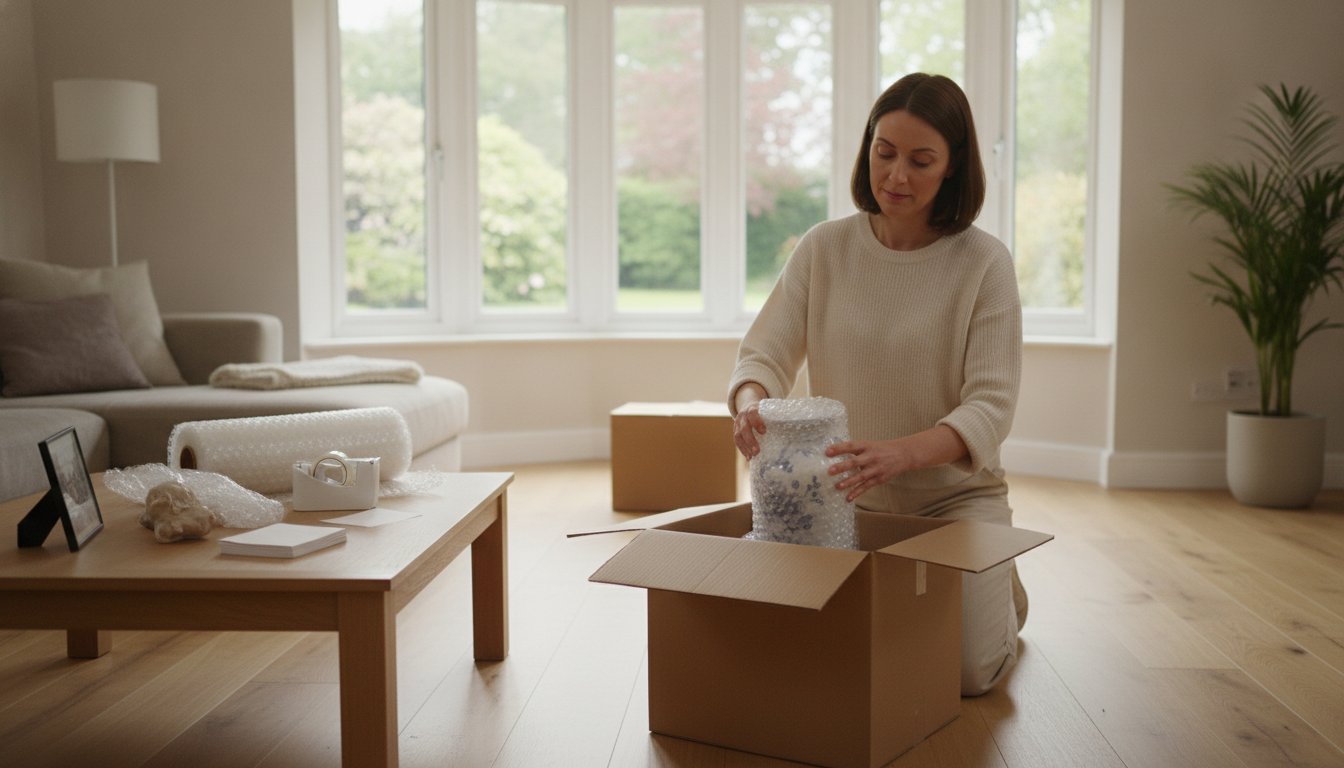
Most people treat packing like a simple game of Tetris, but the truth is that a successful relocation is actually an exercise in structural engineering. When you are preparing for a big life change, the last thing you want is the heartbreak of finding your favourite heirlooms in pieces. Learning how to pack fragile items for moving is the only way to ensure your most delicate belongings arrive at your new home in one piece. It is a practical skill that saves you from the fear of breaking irreplaceable items and the frustration of wasted time.
We understand that the process can feel overwhelming, especially when you are staring at a mountain of glassware and wondering if a standard box is strong enough. You aren't alone in this; over 2.1 million people across the UK move house every year, and almost all of them share that same anxiety about the journey. This guide promises to turn that worry into confidence by teaching you the exact techniques used by professionals. We will walk you through the essential materials you need, from double wall boxes to removal blankets, and provide a clear plan to keep every item completely immobilised until you reach your front door.
Key Takeaways
- Choose heavy-duty, double-wall boxes and high-quality bubble wrap to provide a rigid outer shell that protects against external pressure and box collapse.
- Master the professional "Burrito" wrapping technique and learn how to create a shock-absorber base at the bottom of every box for maximum cushioning.
- Discover how to pack fragile items for moving across different rooms, including why plates should always be stacked vertically rather than flat.
- Apply the "Heavy-to-Light" rule and use smaller moving boxes to maintain structural integrity and ensure your belongings remain completely immobilised.
- Utilise removal blankets and webbing straps in the transit van to absorb road vibrations and keep your stacks secure against the walls during the journey.
Essential Supplies: Choosing the Right Materials for Fragile Packing
Using old boxes from the local supermarket might seem like a thrifty way to save on moving costs, but for your delicate items, it's a gamble that rarely pays off. These boxes are designed for a single journey from the warehouse to the shelf. They are often thin, single-walled, and may have been compromised by humidity or heavy contents before they ever reach your hands. In a removal van, boxes are stacked high to maximise space. A weak box at the bottom of a pile will eventually give way, causing a domino effect that can crush everything inside. When you are learning how to pack fragile items for moving, the first lesson is that your protection is only as strong as your outer shell.
Double-Wall vs Single-Wall Boxes
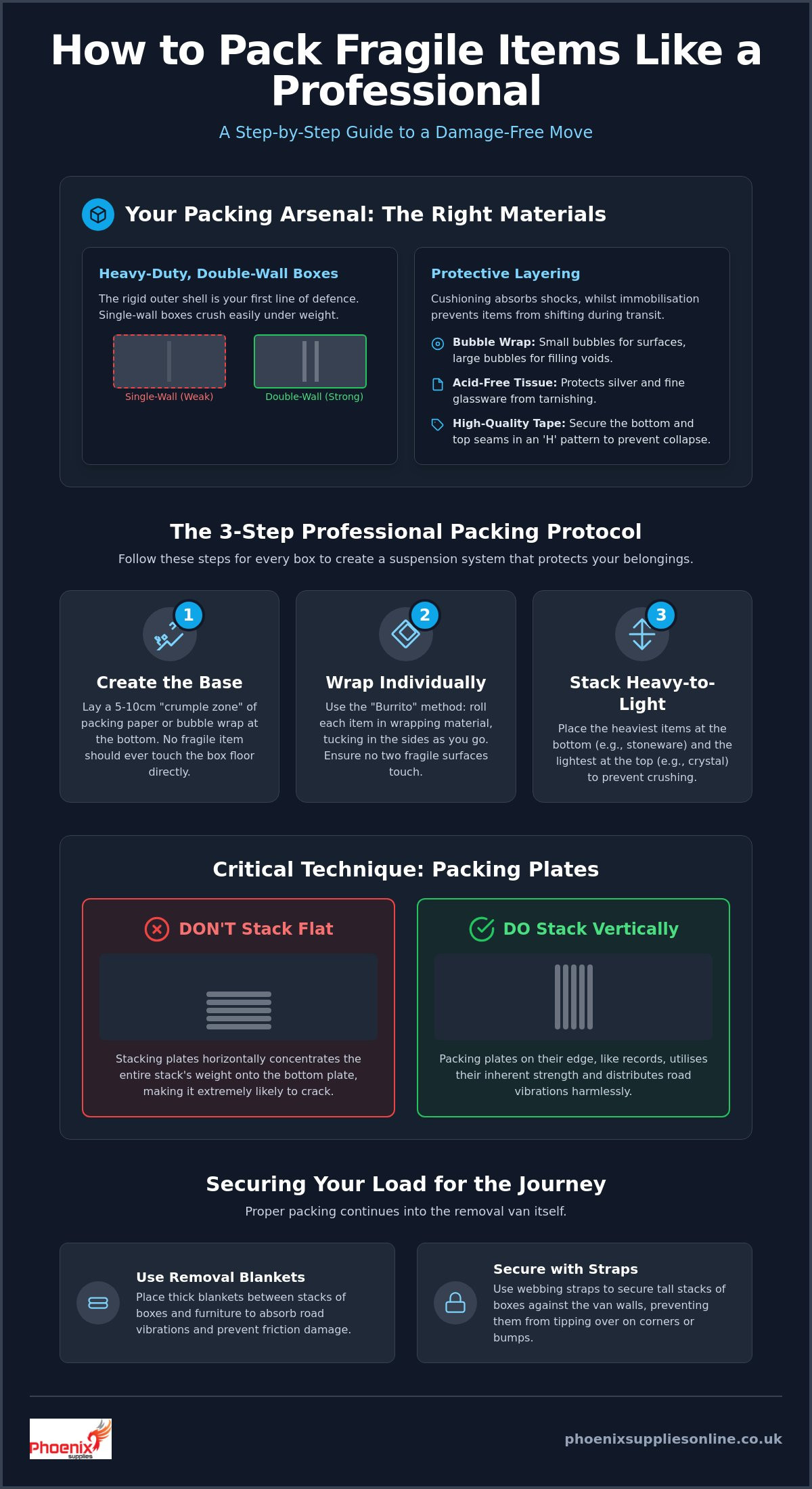
The difference between a standard box and a professional removal box lies in the fluting. Single-wall boxes have one layer of corrugated cardboard, which is fine for light linens but offers little protection against impact. Double-wall boxes feature two layers of fluting, providing a 5mm thick barrier that creates significant vertical crush resistance. This structural necessity prevents the bottom box in a stack from buckling under the pressure of those above it. If you are moving heavy or delicate items, choosing the right box strength is the foundation of a damage-free move.
Protective Layering Essentials
Once you have a sturdy box, you need to focus on internal shock absorption. Bubble wrap is a staple for a reason; its air-filled pockets act as a buffer against bumps and vibrations during transit. Use small bubbles for surface protection on items like figurines, whilst larger bubbles are better for cushioning larger gaps and providing a thicker shield for heavy ceramics. For silver or fine glassware, acid-free tissue paper is a better choice to prevent tarnishing or chemical reactions with the glass surface that can occur with standard newsprint.
Immobilisation is just as vital as cushioning. Even well-wrapped items can break if they are allowed to shift inside the box. Use void fillers like biodegradable packing peanuts or crumpled paper to fill every corner until there is zero movement when you gently shake the box. Finally, invest in high-quality packing tape. Cheap tape often peels away from the cardboard, leading to the dreaded box floor failure where the bottom opens up as you lift it. A strong, wide tape applied in an H pattern across the seams is the best way to secure your load and give you peace of mind during the journey.
The Professional Wrapping Technique: A Step-by-Step Guide
Understanding how to pack fragile items for moving involves more than just covering things in plastic. It is about creating a suspension system within the box that keeps your belongings completely stationary. When a removal van travels over speed bumps or takes a sharp corner, the items inside your boxes are subject to G-forces. If there is even a centimetre of wiggle room, that energy is transferred directly into your glassware. Professional packing is designed to absorb this energy before it ever reaches the item itself.
Creating the Protective Buffer
The first rule of a damage-free move is that no fragile item should ever sit directly against the cardboard floor or walls. You must build a foundation that acts as a shock absorber. Follow these three essential steps to prepare every box:
- Step 1: Lay 5-10cm of crumpled packing paper or large-bubble wrap at the very base of the box. This creates a "crumple zone" that protects the contents from the impact of being set down on hard floors.
- Step 2: Wrap every item individually. For plates and bowls, use the "Burrito" method. Place the item on a corner of the wrapping material, fold the corner over, tuck in the sides as you roll, and secure it with a small piece of tape. This ensures the item is padded from every angle.
- Step 3: Place your items into the box using a "Heavy-to-Light" hierarchy. Heavy stoneware or thick glass goes at the bottom, whilst delicate crystal or fine china sits safely at the top.
A common mistake is allowing two fragile surfaces to touch. Even if items are wrapped, the pressure of them pressing against each other can cause chips or cracks amongst a set. Always place a layer of padding between each item to ensure they remain isolated. Once the box is full, perform the "Shake Test." Gently lift the box and give it a very soft shake. If you hear anything shifting or rattling, you need more void filler. If it rattles, it breaks.
Final Sealing and Reinforcement
Once you are satisfied that the contents are immobile, you must secure the structure. The "H-tape" method is the industry standard for securing heavy-duty boxes. This involves running a strip of tape down the centre seam and two further strips along the side edges, creating the shape of a capital H. This reinforces the most vulnerable points of the box and prevents the flaps from bowing under pressure.
Using "Fragile" printed tape is a simple but effective way to alert your removal team. It acts as a constant visual reminder to exercise caution, ensuring your boxes are handled with the care they deserve. For the best results, always use high-quality packing tape that won't peel away whilst in the back of a humid van. Taking these extra few minutes to wrap and seal correctly will be the difference between a stressful arrival and a celebratory unpacking.
Room-by-Room Fragile Strategies: Kitchen, Living Room, and Office
Every room in your home presents a different set of challenges for safety. Whilst a ceramic vase in the living room might be vulnerable to a single sharp impact, your kitchen plates are more likely to fail due to cumulative pressure. Understanding how to pack fragile items for moving requires you to look at each object and identify its weakest point. In the kitchen, this is often the centre of a plate; in the office, it is the delicate internal circuitry of a computer or the thin glass of a monitor.
The kitchen is arguably the most time-consuming room to pack correctly. A common mistake is stacking plates flat on top of one another. When you stack ten dinner plates, the bottom one carries the weight of the nine above it. One sharp pothole in the road can send a shockwave through the stack, causing the bottom plate to shatter. Instead, you should always pack plates on their edges, similar to how records are stored in a crate. This vertical orientation allows the plate's rim to absorb the weight, which is much stronger than the centre.
Glassware and Stemware
Wine glasses and champagne flutes are notoriously difficult because their weight is unevenly distributed. Always wrap the stem first to equalise its thickness with the bowl. This prevents the stem from snapping under lateral pressure if the box is tilted. Once the stem is padded, wrap the entire glass in a "Burrito" style as discussed earlier. For an extra layer of security, fill the "hollow" of the glass with crumpled acid-free paper. This provides internal support that prevents the glass from being crushed inwards. Using cardboard dividers in your boxes is a simple way to keep each glass in its own dedicated cell, ensuring they don't knock together during the journey.
Large Electronics and TVs
Modern 65-inch flat screens are engineering marvels, but they are physically quite delicate. A standard cardboard box simply isn't sufficient for these items because it lacks the necessary rigidity to prevent the screen from flexing. If a screen flexes even slightly, the internal crystals can crack, rendering the TV useless. It's vital to keep these screens upright at all times; they aren't designed to support their own weight if laid flat. Knowing how to choose the best TV moving box is essential for providing the foam-cushioned suspension these devices need.
For office electronics, static electricity is a hidden danger. Use anti-static bubble wrap for motherboards and internal components. When packing monitors or mirrors, always fit them with specialised cardboard corner protectors before wrapping. These protectors direct any impact away from the glass and into the strongest points of the frame. By tailoring your approach to each specific item, you move away from guesswork and towards a methodical, damage-free relocation.
Box Architecture: How to Organise and Load for Maximum Safety
Packing individual items is only half the battle. The way you arrange those wrapped objects inside a container, a concept known as box architecture, determines whether the box survives the pressure of a removal van. When you are learning how to pack fragile items for moving, you must treat the interior of each box like a structural project. A poorly organised box will collapse under its own weight or shift during transit, regardless of how much bubble wrap you have used.
The golden rule of box architecture is the "Heavy-to-Light" principle. By placing your heaviest, sturdiest items at the base, you create a low centre of gravity that prevents the box from toppling. This also ensures that delicate items sitting at the top aren't crushed by the weight of stoneware or heavy appliances. Avoid "The Bulge" at all costs. An overfilled box will have a rounded top that makes stacking impossible, whilst an underfilled box will likely cave in when another container is placed on top. Use your void fillers to ensure the top of the box is flat and firm before sealing.
Weight Distribution and Box Size
Many people assume that large boxes are better for fitting more in, but for fragile goods, the opposite is true. Small moving boxes are the preferred choice for heavy or delicate items because they limit the momentum of the contents. If a van stops suddenly, items in a small, well-packed box have less room to gain speed and impact the walls. Keeping each box under a 15kg limit also ensures that you or your removal team can lift it safely without the risk of dropping it. For a full breakdown of what you need, see our essential packing materials list.
Clear Labelling for Removals
Proper labelling is a communication tool for whoever is carrying your life's work. Mark your boxes on at least three sides so the information is visible even when they are stacked in the van. Use bold markers to indicate "This Way Up" with arrows, ensuring that items like televisions or stemware remain in their safest orientation. Colour-coded labels for different rooms in the new house will speed up the unloading process and ensure that fragile kitchen boxes don't end up under a pile of heavy garage gear.
Don't forget to identify "Open First" boxes. These should contain your most essential fragile items, such as a few mugs, plates, and perhaps your favourite coffee maker. Having these clearly marked saves you from digging through dozens of boxes on your first night. To ensure your box architecture holds up under pressure, always start with heavy-duty double-wall boxes that are designed for the rigours of a British house move.
Transit Protection: Using Removal Blankets and Straps in the Van
Packing your boxes correctly is a significant achievement, but the final hurdle is the journey itself. A removal van is a dynamic environment where vibration and movement are constant. Even the most meticulously wrapped glassware can be at risk if the boxes are allowed to slide or if the van's suspension transfers too much energy into the load. Understanding how to pack fragile items for moving extends to how you arrange and secure your cargo in the vehicle. It is about moving from internal box safety to external transit stability.
Professional removal teams use a technique called "Tiering" to build a solid wall of boxes from the floor to the ceiling. You should place your most delicate items towards the front of the van, closest to the driver's cab. The area over the rear axle is often the bounciest part of the vehicle, so keeping fragile boxes away from the back door reduces the impact of every bump in the road. Always ensure these boxes are at eye level or higher within a tier, resting on sturdy, non-fragile foundations like chests of drawers or heavy-duty crates.
The Power of Removal Blankets
For large fragile items that won't fit in a box, such as antique mirrors or polished wood furniture, removal blankets are your best defence. These aren't simple dust covers; they are thick, transit-grade textiles designed to absorb road vibration and prevent surface scratches. When you wrap a dining table or a sideboard, you are creating a soft buffer that stops furniture from rubbing against the van walls or other items in the load. Secure these blankets tightly with stretch wrap or webbing straps to ensure they don't slip during transit. A loose blanket offers no protection at all.
Securing the Load
Load shift is one of the primary causes of damage during a house move. If a stack of boxes topples over because of a sharp turn, even the best bubble wrap might not save the contents. Use webbing straps to create tension across each tier of your load, anchoring the boxes firmly against the internal rails of the van. This prevents the "domino effect" where one falling box takes down the entire row. Never be tempted to stack heavy, unlabelled boxes on top of those marked as fragile. The structural integrity of your double-wall boxes is high, but it isn't infinite.
By following these transit protocols, you ensure that the hard work you put into packing isn't undone by a single mile of British road. If you are ready to start your journey, you can browse our range of heavy-duty boxes and removal blankets to get the professional tools you need. Taking these final precautions gives you the peace of mind that your belongings will arrive at your new home exactly as they left your old one.
Move with Confidence and Total Peace of Mind
Relocating your life is a major milestone, and protecting your most cherished possessions shouldn't be a source of constant worry. By choosing the right double-wall boxes and mastering the professional wrapping techniques we've discussed, you're taking the most important steps toward a successful arrival. Learning how to pack fragile items for moving is truly about preparation and using the correct tools for the job. Whether it's your favourite set of wine glasses or a large flat-screen TV, the right method makes all the difference.
As a family-run business, we take pride in offering the expert support you need to get your packing right the first time. We provide durable double-wall boxes specifically designed for the rigours of house moves, alongside free UK delivery on all orders to help keep your moving process simple. Order your heavy-duty fragile packing supplies from Phoenix Supplies UK today and give your delicate items the protection they deserve. You've done the hard work of planning your move; now it's time to ensure everything arrives safely at your new front door. We wish you the very best of luck with your new chapter.
Frequently Asked Questions
What is the best way to pack glasses for moving?
The best way to pack glasses is to use cardboard dividers within a sturdy box to keep each item isolated and upright. You should wrap the stems of wine glasses first with bubble wrap to equalise the thickness before wrapping the entire glass in a "Burrito" style. Always fill the hollow centre of each glass with crumpled paper to provide internal support against crushing forces.
Do I really need double-wall boxes for fragile items?
Yes, double-wall boxes are a non-negotiable standard for protecting delicate belongings during a house move. Unlike single-wall alternatives, they provide two layers of fluting that offer the vertical crush resistance needed to support the weight of stacked containers. This structural integrity is the most reliable way to prevent the bottom of a stack from buckling whilst in transit.
How do I pack a flat-screen TV without the original box?
You should use a specialised Extra Large TV Moving Box that includes foam inserts to provide the necessary suspension and rigidity. If you don't have the original packaging, these heavy-duty boxes are designed to keep the screen upright and prevent the flexing that causes internal crystal damage. Never lay a flat-screen TV flat, as the internal components aren't built to support that specific type of pressure.
Can I use newspaper to wrap my fragile items?
You should avoid using standard newspaper because the ink can permanently stain or react with delicate finishes on silver, china, and fine glass. Acid-free tissue paper or bubble wrap are much safer alternatives that won't leave behind a messy residue or chemical marks. If you need extra padding, use plain packing paper to fill voids rather than old newsprint.
What should I do if a fragile item breaks during the move?
If an item breaks, you should document the damage immediately with clear photographs before moving the box or disturbing the contents. Check your goods-in-transit insurance or your home contents policy to see what level of cover you have for accidental breakages. Keep the broken pieces and all original packaging as evidence, as this is almost always required for a successful claim.
How many layers of bubble wrap should I use?
You should aim for at least two to three layers of bubble wrap for most delicate objects to ensure adequate cushioning. For heavier ceramics or particularly thin glassware, you may need more to ensure no hard surfaces can be felt through the wrapping. When considering how to pack fragile items for moving, the goal is to make the item feel "bouncy" and completely protected from impact.
Is it better to use tape or string to secure fragile boxes?
High-quality packing tape is the only reliable way to secure your boxes; string can easily slip or cut into the cardboard during lifting. Use the "H-tape" method to seal all seams and provide structural reinforcement to the box flaps. This ensures the bottom won't give way when the box is moved and keeps the lid firmly closed against dust and moisture.
Should I pack fragile items in large or small boxes?
Small moving boxes are much better for fragile items because they are easier to handle and limit the internal momentum of the contents. Large boxes often become too heavy to lift safely and are more prone to bowing or collapsing under the weight of other items. Using smaller containers is a key part of how to pack fragile items for moving safely, as it keeps the load manageable and stable.


