
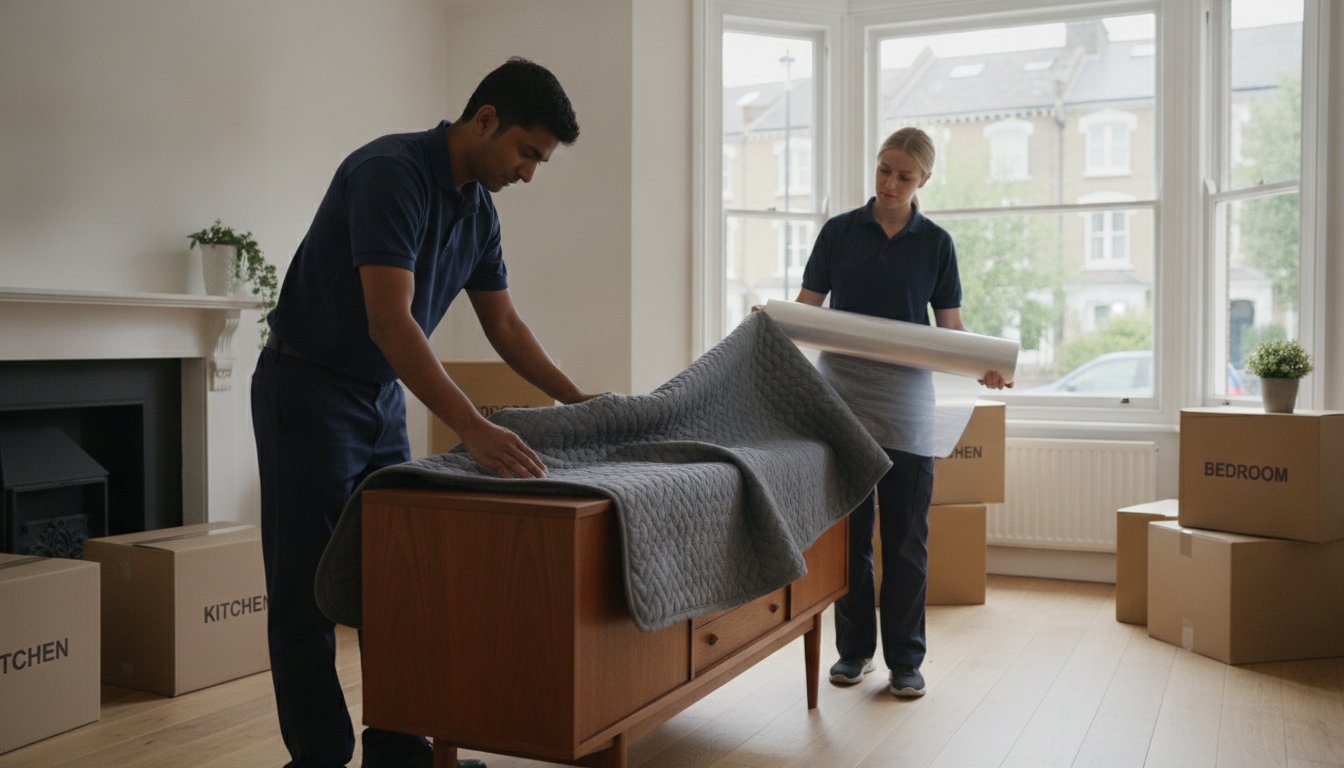
The average person in the UK moves house eight times in their lifetime, yet many of us still simply cross our fingers and hope for the best when it's time to load the removal van. It's a common worry, especially whilst you're watching a favourite mahogany sideboard or a delicate velvet sofa being manoeuvred through a narrow hallway. Learning how to protect furniture when moving is the most effective way to replace that moving-day anxiety with genuine peace of mind.
We understand that you want your belongings to arrive in your new home in the same condition they left the old one. This guide shares the professional techniques and essential materials you need to safeguard every piece from scratches, dents, and damp. From using heavy-duty removal blankets to choosing the right furniture covers, we'll show you how to organise a damage-free transition. We'll walk you through a clear, three-layer approach of surface shielding, impact cushioning, and structural securing to ensure your furniture stays safe for the entire journey.
Key Takeaways
- Identify the primary risks of transit, including friction scratches and structural strain caused by road vibrations, to better prepare your belongings for the journey.
- Discover how to protect furniture when moving using professional-grade removal blankets and specialised polythene covers to prevent unsightly stains and scuffs.
- Learn tailored techniques for different materials, such as shielding polished wood from finish damage and protecting upholstered items from snags and dust.
- Master the "Tetris" loading strategy to create stable vertical walls in the removal van, ensuring heavy items provide a secure base for lighter belongings.
- Organise your packing process by taking a full furniture inventory and securing your essential supplies at least a fortnight before your moving date.
Understanding the Risks: Why Furniture Protection is Essential
Many people assume that once furniture is safely inside a van, the risk has passed. The reality is quite different. The journey itself is often where the most significant damage occurs. Learning how to protect furniture when moving involves more than just a bit of bubble wrap; it requires a strategy to combat friction, impact, and structural strain.
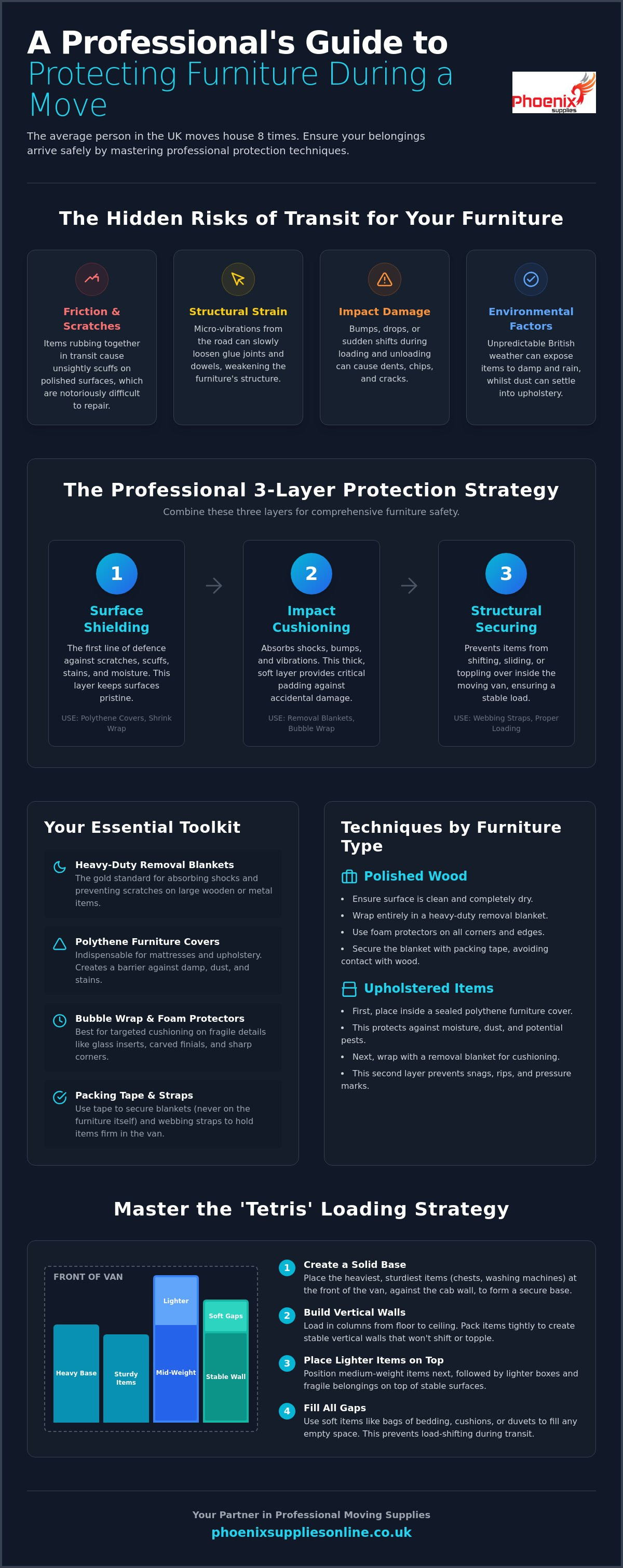
The "Transit Effect" is a particular worry for wooden pieces. As the van moves, micro-vibrations travel through the floor and into your furniture. These vibrations can slowly loosen dowels and glue joints over a long journey. When items are packed too tightly without padding, they rub together. This friction creates unsightly scuffs on polished surfaces that are notoriously difficult to buff out.
For those who are planning a more extensive relocation, it can be beneficial to explore Moving Interstate resources to see how professional teams mitigate these risks during complex, long-distance moves.
Environmental factors also play a huge role. During the process of moving, your belongings are vulnerable to the unpredictable British weather. Even a short walk from the front door to the tail lift can expose a mattress to damp or rain. Professional protection means using materials designed for the job. Whilst an old bedsheet might keep off a bit of dust, only heavy-duty removal blankets provide the thickness needed to absorb impacts and block out moisture.
The Cost of Damage vs. The Cost of Prevention
Repairing a deep scratch in a mahogany table or replacing a torn sofa cushion is an expensive and frustrating task. Often, the cost of professional-grade protection is a tiny fraction of the furniture's value. It's about more than just money, too. Damaging a family heirloom can be heartbreaking. Taking the time to properly shield these pieces ensures that your memories stay intact along with your woodwork. DIY moving shouldn't mean leaving your valuables to chance. Similarly, when settling into a new home, ensuring the security of your outdoor space is a priority; specialists like Romford Fencing Ltd provide the specialised components and expertise needed to keep your garden boundaries secure and well-maintained.
Common Moving Injuries and How Protection Helps
Safe lifting is much easier when you have a secure hold. Polished wood and smooth plastic are notoriously difficult to grip, especially if your hands are tired. Wrapping these items in fabric blankets provides a textured surface that is much safer to carry. It also protects you from sharp corners and hidden splinters. When you secure these wrapped items with webbing straps, you prevent the load from shifting during transit, which keeps everyone safe when it is time to unload at the other end. Physical safety is just one part of the equation; keeping your family healthy during the move is also essential, and the Zahler UK Official Store provides helpful guides on supporting children's immune health during such transitions.
Essential Supplies for Protecting Furniture When Moving
Having the right toolkit is the first step in ensuring your belongings survive the journey to your new home. Whilst it's tempting to use old towels or newspapers, these often fail to provide the structural support needed for heavy items. Knowing how to protect furniture when moving starts with choosing professional-grade materials that offer a specific type of defence, from impact cushioning to moisture barriers.
Removal blankets are the gold standard for any move. Unlike thin domestic fabrics, these are thick, durable, and designed to absorb the shocks of a moving van. They provide a versatile shield for everything from mahogany dining tables to modern sideboards. For items with fabric or leather, mattress and furniture covers are indispensable. These polythene shields prevent stains, dust, and damp from ruining your upholstery during the loading process. This is particularly vital in the UK, where an unexpected rain shower can occur at any moment.
For more delicate features, such as glass inserts or carved finials, bubble wrap and foam edge protectors provide targeted cushioning. However, these should never be the only layer for large surfaces. Heavy-duty moving boxes made from double-wall cardboard are essential for smaller components or for placing on top of flat furniture surfaces to prevent crushing. If you are handling the move yourself, resources like Protect Your Move offer excellent guidance on your rights and responsibilities during the transition.
Choosing the Right Protective Layer
Efficiency comes from knowing which material to use and when. Use removal blankets for large wooden or metal items to prevent scratches and dents. Bubble wrap is best reserved for fragile details or glass that needs an extra layer of impact resistance. To block out moisture and pests, always use sealed furniture covers for soft furnishings. Combining these layers ensures that your furniture is shielded from every angle, whether it's a short trip across town or a long-distance relocation. If your journey takes you to Scotland, once you've finished the heavy lifting, you could celebrate your arrival by exploring the scenery with McPhail Scottish Tours.
Securing Your Materials
Once your furniture is wrapped, you must keep the protection in place. High-quality packing tape is your best friend here, but you should never stick it directly onto the furniture surface, as the adhesive can ruin finishes. Instead, use stretch wrap to bind blankets to the item. This creates a tight, secure fit without leaving any sticky residue. Essential tools like sharp scissors, clear markers for labelling, and webbing straps will make the process much smoother. For those looking for reliable gear, choosing high-quality packing supplies from a specialist can save you a lot of trouble on moving day.
Professional Techniques for Different Furniture Types
Understanding that different materials require unique approaches is the secret to a successful move. A velvet sofa has entirely different needs compared to a heavy oak wardrobe. When you are learning how to protect furniture when moving, you must treat each piece as an individual project rather than applying a one-size-fits-all method.
Wooden furniture is particularly sensitive to how it is wrapped. Wood is a natural, porous material that needs to breathe. A major mistake often seen in DIY moves is wrapping polished wood directly in plastic stretch wrap. This traps moisture against the surface, leading to "sweating" that can cloud the finish or even cause the wood to warp. Always use a thick removal blanket as your primary layer. This provides a breathable barrier that shields against scratches whilst allowing air to circulate.
Upholstered items like armchairs and sofas are prone to snags and stains. Even the cleanest removal van can have traces of dust or grease on the floor. Sliding a heavy-duty furniture cover over your seating prevents dirty fingerprints and fabric tears during the carry. For glass-fronted cabinets or mirrors, apply masking tape in a large "X" across the surface. This simple step doesn't stop the glass from breaking, but it does keep the shards together if an accident occurs. Follow this by "sandwiching" the piece between two layers of thick cardboard before wrapping it in a blanket.
Electronics require even more specialised care. Modern screens are incredibly thin and susceptible to pressure damage. Using a dedicated large TV moving box is non-negotiable for safe transit. These boxes are designed to keep the screen away from the cardboard walls, preventing static and impact damage during the journey.
Dismantling for Safer Transport
Items like bed frames, large wardrobes, and dining tables are far easier to move when taken apart. It reduces the risk of structural strain on the joints during transit. Always keep a set of small labelled bags for the screws and brackets. Tape these bags directly to a large part of the furniture so they don't get lost in the shuffle. Once the legs are removed, wrap the exposed joints in bubble wrap to prevent them from splintering or catching on doorways.
Handling Fragile Antiques and Fine Finishes
Antiques often have delicate varnishes that can react with modern plastics. Use acid-free tissue paper as your first layer to provide a neutral barrier. Removal blankets are far superior to bubble wrap for these pieces because they offer better impact protection without the risk of "bubble marks" on the finish. For pieces with ornate carvings or thin, tapered legs, use extra padding to ensure these protruding details don't snap or catch during the move.
How to Pack and Secure Furniture in the Removal Van
Loading the removal van is the final, critical stage of the process. If you have spent hours carefully wrapping your belongings, don't let that effort go to waste by loading them haphazardly. This stage is just as important as the wrapping itself when considering how to protect furniture when moving. A well-packed van doesn't just save space; it ensures that nothing can shift, fall, or rub against other items during the journey.
Professional movers use the "Tetris" strategy; to see how these methods are applied in the field, check out BF Happy Movers for an expert perspective on secure transit. This involves building the load in "tiers," which are vertical walls of furniture and boxes that span the width of the van from floor to ceiling. Heavy, sturdy items like washing machines or solid wood sideboards should always form the base of these tiers. Lighter boxes and cushions can then be placed on top. Before you place a single item, line the van floor with extra removal blankets. This simple step provides a layer of friction that prevents sliding and protects the delicate feet or bases of your furniture from road grime.
The most common mistake in DIY moves is forgetting to secure the load internally. Even a tightly packed tier can collapse if the driver has to brake suddenly. Using webbing straps for moving is the only way to guarantee that large pieces stay upright. If you need to stock up on professional-grade restraints, you can order heavy-duty webbing straps and blankets to secure your load properly before the big day.
Creating a Stable Base
Always load your heaviest items first, placing wardrobes and large appliances directly against the van bulkheads. This keeps the centre of gravity low and forward, which is essential for safe vehicle handling. Once the large pieces are in place, fill any small gaps with small moving boxes for books. These heavy, compact boxes act as perfect "bricks" to stabilise the base of your tiers and prevent furniture from rocking.
The Importance of Tight Tie-Downs
Every standard removal van is fitted with metal anchor points along the interior walls. Thread your webbing straps through these points and across the front of your furniture tiers. You want the straps to be firm, but be careful not to overtighten them, as this can crush the edges of your items. A good rule of thumb is the "shake test." Give the item a firm push; if it moves independently of the van, it needs to be secured more tightly. Checking your work now prevents a disaster when you open the back doors at your new home.
Preparation Checklist: Organising Your Furniture Protection
The secret to a stress-free move lies in the days leading up to the big event. When the removal van arrives, you want to be ready to load, not still struggling with a roll of tape. Success in how to protect furniture when moving depends entirely on your level of organisation. Start by walking through every room in your house with a notepad. Count exactly how many large items require heavy-duty removal blankets and which pieces, like your mattress or velvet armchair, need specialist covers. It is always better to have two extra blankets than to run out when the van is half-loaded.
Once you have your inventory, you should order your packing materials list for moving at least a fortnight before your move date. This gives you plenty of time to receive your supplies and begin the wrapping process without feeling rushed. Measuring is another vital step that many people overlook. Take a tape measure to the hallways and doorways at both your current property and your new home. Knowing that a sideboard is too wide for the side door prevents you from trying to force it through, which is a common cause of deep gouges in both the furniture and the doorframe.
Finally, prepare a "First Day" box specifically for your furniture assembly tools. Keep your Allen keys, screwdrivers, and the bags of screws you taped to your dismantled items in one accessible place. You don't want to be hunting through dozens of boxes late at night just to put your bed frame back together. Having these tools ready ensures that your first night in the new house is comfortable and organised.
In addition to furniture assembly, ensuring your new property is secure and functional is a vital part of settling in; if you are moving within the North West of England, you can visit Key Qualities for professional locksmith and property maintenance assistance.
Timing Your Packing
Don't try to wrap everything in a single afternoon. Start with non-essential items, such as guest room furniture or the dining set, a few days in advance. This allows you to focus on the technique without the pressure of a ticking clock. Leave your main sofa and your bed for the final morning so you can still use them. Rushing the wrapping process is the most frequent cause of moving damage, so take your time to ensure every corner is covered.
Final Walkthrough and Labelling
Before the items leave the room, perform a final check. Label the protection itself by using masking tape on the outside of the blankets to mark which way is "Top" or if an item is particularly "Fragile." Check one last time that all drawers are completely empty and that wardrobe doors are securely taped shut to prevent them from swinging open during the carry. Ready to protect your home? Browse our full range of removal blankets and covers to find the professional supplies you need for a damage-free move.
Move With Confidence and Peace of Mind
A successful house move is about more than just getting from one property to another. It is about ensuring your favourite belongings arrive in the same condition they left. By following this guide on how to protect furniture when moving, you have the knowledge to shield polished wood, prevent upholstery stains, and secure your load safely in the van. Remember that expert-grade removal blankets and specialised covers are the most reliable way to avoid the heartbreak of transit damage.
As a family-run UK business, we take pride in helping our neighbours move safely. We provide the same high-quality removal blankets used by professionals to ensure your furniture stays safe throughout the journey. When you are ready to get started, you can Shop Professional Furniture Protection Kits at Phoenix Supplies UK and enjoy free national delivery on all orders. We are here to support you through every stage of your transition, from the first lift to the final unload. You've done the hard work of planning; now let us help you finish the job properly.
Frequently Asked Questions
Is stretch wrap necessary for furniture when moving?
Stretch wrap is an excellent tool for holding protection in place, but you should never apply it directly to wood or leather surfaces. It can trap moisture or react with certain finishes, leading to permanent damage. Instead, wrap your item in a removal blanket first and then use the stretch wrap to bind the blanket tightly to the furniture. This creates a secure, cushioned shield without the risk of ruining the surface finish.
Can I use bubble wrap directly on wooden furniture?
You should avoid placing bubble wrap directly against wooden furniture. The plastic bubbles can leave permanent circular marks on polished or varnished surfaces, especially if the temperature fluctuates during the move. Always use a breathable layer, such as a removal blanket, as the primary shield. You can then add bubble wrap over the top for extra impact protection on delicate corners or ornate carvings.
How many removal blankets do I need for a 3-bedroom house move?
For a standard 3-bedroom house move, you will typically need between 20 and 30 removal blankets. This quantity allows you to cover large items like wardrobes, sideboards, and dining tables with enough fabric to overlap the edges. It is a good idea to count your large furniture pieces beforehand and allow roughly two blankets per item. This ensures you have enough coverage to prevent any items from rubbing together in the van.
What is the best way to protect a sofa during a move?
The most effective way to protect a sofa is to use a heavy-duty polythene furniture cover. This specialised cover shields the fabric from dust, damp, and dirty fingerprints whilst it is being carried through the house. For extra peace of mind, you can wrap removal blankets around the arms and base before sliding the cover on. This provides a thick layer of cushioning that protects the frame against narrow doorframes and tight corners.
Should I take the legs off my table before moving it?
You should always remove table legs if the design allows for it. Taking the legs off reduces the risk of structural strain on the joints and makes the tabletop much easier to manoeuvre through hallways. Once the legs are removed, wrap them individually in blankets to prevent them from scratching each other. Remember to tape the screws and brackets in a labelled bag directly to the underside of the table so they don't go missing.
How do I protect my mattress from getting dirty in the removal van?
Using a dedicated polythene mattress cover is the only way to keep your bed clean during a move. Mattress fabric is highly absorbent and will quickly pick up road dust, grease, or moisture if it is left unprotected in the van. A sealed cover ensures your mattress stays hygienic and dry from the moment it leaves your bedroom until it is ready to be slept on in your new home.
Do I really need professional webbing straps for a short move?
Professional webbing straps are essential even for very short journeys. Furniture can shift or topple over the moment the van turns a corner or hits a small pothole, regardless of the distance. Using straps to secure your items to the van's internal anchor points is a vital part of learning how to protect furniture when moving. It prevents the "domino effect" where one falling item causes damage to everything else in the load.
How can I prevent my furniture from smelling musty in storage?
To prevent musty smells, ensure your furniture is completely dry before wrapping it and use breathable materials like removal blankets. Avoid sealing wooden items entirely in airtight plastic for long periods, as this can trap moisture. If you are using a storage unit, leave a small gap for airflow between your items. This simple step helps to prevent damp from settling and keeps your belongings smelling fresh until you are ready to use them again.


