

What if the biggest risk to your favourite dinner set isn't a bumpy road, but the cardboard you choose to wrap it in? Most people assume that any large container will do, but the truth is that kitchen packing is a game of weight rather than volume. If you choose the wrong size or a flimsy single-wall material, you'll likely face the heartbreak of a box collapsing under the heavy weight of tinned goods or appliances. Finding the best moving boxes for kitchen items requires a shift in strategy to prioritise burst strength over sheer capacity.
We understand that the kitchen is often the most daunting room to pack. It's a space filled with fragile glass and heavy cast-iron pans that don't always play well together in transit. You want a move that is organised and, above all, damage-free. This 2026 guide is designed to help you select the right strength and size of boxes to protect everything from your delicate china to your microwave. We will walk you through the technical side of wall thickness and provide a clear plan to ensure your boxes are easy to lift and won't burst when you need them most.
Key Takeaways
- Understand why double-wall cardboard is essential for protecting heavy stoneware and preventing boxes from collapsing under the weight of tinned goods.
- Discover how to select the best moving boxes for kitchen categories, including using smaller boxes for heavy spices and medium boxes for bulky pots and pans.
- Learn the specific roles of packing paper and bubble wrap to ensure your fragile china and glassware arrive at your new home in one piece.
- Find out how to organise your packing process to make the unpacking experience at your new house straightforward and stress-free.
- Gain peace of mind by choosing materials from a family-run specialist that prioritises the safety of your favourite dinner sets.
Why Kitchen Packing Requires a Specialist Approach
The kitchen is arguably the most challenging room to pack because it houses your heaviest and most delicate possessions in one place. Unlike the bedroom or living room, where items are often light or bulky, the kitchen requires a specialist approach to prevent damage. Standard supermarket boxes are typically designed for light retail transport and often lack the burst strength required for heavy stoneware and stacks of tinned food. Choosing the best moving boxes for kitchen packing means looking for double-wall construction that can handle significant pressure without buckling.
One of the most frequent mistakes we see amongst UK movers is over-packing large boxes. It feels efficient to put everything in one big container, but the physics of moving don't support this. A large box filled with plates is almost impossible to carry safely and puts immense strain on the cardboard seams. Using high-quality materials designed for removals ensures your favourite kitchen investments stay protected throughout the transition. We've seen many moves where a single flimsy box has resulted in the loss of an entire dinner set, simply because the material wasn't up to the task.
Weight vs Volume: The Golden Rule
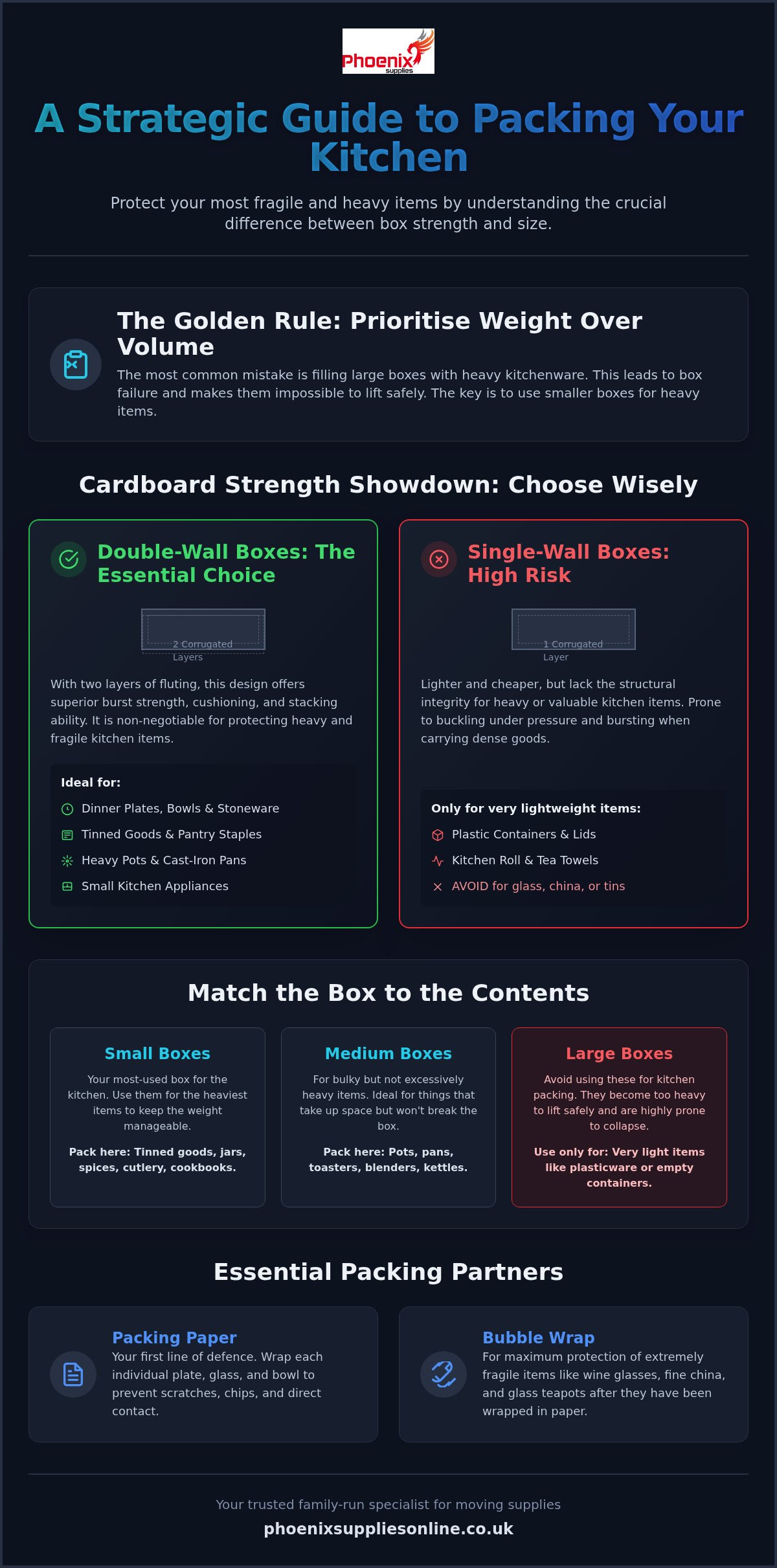
In the kitchen, small is often better. Small Moving Boxes are the ideal choice for heavy items like spices, tinned goods, and cookbooks. By using smaller containers, you naturally limit the weight to a level that is safe for lifting and van loading. This prevents the dreaded scenario where the bottom of the box gives way mid-carry. Double-wall cardboard is essential here. It consists of two layers of fluting that provide a cushioned barrier and superior strength compared to single-wall alternatives. Balancing the weight across several smaller, sturdier boxes keeps the move organised and your back safe.
Fragility and the 'Vibration Factor'
Road vibrations are the secret enemy of your stacked dinner plates. As the van moves, your items experience constant movement. If your boxes aren't rigid, the internal items will shift and collide. High-quality cardboard boxes provide the necessary rigidity to keep everything in place. The Phoenix standard for kitchen-ready cardboard focuses on this structural integrity. A box that holds its shape under pressure prevents internal movement, which is the primary cause of smashed glassware. When your boxes are sturdy, they stack better in the van, creating a solid wall of protection for your belongings.
Double Wall vs Single Wall: Choosing the Right Strength
Understanding the difference between double-wall and single-wall cardboard is the first step in protecting your kitchen. A double-wall box is constructed with two layers of corrugated fluting sandwiched between three layers of linerboard. This design creates a significantly stronger structure that can withstand the vertical pressure of a stacked removal van. In contrast, single-wall boxes use only one layer of fluting. While they're lighter and cheaper, they often lack the structural integrity needed for the best moving boxes for kitchen items like heavy plates or cast-iron pans.
The technical benefit of double-wall cardboard lies in its burst pressure resistance. When you stack boxes in a van, the ones at the bottom must support the weight of everything above them. Single-wall boxes frequently buckle under this stress, leading to collapsed corners and damaged contents. Double-wall construction provides a reliable cushion against external impacts, acting as a shock absorber if a box is accidentally bumped or shifted during transit. It's about more than just thickness; it's about the resilience of the material under real-world conditions.
When to Use Double Wall Boxes
You should always opt for double-wall protection for your most valuable and heavy items. This includes everything from dinner plates and bowls to heavy stoneware mugs. These items are deceptively heavy when stacked, and the reinforced base of a double-wall box ensures they don't crash through the bottom. Tinned goods and pantry staples also require this extra strength due to their high density. Small kitchen appliances, such as stand mixers or coffee machines, are another category where the extra investment in double-wall boxes pays off by preventing expensive repairs or replacements. If you're unsure which strength you need, you can browse our range of heavy-duty removal boxes to find the right match for your favourite dinner set.
The Limitations of Single Wall Cardboard
Single-wall cardboard has its place, but it shouldn't be the workhorse of your kitchen move. These boxes are best reserved for lightweight pantry items like cereal boxes, tea towels, and oven mitts. They're also suitable for plastic Tupperware or lightweight mixing bowls. The main risk with using single-wall boxes for heavier loads is their tendency to buckle. Once the structure of a box is compromised, it can no longer protect what's inside. To save money without risking your belongings, we recommend a balanced approach:
- Double Wall: Plates, mugs, tins, small appliances, and glassware.
- Single Wall: Tea towels, plastic containers, sponges, and light dry foods.
Choosing the best moving boxes for kitchen safety means recognising when to invest in strength and when you can afford to go lighter. Using a mix of both ensures your move is cost-effective whilst keeping your breakables perfectly secure.
The Best Moving Boxes for Every Kitchen Category
Selecting the best moving boxes for kitchen items isn't just about how much you can fit inside. It's about how the box behaves once it's full. We recommend categorising your supplies based on the density and weight of your kitchenware to ensure everything stays safe and manageable during the move. A one-size-fits-all approach often leads to boxes that are either too heavy to carry or too flimsy to protect their contents.
Small Moving Boxes are the favourite choice for items that are small but heavy. Tinned food, jars of spices, and heavy cookbooks fit perfectly here. Because these boxes have a smaller volume, they prevent you from creating a container that is too heavy to lift. Medium Moving Boxes act as the versatile all-rounder for the kitchen. They provide the right amount of space for pots, pans, and mixing bowls without becoming unmanageable. Large Moving Boxes, whilst tempting for their capacity, should be reserved for bulky but lightweight items like bread bins, plastic drying racks, or large Tupperware collections. Archive Boxes are also surprisingly useful for organising kitchen paperwork, warranty manuals, and recipe books that you've collected over the years.
Best Boxes for Crockery and Glassware
Small, double-wall boxes are the gold standard for crockery. When plates are stacked horizontally, the bottom plate bears the weight of every plate above it, which often leads to cracking. The best way to pack is the vertical method, where plates are stood on their edges like records in a crate. This distributes the pressure across the strongest part of the plate. Using Small Moving Boxes: The Best Way to Pack Heavy Items allows you to maintain this vertical structure without the items shifting too much during transit. This method, combined with sturdy cardboard, significantly reduces the risk of breakages.
Best Boxes for Small Appliances
Choosing the right fit for air fryers, stand mixers, and coffee machines is critical. A common mistake is using a box that is too large, which creates dead space. If an appliance can slide around, it's more likely to suffer internal damage. You want a snug fit where the appliance is cushioned on all sides by packing material. Stand mixers and coffee machines often have heavy motors that create concentrated weight points. Ensure the box you choose is a double-wall variety that won't deform under this specific pressure. By matching the box size to the appliance, you keep the centre of gravity stable for the person carrying it, making the loading process much safer.
Essential Packing Materials to Pair with Kitchen Boxes
Even if you've selected the best moving boxes for kitchen items, your packing job isn't finished until the internal contents are secured. Think of the box as the outer armour and the packing materials as the internal suspension system. Without proper padding, items will shift and collide during transit. This internal movement is the primary cause of breakages, even in the sturdiest of containers. A successful move relies on a combination of high-quality cardboard and the right protective layers.
Start with the foundation. High-quality packing tape is essential for reinforcing the base of every box. We recommend the "H-tape" method, where you seal the centre seam and both end seams. This provides the structural integrity needed to support heavy stoneware and tinned goods. For larger appliances like microwaves, Removal Blankets offer a thick, protective layer that prevents scratches and absorbs road shocks. These blankets are far more effective than cardboard alone for protecting the delicate electronics and glass doors of your kitchen gadgets.
Bubble Wrap vs Packing Paper
Choosing between bubble wrap and packing paper depends on the fragility and surface of the item. Bubble wrap is the superior choice for delicate stemware, crystal, and highly fragile ornaments because the air-filled bubbles provide a physical cushion. For everyday ceramic plates and bowls, acid-free packing paper is often more efficient. It allows you to wrap items tightly without adding excessive bulk, making it easier to fit a full dinner set into a medium box. You can find more detailed advice on protecting your breakables in our guide on Bubble Wrap for Moving House: Fragile Packing Tips.
Void Fill and Structural Support
Organising the inside of your kitchen box requires a strategy to eliminate "dead space". Any gap inside a box allows for movement, which leads to damage. Once you've packed your items, use crumpled packing paper or offcuts of bubble wrap to fill the remaining spaces at the top and sides. The goal is to create a solid block of protection where nothing can move. This is particularly important for heavy items that might shift and crush lighter objects nearby.
Before you seal the lid, perform the "shake test". Gently move the box from side to side. If you hear items shifting or clinking, you need more void fill. A properly packed box should feel like a single, solid unit. This attention to detail ensures that your favourite dinner set survives the journey to your new home in one piece. To get started with the right equipment, you can order your kitchen packing supplies online today and take advantage of our free delivery.
Why Phoenix Supplies is the Right Choice for Your Kitchen Move
Choosing the best moving boxes for kitchen items is a significant step, but having a dependable partner makes the entire process feel manageable. At Phoenix Supplies, we operate as a family-run business that understands the unique pressures of moving home in the UK. We don't view our customers as just another transaction on a spreadsheet. Instead, we see ourselves as a steady guide, helping you navigate the practical challenges of protecting your most cherished belongings. From providing heavy-duty double-wall cardboard to offering a friendly voice at the end of the phone, we are committed to being the helpful neighbour you can rely on.
Our boxes are specifically designed for professional removals. This means they possess the structural integrity required to survive the journey in a removal van, whether you're moving across town or to the other side of the country. We also believe that getting your supplies shouldn't add to your stress. That is why we include free delivery on all orders. This allows you to focus your energy on the actual packing rather than the logistics of how to transport bulky bundles of cardboard to your front door. If you ever feel overwhelmed by the choices, our expert office team is only a phone call away to provide straightforward, honest advice.
The Convenience of Kitchen-Ready Packing Kits
Our range of moving kits takes the guesswork out of your preparations. Many people struggle to estimate exactly how many containers they need, which often leads to last-minute panics. Our kits include a thoughtful mix of small and medium double-wall boxes that are perfect for the average UK kitchen. This selection ensures you have the right strength for your heavy tins and the right volume for your mixing bowls. You can learn more about finding the right balance in our guide on How to Buy Moving Boxes Online in the UK. We have designed these bundles to cover everything from your delicate glassware to your heavy cast-iron pans.
Personalised Service from a British Family Business
We take immense pride in the safety of your belongings. Unlike big-box retailers that offer generic solutions, we focus on the specific needs of domestic movers. We know that the best moving boxes for kitchen safety are the ones that protect your favourite dinner set and keep your small appliances secure. Our commitment to personal accountability means we stand behind every product we sell. We want your move to be a success, and we are here to support you every step of the way. Browse our heavy-duty kitchen boxes and packing kits today.
Secure Your Kitchen Move Today
Moving your kitchen doesn't have to be a source of stress or broken plates. By choosing professional-grade double-wall cardboard, you ensure your heavy stoneware and delicate glassware are supported by the best moving boxes for kitchen packing. We've explored how small boxes prevent over-packing and why internal protection like bubble wrap is essential for a damage-free arrival. These simple choices make the difference between a chaotic unpacking experience and a smooth transition into your new home.
As a family-run UK business, we take pride in helping you protect your favourite belongings. We provide the same high-quality materials used by professional removal companies, delivered straight to your door. With free delivery on all orders, you can get the supplies you need without worrying about extra logistics. Take the first step toward an organised, secure move by choosing the right tools for the job.
Order your heavy-duty kitchen moving boxes from Phoenix Supplies today and enjoy the peace of mind that comes with expert protection. You've got this, and we're here to help.
Frequently Asked Questions
What size boxes are best for kitchen items?
Small and medium double-wall boxes are the most effective sizes for kitchen packing. Use small boxes for heavy, dense items like tinned goods or stacks of plates to keep the weight manageable for lifting. Medium boxes are better suited for bulky items that aren't quite as heavy, such as mixing bowls, pots, and pans. Avoid using large boxes for anything heavy, as they become difficult to carry and are prone to buckling.
How many boxes do I need to pack a standard kitchen?
A standard UK kitchen typically requires between 20 and 30 boxes in total. For an average family home, we suggest a mix of 15 small double-wall boxes for heavy items and 10 to 15 medium boxes for general kitchenware. If you have a large pantry or many appliances, you may need more. Choosing the best moving boxes for kitchen efficiency often involves buying a pre-made kit to ensure you have the right variety.
Should I use bubble wrap or packing paper for my plates?
Use acid-free packing paper for your everyday ceramic plates and bubble wrap for delicate glassware. Packing paper is thinner and allows you to wrap plates tightly so they can be stood vertically, which is the safest way to pack them. Bubble wrap provides a thicker air cushion that is necessary for protecting fragile wine glasses, crystal, or items with delicate handles and stems that could snap under pressure.
Can I use second-hand boxes for heavy kitchenware?
We don't recommend using second-hand boxes for heavy kitchenware because cardboard loses its structural integrity over time. A box that has been used previously may have weakened seams or dampened fibres, making it much more likely to fail under the weight of stoneware or tins. For the safety of your belongings, it is always better to invest in new, professional-grade double-wall boxes that haven't been compromised by previous moves.
How do I stop my kitchen boxes from breaking at the bottom?
The most effective way to prevent a box from breaking is to use the "H-tape" sealing method. This involves applying high-quality packing tape across the centre seam and then along the two side seams of the box base. This creates a reinforced seal that distributes weight more evenly. Always ensure you are using double-wall cardboard, as single-wall boxes are simply not designed to hold the concentrated weight of kitchen items safely.
What is the best way to pack small appliances like air fryers?
Small appliances like air fryers or stand mixers should be packed in a box that offers a snug fit with minimal dead space. If the appliance is too small for the box, fill the gaps with crumpled paper or bubble wrap to prevent it from sliding. For larger items like microwaves, wrap them in a removal blanket before placing them in a box to protect the glass and exterior finish from road vibrations.
How do I organise my kitchen boxes for easier unpacking?
Organise your kitchen boxes by labelling them according to the cupboard they came from, such as "Baking" or "Daily Crockery". Using colour-coded tape for different categories can also help you identify what needs to be unpacked first. This methodical approach ensures that when you arrive at your new home, you can find the kettle and mugs quickly without having to search through every container in a state of confusion.
Are double-wall boxes really worth the extra money for a kitchen move?
Double-wall boxes are definitely worth the investment for a kitchen move because of their superior burst strength. They are designed to be stacked on top of each other in a removal van without collapsing under pressure. Given that the best moving boxes for kitchen items must protect fragile china and heavy appliances, the extra cost of double-wall cardboard is a small price to pay to avoid the heartbreak of smashed dinner sets.


