

You have finally measured the wall in your new lounge, but then the realisation hits: how do you move a screen that is nearly two metres wide without it snapping like a biscuit? It is a genuine worry for many UK homeowners because these massive displays are incredibly fragile and awkward to handle once the original factory carton has been recycled. Tracking down a heavy-duty 75 inch TV moving box is the first step toward a stress-free move, but the real secret lies in how you brace the screen inside to prevent pressure points from causing a hairline crack during transit.
We understand that your television is a significant investment, and we are here to help you protect it. This guide will show you exactly how to secure your television using professional techniques and the right protective layers so it arrives at your new home in perfect condition. We will walk you through choosing the correct double-wall dimensions for your screen size, the most effective way to apply bubble wrap and foam, and why keeping the unit upright is the only way to ensure you stay insurance-ready throughout your journey.
Key Takeaways
- Understand why a heavy-duty 75 inch TV moving box with double-wall construction is essential for supporting screens that often weigh over 30kg.
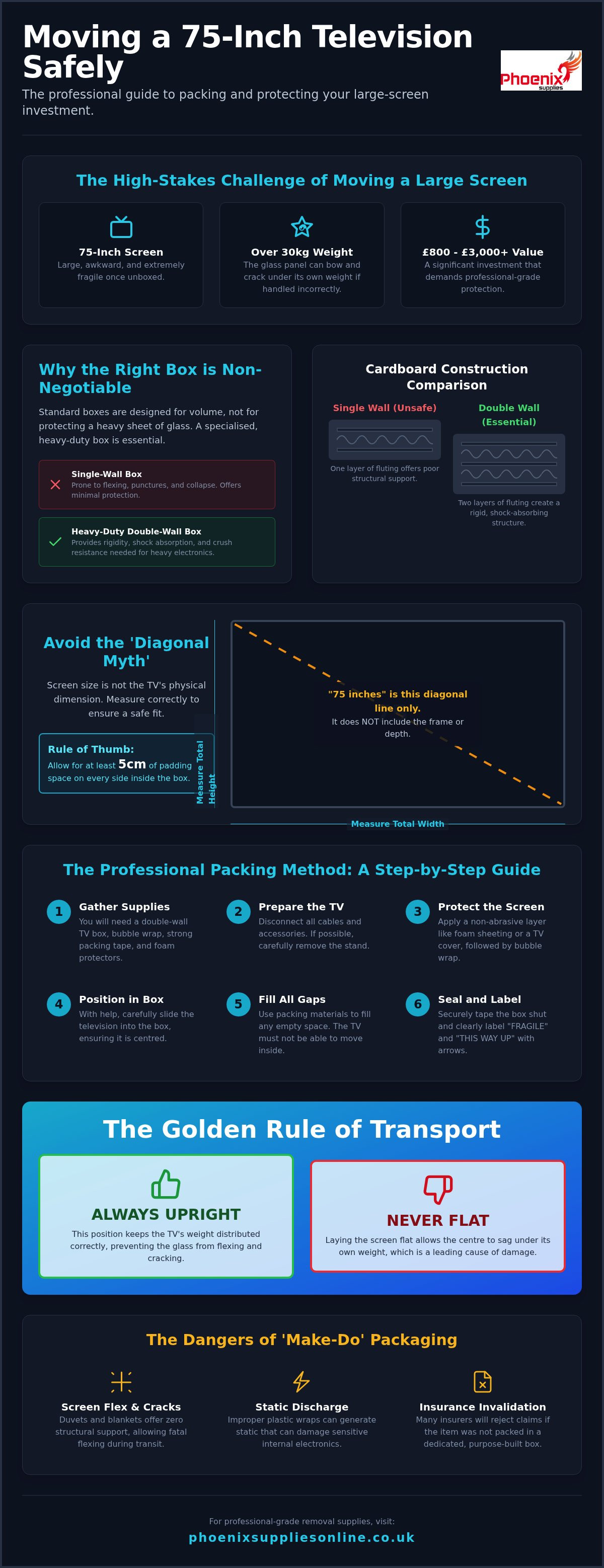
- Learn how to avoid the "diagonal myth" by measuring your television correctly to ensure a perfect, secure fit inside the packaging.
- Follow a professional step-by-step packing method, from removing the stand to applying non-abrasive layers that protect the delicate screen surface.
- Discover why you must always transport large televisions in an upright position to prevent the glass from bowing under its own weight.
- Gain peace of mind by using professional-grade supplies that help ensure your high-value electronics are ready for a safe journey to your new home.
Why a Specialised 75-Inch TV Moving Box is Essential
A 75 inch TV moving box isn't just a larger version of a standard removal carton; it's a piece of engineered equipment. These containers use double wall construction, which provides two layers of vertical fluting. This design creates a high level of puncture resistance and structural rigidity that single-walled boxes simply cannot match. When you consider that a modern 75-inch 4K or 8K panel can cost anywhere from £800 to over £3,000, investing in a professional-grade box is a logical financial decision. Standard "large" boxes are designed for volume, not for protecting a 35kg sheet of glass that is prone to internal cracking if the frame flexes even slightly.
One of the biggest mistakes movers make is assuming a 75-inch box is exactly 75 inches wide. In the electronics world, 75 inches refers only to the diagonal measurement of the glass screen itself. The physical width of the unit is usually closer to 167cm. However, once you account for the protective bezel, the depth of the unit, and the necessary "buffer zone" of packing materials, the box dimensions must be significantly larger to accommodate the padding.
The Difference Between Screen Size and Box Dimensions
Measuring your television correctly is the only way to ensure a safe fit. You should measure the total dimensions including the outer frame rather than relying on the manufacturer's screen size. To get it right, follow these steps:
- Measure the total width and height including the plastic bezel.
- Check the depth of the unit at its thickest point.
- Allow for at least 5cm of extra space on every side for padding.
If you aren't removing the stand, you'll need to include those extra dimensions too, though we always recommend taking the stand off for transit. A professional packing setup requires a buffer zone on all sides. This gap allows for layers of bubble wrap or foam corners to absorb vibrations and external impacts before they reach the delicate screen surface.
The Dangers of Using "Make-Do" Packaging
It is tempting to wrap a screen in old duvets or blankets, but these offer zero structural support. Soft materials don't prevent the "flexing" motion that destroys LCD layers during a bumpy van journey. There is also the hidden risk of static discharge from certain plastic wraps or synthetic fabrics, which can fry sensitive internal components. Perhaps most importantly, many UK insurance providers will flatly reject a damage claim if the item wasn't housed in a dedicated, double-walled box. Using "make-do" materials often means you are moving without any financial protection at all.
Understanding Heavy-Duty Double Wall Construction
When you're dealing with a screen that weighs upwards of 30kg, a standard single-wall box is a recipe for disaster. Heavy-duty double-wall construction refers to the internal architecture of the cardboard. It features two distinct layers of corrugated fluting sandwiched between three sturdy liners. This creates a rigid "sandwich" effect that provides exceptional puncture resistance. For a 75 inch TV moving box, this structural integrity is non-negotiable because the sheer surface area of the cardboard needs to resist flexing under its own weight.
The fluting doesn't just provide strength; it acts as a shock absorber. As your removal van travels along uneven UK roads, the corrugated layers compress and rebound slightly. This process dissipates the vibrations that would otherwise travel directly into the delicate internal electronics of your 4K panel. This rigidity also prevents the dreaded "box sag". If a lighter item is accidentally placed against the box in the van, the double-walled structure maintains its shape rather than bowing inward and putting pressure on the glass. If you're unsure about the grade of cardboard you need, choosing professional-standard removal supplies ensures you get the thickness required for oversized electronics.
Crush Resistance and Burst Strength
Double walls are designed to distribute weight across a wider surface area. This is vital because 75-inch TVs are incredibly top-heavy once they're in a vertical position. A high-quality UK-manufactured 75 inch TV moving box can be identified by its physical weight and the thickness of the board, which is usually around 6mm to 7mm. This vertical strength is what allows the box to stand firm in a packed van without the corners collapsing. It ensures that the protective environment you've created for the screen remains intact from the moment you tape the bottom to the moment you unpack at your new home.
Integrated Hand Holds and Ergonomics
Moving a box that is nearly two metres wide is a logistical challenge. Integrated "easy grip" handles are essential for maintaining control during the lift. These hand holds allow two people to keep the box perfectly level, which reduces the risk of the TV tilting or sliding inside the packaging. It also keeps your fingers away from the base of the box where they might accidentally puncture the cardboard. Just remember the golden safety rule: never attempt to lift or move a 75-inch TV box alone. The size makes it impossible to balance safely, regardless of how many handles the box has.
How to Pack Your 75-Inch TV: A Step-by-Step Guide
Packing a screen of this magnitude is a two-person task that requires plenty of floor space. Before you even touch your 75 inch TV moving box, you need to prepare the unit itself. Start by laying a clean removal blanket on a flat, hard floor. Carefully place the television face down on the blanket to access the stand. Once the stand is removed, organise the screws into a small bag and tape it to the back of the set. This ensures you aren't searching through random drawers for specific fixings when you arrive at your new home.
The first layer of protection should always be non-abrasive. Avoid placing bubble wrap directly against the glass, as the plastic "bubbles" can sometimes leave circular imprints on modern screen coatings. Use a thin foam sheet or a clean cotton sheet as a primary barrier. Once this is secure, you can move on to the heavy-duty cushioning that will protect the unit from external impacts.
Applying Bubble Wrap and Foam Corners
For a screen this large, you should use at least two full layers of bubble wrap for moving house. Wrap the unit horizontally first, then vertically, ensuring the corners are well-padded. After wrapping, fit foam corners over the bubble wrap. These corners are vital because they create a shock-absorbing gap between the TV and the cardboard walls. This "floating" method ensures that if the box is bumped, the energy is absorbed by the foam and air before it reaches the screen frame. Secure everything with packing tape, but make sure the adhesive never touches the screen or the bezel directly.
Securing Cables and Accessories
Cables should be coiled loosely to prevent internal wire damage; never fold them into sharp angles. Once coiled, place them along with the remote control into a dedicated accessory bag. You can tape this bag to the back of the TV or place it in a clearly marked corner of the box where it won't press against the screen. Finally, use a thick marker to label the "Front" of the box. This warns anyone handling the package exactly where the delicate display is located. When sealing the box, use the "H-pattern" method by taping along all open seams. This reinforces the structure and prevents the bottom from dropping out under the weight of the 75-inch unit. Avoid the common DIY mistake of taping two smaller boxes together, as this "telescoping" method lacks the central strength needed to support a heavy 4K panel.
Handling and Transporting Large TV Boxes Safely
The golden rule for moving a screen of this size is simple: keep it upright at all times. It is often tempting to lay the 75 inch TV moving box flat on the van floor to save space, but this is the most common cause of screen failure. Large LED and OLED panels are engineered to stand vertically. When you lay a screen flat, the weight of the glass exerts immense pressure on the centre of the panel, causing it to bow. Even a minor vibration on a bumpy road can cause that flex to turn into a permanent internal crack, often referred to as "spider-webbing."
Once the box is inside the vehicle, you need to ensure it remains vertical throughout the journey. We recommend using webbing straps for moving to anchor the box firmly against the interior wall of the van. This prevents the box from sliding or tipping during transit. You should also consider the temperature. If you're moving during a cold UK winter, let the television sit in your new lounge for at least four hours before plugging it in. This allows any condensation to evaporate and lets the delicate internal components safely acclimatise to room temperature.
Loading the Removal Van
Think about the order of your move to keep the most fragile items safe. Your TV should be one of the last items loaded and the first to come off. This reduces the time it spends in a cramped van environment. For maximum stability, place the box between two heavy, flat items like a mattress and the side of a wardrobe. This creates a protective "sandwich" that keeps the box stable. Just make sure no smaller items can fall behind the box and press against the side marked "Screen."
Unpacking and Setup
When you reach your destination, don't rush the final step. Use two people to lift the TV out of the box vertically. Never tip the box to slide the unit out, as this puts uneven pressure on the bottom corners. Once it's positioned, check the screen for any visible damage before you plug it into the mains. It's a wise move to keep your 75 inch TV moving box for a few days. If you discover "concealed damage" that wasn't immediately obvious, having the packaging available makes the insurance claim process much easier to manage. If you need to stock up on heavy-duty protection for your next move, you can browse our professional moving supplies to find the right fit for your home.
Professional Supplies from Phoenix Supplies UK
At Phoenix Supplies UK, we know that moving house is one of the most stressful events you'll face. As a family-run business, we take a personal interest in helping you protect your most valuable possessions. Whilst we've spent this guide explaining the physics and requirements of a 75 inch TV moving box, the actual protection comes down to the grade of the materials you choose. We specialise in providing large moving boxes and heavy-duty, double-walled solutions that meet the exact standards used by professional removal companies across the country.
Our commitment to quality means we don't just sell cardboard; we provide a complete TV moving box UK solution that includes the necessary padding to keep your electronics safe. We offer national delivery across the UK, ensuring your supplies arrive well before your moving date. This allows you to focus on the logistics of your move, knowing your high-value 4K or 8K screen is protected by materials designed for the job. We pride ourselves on being a dependable partner you can reach out to whenever you have a question about your packing requirements.
Why Choose a Family-Run Specialist?
Choosing a family-run specialist means you get more than just a transaction. You get access to personalised advice from a team that understands the practical challenges of moving oversized items. We maintain strict quality control, only stocking materials that we would trust with our own home electronics. We believe in providing competitive pricing without ever compromising on the thickness or burst strength of our cardboard. This balance of value and reliability is why so many UK homeowners return to us for every move, knowing they'll receive the same high level of care every time.
Complete Your Packing Kit
To make your transition even smoother, you can order all your packing materials from a single, reliable source. From heavy-duty bubble wrap and webbing straps to wardrobe boxes for moving, we provide everything you need to streamline the process. Having all your supplies arrive in one shipment saves time and ensures your packing remains consistent and professional. If you're ready to secure your high-value items, View our range of Extra Large TV Moving Boxes at Phoenix Supplies UK today.
Secure Your Screen for a Stress-Free Move
Moving a television of this scale doesn't have to be a source of anxiety. By focusing on upright transit and using the "floating" packing method, you've already eliminated the most common risks associated with large-screen damage. It's clear that the structural integrity of a heavy-duty 75 inch TV moving box is your primary defence against the bumps and vibrations of a UK house move. When you combine professional-grade materials with careful handling, you ensure that your high-value display remains safe throughout the entire journey.
As a family-run UK business, we take genuine pride in helping you protect what matters most. Our professional-grade, double-walled cardboard is designed to meet the same high standards used by removal experts, giving you peace of mind from the moment you tape the box shut until you're settled in your new home. We make the process simple by including free UK delivery on all orders, so your supplies arrive exactly when you need them. Browse our Heavy-Duty 75-Inch TV Moving Boxes today and ensure your home cinema setup arrives in perfect condition. You've got this, and we're here to support you every step of the way.
Frequently Asked Questions
Can I move a 75-inch TV without the original box?
Yes, you can safely move your television without the original packaging by using a specialised, double-walled replacement box. It is essential to replicate the protective environment of the factory carton by using foam corners and multiple layers of heavy-duty bubble wrap. This ensures the screen remains "floating" and does not come into direct contact with the cardboard walls during transit.
Will a 75-inch TV fit in a standard large moving box?
No, a standard large box is not designed to handle the dimensions or the weight of an oversized screen. Most standard boxes are too narrow and lack the structural integrity to support a unit that often weighs over 30kg. You must use a dedicated 75 inch TV moving box with BC-flute construction to prevent the base of the package from collapsing under the pressure.
Why do I have to keep my LED or OLED TV upright during a move?
Keeping the unit upright prevents the internal glass layers from bowing under their own weight. Modern LED and OLED panels are engineered to stand vertically; laying them flat causes the centre of the screen to sag. Even a minor bump in the road can turn this sag into a permanent internal crack, which is why removal professionals never lay large screens flat.
What is the best way to protect the screen inside the box?
The most effective method is to use a non-abrasive primary layer, such as a thin foam sheet or a clean cotton sheet, followed by heavy-duty bubble wrap. This prevents the plastic bubbles from leaving imprints on the delicate screen coating. Adding foam corners at the end creates a vital buffer zone that absorbs impacts before they can reach the frame of the television.
How many people are needed to move a 75-inch TV box safely?
You should always have at least two people to lift and move a box of this size. Because the 75 inch TV moving box is nearly two metres wide, it is impossible for one person to maintain a level balance. Attempting to move it alone significantly increases the risk of dropping the unit or causing a puncture in the cardboard side walls.
Should I remove the stand before putting the TV in the moving box?
Yes, you should always remove the stand to ensure the television sits securely and flat inside the box. Leaving the stand attached increases the depth of the unit and creates concentrated pressure points that can damage the frame. Removing it also makes the television much easier to wrap and significantly reduces the overall height of the package.
Does bubble wrap cause static damage to modern televisions?
Whilst static discharge is a rare occurrence with modern sets, the physical bubbles can sometimes leave marks on the screen's anti-glare coating. It's best to use a soft fabric or a dedicated foam sheet as a base layer. This provides a clean, static-free barrier between the delicate glass and the plastic cushioning materials used for shock absorption.
How do I know if a TV box is strong enough for a heavy screen?
Check that the box is explicitly labelled as "double wall" and has a thickness of approximately 6mm to 7mm. A high-quality box will feel rigid and heavy rather than flimsy or soft. If the cardboard flexes easily when you press against the side, it won't provide the vertical strength required to protect a 75-inch unit in a removal van.


