

Imagine standing in your living room, looking at your 65-inch screen and realising it's the most fragile item you own. You've measured the diagonal size, but finding a 65 inch TV box for moving that actually handles the physical width and weight is a common challenge for many UK homeowners. It's a daunting task to find a container that's strong enough to prevent the screen from cracking under pressure during transit.
We understand that the thought of your expensive display shifting in the back of a van is enough to cause anyone stress. You want to be sure that your equipment is safe, and we're here to help you get it right. This guide will show you how to select a heavy-duty, double-wall box that fits your specific model perfectly while explaining the professional techniques used to secure the screen inside. You'll learn the best ways to use protective materials like removal blankets and bubble wrap to ensure your television arrives at your new home in perfect condition.
Key Takeaways
- Understand that "65-inch" refers to the diagonal screen size, meaning you require a box with a physical width of approximately 150cm to 160cm to fit the frame.
- Choose a reinforced, double-walled 65 inch TV box for moving to prevent modern OLED and LED screens from flexing or cracking under pressure.
- Learn why removal-grade containers offer more reliable structural support than original retail packaging or improvised alternatives.
- Discover the importance of removing stands and cables to eliminate internal pressure points that could damage the panel during transit.
- Follow professional packing standards by using soft film and heavy-duty blankets to ensure your high-value screen arrives in perfect condition.
Why a Standard Box Won’t Suffice for a 65-Inch Television
Most people don't realise that a 65-inch TV is more than just a screen; it's a precision-engineered panel that's surprisingly fragile. Using a dedicated 65 inch TV box for moving is essential because standard cardboard simply isn't up to the task. These specialised boxes are reinforced, double-walled containers designed to handle the unique dimensions and weight of large-format displays. They provide a rigid environment that keeps the screen upright and stable throughout the journey.
Modern OLED and LED screens are incredibly thin. Whilst this looks great on your wall, it makes them vulnerable to "flexing" during transit. If a screen bends even slightly, the internal layers can delaminate or crack. A standard single-wall box, the kind often found at supermarkets or general retailers, will buckle under the weight of a 65-inch unit. It offers almost no protection against the structural stresses of a moving van, where items can shift from side to side.
Puncture resistance is another vital factor. Van environments are unpredictable, and a sharp corner of a table or a stray chair leg can easily pierce thin cardboard. Understanding the basics of protecting electronics from damage helps you see why a flimsy box is a gamble you shouldn't take. You need a barrier that can withstand external pressure while keeping the contents perfectly still.
The Risks of Inadequate Packaging
Structural failure is the biggest worry when using the wrong materials. If the box fails, the impact is transferred directly to the screen. Beyond impact, there's the issue of surface damage. Raw corrugated cardboard is surprisingly abrasive. Without soft layers or protective film, the vibrations of the road can cause internal scratches that are impossible to buff out. When you compare the cost of a replacement TV to the small investment in a proper box, the choice becomes clear for any homeowner.
The Role of Double-Wall Cardboard
The secret to a safe move lies in the fluting. Double-wall cardboard uses two layers of wavy fluting sandwiched between three flat sheets of kraft paper. This construction provides superior crush resistance, which is vital when you're moving large spans of glass. For a 65-inch screen, this extra rigidity prevents the box from bowing in the middle or collapsing when stacked. Double-wall cardboard is the industry standard for electronics over 50 inches. It's the difference between a box that holds its shape and one that folds under the pressure of a house move.
Essential Specifications: What to Look for in a 65-Inch TV Box
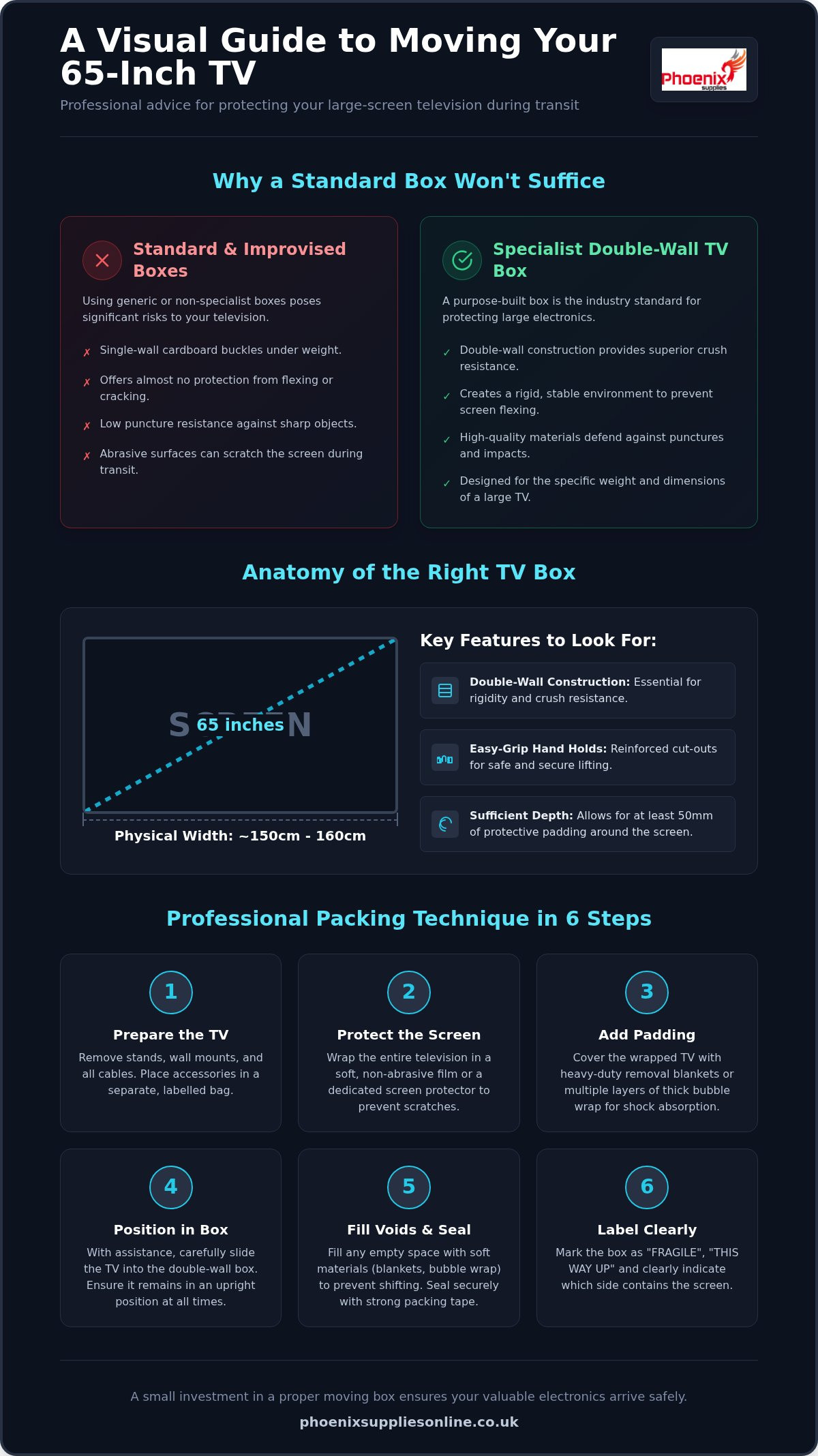
Choosing the right 65 inch TV box for moving starts with understanding a simple industry quirk. When you bought your television, that "65-inch" label referred strictly to the diagonal measurement of the screen. It doesn't account for the frame or the physical width of the device. For a standard 65-inch unit, you'll typically need a box that spans between 150cm and 160cm in width to accommodate the entire chassis safely.
Size isn't the only factor to consider. A 65 inch TV box for moving becomes heavy and awkward once the screen is inside. Look for designs featuring "Easy Grip" hand holds. These reinforced cut-outs allow removal teams or helpful friends to lift the package securely without the risk of the cardboard tearing under the strain. Additionally, check the internal depth. You need enough room for at least 50mm of protective wrapping on either side of the panel to absorb shocks during the journey.
Measuring Your TV Correctly
To find the perfect fit, grab a tape measure and record the outer dimensions of the frame, often called the bezel. Don't just rely on the manufacturer's screen specs. If you can't remove the stand, you must measure the total depth from the front of the screen to the back of the base. Once you have these figures, you can compare them against the internal dimensions of Extra Large TV Moving Boxes to ensure a snug but safe fit. It's always better to have a few extra centimetres of space for padding than a box that's too tight.
Material Strength and Durability
The quality of the cardboard is just as important as the size. High-quality boxes use kraft paper exteriors because the natural fibres provide a better surface for packing tape to grip. This ensures your box stays sealed even in humid conditions. You should also look for boxes with high "burst pressure" ratings, which indicate how much force the material can take before failing. While recycled cardboard is great for the environment, the strongest moving boxes use a balance of recycled content and virgin fibres to maintain structural integrity over long distances. If you're planning a big move, you can browse our heavy-duty supplies to find the right level of protection for your valuables.
Comparing TV Packaging Solutions: Bespoke Boxes vs. Improvised Methods
When you're preparing for a move, it's tempting to look for cost-cutting "hacks" found on social media or forums. However, a 65 inch TV box for moving is a precision tool rather than just a container. Many people consider using soft moving bags or fabric covers as a shortcut. Whilst these are excellent for preventing dust or minor surface scuffs, they offer zero protection against the structural impacts or crushing forces found in a removal van. For a high-value screen, the choice between a bespoke solution and an improvised one often determines whether your TV survives the trip.
One popular alternative is the telescopic box design. These consist of two separate heavy-duty sleeves that slide over one another. This allows you to adjust the width to create a snug, custom fit for your specific screen model. This adjustable nature eliminates the "void" spaces that lead to damage. It's a far more reliable method than trying to modify a standard box that wasn't built for the task.
The Bicycle Box Myth
You might see advice online suggesting that a bicycle box is a perfect substitute for a 65 inch TV box for moving. This is a risky misconception. Bicycle boxes are designed for heavy metal frames and are significantly wider than a flat-screen television. This extra depth causes the TV to shift and rattle during transit, which is the primary cause of internal component failure. Professional movers avoid these because they lack the specific "This Way Up" markings and structural reinforcement points required to keep a delicate LED panel stable and upright throughout a long journey.
Retail vs. Removal Grade
It's a common mistake to assume that the original box your TV came in is the best option for a house move. Retail packaging is designed for palletised shipping, where the box is surrounded by dozens of others and moved by forklifts in a controlled warehouse. Removal-grade cardboard is often much thicker because it's built for individual handling by people. It needs to withstand being carried up stairs, navigated through tight hallways, and secured with webbing straps.
Whilst you're focusing on the screen, don't forget the peripherals that come with it. Stands, remote controls, and bulky power cables should be packed separately to prevent them from pressing against the glass inside the main box. You can use large cardboard boxes to keep these accessories organised and protected alongside your bedding or other soft items. This keeps your specialised TV container dedicated solely to the safety of the panel itself.
Step-by-Step Guide: How to Pack Your 65-Inch TV Safely
Preparing your television for a move requires a methodical approach. Start by disconnecting all cables and removing the stand. Leaving the stand attached creates a dangerous pressure point that can snap the frame or crack the screen if the box is jolted. Once the unit is bare, apply a layer of soft film or acid-free paper directly to the glass. This simple step prevents the abrasive surface of the cardboard or plastic from causing micro-scratches during the journey.
For the primary cushioning, wrap the entire unit in bubble wrap for moving house. Aim for at least two full layers, ensuring the corners are particularly well-covered. To provide the ultimate level of shock absorption, wrap a heavy-duty removal blanket over the bubble wrap. While bubble wrap protects against light impacts, a thick blanket absorbs the deep vibrations and heavy thuds that occur in a moving van. This combination creates a professional-grade shield before you slide the unit into your 65 inch TV box for moving.
Internal Cushioning Techniques
Once the TV is inside the box, it shouldn't touch the cardboard walls directly. Use foam corners or tightly rolled-up bubble wrap at the base to suspend the TV, creating a "floating" effect. This ensures that any impact on the box's exterior doesn't transfer straight to the screen. Fill any remaining gaps with soft household items like linens or additional packing paper. You'll know it's secure when you can gently tilt the box and feel zero "rattle" or movement from within. If you need professional-grade materials to get this right, you can order your packing supplies from our family-run shop for national delivery.
Sealing and Labelling
The way you seal the box is just as important as the padding inside. Use the "H-taping" method by running heavy-duty tape along the main flap seam and then across both side seams to create a reinforced 'H' shape. This prevents the bottom from dropping out under the weight of the screen. Finally, use a thick marker to label all sides with "Fragile" and "Glass" in clear, bold letters. Clearly indicate which side is the front of the screen so removal teams know which way to face the unit against the van wall. It's a vital rule of thumb that 65-inch boxes should always be stored upright, never flat, to prevent the glass from bowing or cracking under its own weight.
Securing Your Screen with Phoenix Supplies UK
Phoenix Supplies UK is a family-run specialist dedicated to providing the heavy-duty protection your valuables deserve. We know that moving house is one of life's most stressful events, especially when you're responsible for transporting high-value electronics. When you're searching for a 65 inch TV box for moving, you need more than just a cardboard container; you need a solution that meets professional standards. Our range of Extra Large TV Moving Boxes and specialist packing supplies provides the structural integrity required for modern, large-format screens. By following a complete packing materials list for moving, you can gather everything from double-wall boxes to cushioning layers in one simple order. Our national delivery service operates across the UK, ensuring your essential supplies arrive well before your moving date.
Professional Grade Materials
We give you direct access to the same high-quality materials used by professional removal companies across the country. This includes our stock of heavy-duty double-wall cardboard, which offers the crush resistance needed for heavy items. To keep your television from shifting in the back of a van, we also recommend using webbing straps for moving. These straps allow you to anchor the box firmly to the vehicle's interior rails, preventing it from toppling during transit. If you're unsure about which accessories you need for a 65 inch TV box for moving, our dedicated office team is always a phone call away to provide personalised support and guidance.
Why Choose a Family-Run Specialist?
Choosing a family-run business means you're more than just a transaction to us. We take a clear sense of pride in our service and remain committed to providing honest, dependable advice to every home mover. We understand the practical challenges of a move, which is why we focus on high-quality materials that won't let you down when it matters most. Our competitive pricing on bulk orders and moving kits ensures you get professional-grade protection at a fair value. We act as a steady guide for our customers, helping you navigate the complexities of packing fragile items with ease and confidence.
Whether you're moving a single room or a whole family home, we're here to ensure your most fragile items are handled with care. Browse our full range of TV moving boxes and protective supplies at Phoenix Supplies UK.
Get Ready for a Safe and Successful Move
Moving a large screen doesn't have to be a source of constant worry. By focusing on the actual physical width of your unit and choosing a reinforced container, you've already taken the most important steps toward a successful move. Always remember to prioritise double-wall strength and use professional-grade cushioning to keep that fragile panel safe from the unpredictable vibrations of the road. It's these small details that ensure your equipment survives the journey without a scratch.
Securing a proper 65 inch TV box for moving is the best way to protect your investment. As a family-run UK business, we're proud to offer double-wall strength guaranteed to handle the weight of modern displays. We provide reliable national delivery and even offer free delivery on qualifying orders to make your moving preparations as straightforward as possible. You can trust our specialist materials to act as a steady guide during your transition.
Order your heavy-duty 65-inch TV moving box from Phoenix Supplies UK today.
Take the process one step at a time. With the right supplies and a bit of patience, you'll be settled in and enjoying your favourite films in your new home in no time at all.
Frequently Asked Questions
Can I move a 65-inch TV without the original box?
Yes, you can safely move a large television without the original packaging as long as you use a dedicated 65 inch TV box for moving. Most homeowners discard the retail box due to its awkward size, but a removal-grade, double-walled replacement provides the necessary rigidity to protect the screen from external pressure and impacts during transit.
Is it safe to lay a 65-inch TV flat in a car or van?
What size box do I need for a 65-inch TV?
You require a box that matches the physical width of your television frame, which typically ranges between 150cm and 160cm for a 65-inch model. It's a common mistake to buy a box based on the 65-inch diagonal screen measurement. Always measure the outer bezel of your unit and ensure the box depth allows for at least 50mm of padding on either side.
How much bubble wrap do I need for a large screen TV?
We recommend using approximately 10 to 15 metres of high-quality bubble wrap to protect a screen of this scale. This allows you to wrap the unit at least twice, providing a thick enough layer to absorb minor shocks. Pay special attention to the corners, as these are the most frequent points of failure during a move.
Can I use a bicycle box for my 65-inch television?
Using a bicycle box is generally discouraged because the internal dimensions are far too wide for a modern flat-screen. This excess space allows the TV to shift and rattle, which is the leading cause of damage during house moves. A 65 inch TV box for moving is specifically designed with a slimmer profile to keep the unit upright and immobile.
How do I stop my TV from moving inside the box during transit?
The best way to prevent movement is to fill all internal voids with soft materials like packing paper, foam corners, or even household linens. Once packed, you should be able to gently tilt the box without hearing or feeling the television shift inside. A snug fit ensures that the weight is distributed evenly across the double-wall cardboard.
Do I need double-wall cardboard for a flat-screen TV?
Yes, double-wall cardboard is essential for any television over 50 inches because it provides two layers of protective fluting. Single-wall boxes are prone to buckling under the weight of a 65-inch unit and offer very little resistance against punctures. The added thickness of a double-wall box is what prevents the screen from flexing when the van hits a bump.
What is the "H-taping" method for heavy boxes?
The H-taping method involves applying heavy-duty tape along the centre seam of the box and then across both side edges to create the shape of a capital 'H'. This technique is vital for large electronics because it reinforces the flaps and prevents the bottom of the box from bursting open. It provides a much more secure seal than a single strip of tape along the middle.


