

Did you know that more than two in five people are planning to move house in 2026? It's a year for fresh starts, but that initial excitement often fades the moment a "free" supermarket box gives way, scattering your favourite dinner service across the pavement. We know that packing is consistently rated as the most stressful part of moving. It's easy to feel overwhelmed by the fear of fragile items breaking or the nightmare of running out of tape late on a Sunday night when the shops are closed.
You deserve a move that feels organised and secure rather than chaotic. This comprehensive packing supplies checklist for moving provides a professional-grade roadmap to protect your belongings from the kitchen to the bedroom. We have put together a room-by-room guide to every material you need, from heavy-duty boxes and bubble wrap to specialised wardrobe cartons and removal blankets. By the end of this article, you'll have a complete shopping list and the confidence that comes from knowing your home is packed to survive the journey safely.
Key Takeaways
- Learn why choosing the right box size is vital, including the golden rule of using small boxes for heavy items and larger cartons for lighter bedding.
- Use our comprehensive packing supplies checklist for moving to ensure you have the correct cushioning materials to prevent transit damage from shock and vibration.
- Discover how specialised containers, such as wardrobe and TV boxes, provide far better protection for high-value items than standard alternatives.
- Master the "H-taping" method and understand why investing in professional-grade tape prevents boxes from collapsing during the loading process.
- Streamline your arrival with a proactive labelling strategy and an "Essentials Box" designed to support your family through the first 24 hours in your new home.
The Foundation: Essential Boxes and Containers for Every Room
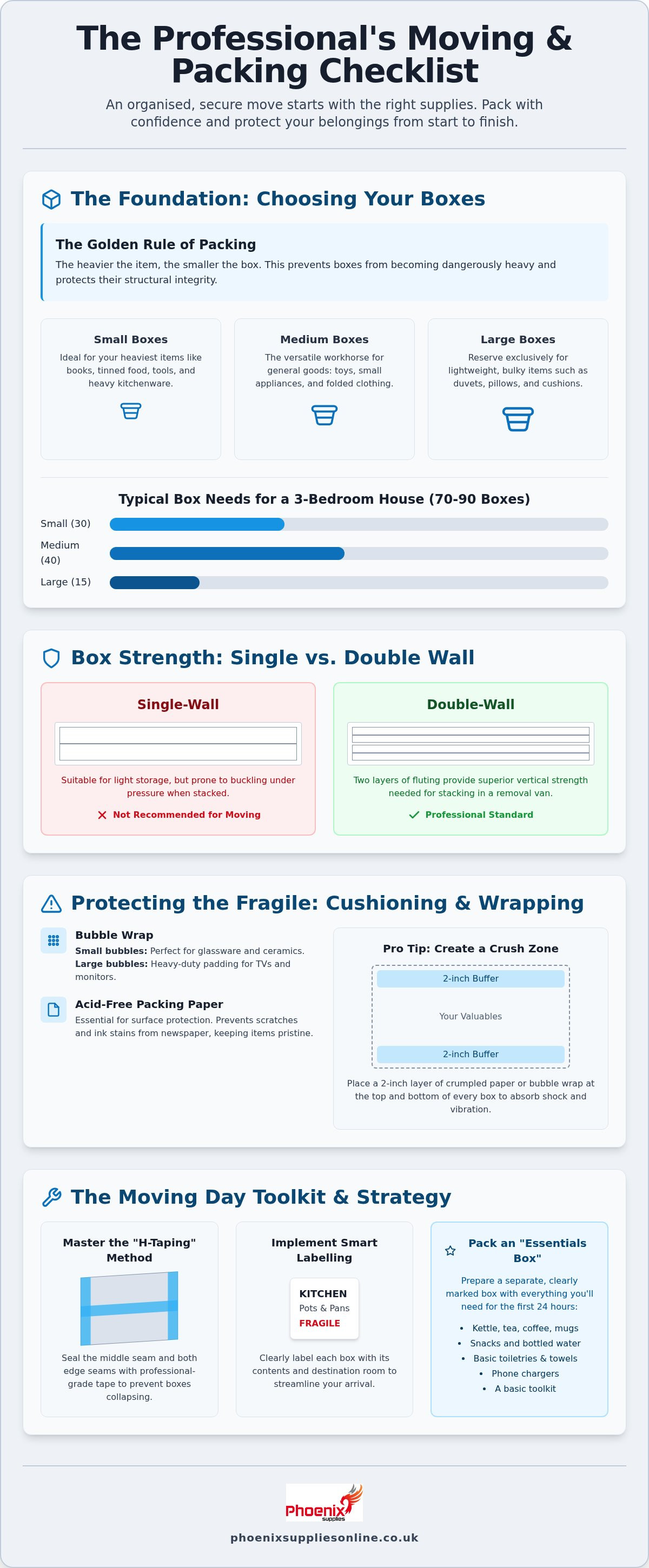
Choosing a "one size fits all" approach to your boxes is a recipe for moving day disaster. When you rely on a single box size, you inevitably end up with containers that are either dangerously heavy or inefficiently packed. Using a detailed packing supplies checklist for moving helps you categorise your belongings by weight and volume before the first piece of tape is even cut. This strategic approach ensures your items remain intact and your back stays healthy during the lifting process.
For a standard three-bedroom house, you'll generally need between 70 and 90 boxes to ensure a smooth transition. A typical breakdown includes 30 small boxes for heavy items, 40 medium boxes for general goods, and 15 large boxes for bulky items. It's tempting to use free supermarket boxes, but this is often a false economy. These recycled containers are frequently weakened by previous use or moisture, making them prone to collapsing when stacked in a removal van. Fresh, professional-grade cardboard provides the structural integrity needed to protect your life's possessions.
Small, Medium, and Large Moving Boxes
The golden rule of packing is simple: the heavier the item, the smaller the box should be. Small boxes are your best friend for books, tinned food, and heavy kitchenware. They keep the weight manageable and prevent the bottom from dropping out. When selecting standard moving boxes, it's vital to match the box size to the weight of its contents to avoid transit damage.
Medium boxes are the versatile workhorses of any move. They're perfect for toys, small appliances, and folded clothing. Large boxes should be reserved exclusively for lightweight, bulky items like duvets, pillows, and cushions. If you fill a large box with books, it will become impossible to lift and will likely burst under its own pressure.
Box Strength: Understanding Single vs Double Wall
The strength of a box comes from its "fluting," which is the S-shaped wavy layer between the flat sheets of cardboard. Single-wall boxes have one layer of fluting and are suitable for lightweight storage or items that won't be stacked. However, for a house move, you need the extra reinforcement of double-wall boxes. These feature two layers of fluting, providing the vertical strength required to support the weight of multiple boxes stacked on top of each other in the van.
Double-wall cardboard is the industry standard for professional removals. While single-wall options might save a few pence initially, they often buckle under pressure, leading to crushed items at the bottom of the pile. Always opt for double-wall boxes for your most valuable or breakable items to ensure they arrive at your new home in the same condition they left.
Protecting the Fragile: Cushioning and Wrapping Supplies
Even if your boxes remain perfectly intact during transit, the items inside can still shatter. This happens because of kinetic energy. When a removal van hits a bump, that energy travels through the box and into your belongings. Proper shock absorption is the most critical element of any packing supplies checklist for moving. Without it, delicate items like porcelain or electronics vibrate against one another, leading to hairline fractures or total breakage.
A common mistake is over-packing a box to save space. When you force too many items into a single container, the cardboard walls bulge. This tension makes the box far more likely to burst if it's stacked or shifted. Instead, focus on creating crush zones by placing a 2-inch layer of crumpled paper or bubble wrap at the very bottom and top of every box. This buffer acts as a suspension system, absorbing the impact before it reaches your valuables.
Bubble Wrap and Packing Paper
Not all cushioning is created equal. Small bubble wrap is perfect for protecting glassware and ceramics, as the tiny air pockets conform closely to intricate shapes. For larger items like televisions or computer monitors, large bubble wrap provides the heavy-duty padding needed to withstand significant jolts. You can find more detail on these essentials in our guide to The Ultimate Packing Materials List for Moving House in 2026.
Whilst bubble wrap is excellent for impact, acid-free packing paper is essential for surface protection. Standard newspaper can leave unsightly ink stains on your favourite white plates or polished wood. Acid-free paper prevents scratches and chemical reactions, ensuring your surfaces stay pristine. If you're looking for eco-friendly options, consider paper-based honeycomb wrap, which offers excellent protection without the plastic waste.
Mattress and Furniture Covers
Protection extends beyond what fits in a box. Polythene mattress covers are non-negotiable for a hygienic move. They prevent moisture, dust, and grime from ruining your bed during the loading process. Similarly, dedicated sofa and armchair covers protect expensive upholstery from rips or oil stains whilst being manoeuvred through narrow hallways.
For items with moving parts, like chests of drawers or sideboards, stretch wrap is a lifesaver. It holds drawers and doors shut without the sticky residue left behind by traditional tape. To keep your larger pieces safe, you might consider using professional removal blankets and furniture covers to provide a final layer of thick, fabric-based protection against scuffs. Adding these items to your packing supplies checklist for moving ensures that every piece of furniture arrives in your new home looking exactly as it did when it left.
Speciality Supplies for High-Value and Awkward Items
Standard boxes are the workhorses of any move, but they have their limits. When you're dealing with your most expensive or awkwardly shaped possessions, a standard square carton simply won't do. Formal wear, large electronics, and delicate artwork require dedicated support structures that a basic box can't provide. Including speciality items in your packing supplies checklist for moving isn't a luxury; it's a strategic choice to protect your financial investment. Whilst a speciality box might cost slightly more than a standard one, the price is a tiny fraction of the cost of replacing a 4K television or paying for professional restoration of a damaged oil painting.
Large mirrors and framed artwork present a unique challenge because of their size and fragility. Telescoping picture boxes are the professional solution here. They consist of two separate pieces that slide together, allowing you to create a custom-fit container for items of various widths. This snug fit ensures the glass doesn't have room to flex or vibrate during the drive, which significantly reduces the risk of a breakage disaster.
Wardrobe Boxes with Rails
Moving your closet is often the most tedious part of the process. Wardrobe boxes solve this by featuring an integrated metal rail, allowing you to transfer clothes directly from the wardrobe whilst they're still on their hangers. This system keeps your suits, coats, and dresses upright, preventing the deep creases that occur when clothes are crushed into standard boxes. It's a massive time-saver that means you won't spend your first week in the new house behind an ironing board. You can find more tips in our guide on How to Pack Clothes for Moving in Boxes.
Heavy-Duty TV and Electronics Packaging
Modern screens are incredibly thin and prone to pressure damage. If you no longer have the original packaging, a heavy-duty, double-wall TV box is a non-negotiable replacement. To get the right fit, measure your screen diagonally from corner to corner and ensure the box is wide enough to accommodate protective foam corners. For computer towers and sensitive components, using anti-static wrap is vital to prevent static discharge from damaging internal circuitry. Our detailed advice on How to Choose the Best TV Moving Box in the UK will help you select the perfect size for your specific model.
The Moving Day Toolkit: Sealing and Securing the Load
Once your boxes are filled, the focus shifts from internal protection to structural integrity. A box is only as strong as the seal holding it together, which is why the "H-taping" method is a vital entry on any packing supplies checklist for moving. To do this, run a strip of tape across the middle seam of the box, then apply two more strips along the edges where the flaps meet the sides. This creates a structural "H" shape on both the top and bottom, distributing the weight evenly and preventing the cardboard from bowing under pressure.
Relying on cheap office tape or masking tape is a common false economy that leads to collapsed bottoms and damaged goods. These tapes lack the tensile strength and adhesive depth required to bond with heavy-duty cardboard. Professional packing tape is designed to grip the fibres of the box, ensuring the seal remains firm even if the van gets a little warm or damp during the journey. Using the right tools also prevents physical strain; a pair of high-quality work gloves and a proper tape dispenser will save your hands from blisters and "tape burns" during a long day of packing.
High-Quality Packing Tape and Dispensers
When selecting your tape, consider the environment where your boxes will be kept. Acrylic tape is the best choice for long-term storage as it resists yellowing and maintains its grip in varying temperatures. Hot-melt tape, however, provides a much stronger initial "tack," making it the favourite for quick, high-tension sealing on moving day. If you are packing late into the evening, you can even find "silent" tape options that won't disturb your neighbours with that characteristic sharp, ripping sound.
A pistol-grip tape dispenser is the most important tool for speed and tension control. It allows you to apply tape with one hand whilst holding the box flaps steady with the other. This ensures the tape is applied smoothly without bunching, which is essential for maintaining the strength of your H-taping seal.
Removal Blankets and Webbing Straps
Securing the load inside the van is just as important as the packing itself. Professional-grade removal blankets are made from thick, quilted textiles that provide a buffer between furniture pieces. Unlike old household duvets, these blankets are designed to withstand the high friction of a moving vehicle, preventing "friction burns" and scuffs on polished wooden surfaces. To keep your larger items from shifting, you should invest in heavy-duty removal blankets and webbing straps to anchor the load.
Webbing straps are essential for securing heavy appliances like washing machines or fridges to the side rails of the transit van. When stacking your boxes, follow this simple process:
- Place the heaviest double-wall boxes at the very bottom of the stack.
- Place a removal blanket between every layer of furniture to prevent direct contact.
- Use webbing straps to tie off sections of the load every few feet.
- Fill any remaining gaps with soft items like mattress covers or cushions to prevent sliding.
Organising Your Move: The Proactive Checklist Strategy
A successful relocation relies as much on your system as it does on your supplies. Even with the best boxes in the world, you'll still feel the pressure if you can't find your toothbrush on the first night. Integrating a labelling system into your packing supplies checklist for moving ensures that every item has a designated destination in your new home. This proactive approach transforms a chaotic pile of cardboard into a methodical, room-by-room delivery process.
Before you even place your order, conduct a thorough "pre-pack" audit of every room. It's easy to forget how much we accumulate over the years, and moving house is the perfect time to declutter. Since nearly 14 per cent of people moving in 2026 are doing so to purchase a home, starting fresh without unnecessary clutter is a common goal. By donating or recycling items you no longer need, you reduce the total number of boxes required, saving you money and effort. Remember that 45 per cent of movers are planning to move to a suburb, but that doesn't mean you should fill your extra space with items you haven't touched in years.
The final piece of your strategy is the "Essentials Box". This is the one container that shouldn't go on the removal van. Instead, keep it in your car. It should contain everything your family needs for the first 24 hours, such as phone chargers, basic toiletries, a kettle, and tea-making supplies. Having these items within arm's reach ensures you can relax the moment you step through the door of your new home.
Labelling and Inventory Management
Efficiency is found in the details. Don't rely on memory; use a colour-coded system with stickers or markers to identify which room each box belongs to. It's better to write directly on the cardboard rather than the tape, as tape can occasionally lift during transit. We recommend creating a master inventory list where each box is numbered. If Box 42 contains your "Kitchen - Small Appliances", you'll know exactly which one to open for the toaster without rummaging through everything else. Use "Fragile" and "This Way Up" stickers on at least two sides of a box to ensure they're visible to anyone lifting them.
Final Checklist: What to Order Now
To keep things simple, we suggest following these general quantity guidelines based on your home size:
- 1-Bedroom Home: 15 small, 10 medium, 5 large boxes
- 2-Bedroom Home: 25 small, 20 medium, 10 large boxes
- 3-Bedroom Home: 35 small, 30 medium, 15 large boxes
The secret to a stress-free move is the 10 per cent rule: always order ten per cent more tape and bubble wrap than you think you'll need. This small buffer prevents that dreaded Sunday night realisation that you've run out of supplies mid-pack. To make the process even easier, you can browse our complete range of professional moving kits which are pre-calculated to provide everything you need in one delivery.
Start Your Next Chapter with Confidence
Moving house doesn't have to be a series of broken plates and collapsed boxes. By following a structured packing supplies checklist for moving, you've taken the most important step towards a successful relocation. You now know that using professional-grade double-wall boxes and the right "H-taping" method provides the structural integrity needed for a safe journey. You also understand that specialised items like wardrobe and TV boxes aren't just luxuries; they're essential tools for protecting your most valuable belongings and saving you hours of frustration.
As a family-run business, we take pride in being your reliable partner during this busy time. We offer expert support to help you choose exactly what you need for your specific home size. Order your high-quality moving supplies today from Phoenix Supplies UK and benefit from free UK delivery on all orders. With the right materials and a solid plan, you can look forward to your new home with excitement and peace of mind. We wish you every success with your move.
Frequently Asked Questions
How many boxes do I need for a 3-bedroom house move?
For a standard three-bedroom house, you should typically budget for between 70 and 90 boxes. This estimate usually includes 35 small boxes for heavy items like books, 30 medium boxes for general household goods, and 15 large boxes for lighter, bulky items like bedding. Every home is different, so walking through each room with a packing supplies checklist for moving will help you refine these numbers based on your specific storage levels.
What is the best way to pack fragile kitchenware?
The safest method is to pack plates vertically, like records in a crate, rather than stacking them flat. Use small double-wall boxes to keep the weight manageable and prevent the bottom from dropping out. Wrap each item individually in acid-free packing paper and use bubble wrap for extra cushioning. Always create a two-inch "crush zone" of crumpled paper at the top and bottom of the box to absorb shocks during transit.
Is it better to buy moving boxes or get them for free?
Buying professional-grade boxes is almost always the better choice for a house move. Free supermarket boxes are often a false economy because they're usually single-wall and weakened by previous use or moisture. Professional boxes are made from clean, double-wall cardboard designed to be stacked high in a removal van without collapsing. This small investment protects your valuables from being crushed under the weight of other containers during the journey.
What is the difference between single and double-wall boxes?
The main difference lies in the "fluting," which is the wavy layer of cardboard between the flat sheets. Single-wall boxes have one layer of fluting and are suitable for light storage or very lightweight items. Double-wall boxes feature two layers of fluting, providing significantly more structural strength. This extra reinforcement is essential for removals because it allows boxes to be stacked on top of each other in a van without the bottom ones buckling.
How much bubble wrap do I actually need for a standard move?
For a standard three-bedroom move, you will likely need at least 50 to 100 metres of bubble wrap. It's used more quickly than most people expect, especially when wrapping delicate kitchenware and electronics. We recommend having both small bubble wrap for glassware and large bubble wrap for larger items like mirrors or televisions. Including a generous amount on your packing supplies checklist for moving prevents frustrating mid-pack delays when the shops are closed.
Can I use bin liners for moving clothes?
Whilst bin liners are cheap, they're not recommended for moving clothes. They rip easily when snagged and offer zero protection against damp, dust, or crushing. Your clothes will arrive at your new home heavily creased and potentially damaged by the weight of other items. A much better alternative is using wardrobe boxes with integrated rails. These allow you to move your clothes directly from the closet whilst keeping them clean, organised, and ready to wear.
What should I put in my 'Moving Day' essentials box?
Your essentials box should contain everything you need to survive the first 24 hours in your new home. This includes a kettle, tea, coffee, and mugs, along with basic toiletries and a change of clothes for everyone. Don't forget phone chargers, a small first-aid kit, and basic tools like a screwdriver or scissors for opening other boxes. Keeping this box in your car ensures you have immediate access to comfort without searching through dozens of containers.
How do I prevent my mattress from getting dirty during the move?
The only reliable way to keep your mattress clean is to use a heavy-duty polythene mattress cover. These covers are designed to fit standard mattress sizes and provide a waterproof, dust-proof barrier during the move. They protect the fabric from being scuffed against van walls or stained by dirty hands during the lifting process. Simply slide the cover on and seal the end with packing tape for total peace of mind on moving day.


