

Last Saturday, Sarah watched in horror as a single cup of tea tipped toward her brand-new velvet sofa, a moment that perfectly captures the anxiety of owning high-end furniture. Whether you're trying to protect couch upholstery from a toddler's sticky fingers or preparing for a big house move, that feeling of dread is universal. We all want a home that feels lived-in and comfortable, yet we worry about the cost of professional cleaning or the permanent scuffs that often happen in the back of a moving van.
You don't have to choose between a beautiful home and a practical one. This guide provides the most effective methods to safeguard your sofa from daily spills, pet hair, and the high-risk environment of a relocation. We'll explore everything from simple fabric treatments for your living room to the heavy-duty polythene covers and removal blankets that professionals rely on. By the end, you'll have the confidence to choose the right protection for every situation, ensuring your favourite seat stays in showroom condition for years to come.
Key Takeaways
- Learn how to use stylish throws and hydrophobic sprays to protect couch fabrics from everyday spills and pet damage.
- Identify the specific "danger zones" such as corners and armrests that require extra padding during a house move.
- Understand why professional-grade materials like heavy-duty polythene and removal blankets outperform household alternatives like old bedsheets.
- Follow a logical preparation routine, including removing feet and cushions, to ensure your sofa arrives at its new destination without a scratch.
- Discover the essential steps for long-term storage to prevent moisture build-up and "sweating" underneath protective layers.
Why Couch Protection is a Non-Negotiable Investment
Your sofa is likely the second most expensive item in your home after your car. It's where you relax after work, where the kids play, and where guests congregate. Because it's such a focal point, a single spill or a snagged thread can feel like a disaster. A comprehensive strategy to protect couch surfaces is a multi-layered investment. It isn't just about keeping the fabric clean; it's about preserving the structural integrity of the frame and the finish of the woodwork.
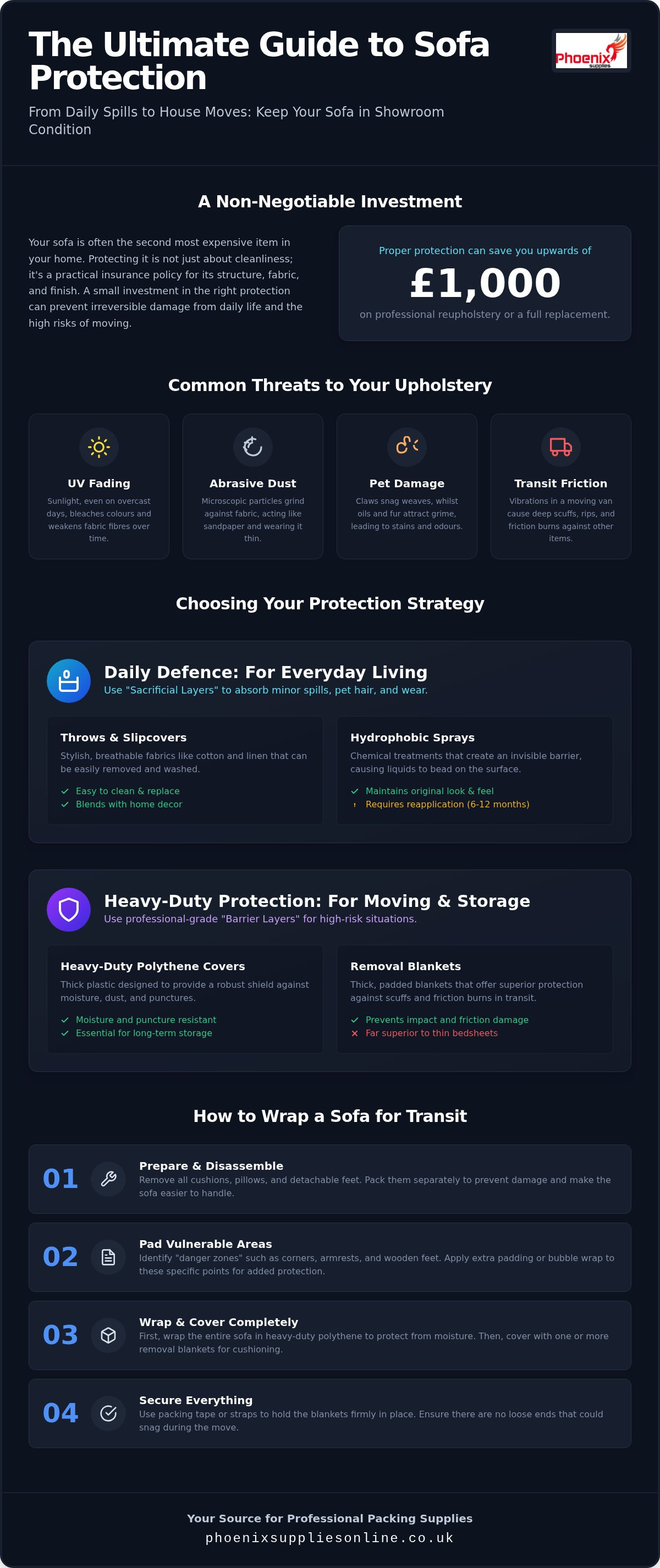
Think of it as a practical insurance policy. Spending a small amount on high-quality protection today can save you upwards of £1,000 on professional reupholstery or the cost of a full replacement. We often see homeowners struggle with avoidable damage that occurs during the "removal van shuffle", where furniture vibrates against other items in transit, causing friction burns and deep scuffs that are impossible to repair.
Understanding Your Upholstery Vulnerabilities
Not all fabrics are created equal. Natural fibres like wool or silk often require more frequent care and specialised protection compared to hard-wearing synthetics. In many British homes, the biggest silent killer of furniture is UV degradation. Even on overcast days, sunlight streaming through south-facing windows can bleach the colour from your favourite armchair in just a few months.
Dust is another hidden enemy. It doesn't just look untidy; it acts as a microscopic abrasive. Every time someone sits down, those tiny particles grind against the fabric, wearing it thin over time. Gaining a deeper foundation by understanding upholstery construction helps you identify which areas of your sofa are most at risk, from the tension of the springs to the delicate pile of the velvet. Common threats include:
- UV Fading: Constant exposure to natural light that weakens fibres.
- Abrasive Dust: Gritty particles that saw through fabric threads.
- Pet Damage: Claws that snag weaves and oils that attract grime.
- Transit Friction: Rips and stains that occur during a house move.
Sacrificial Layers vs. Permanent Barriers
Effective protection is about using the right tool for the specific threat. For daily life, "sacrificial layers" like decorative throws or slipcovers are perfect. They take the brunt of pet hair and biscuit crumbs, and you can simply pop them in the washing machine. You might also consider chemical sprays that create a hydrophobic barrier to stop liquids from soaking into the cushion foam.
However, high-risk periods like moving house or long-term storage require "barrier layers". This is where professional-grade supplies come into play. A thin bedsheet won't stop a sharp corner from ripping your fabric, but a heavy-duty polythene cover will. These covers are designed to resist punctures and moisture, providing a level of safety that standard household items simply can't match.
Daily Defence: Guarding Against Stains, Pets, and Sunlight
Whilst we often think about safeguarding furniture during big events like a house move, the real battle to protect couch surfaces happens every single afternoon. Daily life is messy. Between the morning coffee and the evening glass of wine, your upholstery faces a constant barrage of potential stains and wear. A proactive approach doesn't mean you have to hide your sofa under unsightly plastic; it's about choosing smart, stylised barriers that blend into your decor.
Choosing Stylised Protection for Modern Living
Cotton and linen are favourite choices for many homeowners because they offer breathability and a natural feel. These materials are excellent as throws or slipcovers because they're easy to wash and replace. To keep them looking tidy, you can organise your throws by tucking them deep into the crevices of the cushions. This prevents them from sliding around when you sit down. For homes with young children, a machine-washable barrier is essential. It allows you to deal with spills immediately without the stress of permanent damage.
Chemical Fabric Protectors: Pros and Cons
If you prefer the look of your original upholstery, a chemical fabric protector might be the answer. These sprays create a hydrophobic barrier that causes liquids to bead on the surface rather than soaking into the pile. It's vital to follow expert textile conservation tips by always performing a patch test on an inconspicuous area first. This ensures the spray won't alter the colour or texture of your fabric. Depending on how much use your sofa gets, you should aim to reapply these treatments every six to twelve months to maintain maximum effectiveness.
Managing pet behaviour amongst expensive furniture is another daily challenge. Providing sturdy scratching posts nearby and using designated blankets for dogs or cats can significantly help you protect couch fabrics from sharp claws. Don't forget the importance of rotational cleaning. Flipping and rotating your cushions every few weeks is a simple form of structural protection. It prevents uneven wear and ensures the internal foam doesn't collapse in the spots where you sit most often. If you're preparing for more than just daily use, you might explore professional-grade furniture covers to keep your investment safe.
Professional Packing: Protecting Your Couch During a House Move
Moving day is when your sofa faces its greatest challenge. To effectively protect couch frames and fabrics, you need to think like a professional mover. Most damage occurs at the "Danger Zones", which are the sharp corners, wooden feet, and protruding armrests that inevitably clip doorframes or the sides of the removal van. Identifying these vulnerable spots before you start lifting is the first step in a successful relocation.
You might be tempted to drape old bedsheets over your furniture, but they aren't up to the task. Sheets are porous, so they'll soak up rain during the dash to the van and offer no protection against the structural stress of a move. They also rip easily if they catch on a bolt or a sharp edge. This is why you must protect couch upholstery with puncture-resistant barriers that can handle the rigours of transit.
Polythene Covers: The Ultimate Moisture and Dust Barrier
400-gauge polythene is the industry standard for a reason. It's thick enough to resist snagging whilst remaining flexible enough to wrap around odd shapes. Given the unpredictable nature of British weather, these covers are your primary defence against damp and road grime. Ensure the cover fits snugly to avoid it catching the wind like a sail during loading. This level of Caring for Textiles ensures that even if the move takes longer than expected, your sofa won't arrive smelling of damp or covered in exhaust soot.
A professional-grade polythene cover provides:
- Puncture Resistance: It stops sharp corners on other furniture from tearing through to your fabric.
- Moisture Barrier: It keeps rain and humidity away from the internal foam and wooden frame.
- Dust Protection: It prevents grit from settling into the weave whilst in the back of the van.
Removal Blankets: Adding a Layer of Cushioning
Once the moisture barrier is on, you need to address impact. High-quality removal blankets are essential for absorbing shocks and preventing friction burns. These burns are particularly common on leather sofas when they rub against other items in the van. Professionals use the "Burrito Wrap" technique, where the blanket is folded entirely around the piece to ensure no part of the frame is exposed.
Don't use adhesive tape directly on your sofa or the polythene cover, as it can leave a sticky residue or pull at the fibres. Instead, use webbing straps to keep the blankets and covers in place. This method ensures that the padding stays exactly where it's needed most throughout the journey, providing a steady and secure environment for your furniture.
Step-by-Step Guide: How to Wrap and Organise a Couch for Transit
Once you've gathered your professional-grade materials, it's time to execute the wrap. A methodical approach ensures that your furniture remains stable and clean from the moment it leaves your living room until it's unwrapped in your new home. To protect couch frames effectively, you must treat the process as a series of layers, starting with the most vulnerable components.
Preparing the Frame for Movement
Before you even reach for the plastic, you need to strip the sofa down. Always remove screw-in feet or legs; these are the most common points of failure during a move. If they catch on a doorframe or the van floor, the leverage can easily snap the wooden frame. Place these in a small bag and tape it securely to the underside of the sofa frame so they don't get lost. You should also pack loose cushions separately in large moving boxes. This not only saves space in the van but also prevents the cushions from becoming misshapen or soiled during the heavy lifting.
After the frame is clear, slide on your heavy-duty polythene cover. This acts as your primary barrier against moisture and dust. If your sofa is an awkward shape, you can use a small amount of tape to gather the excess plastic, but ensure the tape only touches the polythene itself. Once the plastic is snug, layer your removal blankets over the armrests and corners. These high-contact points need that extra bit of cushioning to survive the journey through tight hallways.
Securing the Wrap: Tape vs. Straps
One of the biggest mistakes people make is using packing tape to hold everything together. There is a golden rule in furniture moving: never apply adhesive tape directly to upholstery, leather, or polished wood. The residue is incredibly difficult to remove and can permanently ruin the finish. Instead, use webbing straps to create a professional, non-slip finish. These straps allow you to tighten the wrap without damaging the sofa, ensuring everything stays in place even if the van hits a bump.
A tight wrap is essential for safety. If the blankets or plastic are loose, they can snag on door handles or become a trip hazard for those carrying the furniture. When you've finished, your couch should look like a tidy, secure package. If you're ready to start your own packing project, you can find everything you need amongst our range of professional moving supplies to ensure your furniture arrives in pristine condition.
Beyond the Basics: Long-Term Storage and Maintenance Strategies
Storing a sofa for several months isn't as simple as leaving it in a spare room. If you're moving it into a garage or a self-storage unit, you need a strategy that goes beyond transit protection. To effectively protect couch frames and fabrics over long periods, you must account for environmental changes like humidity and temperature shifts. It's a different kind of care than the daily defence we've discussed previously.
One of the biggest risks in storage is "sweating". This happens when moisture is trapped beneath a plastic cover. If your sofa was moved on a rainy day, even a tiny amount of dampness can turn into a mould colony if it's sealed in polythene. Always ensure your furniture is bone-dry before the final wrap. You should also avoid storing your couch directly on a concrete floor. Concrete wicks moisture from the ground, which can rot the wooden base. Use wooden pallets or blocks to keep the piece elevated and allow air to circulate underneath.
Preventing Mould and Mildew in Storage
Whilst heavy-duty covers are great for dust, they need to allow for some airflow in non-climate-controlled spaces. You can place silica gel packs or moisture absorbers inside the wrap to manage humidity. For leather furniture, climate-controlled storage is always the favourite option to prevent the material from cracking or growing mildew. If you can't access a temperature-controlled unit, check on your furniture every six months. Look for any changes in the smell or feel of the fabric so you can catch issues early.
The Importance of a Clean Start
Before you pack your sofa away, give it a thorough clean. Professional cleaning prevents odours from setting in permanently, especially if the furniture will be wrapped for a year or more. Vacuum deep into the crevices to remove crumbs or organic matter that might attract pests. Organic debris is often what leads to infestations in storage units, so a clean start is your best defence. For a complete inventory of what you'll need to protect couch surfaces properly, refer to our ultimate packing materials list. Taking these extra steps now ensures that when you finally unwrap your sofa, it's just as fresh and comfortable as the day you put it away.
Ready to Secure Your Sofa's Future?
Taking the time to protect couch surfaces today ensures your home remains a comfortable, stress-free space for years to come. We've explored how a multi-layered strategy makes all the difference in preserving your investment. This spans from daily fabric guards to the heavy-duty transit covers used during a move. The right materials provide the peace of mind you deserve. Your furniture is worth it.
As a family-run UK business, we take pride in offering the same heavy-duty materials used by professional removal firms. You can browse our professional-grade furniture covers and removal blankets to find exactly what you need. With free delivery on all orders, it's easy to get expert protection delivered to your door. You've invested a lot in your sofa. Now you have the tools to keep it pristine through every move and milestone.
Frequently Asked Questions
How can I protect my couch from dog hair and scratches?
To protect couch fabrics from pets, use a combination of physical barriers and behavioural training. Heavy-duty throws are excellent because you can wash them frequently to remove dander and oils. For scratches, ensure you have sturdy scratching posts nearby and use designated pet blankets. These create a specific "safe zone" for your dog or cat, keeping their sharp claws away from the delicate weave of your expensive upholstery.
What is the best way to wrap a sofa for a house move?
The professional method involves a two-layer approach. First, remove the feet and cushions to prevent snapping or loss. Slide on a heavy-duty polythene furniture cover to guard against moisture and dust. Follow this by wrapping the entire frame in high-quality removal blankets to absorb impacts. Finally, secure the layers tightly with webbing straps. This ensures the protection doesn't slip whilst you navigate tight hallways or steep stairs.
Can I use bubble wrap directly on my leather couch?
You should never apply bubble wrap directly onto leather surfaces. The plastic can trap moisture against the hide, leading to mould growth or permanent "bubble" patterns on the finish. Instead, wrap the leather in a soft removal blanket or acid-free tissue paper first. Once you've created this breathable barrier, you can safely use bubble wrap on the outside to provide extra cushioning against knocks and bumps during transit.
How do I protect my sofa from fading in a sunny room?
Sunlight is a silent threat to your furniture's colour. To prevent fading, consider applying UV-filtering film to your windows or using light-coloured throws to shield the most exposed areas. It's also wise to rotate your cushions every few weeks so any light exposure remains even. During the peak sun hours of the afternoon, closing the curtains or blinds is the most effective way to protect couch fabrics from permanent UV degradation.
Are sofa covers better than throws for daily protection?
This depends on your lifestyle. Slipcovers are better for total protection because they wrap around the entire frame and stay in place during heavy use. They're the favourite choice for homes with young children. Throws are more versatile and decorative, making them ideal for protecting specific "high-traffic" zones like armrests. Many homeowners choose to use a slipcover for the base and a throw on top for a layered, stylised look.
How do I stop my sofa from getting mouldy in a storage unit?
Moisture management is the key to preventing mould in storage. Ensure your sofa is completely dry before wrapping it in any material. Place silica gel packs inside the cushions to absorb any ambient humidity. Crucially, never store your furniture directly on a cold concrete floor. Use wooden pallets to elevate the sofa, which allows air to circulate underneath and prevents moisture from wicking up into the wooden frame or fabric.
What should I do if I spill red wine on a protected couch?
If you spill red wine, the first rule is to blot the liquid immediately with a clean, white cloth. Never rub the stain, as this pushes the pigment deeper into the fibres. If the couch is already treated with a hydrophobic spray, the wine should bead on the surface, making it easy to lift away. If a mark remains, use a specialist upholstery cleaner recommended by the manufacturer, always testing an inconspicuous area first.
How many removal blankets do I need for a standard 3-seater sofa?
For a standard 3-seater sofa, you will typically need two to three large removal blankets to ensure total coverage. One blanket usually covers the back and seat, whilst the others are needed for the armrests and the front of the frame. It's better to have a slight overlap than to leave any part of the upholstery exposed. Use webbing straps to pull the blankets tight, creating a secure "burrito wrap" that resists impacts.


