

Taping bubble wrap directly onto a polished oak table might feel like the safest choice, but it's often the quickest way to ruin a delicate finish. Knowing how to protect wooden furniture when moving is about more than just padding; it's about understanding how wood reacts to pressure and moisture. It's natural to feel anxious about scratches on mahogany surfaces or structural joints loosening during the journey. You want your favourite pieces to arrive looking exactly as they did when they left, without the heartbreak of finding a fresh split or a moisture stain caused by the damp British weather.
We understand that your furniture is more than just wood and screws; it's a collection of memories. This guide teaches you professional techniques that balance physical cushioning with the right level of breathability. You'll discover why certain materials work better than others and gain the confidence to pack like a specialist. We'll provide a clear shopping list of essentials, from heavy-duty removal blankets to specialised furniture covers, and show you how to secure everything from small bedside cabinets to large wardrobes for a damage-free move.
Key Takeaways
- Learn why professional-grade removal blankets offer superior protection against impact and friction compared to standard domestic duvets.
- Master the "Burrito Wrap" technique and discover how to protect wooden furniture when moving without leaving tape residue or surface scratches.
- Identify which modern pieces should be dismantled and why solid wood antiques are often safer when left whole to preserve their structural integrity.
- Protect your polished surfaces from the unpredictable British weather by using specialised furniture covers designed to keep moisture away during transit.
- Prepare a professional toolkit of essential supplies, including webbing straps and heavy-duty boxes, to ensure your items remain secure inside the moving van.
Understanding the Vulnerability of Wood During a Move
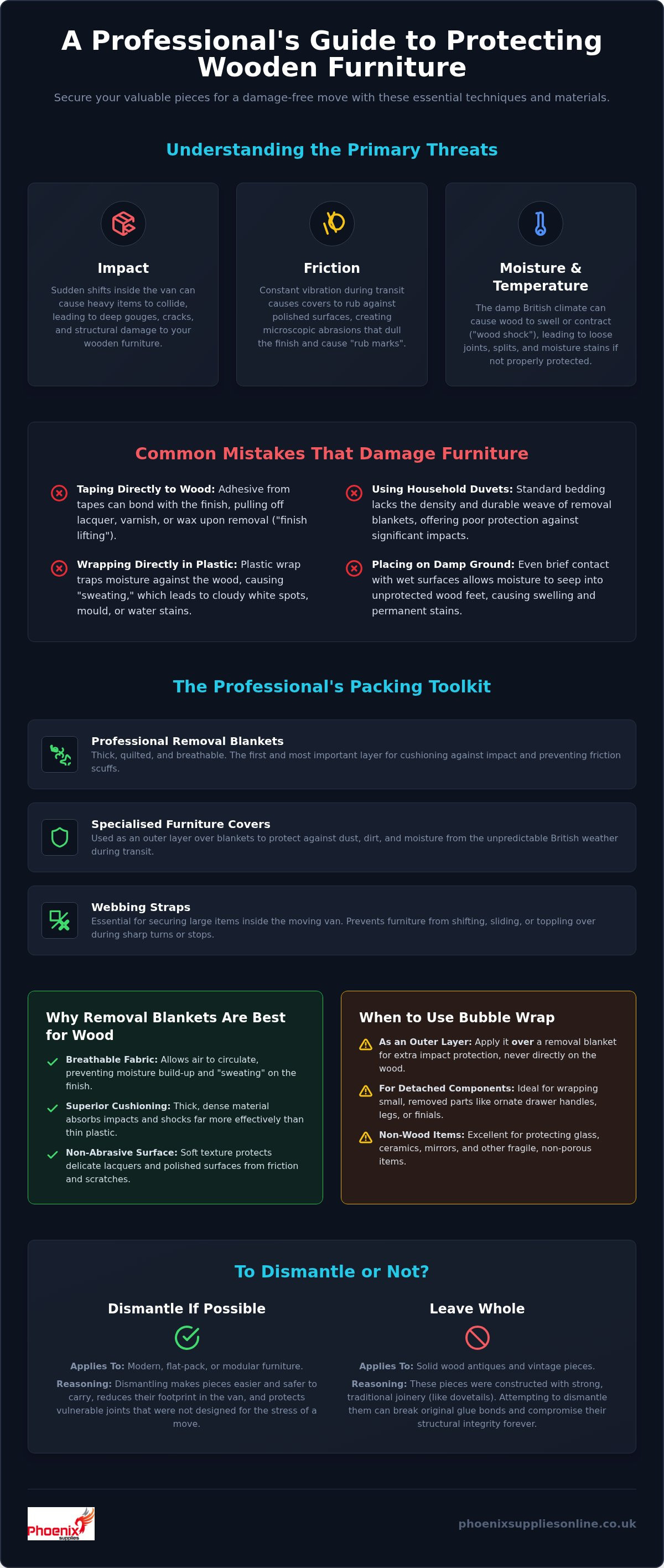
Wooden furniture is an organic, reactive material that requires more than just a quick wrap in old sheets. When you are learning how to protect wooden furniture when moving, you must account for three primary threats: impact, friction, and environmental shifts. Unlike plastic or metal, wood is porous and structurally complex; it responds to the world around it in ways that can lead to permanent damage if you aren't careful.
Impact damage is the most obvious risk. Inside a moving van, heavy items can shift amongst one another if they aren't properly secured with webbing straps. A sudden brake or a sharp turn can send a heavy crate into the side of a mahogany sideboard, causing deep gouges or structural cracks. Friction is a subtler enemy. As the vehicle vibrates, even a slightly loose cover can rub against a polished surface, dulling the finish and creating scuffs that are difficult to buff out. Wood shock is the physical stress placed on structural joints as the material expands or contracts in response to rapid temperature and humidity changes during transit.
The Risk of Surface Scratches and Dents
Softwoods like pine or cedar are particularly prone to "rub marks" caused by constant vibrations during a long journey. These marks appear as cloudy patches where the finish has been microscopically abraded. Another common mistake involves using adhesive tapes directly on the wood. This often leads to "finish lifting," where the lacquer or wax is pulled away when the tape is removed. Gaining a better understanding wood finishes helps you realise why certain adhesives are so destructive to varnishes and oils. Remember that corners and edges are the most vulnerable points during the "carry" phase; they act as lightning rods for door frames and narrow hallways.
Moisture and Temperature: The British Weather Factor
The British climate presents a unique challenge for furniture protection. High humidity levels inside a removal van can cause wood fibres to swell, whilst a sudden drop in temperature might cause them to contract. This movement is what leads to the dreaded "wood shock" mentioned earlier. A frequent error is applying plastic wrap directly to a wood finish in an attempt to waterproof it. In reality, this often causes "sweating," where moisture is trapped against the surface, leading to white clouds or mould growth. It is also essential to keep furniture off damp ground during the loading process. Placing a heavy wardrobe on a wet driveway, even for a few minutes, allows moisture to seep into the unprotected end-grain of the feet, causing swelling and permanent staining.
Essential Packing Materials for Furniture Protection
A professional-grade toolkit is the foundation of a damage-free relocation. Many people assume that old household duvets or thin sheets will suffice, but these materials lack the density required to absorb significant impacts. To achieve the same results as national removal firms, you need specialised supplies designed for the rigours of transit. This include thick, quilted removal blankets, furniture covers for dust and moisture protection, and heavy-duty webbing straps to prevent shifting inside the van.
When you are planning how to protect wooden furniture when moving, your choice of materials determines whether your pieces arrive in showroom condition or with fresh scuffs. High-quality removal blankets offer a level of cushioning that far surpasses domestic alternatives. They are designed to be reused and provide a soft, non-abrasive barrier that respects the delicate nature of polished wood. Using the right tools doesn't just protect the furniture; it gives you the confidence to handle heavy items without fear of causing accidental damage.
Removal Blankets vs. Bubble Wrap
There is a common misconception that bubble wrap is the best choice for every item. Whilst it's excellent for glass or ceramics, it can be problematic for wood. Removal blankets are the preferred choice for wooden surfaces because they are breathable. If you wrap wood tightly in plastic bubble wrap, you risk trapping moisture against the finish, which can lead to clouding or "sweating." Following professional conservation advice means ensuring your first layer of protection is always a soft, breathable fabric. Reserve bubble wrap for use as an outer layer or for protecting small, detached components like ornate drawer pulls and handles.
Tapes and Straps: Securing the Load
Never apply packing tape directly to a wooden surface. The adhesive can bond with the varnish or wax, leading to "finish lifting" when the tape is removed. Instead, use stretch wrap to hold your blankets in place; this material sticks only to itself and never touches the wood. Once your furniture is wrapped, webbing straps are vital for securing the load. These straps anchor heavy wardrobes and tables to the internal rails of the van, ensuring they remain stationary amongst other cargo. For a successful move, investing in professional removal blankets and webbing straps ensures your belongings stay exactly where you put them. This simple step prevents the friction damage that occurs when items are allowed to slide during the journey.
To Dismantle or Not: Preparing Different Types of Wooden Furniture
Before you reach for the removal blankets, you must decide which items should be taken apart and which should remain whole. Evaluating each piece individually is a critical step in learning how to protect wooden furniture when moving. Whilst it's tempting to leave everything assembled to save time, the structural stress of a moving van can turn a sturdy wardrobe into a pile of splinters if it isn't prepared correctly. Structural failure often occurs because furniture isn't designed to withstand the lateral forces and constant vibrations experienced during transit.
Dismantling should always be a deliberate choice based on the construction of the item. As a general rule, if an item was delivered as a flat-pack, it's often safer to take it apart again. Conversely, solid wood pieces built with traditional joinery are usually better off staying together. Regardless of the type, always keep your fixings organised. Place all screws, dowels, and cam-locks into a labelled, sealable bag and tape it to an inconspicuous internal surface of the furniture. This simple habit ensures that you aren't left searching for a single vital bolt when you arrive at your new home.
Moving Solid Oak and Antique Pieces
Solid wood antiques and heavy oak furniture often benefit from remaining whole to preserve their joint integrity. However, "remaining whole" doesn't mean moving them exactly as they sit in your lounge. You should always remove drawers, adjustable shelves, and glass panels to reduce the overall weight and prevent internal components from sliding. For items with delicate "cabriole" legs or ornate carvings, apply extra padding around these specific points before wrapping the entire piece. These high-value items require the heaviest grade of removal blankets to provide a dense cushion against the shifts and bumps of the journey.
Handling Flat-Pack and MDF Furniture
Flat-pack and MDF furniture are notoriously weak when moved whilst fully assembled. The cam-locks and dowels that hold these pieces together are designed for static loads, not the rhythmic shaking of a lorry journey. If you cannot dismantle a flat-pack item, you should reinforce the back panel with extra tacks to keep the frame square. For those items you do take apart, you'll often end up with a surprising amount of heavy hardware. It's helpful to use small moving boxes for books to store these heavy fixings and any tools needed for reassembly. This keeps everything together and prevents small metal parts from scratching your wooden panels whilst they are stacked in the van.
Step-by-Step Guide to Wrapping and Securing Your Furniture
Professional protection relies on a logical sequence of materials to balance breathability with impact resistance. Each layer serves a specific purpose in maintaining the integrity of the wood finish:
- Layer 1: Use a soft fabric or removal blanket. This first layer provides surface protection whilst allowing the wood to breathe.
- Layer 2: Add corrugated cardboard or bubble wrap over the blanket. This adds a layer of impact resistance specifically for corners and flat tops.
- Layer 3: Apply stretch wrap around the bundle. The wrap should only touch the blanket, never the bare wood, to avoid trapping moisture or leaving residue.
Loading the Removal Van
How you position your items inside the vehicle is just as vital as how you wrap them. Heavy wooden items, such as wardrobes or sideboards, should be loaded against the "bulkhead" at the front of the van. This is the most stable part of the vehicle. Once in place, use webbing straps to "tie off" the furniture to the internal rails. This prevents the item from sliding forward during braking. You can also use large moving boxes to create "walls" around your furniture. These boxes act as a secondary buffer, preventing smaller items from toppling onto your polished surfaces. Using these steps is the most reliable way to understand how to protect wooden furniture when moving without risking structural damage. To get started with the right equipment, you can find professional-grade removal blankets and stretch wrap that the experts use.
Professional-Grade Protection with Phoenix Supplies UK
Phoenix Supplies UK provides the same high-quality materials used by the country's leading removal firms. We understand that your furniture represents a significant investment, both financially and emotionally. Our range includes everything from heavy-duty removal blankets to specialised furniture covers, ensuring you have the right tools for every piece in your home. As a family-run business, we pride ourselves on offering expert advice and dependable service. We don't just sell boxes; we act as a steady guide to help you manage the complexities of a national move with confidence.
Why Quality Materials Matter for Your Move
The difference between "budget" boxes found in local shops and our heavy-duty options is significant, especially when storing heavy furniture fixings or delicate components. Our removal blankets provide superior cushioning compared to household linens or thin duvets, which often lack the density required to absorb shocks in a moving van. Using professional-grade supplies offers a level of peace of mind that domestic alternatives simply cannot match. When you know how to protect wooden furniture when moving using the correct materials, you reduce the risk of structural damage and surface scuffs. You can explore our moving house packing kits UK for a complete protection solution that takes the guesswork out of your shopping list.
Easy Ordering and National Delivery
Organising your supply list is straightforward with our comprehensive online catalogue. We offer everything from small and large moving boxes to specialised wardrobe and TV boxes. One of the biggest benefits of choosing Phoenix Supplies UK is the free delivery available on our range of moving packs and individual items. This ensures you get professional-grade protection delivered directly to your door without hidden costs. If you are unsure about which covers or blankets are best for your specific needs, our friendly office team is always within reach. We value personal accountability and are happy to provide personalised support to ensure you have exactly what you need for a successful move. Understanding how to protect wooden furniture when moving starts with having a dependable partner in your corner, and we are committed to being that helpful neighbour for every customer.
Secure Your Furniture for the Journey Ahead
Moving house is a significant milestone, and your furniture deserves a smooth transition to your new space. By focusing on surface breathability, structural stability, and the right layering techniques, you can avoid the common pitfalls of scuffs and "wood shock." Mastering how to protect wooden furniture when moving ensures your home's most precious pieces arrive in the same condition they left, ready to be enjoyed for years to come.
At Phoenix Supplies UK, we are here to support your journey with the same professional-grade materials used by leading removal firms. As a family-run UK business, we take pride in helping you move with confidence by providing heavy-duty supplies that stand up to the rigours of national transit. We offer free delivery on all orders, making it easier for you to get the high-quality protection you need without the stress of extra costs or logistical delays.
Browse our range of professional removal blankets and furniture covers today and take the first step towards a damage-free relocation. With the right preparation and a little care, your favourite wooden pieces will be ready to take pride of place in your new home.
If you are looking to complement your current furniture with new stylish pieces for your new home, you can visit Living Chic to explore their latest collections.
Frequently Asked Questions
Can I put bubble wrap directly on wooden furniture?
No, you should never place bubble wrap directly against a wooden surface. The plastic can trap moisture and heat, leading to "clouding" or permanent damage to the finish. Instead, wrap the item in a breathable removal blanket first. You can then use bubble wrap as a secondary outer layer to provide extra impact protection for delicate carvings or glass inserts without risking the wood finish.
How do I protect the corners of my wooden table during a move?
The most effective way to protect table corners is by using corrugated cardboard "bumpers" over your initial padding. Once you have applied a removal blanket, fold thick pieces of cardboard around each corner and tape them to the blanket, not the wood. This creates a sacrificial layer that absorbs the force of any accidental knocks against door frames or the sides of the van during transit.
Is it better to use removal blankets or old duvets?
Professional removal blankets are much better than old duvets because they are specifically quilted to absorb heavy impacts. Whilst a duvet might feel soft, it is often too bulky and lacks the density needed to prevent dents. Removal blankets provide a slim but tough barrier that is easier to secure tightly with stretch wrap; this ensures the protection stays in place throughout the entire journey.
Should I take the drawers out of my chest of drawers before moving?
You should always remove drawers from a chest before moving it to reduce the overall weight and prevent structural strain. Carrying a full chest of drawers often leads to the frame twisting, which can cause the joints to loosen over time. Emptying the drawers also removes the risk of them sliding out and causing an injury or damaging the floor if the unit is tilted during the carry.
How do I prevent my wooden furniture from scratching the floor of the van?
To prevent scratches on the van floor, you should lay down a base layer of cardboard or heavy-duty blankets before loading your furniture. This acts as a buffer between the wooden feet and the metal or plywood floor of the vehicle. Securing the item with webbing straps is also vital; it stops the furniture from vibrating or sliding, which is the primary cause of floor scuffs and friction damage. If you are looking to refresh your home's surfaces after your move, you can learn more about Frankly Flooring for a wide variety of quality solutions.
Cling film or stretch wrap should only be used as an outer layer to hold removal blankets in place. Applying it directly to bare wood is risky because the plastic doesn't allow the material to breathe, which is a key part of how to protect wooden furniture when moving safely. If moisture gets trapped underneath the film, it can cause the wood to swell or the finish to peel away entirely.
What is the best way to move heavy wooden furniture without damaging the legs?
The best way to protect furniture legs is to lift the item entirely rather than dragging it across the floor. For particularly heavy pieces, you should use a furniture dolly and ensure the legs are wrapped in extra layers of padding or specialised covers. This prevents the legs from catching on uneven surfaces, which can cause the wood to splinter or the joints to snap under the lateral pressure.
How do I protect my furniture from moisture if it rains on moving day?
Using specialised furniture covers is the most reliable way to guard against moisture during a rainy move. These polythene covers should be slipped over your removal blankets to create a waterproof barrier whilst you are moving items between the house and the van. This dual-layer approach is a vital part of how to protect wooden furniture when moving in the unpredictable British weather, as it keeps the wood dry.


