

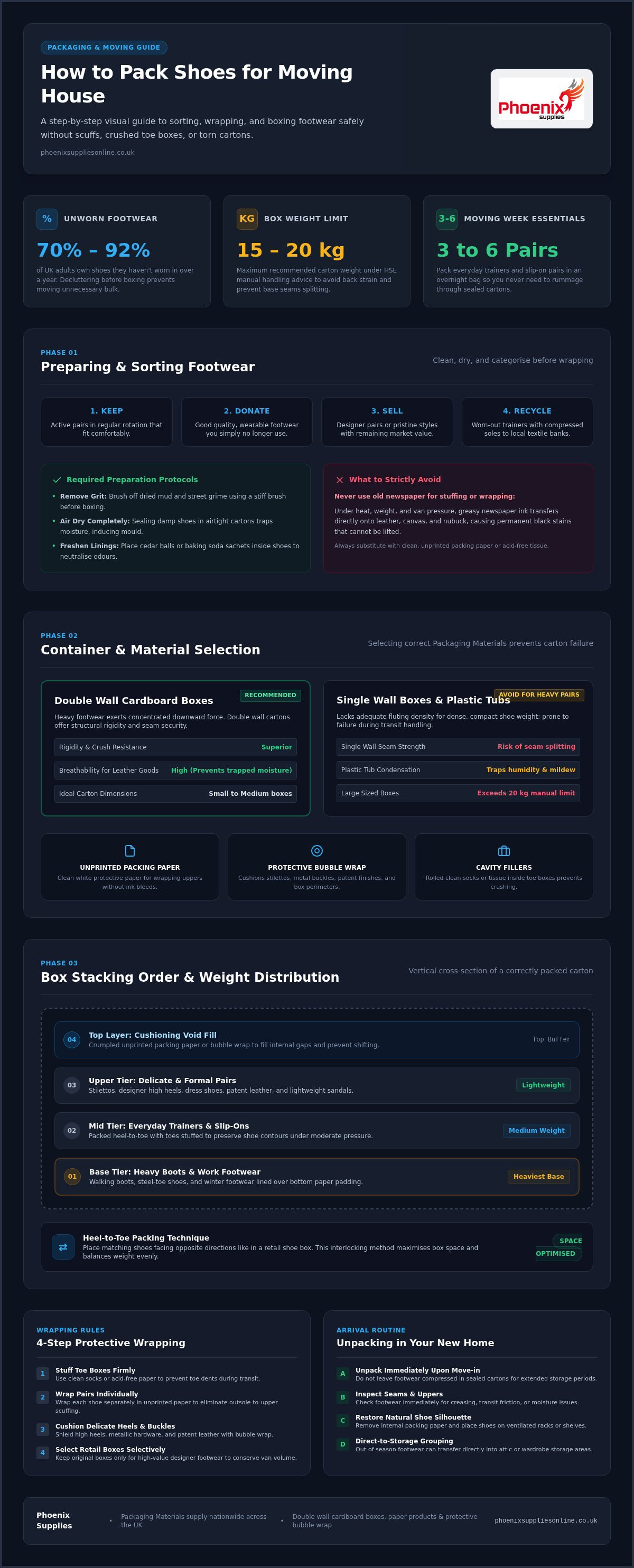
Surveys show that between 70% and 92% of UK adults own shoes they haven't worn in over a year, yet footwear remains one of the trickiest household items to transport safely. If you are wondering how to pack shoes for moving without crushing their shape, you aren't alone. It is easy to worry about expensive leather boots getting creased, dirty outsoles marking clean uppers, or packed cartons turning dangerously heavy to lift.
You don't need to risk ruined footwear or bursting boxes on moving day. In this guide, you will learn how to sort, wrap, and pack every pair safely without scuffs, bends, or wasted van space. From protecting delicate fabrics with clean packing paper to arranging pairs heel-to-toe inside small double wall boxes, here is everything you need to keep your shoes organised and intact from door to door.
Key Takeaways
- Sort and thoroughly clean footwear beforehand to shed unwanted pairs and keep outsole grit away from clean uppers.
- Discover how to pack shoes for moving using small or medium double wall boxes to distribute weight evenly and prevent cartons from tearing.
- Protect shoe structure by stuffing toe boxes with unprinted packing paper and wrapping delicate pairs individually to prevent friction scuffs.
- Arrange pairs heel-to-toe with the heaviest boots at the bottom, cushioning each layer with bubble wrap or paper padding.
- Unpack and inspect footwear straight away in your new home, checking their condition and restoring their natural shape on shoe racks or shelves.
Preparing Footwear: Sorting, Cleaning, and Decluttering Before Packing
Before you wrap a single pair, taking time to prepare your collection makes a substantial difference. Understanding how to pack shoes for moving starts with reducing excess bulk and making sure every item you pack is fresh, dry, and ready to wear in your new home.
Decluttering Your Shoe Collection
Moving house offers the ideal chance to streamline your wardrobe. Sort your footwear into four distinct categories: keep, donate, sell, and recycle. Be honest about what you actually wear. Worn-out trainers with compressed midsoles or shoes that pinch can be dropped off at local textile recycling banks. Next, set aside three to six pairs of everyday essentials, such as comfortable trainers and slip-on shoes, into an overnight bag. Keeping these separate ensures you won't have to rummage through sealed cartons during moving week.
Cleaning and Drying Footwear Thoroughly
Packing dirty footwear creates problems inside enclosed boxes. Road grit, dried mud, and street oils can rub off outsoles and permanently stain delicate suede or canvas uppers. Start by brushing off dry debris using a stiff household brush. Wipe down leather and synthetic exteriors with a damp, lint-free cloth.
Crucially, allow every pair to air dry completely before boxing. Sealing slightly damp footwear inside airtight cardboard traps moisture, which rapidly encourages mildew and unpleasant odours during transit. To keep interior linings fresh, insert cedar balls or small baking soda sachets into each shoe. Many removal guides suggest stuffing shoes with old newspaper, but you should avoid this completely. Under heat and pressure, newspaper print rubs off onto leather and fabric, leaving greasy black stains that are almost impossible to lift.
Organising Shoes by Weight and Usage
Once clean and dry, group your footwear by weight, style, and season. You can check your inventory against a packing materials list for moving to ensure you have the right cartons ready. Group your collection logically:
- Heavy footwear: Separate walking boots, work boots, and thick-soled winter footwear so they can sit at the base of your boxes.
- Delicate styles: Keep formal dress shoes, high heels, and designer trainers apart from everyday wear to protect their shape.
- Out-of-season pairs: Box summer sandals or winter snow boots together so they can go directly into attic or wardrobe storage upon arrival.
Grouping pairs in this manner simplifies unpacking and gives you a clear view of how to pack shoes for moving without overloading individual cartons.
Choosing the Right Packaging Materials for Moving Shoes
Selecting suitable Packaging Materials protects your footwear from compression, scuffs, and transit dust. Shoes are deceptively dense items. A carton filled with heavy leather footwear quickly becomes unmanageable if you pick the wrong supplies, making proper container selection an essential part of learning how to pack shoes for moving house safely.
Double Wall Moving Boxes Versus Plastic Totes
Always choose sturdy double wall cardboard boxes instead of single fluted cartons or plastic storage tubs. Heavy leather boots and trainers exert concentrated downward pressure that can split single wall seams. Opt for small moving boxes for books and footwear to keep total carton weight manageable. In line with HSE manual handling guidance, keeping packed box weights under 15 to 20 kg prevents back strain and stops base seams from rupturing during lifting. Cardboard also breathes naturally, preventing condensation from getting trapped around organic leathers.
Packing Paper, Bubble Wrap, and Fillers
To shield delicate surfaces, keep these core protective supplies to hand:
- Unprinted packing paper: Clean white wrapping paper shields leather, nubuck, and canvas without any risk of ink transfer.
- Protective bubble wrap: A layer of bubble wrap cushions delicate stilettos, patent leather dress shoes, and metallic hardware from transit impacts.
- Cavity fillers: Use acid-free tissue or rolled clean socks inside toe cavities to hold the shoe's structure firm against external van vibrations.
Original shoeboxes offer excellent corner strength, but packing every single pair inside its retail box squanders valuable van volume. Reserve original boxes for your most expensive pairs, and wrap the rest neatly in paper to maximise internal box capacity.
Making Use of Wardrobe Boxes
If you are coordinating footwear alongside learning how to pack clothes for moving in boxes, make good use of your wardrobe cartons. The void beneath hanging garments is ideal for lightweight footwear. You can place clean plimsolls, flat sandals, or boxed formal shoes into the bottom of standard wardrobe boxes (available in short 40-inch and tall 48-inch sizes). Just place pairs inside sealed individual bags first so stray dust cannot touch long dresses, trousers, or suits suspended above.
For dependable cartons and cushioning tailored to your move, explore the wide range of supplies available from phoenixsuppliesonline.co.uk to keep your packing running smoothly.
Step-by-Step Guide: How to Wrap and Protect Different Shoe Styles
Every style of footwear features its own structural weak points. Sharp stiletto heels easily snap under sideways pressure, whilst tall leather boots quickly develop permanent creases when folded into tight spaces. Learning how to pack shoes for moving means tailoring your wrapping technique to each specific design, ensuring every pair arrives in the same shape it left.
Wrapping Everyday Trainers and Flat Shoes
To pack trainers, loafers, and pumps efficiently without sacrificing protection, follow a simple pairing process:
- Stuff the toe cavities: Pack scrunched paper tightly into the toe box to stop the vamp from caving inward under weight.
- Align heel-to-toe: Lay two sheets of clean wrapping paper flat on your table. Place one shoe down, then position its mate facing the opposite direction beside it, matching heel to toe.
- Roll and tuck: Roll both shoes together into the paper, tucking in the sides to form a neat, secure parcel.
- Tape the paper: Seal the outer paper folds with standard packing tape. Take care never to let adhesive tape touch leather or fabric uppers directly.
Protecting High Heels and Designer Footwear
Delicate evening footwear requires extra attention. Start by wrapping individual heel posts in small bubble wrap to guard against bending or shearing during transit. If the shoes feature decorative metal buckles, pearl studs, or rhinestone brooches, cover these features with a layer of acid-free tissue paper first so they don't snag against adjacent leather. Whenever possible, pack designer pairs inside their original cloth dust bags before sliding them into their retail boxes.
Packing Ankle, Riding, and Knee-High Boots
Tall boot shafts collapse and crease if left unsupported inside moving cartons. Roll stiff card, magazine inserts, or dedicated boot shapers and slide them firmly down each leg shaft to keep the leather upright. Next, wrap metal stirrup buckles or heavy side zips in small bubble wrap pouches to stop the metal teeth from pressing deep indentations into soft calfskin.
Lay each wrapped boot flat across clean packing paper, folding the paper gently over the shaft. Place boots horizontally in alternating directions across the bottom of medium moving boxes rather than forcing them vertically into compact cartons. Mastering how to pack shoes for moving this way keeps expensive winter leather supple and crease-free.
Loading the Moving Box: Stacking Order and Weight Distribution
Careful layering inside the carton is just as important as wrapping each pair. When you know how to pack shoes for moving correctly, loading becomes a systematic process that protects lightweight footwear from being squashed beneath heavier treads while ensuring the box stays balanced during transit.
Layering from Heavy Boots to Lightweight Sandals
Begin by creating a soft foundation. Line the bottom of your double wall carton with two layers of crumpled packing paper or a sheet of bubble wrap to absorb road vibrations. From there, stack your footwear in distinct tiers:
- Bottom tier: Heavy steel-toe work boots, rugged walking boots, and thick-soled brogues. Their rigid frames handle the base pressure effortlessly.
- Middle tier: Medium-weight footwear, including smart leather oxfords, running trainers, and casual ankle shoes.
- Top tier: Delicate canvas pumps, strappy evening sandals, ballet flats, and house slippers. These softer styles must never bear downward weight.
Eliminating Voids and Cushioning Box Tops
Internal movement causes scuffs. As you build each layer, slide balled-up packing paper into the gaps along the box sides and between wrapped shoes. Test your packing by gently nudging the sides of the box; nothing should rattle or slide. Finish the container with a protective top pad of bubble wrap. The top flaps must close completely flat without forcing them down over proud footwear or leaving an empty depression that could cave in when another box is stacked on top.
Sealing and Labelling for Fast Room Placement
Secure the carton using the standard H-taping method. Run parcel tape cleanly along the centre seam where the flaps meet, then tape across the open perpendicular edges at both ends. This locks out moisture, seals down flap corners, and reinforces the structural rigidity of the carton.
Finally, write clear handling notes on top and on at least two sides. Note down the room destination, the owner's name, and a short summary of the contents, such as "Master Bedroom: Winter Boots and Trainers". If the carton contains delicate high heels or formal shoes, mark it with "Fragile: Footwear / Do Not Stack Heavy Items On Top".
To stock up on double wall boxes, packing paper, and parcel tape before moving day, order your moving supplies from Phoenix Supplies UK for fast, dependable delivery directly to your door.
Unpacking Footwear and Restoring Shoe Shape in Your New Home
Reaching your new home is a huge relief, but your footwear care doesn't stop once the van doors open. Even when you follow every guideline on how to pack shoes for moving house, the unpacking phase determines how quickly your footwear returns to regular rotation without cluttering your new bedrooms.
Initial Inspection and Reshaping Techniques
Open your shoe cartons methodically and check each pair as you remove the outer packing paper. If fine dress shoes show minor pressure marks from transit, insert cedar or beech wood shoe trees immediately. The spring tension naturally pushes out surface indentations whilst drawing out any residual transit moisture. For tall leather riding or fashion boots, remove the internal card shapers, inspect the zips, and stand them upright in a warm, dry room to let the leather breathe and relax into its natural silhouette.
Organising Your New Wardrobe and Shoe Storage
Take this opportunity to establish a practical, orderly layout in your new wardrobes:
- Daily footwear: Place office shoes, school footwear, and daily running trainers on accessible lower shelves or open entrance racks.
- Occasion and seasonal pairs: Store heavy snow boots, summer sandals, and formal evening heels on higher wardrobe shelves or dedicated top cupboards.
- Stackable storage: Use tiered shoe racks or transparent shoe drawers rather than piling pairs loosely on the wardrobe floor, which quickly leads to scuffs and crushed heel counters.
Recycling and Storing Used Moving Supplies
Once your shoes are safely put away, deal with the leftover packaging so it doesn't take over your living space. Flatten clean double wall cardboard boxes along their original crease lines and bundle them together flat in a dry garage or underbed space; quality cartons can be reused several times for future relocations or loft storage. You can order supplies online from Phoenix Supplies UK for next day delivery whenever you need dependable boxes and packaging materials for domestic projects. Any torn wrapping paper can be folded into your standard domestic council recycling bin, keeping the entire move efficient and environmentally responsible from start to finish.
Step Confidently into Your New Home
Knowing how to pack shoes for moving takes the worry out of moving day. When you sort out unworn footwear early, wrap delicate styles individually in clean packing paper, and stack pairs heel-to-toe inside dedicated cartons, your favourite footwear arrives in perfect shape without scuffs, dust, or transit creases.
Having the right packaging materials makes all the difference for a calm, organised move. As a family-run UK packaging specialist serving domestic and commercial movers since 1920, Phoenix Supplies UK provides top-rated double wall cardboard boxes engineered to protect heavy household goods. Orders placed by 1pm are dispatched the same day on a free next working day delivery service across the UK.
Take the hassle out of moving week and protect every pair you own. Explore our range of heavy-duty double wall moving boxes and packing supplies at Phoenix Supplies UK today, and step into your new home with total confidence.
Frequently Asked Questions
Can I pack shoes in plastic bags when moving house?
No, you should never seal shoes in airtight plastic bin bags. Plastic traps residual environmental moisture and heat, creating a humid microclimate that can warp genuine leather, break down shoe glue, and cause mould growth. Plastic bags also offer zero crush resistance when heavier items shift inside the removal vehicle.
Is it better to pack shoes in their original boxes or wrap them?
Wrapping pairs individually in packing paper is usually better because it saves significant van space. Original retail boxes offer excellent edge protection, but their rigid bulk takes up unnecessary volume. Reserve manufacturer boxes for high-value designer shoes, and wrap everyday trainers, boots, and casual flats neatly in clean packing paper to fit more pairs per carton.
How do you pack boots so they do not crease in transit?
Insert firm structural supports straight down each boot shaft before loading them into cartons. Rolled cardboard inserts, boot trees, or thick magazines work brilliantly to hold tall leather shafts upright. After supporting the shaft, wrap heavy exterior metal buckles in protective padding and lay the boots completely flat inside a medium double wall box.
What is the best way to pack expensive designer shoes for a move?
Stuff each toe cavity with acid-free tissue paper to preserve the front silhouette, then shield decorative buckles or embellishments with soft paper. Wrap delicate heel posts in bubble wrap to stop snapping. For maximum care, slip each shoe into its original breathable cotton dust bag before nesting the pair inside a sturdy double wall carton.
Can you pack shoes in the bottom of a wardrobe box?
Yes, placing lightweight footwear in the base of a wardrobe box is an excellent way to use empty space. Make sure to pack clean pairs inside individual cloth or dust bags first. This barrier stops outsole dust from reaching hanging coats, trousers, or dresses suspended above during transport.
How heavy should a box of packed shoes be?
Aim to keep each packed box under 15 to 20 kg. Heavy work boots and thick soles accumulate weight surprisingly quickly. Following safe UK lifting guidelines prevents personal back injury and stops bottom cardboard flaps from sagging or rupturing under excessive point-load pressure while moving.
What kind of paper should I use to stuff and wrap shoes?
Always use clean, unprinted white packing paper or neutral acid-free tissue paper. Standard printed daily newspaper contains petroleum-based inks that easily transfer onto damp or warm leather, suede, and light canvas under pressure. Plain packing paper gives reliable friction protection without leaving greasy black stains on your footwear.


