

You might think that stacking your dinner service flat, just as it sits in your kitchen cupboard, is the safest way to travel. In reality, this common habit is the primary reason families open their moving boxes to find a jigsaw puzzle of shattered porcelain. Plates are designed to withstand vertical pressure, but they're incredibly vulnerable when stacked horizontally during a bumpy transit.
We understand the sinking feeling that comes with handling heirloom china or your favourite everyday sets. It's completely natural to feel overwhelmed by the choice between bubble wrap and paper, or to worry about the physical strain of lifting over-packed, heavy containers. You want a move that's efficient and, above all, damage-free.
This guide will teach you exactly how to pack plates for moving using the professional "on-edge" technique. By mastering this simple method, you'll ensure your crockery survives the journey without a single crack. We will cover everything from selecting the right heavy-duty small boxes to creating a multi-layer protection system that keeps your kitchenware secure from door to door.
Key Takeaways
- Learn why the professional "on-edge" technique is the most effective way to prevent transit breakage compared to traditional flat stacking.
- Discover how to pack plates for moving using heavy-duty Small Moving Boxes to avoid the risks of over-packing and box failure.
- Master the individual wrapping method to create a protective paper cushion that guards delicate rims and fine china against impact.
- Understand the vital role of high-quality bubble wrap and double-wall cardboard in providing essential shock absorption for your kitchenware.
- Gain practical tips for securing fragile boxes in a removal van using blankets and straps to insulate your belongings from road vibrations.
Essential Packing Materials: What You Need Before You Start
Before you begin learning how to pack plates for moving, you need the right toolkit. Using the wrong materials is a shortcut to disappointment on moving day. Professional-grade supplies aren't just a luxury; they're a necessity for ensuring your kitchenware survives the journey. Small Moving Boxes are the only safe choice for heavy kitchenware, as larger containers quickly become too heavy to lift safely and are more prone to structural failure. High-quality Bubble Wrap and Removal Blankets provide the essential shock absorption needed to protect against the inevitable bumps of the road.
Whilst it's tempting to grab whatever is lying around the house, some common household items can actually damage your crockery. For instance, old newspapers might seem like a free alternative to packing paper, but they carry hidden risks. Similarly, "bargain" rolls of tape often lack the adhesive strength to hold heavy boxes together, potentially leading to a "bottoming out" disaster when you lift the carton. Investing in Double Wall cardboard and heavy-duty packing tape ensures your boxes remain intact during the entire process of moving house.
The Problem with Newspaper Ink
Many people assume newspaper is a cost-effective wrapping material when researching how to pack plates for moving, but it's often a false economy. Newspaper ink is notoriously unstable. If there's any moisture in the air or the removal van during transit, the ink can leach into the glazes of your plates, leaving permanent grey stains that are nearly impossible to remove. Clean, ink-free packing paper provides a soft, non-abrasive barrier that keeps your sets pristine. For your most precious items, acid-free tissue paper is the gold standard for protecting fine china from chemical reactions and surface scratches.
Choosing the Right Tape and Labelling
The way you seal your box is just as vital as how you wrap the contents. You must tape the bottom of every box in a secure "H" pattern, sealing both the centre seam and the two side edges. This reinforces the structure and prevents the flaps from buckling under the weight of heavy stoneware. Once sealed, use a thick-nibbed marker pen to write "FRAGILE" and "KITCHEN" on at least three sides of the box. Clear labelling ensures that anyone handling the parcel knows exactly which way up it should stay. For a full breakdown of the kit you'll need, check out The Ultimate Packing Materials List for Moving House in 2026.
Finally, don't forget the importance of internal cushioning. Once your plates are wrapped and positioned, any remaining gaps should be filled with crumpled paper or Bubble Wrap. For extra security, a layer of Removal Blankets or thick towels at the very top and bottom of the box creates a secondary cushion that absorbs vibrations whilst the van is in motion.
How to Pack Plates for Moving: The "On-Edge" Technique
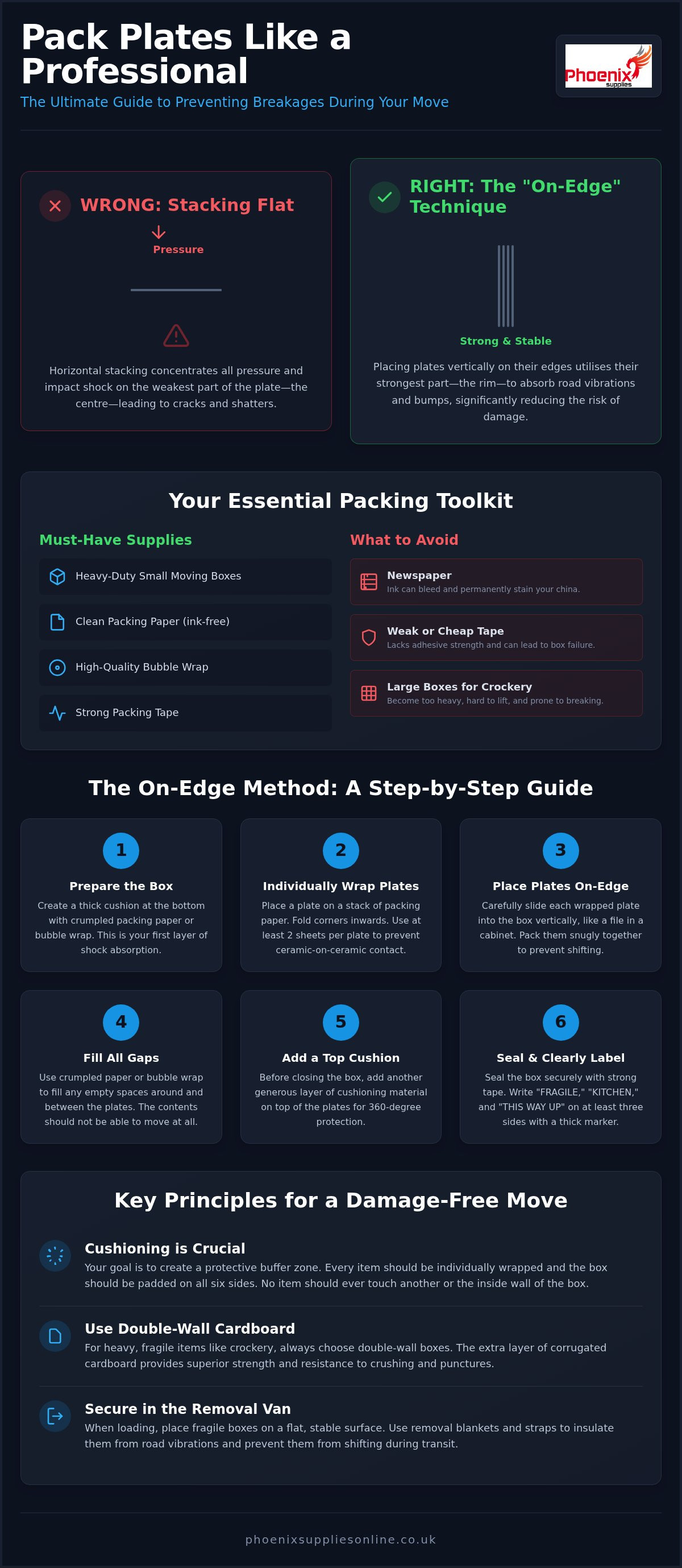
Understanding the physics of your crockery is the first step in preventing breakages. Most people naturally stack plates flat, just as they do in a kitchen cupboard. However, the centre of a plate is its weakest point, whilst the rim is the most structurally sound part of the object. When you stack plates horizontally, the weight of the entire pile rests on the brittle centre of the bottom plate. Any sudden jolt or vibration during transit can cause that pressure to turn into a clean snap.
When you learn how to pack plates for moving, the professional secret is to store them vertically. By standing plates on their edges, like books on a library shelf or dishes in a drying rack, you allow the strongest part of the ceramic to bear the weight. This orientation significantly reduces the risk of structural failure. It's a simple change in habit that makes a world of difference when your belongings are in the back of a moving van. For more expert insights on this method, you can read about how to pack dishes for moving from industry specialists.
Step-by-Step Wrapping Guide
Start with a clean, flat surface and a generous stack of packing paper. Place your first plate in the centre of the top sheet and fold each corner inward until the ceramic is completely hidden. You should use at least two sheets for everyday stoneware and more for delicate items. Ensure no ceramic-to-ceramic contact is possible; if you can feel the hard surface of the plate through the paper, add another layer. For heirloom items or expensive fine china, wrapping the paper-covered plate in a secondary layer of protective bubble wrap adds a vital level of shock absorption.
Bundling for Extra Security
Once you have wrapped three or four plates individually, stack them together and wrap the entire group in another large sheet of paper. Secure this bundle with a small piece of packing tape to keep it from unfurling. These bundles prevent individual plates from rattling against one another whilst the vehicle is in motion. A snug fit is better than a tight squeeze, as you want the plates held firmly without applying unnecessary force to the edges. Place these bundles into your box vertically on top of a thick cushion of crumpled paper. This "dish rack" arrangement ensures that any impact is distributed across the reinforced rims rather than the fragile centres.
Box Selection: Why Small Heavy-Duty Boxes are Essential
Choosing the right container is just as critical as the wrapping itself. A common mistake when learning how to pack plates for moving is opting for the largest boxes available to "get it all done" in fewer trips. This is a dangerous weight trap. Plates are incredibly dense and heavy; a large box filled with stoneware can easily exceed 40kg. Not only does this risk serious physical strain for whoever has to lift it, but it also puts immense pressure on the cardboard. Even the best tape can struggle to hold the bottom of an over-packed large box, leading to a total collapse during transit.
Professional movers and specialist suppliers always recommend Small Moving Boxes for ceramics. These containers are specifically sized to ensure that, even when full, the weight remains manageable for a single person. By using smaller dimensions, you naturally limit the number of plates per box, which protects your back and your belongings. It's much safer to carry four small, sturdy boxes than one giant, unstable one that might "bottom out" the moment it's lifted off the ground.
The Strength of Double-Wall Cardboard
When you're dealing with heavy kitchenware, single-wall cardboard simply isn't enough. You need the structural integrity of double-wall boxes. These consist of two layers of corrugated fluting sandwiched between three layers of sturdy kraft paper. This fluting acts like a series of vertical columns, providing the crush resistance needed when boxes are stacked high in a removal van. This is the same principle we discuss in our guide on Small Moving Boxes for Books: A Guide to Packing Your Library Safely, as both books and plates require maximum load-bearing support to prevent the boxes at the bottom of a stack from buckling.
Reinforcing the Base
Before you place a single plate inside, you must reinforce the base. Use the "Double-T" taping method: apply one long strip of heavy-duty tape across the centre seam, then two more strips perpendicular to the first, covering the side edges. This creates a secure grid that distributes the weight evenly. Inside the box, create a 2-inch "crumple zone" by padding the bottom with several layers of scrunched-up packing paper. This layer acts as a shock absorber against road vibrations. Before you seal the top, perform a quick test: if you can't lift the box comfortably with a straight back, it's too heavy. Take a few bundles out and fill the remaining space with light items like tea towels or bubble wrap instead.
Packing Bowls, Saucers, and Delicate Fine China
While the vertical "on-edge" method is the best way to handle your main dinner service, your kitchen cupboards likely contain a variety of shapes that require a more tailored approach. From deep soup bowls to delicate saucers, each piece needs specific attention to ensure the entire set arrives safely. Learning how to pack plates for moving is only half the battle; you also need to apply similar logic to your smaller or more awkwardly shaped items to prevent avoidable chips and cracks.
It's easy to overlook saucers or side plates, but they are often the most prone to damage if handled incorrectly. These items should be wrapped individually and stood on their edges, just like their larger counterparts. This consistency in technique ensures that your entire collection, from the everyday mugs to the finest porcelain, remains in one piece throughout the journey.
Nesting Bowls Safely
Bowls are naturally designed to sit inside one another, but this nesting can be a trap during a move. Without proper padding, the bowls can wedge together so tightly that the pressure causes them to snap. To avoid this, place a generous layer of high-quality bubble wrap or several sheets of crumpled packing paper between every single bowl. This creates a soft buffer that absorbs shocks and prevents the ceramic surfaces from grinding against each other.
You shouldn't nest more than three bowls together in a single bundle. Larger stacks become too heavy and unstable, increasing the risk of the bottom bowl failing under the weight. Once your bundles are placed in the box, give the side of the container a gentle tap. If you hear a rattle, it means there's still room for movement. Use soft items like tea towels or extra scrunched paper to fill these gaps until everything is perfectly still.
Protecting Fine and Antique China
Delicate heirloom pieces, such as hand-painted sets or gold-rimmed saucers, require an extra level of protection. The glazes on antique china can be surprisingly sensitive to chemical reactions. You should never use plastic wrap or even standard bubble wrap directly against the surface of antique glazes; the plastic can sometimes bond to the finish in a warm van. Instead, wrap these items in acid-free tissue paper first to provide a neutral barrier.
For extremely high-value items, we recommend the double-box method. This involves packing your wrapped china into a small box and then placing that box inside a Medium Moving Box lined with a thick layer of padding. This creates a box-within-a-box shield that provides the ultimate defence against impact. By using this multi-layered approach, you can feel confident that even your most precious items are secure. To get started with the right materials, you can find everything you need in our range of heavy-duty moving boxes and protective wraps.
Loading the Removal Van: Securing Your Fragile Boxes
Once you've mastered how to pack plates for moving, the final hurdle is getting those boxes safely to your new home. Even a perfectly wrapped plate can crack if the box is allowed to slide across the floor of a van or if a heavier item falls onto it. The golden rule of loading any vehicle is "heavy to light". This means your heaviest furniture and white goods form the base layer, whilst your lighter, more fragile boxes sit securely on top. You should never place your kitchen boxes at the very bottom of a stack, as the weight of other items can crush the cardboard and compromise the vertical strength of your plates.
One professional secret that many DIY movers overlook is the use of Removal Blankets as a foundation layer. Before you load your fragile boxes, lay a thick blanket on the van floor or over the top of a flat, stable piece of furniture. This provides a vital layer of insulation against road vibrations. These blankets act as shock absorbers, dampening the jolts from speed bumps and uneven surfaces that could otherwise travel through the box and rattle your crockery.
Positioning for Stability
Where you place your boxes inside the van is just as important as how they're stacked. It's best to wedge your plate boxes between heavy, immobile furniture items like a sofa or a wardrobe. This prevents the boxes from shifting during transit. You should also be mindful of the van's mechanics; the area directly over the axle is often the most turbulent part of the vehicle. If possible, keep your most delicate items towards the centre of the load where the suspension is most effective.
Communication is key during a move. Ensure that everyone helping you understands the "This Way Up" arrows you've marked on the boxes. It's a simple step, but it ensures that your plates remain in their safe vertical orientation throughout the entire lifting and loading process. If a box is turned on its side, the "on-edge" physics you worked so hard to achieve are instantly negated.
The Finishing Touches
Before you close the van doors, perform one final check. Give each box a very gentle shake; if you hear even the slightest clink of ceramic, you need to add more padding. To prevent the load from shifting during corners or sudden braking, use webbing straps to pin your kitchen boxes against the van's internal rails. These straps keep the boxes tight against the wall, ensuring they don't have the room to gain momentum and slide.
Ready to start? Browse our range of heavy-duty small moving boxes to give your kitchenware the best possible protection during your next move.
Master Your Kitchen Pack Today
Moving your kitchen doesn't have to be a source of constant stress or anxiety. By shifting from traditional flat stacking to the professional "on-edge" technique, you effectively protect the structural integrity of every piece you own. You've now learned that how to pack plates for moving involves more than just simple wrapping; it requires the right Small Moving Boxes and a multi-layered cushion of paper, bubble wrap, and removal blankets. These steps ensure that your most delicate items arrive at your new doorstep without a single chip or crack.
Phoenix Supplies UK is a family-run business that takes pride in helping families move safely and efficiently. We specialise in high-quality double-wall cardboard that won't buckle or fail under the weight of heavy stoneware. With our nationwide delivery on all packing supplies, you can get the professional-grade tools you need delivered straight to your door. Order your Heavy Duty Small Moving Boxes from Phoenix Supplies UK today and take the first step towards a calm, organised moving day. It's time to pack with confidence and look forward to your first meal in your new home.
Frequently Asked Questions
Can I pack plates without professional packing paper?
You can use household items like tea towels or clean linens, but avoid old newspapers as the ink can permanently stain glazes. Professional packing paper is the ideal choice because it's ink-free and specifically designed to provide a soft, non-abrasive barrier. It's thin enough to wrap tightly around individual pieces whilst being strong enough to prevent surface scratches during transit. This ensures your sets remain clean and ready for use in your new home.
How many plates should I put in one moving box?
There is no fixed number, but you should aim for a total weight that you can lift comfortably with a straight back. In a standard Small Moving Box, you can usually fit between 12 and 18 dinner plates if they are bundled in groups of four. Always prioritise the structural integrity of the box over the number of items. If the box feels too heavy to carry safely, swap some plates for lighter padding.
Is bubble wrap better than paper for packing plates?
Both materials serve different purposes. Packing paper is better for the initial wrap because it's non-abrasive and fits the contours of the ceramic perfectly. Bubble wrap is an excellent secondary layer for providing shock absorption, especially for heirloom china or glass. When learning how to pack plates for moving, use paper first to prevent scratches and then use bubble wrap to insulate against heavy impacts and road vibrations during the journey.
What happens if I pack my plates flat instead of on their side?
Packing plates flat is the primary cause of transit breakage. When stacked horizontally, the weight of the entire pile rests on the weakest part of the bottom plate: the centre. Standing them on their edges allows the stronger rim to bear the load. This vertical orientation significantly reduces the risk of a plate snapping if the removal van hits a sharp bump or travels over uneven road surfaces whilst you are moving house.
How do I stop my plates from rattling inside the box?
You stop movement by filling every "void" or empty space with soft materials. Once your plate bundles are positioned vertically, use scrunched-up packing paper or bubble wrap to plug any gaps at the sides and corners. A well-packed box shouldn't make a sound when you give it a gentle shake. If you hear a rattle, add more padding until the contents are held firmly in place without being crushed by the box flaps.
Should I use large boxes to save money on the move?
Using large boxes for heavy items like plates is often a false economy. Whilst you might buy fewer boxes, the risk of the bottom "bottoming out" under the weight is much higher. Large boxes also become incredibly difficult to carry safely, leading to potential back injuries. It's much safer to use Small Moving Boxes made of double-wall cardboard, as they are specifically designed to handle the density of kitchen stoneware without buckling.
What is the best way to tape a box full of heavy crockery?
The most secure method is the "Double-T" or "H-tape" pattern. Apply a long strip of heavy-duty packing tape along the centre seam of the box flaps, extending it several inches down the sides. Then, apply two more strips perpendicular to the first, sealing the edges where the flaps meet the box body. This grid-like reinforcement ensures the base can support the significant vertical pressure of a full load of ceramics throughout the move.
How do I pack deep soup bowls differently from flat plates?
Deep bowls shouldn't be stood on their edges like plates. Instead, you should use the nesting technique. Place a thick layer of bubble wrap or scrunched paper inside each bowl before placing the next one on top. Don't nest more than three or four bowls together, as the weight can cause the bottom piece to crack. Once bundled, wrap the entire group in paper and place it vertically into the box for maximum protection.


