

Imagine the sinking feeling as you watch your favourite velvet sofa scrape against a rough brick wall in a narrow hallway. It is a common nightmare when you are figuring out how to pack a sofa for moving, and it often ends with a permanent tear or a stubborn oil stain from the van floor. If you are worried about your furniture arriving in anything less than pristine condition, you aren't alone. Most of us treat our sofas as the heart of the home, yet they are frequently the most vulnerable items during transit.
Learning the right techniques doesn't have to be a guessing game. This guide will help you master the professional Three-Layer Method; this ensures your furniture is fully armoured against the bumps and shifts of the journey. From delicate fabric settees to heavy leather corner units, we will walk through the essential steps of surface shielding, impact cushioning, and structural security. By the end, you'll have the confidence to load your sofa safely, knowing it is protected from every scuff, rip, and spill.
Key Takeaways
- Learn how to measure the "path of least resistance" through your home to avoid getting stuck in tight hallways or narrow door frames.
- Master the professional three-layer wrapping method to discover exactly how to pack a sofa for moving while preventing scuffs, rips, and oil stains.
- Understand the vital differences between protecting leather and fabric, including how to stop moisture build-up and "sweating" during transit.
- Discover the "up-and-over" lifting technique and the "low-and-slow" method to navigate corners safely without risking injury or furniture damage.
- Identify the essential "armour" required for your DIY move, from heavy-duty removal blankets to specialised furniture covers.
Assessment and Preparation: Measuring Your Route
Preparation is the foundation of any successful house move. Before you reach for the tape and blankets, you must understand the physical challenges of the task ahead. Knowing how to pack a sofa for moving begins with a clear assessment of your furniture's dimensions and the path it must travel. Whether you own a standard three-seater, a modular corner unit, or a heavy electric recliner, each requires a specific strategy to ensure it doesn't become wedged in a doorway or suffer damage in transit.
One practical tip we always recommend is the "First Night" rule. Moving is exhausting, and you might not have the energy to unpack every box immediately. Keep your sofa cushions accessible or pack them in clearly labelled bags near the van doors. This way, you can set up a comfortable spot to rest as soon as you arrive at your new home without having to hunt through a mountain of cardboard. If you’ve already planned your new outdoor space with pieces from Rengard, you might even find your garden is the first room ready for relaxation.
Dismantling for a Smoother Move
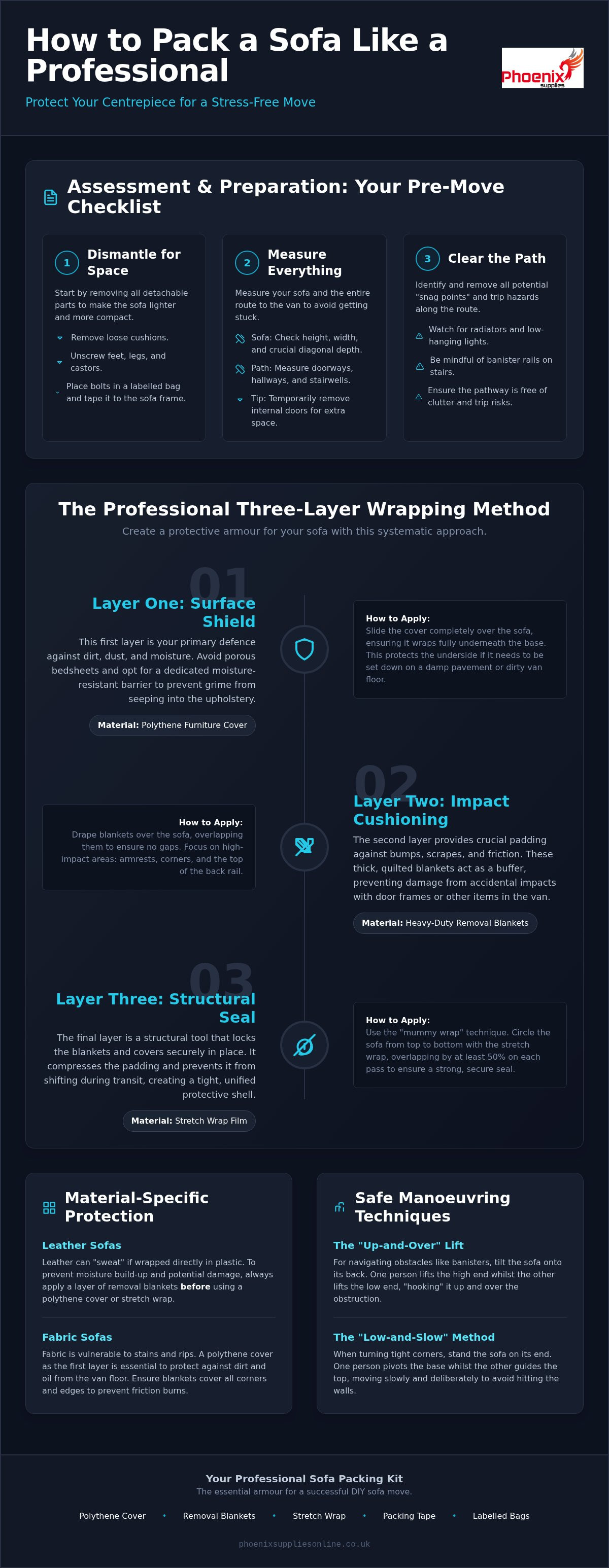
Most sofas are designed to be partially dismantled. Start by removing all detachable elements like loose cushions, castors, and legs. Unscrewing the legs is often the difference between a sofa that fits through a narrow British hallway and one that gets stuck. Once removed, place all bolts and small parts into a plastic bag and tape it securely to the underside of the sofa frame so they don't go missing. For those planning to renovate their home's entryways or staircases after moving, you can explore Product Sales via E-commerce and Showroom at Arborfield Joinery for high-quality timber products.
Modular sofas should be unhooked and handled as individual sections. This makes them much lighter and easier to protect with furniture covers. If you have an electric recliner, ensure the cables are neatly coiled and taped down. You should also secure the internal motor mechanism with webbing straps to prevent it from shifting whilst it is being tilted or carried.
Measure the height, width, and diagonal depth of your sofa. The diagonal depth is particularly important; it is the measurement from the top back corner to the bottom front of the armrest. This figure tells you if the sofa can be "threaded" through a door frame at an angle. To gain those vital extra centimetres in a tight squeeze, don't be afraid to pop internal doors off their hinges temporarily.
Walk the entire route from the living room to the removal van to identify potential "snag points." Radiator valves, low-hanging light fixtures, and banister rails are all common culprits for causing deep gouges in upholstery. To avoid injury during this stage, it's vital to use safe lifting and carrying techniques whilst navigating these narrow spaces. Clear the path of all trip hazards to ensure your focus remains entirely on the furniture.
The Three-Layer Wrapping Method: A Step-by-Step Guide
When you are learning how to pack a sofa for moving, the secret lies in a systematic approach. Professional movers don't just throw a sheet over the furniture and hope for the best. Instead, they use a specific sequence of materials to provide comprehensive protection. This method aligns with professional moving advice that prioritises the physical integrity of your belongings throughout the transit phase. By following a structured layering process, you create a shield that handles both surface stains and heavy impacts.
Applying the Surface Shield
The first layer is your primary defence against dirt, dust, and moisture. Whilst old bedsheets might seem like a thrifty option, they are often thin and porous; this allows van floor grime or oil to seep through to your upholstery. A dedicated polythene furniture cover is a far better choice because it provides a moisture-resistant barrier. Slide the cover over the sofa and ensure it wraps under the base. This protects the underside from dirt if the sofa needs to be set down on a damp pavement or a dusty van floor during the loading process.
Cushioning with Removal Blankets
Once the surface is shielded, you need impact protection. Heavy-duty removal blankets are the gold standard for this task. Focus your attention on high-impact areas such as the armrests, the back rail, and the corners. These are the parts most likely to strike a door frame or rub against other furniture in the van. These thick, quilted blankets act as a buffer between the sofa and other items, preventing friction burns on delicate fabric during the vibrations of travel. Overlap the blankets as you go so there are no gaps in your protective armour. Having a few high-quality removal blankets on hand makes this process much smoother and gives you peace of mind that your furniture is truly secure.
The Final Structural Seal
The final step is to lock everything in place using stretch wrap. This isn't just for protection; it's a structural tool. Use the "mummy wrap" technique by circling the sofa from top to bottom, ensuring the wrap overlaps by several inches on each pass. This compresses the blankets and prevents them from slipping whilst you are manoeuvring through tight gaps. Be careful not to pull the wrap so tight that it distorts the sofa frame or crushes the padding. Crucially, never apply adhesive tape directly to the leather or fabric. Tape can leave a permanent sticky residue or even peel away the finish of your furniture when removed.
Material-Specific Protection: Leather vs Fabric
Not all sofas are made equal. While the three-layer method provides a solid framework, the specific material of your upholstery determines how you apply those layers. A one-size-fits-all approach often leads to heartbreak, especially with natural hides or delicate weaves. When you are planning how to pack a sofa for moving, you must consider the breathability and sensitivity of the surface to avoid long-term damage that might only become visible after you unpack.
Safeguarding Leather and Suede
Leather is a natural, porous material that needs constant airflow. One of the biggest mistakes DIY movers make is wrapping leather directly in stretch wrap or plastic. This traps moisture against the hide, causing it to "sweat." If left in a warm van or storage unit, this condensation can lead to permanent discolouration or even mould growth amongst the folds of the leather. It's a risk that is easily avoided with the right sequence of materials.
To prevent this, always ensure a textile layer, such as a heavy-duty removal blanket, is placed directly against the leather before any plastic is used. This creates a breathable buffer. For suede and nubuck, a dry and dust-free environment is even more critical. These materials are highly absorbent; even a small amount of moisture or van oil can leave a permanent mark. Use extra padding on the corners to prevent the leather from being pinched or scuffed against walls during the move.
Protecting Fabric and Delicate Velvet
Fabric sofas, particularly those with a high nap like velvet, face a different set of risks. The main concern here is pile crushing. If a velvet sofa is tightly wrapped or has heavy items leaning against it for several hours, the fibres can become permanently flattened. This creates a "shading" effect that is almost impossible to brush out. You should keep the wrapping firm enough to secure the blankets but avoid excessive compression that might distort the fabric's natural texture.
For light-coloured fabrics, hygiene is the priority. Even a clean-looking removal blanket can sometimes transfer microscopic dust or old fibres onto a cream or white settee. Using the right packing materials, such as a virgin polythene furniture cover, provides an essential barrier against moisture and stains. This first layer ensures that the fabric remains pristine, whilst the subsequent layers of blankets handle the physical shocks of the journey.
Manoeuvring and Loading the Removal Van
Once your furniture is fully armoured, the physical transition from your living room to the removal van begins. Understanding how to pack a sofa for moving involves more than just wrapping; it requires a tactical approach to lifting and loading. This stage is where most accidental damage occurs, often because of rushed movements or poor communication between helpers. Taking a methodical approach ensures both your sofa and your hallway walls remain in perfect condition.
Safe Lifting and Carrying
Never attempt to move a sofa alone. A minimum of two people is required, though three is ideal for navigating tight corners or stairs. We recommend a "Low-and-Slow" lifting technique; this involves keeping your back straight and lifting with your legs whilst maintaining a steady, controlled pace. If you are moving across carpeted areas, furniture sliders can be a lifesaver by reducing friction and protecting your lower back from strain.
British homes often have narrow entryways that leave little room for error. To prevent scuffs, create temporary shields by taping flattened cardboard boxes to door frames and banisters. When you reach a tight turn, use the "up-and-over" method. This involves tilting the sofa vertically to clear the corner before lowering it back into a horizontal position. It is a slow process, but it is the safest way to avoid impact damage.
Securing the Sofa for the Journey
Inside the van, the sofa should ideally be placed against the bulkhead, the front wall, or securely against a side wall. This provides a stable foundation for the rest of your load. You must use durable webbing straps to anchor the sofa to the van’s internal rails. Thread the straps through the anchor points and tighten them until the sofa cannot shift, but be careful not to overtighten and crush the frame.
Positioning is key for long-distance transit. Depending on the available space, you can stand the sofa upright on its end or keep it in its natural horizontal position. However, you should never place heavy boxes on top of a wrapped sofa. Even with thick padding, the constant vibration of the road can cause the frame to warp or the cushions to deform under the weight of other items. By keeping the top clear, you ensure the internal structure remains as pristine as the upholstery.
The Professional Sofa Packing Kit
To successfully execute the techniques described in this guide, you need more than just effort; you need the right tools. Knowing how to pack a sofa for moving is only half the battle. The other half is ensuring your "armour" is up to the task. A professional-grade kit is designed to handle the unique stresses of a removal van, where items are subject to constant vibrations and shifting weights. From the thick cushioning of heavy-duty blankets to the structural security of webbing straps, each component serves a specific purpose in your furniture's safety.
- Heavy-duty removal blankets: These provide the essential quilted cushioning that absorbs shocks and prevents friction.
- Polythene furniture covers: These act as a sanitary barrier against dust, moisture, and van floor grime.
- Durable webbing straps: These are crucial for anchoring the sofa frame to the vehicle's internal rails.
- Stretch wrap and packing tape: These tools hold your protective layers in place without leaving sticky residue on the upholstery.
Why Quality Materials Matter
It is tempting to use old towels or bedsheets, but these thin materials lack the density required to prevent impact damage. Professional removal blankets are specifically engineered to stop friction burns on fabric and deep scuffs on leather. By buying moving boxes online and securing your supplies well in advance, you remove a significant layer of moving-day stress. Spending a few pounds on high-quality covers and straps is a wise investment when compared to the hundreds or thousands of pounds it would cost to replace a damaged three-piece suite.
Sourcing Your Supplies Nationally
Choosing a family-run specialist like Phoenix Supplies UK ensures you receive reliable advice and durable equipment. We understand the practicalities of a DIY move and provide the same high-standard kit used by professional firms. When ordering, always ensure you have enough material to allow for a generous overlap. This is especially important for large modular or corner sofas, where gaps in the wrapping can leave the frame vulnerable. Before the van doors close, run through this final checklist:
- Check all legs and castors are removed, bagged, and taped to the underside.
- Verify the first layer (furniture cover) is fully tucked under the base to block rising dust.
- Ensure removal blankets are double-layered on the armrests and top rail.
- Confirm the webbing straps are tight and the load is completely immobile.
Preparing for a Stress-Free Arrival
Moving a sofa doesn't have to be the most stressful part of your relocation. By following the professional Three-Layer Method, you ensure your furniture stays in pristine condition from the living room to the removal van. You've now mastered the essentials of how to pack a sofa for moving, from dismantling legs for narrow hallways to choosing breathable protection for delicate leather hides. These steps provide the necessary armour to prevent scuffs, rips, and stubborn stains.
Having the right equipment makes all the difference when protecting your home's heart. At Phoenix Supplies UK, we are a family-run business providing specialist packaging for both domestic and commercial moves. We are here to support your DIY project with professional-grade materials and personalised customer service. Browse our range of Removal Blankets and Furniture Covers at Phoenix Supplies UK and benefit from free delivery on all moving supply orders. With the right preparation and the proper kit, you can look forward to relaxing on your favourite sofa the moment you arrive at your new front door.
Frequently Asked Questions
Can I move a sofa on its side in the removal van?
You can move a sofa on its side in the van if you have limited floor space, but it requires careful preparation. The side resting on the floor must be protected with several layers of removal blankets to absorb road vibrations. You should also use webbing straps to anchor the sofa against the van wall. This prevents it from shifting or tipping over, which could cause structural damage to the internal wooden frame during the journey.
How do I protect the legs of my sofa during a move?
To protect the legs of your sofa, you should ideally unscrew them before the move begins. Place the legs and fixings in a small bag and tape it securely to the underside of the sofa frame. If the legs are fixed, wrap them individually in bubble wrap and secure the padding with tape. This simple step prevents the wood from being chipped and stops the legs from scratching your door frames or flooring during transit.
Is bubble wrap safe to use directly on a leather sofa?
Bubble wrap should not be used directly on leather furniture. The plastic material can trap heat and moisture, which leads to "sweating" and may cause permanent discolouration or mould. The bubbles can also leave unsightly circular marks on soft hides. To protect leather safely, always place a breathable removal blanket over the sofa first. You can then wrap the exterior in plastic or bubble wrap to provide a final layer of impact and moisture protection.
How many removal blankets do I need for a three-seater sofa?
When considering how to pack a sofa for moving, a standard three-seater usually requires three to four heavy-duty removal blankets. This quantity ensures that you can overlap the material across the armrests and the back rail, which are the most vulnerable points. Using multiple blankets creates a thick cushion that protects the upholstery from friction burns and impact damage. It is always safer to have a surplus of blankets rather than leaving gaps in your furniture's armour.
Should I leave the cushions on the sofa when wrapping it?
Removing the cushions is usually the best approach when preparing for a move. This reduces the weight of the main frame and makes the sofa much easier to carry through narrow hallways. You can pack the cushions separately in specialised furniture covers to keep them clean and dry. If you decide to leave them attached, use stretch wrap to secure them firmly so they do not slip and cause the sofa to become unbalanced whilst being lifted.
How do I get a large sofa through a narrow front door?
Getting a large sofa through a narrow door often requires a combination of dismantling and clever positioning. Start by removing the legs and any loose cushions to slim down the profile. You might need to tilt the sofa vertically and "thread" it through the opening in a curling motion. If you are still struggling for room, temporarily removing the internal door from its hinges can provide the extra clearance needed to move the furniture without causing scuffs.
What is the best way to wrap a sofa for long-term storage?
When wrapping a sofa for long-term storage, you must prioritise airflow to prevent damp and mould. Avoid sealing the furniture entirely in plastic wrap, as this traps moisture against the fabric. Instead, use a breathable furniture cover or a series of heavy-duty removal blankets. These materials block dust and light whilst allowing the upholstery to breathe. Secure the blankets with webbing straps rather than adhesive tape to ensure the fabric remains in perfect condition for months.
Do I need a special cover for a sofa bed?
A sofa bed does not require a unique cover, but it does need extra structural security. Use durable webbing straps to tie the internal mattress mechanism to the main frame so it cannot spring open during the move. Sofa beds are considerably heavier than standard models, so you should use extra removal blankets on the base and corners. A standard furniture cover will work well for hygiene, provided you have checked the dimensions of the unit first.


