

The most expensive-looking plastic crate might actually be the riskiest choice for your fragile china. When you're staring at a mountain of belongings, the debate of cardboard vs plastic moving boxes often comes down to a simple fear: will this container collapse when it's halfway up the removal ramp? We understand that your home isn't just a collection of items; it's years of memories that deserve to arrive in one piece without any unnecessary stress.
It's natural to feel torn between the perceived sturdiness of plastic and the classic versatility of cardboard, especially with 2026 UK packaging regulations and the Plastic Packaging Tax influencing the cost of materials. We promise to provide a clear, expert comparison to help you decide which material protects your valuables whilst keeping your house move organised and on budget. We will explore everything from structural integrity and hidden rental fees to the best ways to recycle or reuse your supplies once the final van is unloaded at your new front door.
Key Takeaways
- Learn why double-wall corrugated cardboard is the industry standard for protecting heavy items and preventing boxes from collapsing during transit.
- Discover the key differences in the cardboard vs plastic moving boxes debate, specifically regarding stacking efficiency and van loading logistics.
- Understand the cost-saving benefits of using professional-grade cardboard compared to the hidden expenses and storage requirements of renting plastic crates.
- Identify which specialist containers, from wardrobe boxes to TV protectors, are essential for ensuring your most fragile belongings survive the journey.
- Find out how to source high-quality materials from a trusted family-run specialist to ensure your packing supplies are reliable and fit for purpose.
Cardboard vs Plastic Moving Boxes: Choosing the Right Foundation for Your Move
Choosing your containers is the first major decision of any relocation. It dictates your entire packing strategy and how efficiently your removal van is loaded. When weighing up cardboard vs plastic moving boxes, you're choosing between two very different engineering philosophies. Cardboard boxes, specifically those crafted from corrugated fibreboard, are designed for stacking strength and transit protection. In contrast, plastic moving boxes are typically heavy-duty crates made from high-density polyethylene (HDPE). These are often seen in commercial office moves where high-volume, uniform stacking is the priority.
We've noticed a significant psychological shift amongst British movers lately. People are moving away from the old habit of scrounging for free, flimsy supermarket boxes. There's a growing understanding that a house move involves your most precious possessions. Relying on a box that once held bags of crisps is a recipe for a collapsed base. Purpose-built supplies offer the security you need when navigating the unique challenges of a British move, such as narrow Victorian hallways or the inevitable drizzly afternoon. Using an engineered corrugated box design ensures that the foundation of your move is solid from the moment you start tape-sealing the first flap.
When Cardboard is the Traditional Favourite
Cardboard remains the industry standard for several practical reasons. Its versatility is unmatched, offering everything from small moving boxes for books to massive containers for kitchen appliances. Unlike plastic, these boxes arrive flat-packed. This means you can store fifty boxes in a corner of your lounge without losing your living space before moving day. For large family homes requiring hundreds of containers, the cost-effectiveness of buying cardboard outright usually outweighs the daily rental fees of plastic alternatives. Once the move is over, you can simply fold them back down or recycle them, which is a huge advantage for those with limited storage space.
The Rise of Plastic Crates in the UK
The Case for Professional-Grade Cardboard: Why Double Wall is the Industry Standard
Many people assume that all cardboard is the same. This misconception often leads to the frustration of a box bottom falling out in the middle of a driveway. When deciding between cardboard vs plastic moving boxes, the specific grade of cardboard you choose changes everything. Double-wall construction is the gold standard for domestic relocations. It features two distinct layers of fluting, providing immense crush resistance that single-wall alternatives simply cannot match. This structural strength is why heavy items like kitchenware, small appliances, and dense stacks of books belong in heavy-duty cardboard. It's built to withstand the pressure of being stacked five-high in a removal van.
One often overlooked benefit of cardboard is its inherent flexibility. You can easily customise a box size with a simple craft knife to create a snug fit for an awkwardly shaped lamp or a tall vase. Scoring and folding the cardboard allows you to maintain its strength whilst eliminating empty space that would otherwise require extra bubble wrap. This versatility makes it the superior choice for 'long-tail' moves where items might stay packed in a garage or storage unit for weeks. Unlike plastic, cardboard is breathable. It doesn't trap condensation, which helps prevent the musty smells that can develop when items are sealed in airtight plastic crates for long periods. Investing in heavy-duty cardboard boxes is often the most reliable way to secure your home's contents.
Structural Integrity and Stacking Strength
Specialist Protection for Electronics
Delicate electronics require more than just a sturdy container. A dedicated best TV moving box UK offers a level of shock absorption that generic plastic tubs lack. Cardboard naturally dampens minor vibrations during the journey. In contrast, rigid plastic crates can transfer these jolts directly to the screen or internal components. For your clothing, wardrobe boxes for moving allow you to transfer items directly from the rail, keeping them crease-free and organised. Once your move is complete, following best practices for recycling packaging materials ensures your transition remains as green as possible.
The Reality of Plastic Moving Crates: Durability vs Logistics
Plastic crates are nearly impossible to crush under normal moving conditions. This durability is their primary appeal. They offer a "snap-shut" convenience that appeals to anyone who wants to avoid the repetitive task of applying packing tape. You simply fill the crate, click the integrated lid into place, and move on to the next item. It's a fast way to start your packing journey, but the reality of cardboard vs plastic moving boxes often changes once you arrive at your new home.
The logistical reality is that plastic crates don't collapse. In a typical UK semi-detached house or a flat with a narrow hallway, fifty empty plastic crates become a massive physical barrier. Unlike cardboard, which you can fold flat and tuck behind a sofa, these rigid containers demand constant floor space. This often leads to a "rental trap". You might find yourself frantically unpacking and shoving items into cupboards just to meet a return deadline, rather than organising your new home at a comfortable pace. As highlighted in CNET's guide to moving boxes, the choice often depends on whether you prioritise initial speed over the flexibility needed during the weeks after your move.
Weight is another significant factor. Plastic containers are heavy before you've even added a single plate. When you fully load a large plastic crate with books or kitchenware, the total weight can quickly lead to over-exertion or back strain. Cardboard starts as a lightweight frame, allowing the weight of your belongings to be the primary concern. For many, the physical effort of moving dozens of heavy plastic tubs up and down stairs simply isn't worth the perceived gain in durability.
Moisture Resistance and Outdoor Staging
Plastic wins when you're moving during a classic British downpour or staging items in a damp garage. It's the ideal choice for "spill-prone" items like cleaning supplies, bathroom liquids, or garden chemicals. However, you must be wary of "sweating". Plastic can trap humidity amongst sensitive fabrics or paper. If these crates are left in a warm van or a storage unit, that trapped moisture can lead to mildew, which is a risk you don't face with breathable cardboard.
The Storage Dilemma
Visualise the space required: 50 flat-packed cardboard boxes take up a tiny sliver of a garage, whilst 50 empty plastic crates would fill it. Buying these crates outright is rarely a sound financial investment for a one-off move, and their rigid, fixed dimensions can actually limit your van loading options. You can't "nudge" a plastic crate into a tight gap the way you can with a slightly flexible cardboard box, which often leads to wasted space in the removal vehicle.
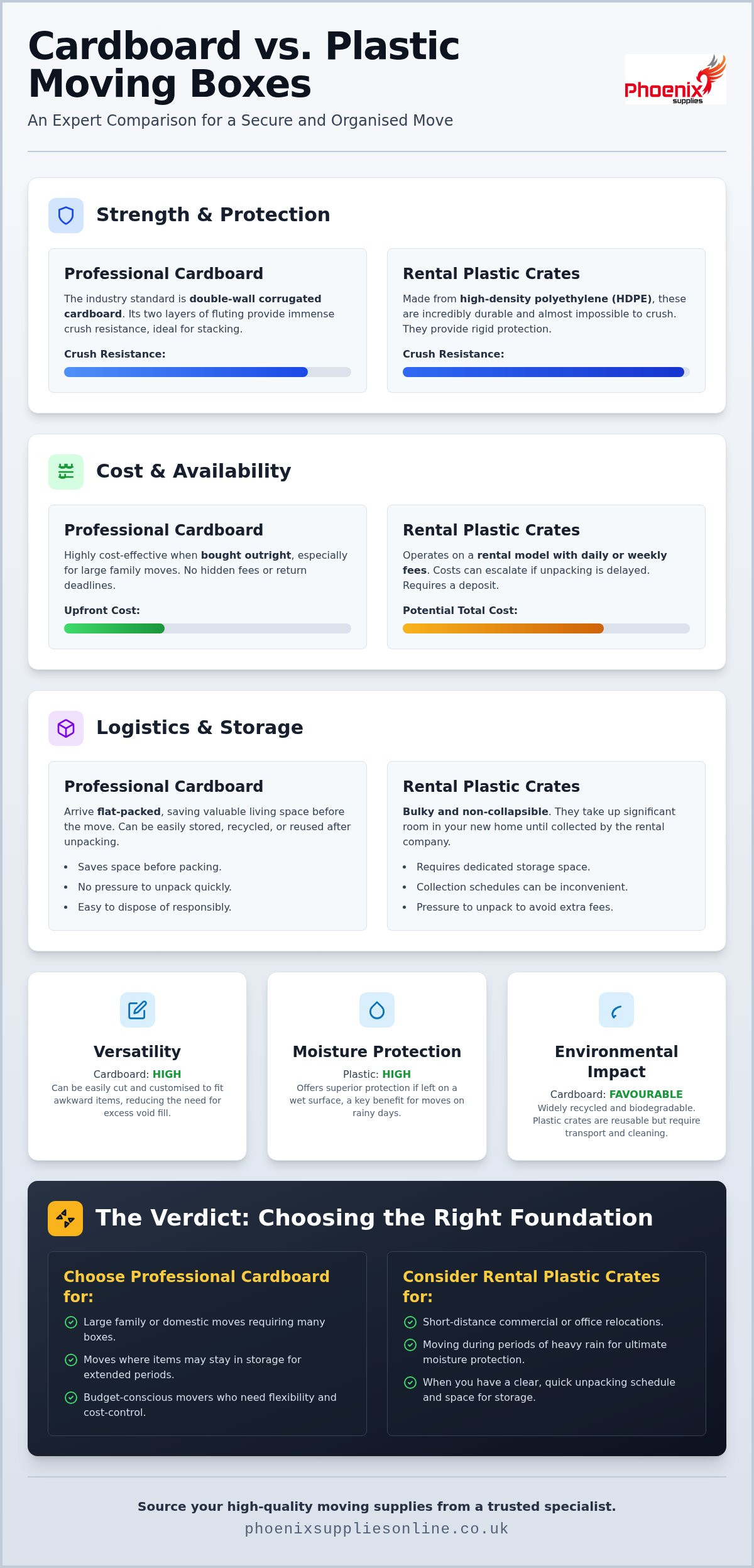
Direct Comparison: Evaluating Cost, Stacking Strength, and Environmental Impact
When you look at the total bill for your relocation, the financial side of the cardboard vs plastic moving boxes debate becomes very clear. Building a complete packing materials list for moving is significantly more affordable when you choose cardboard. For a standard three-bedroom home, the cost of purchasing professional-grade boxes is often less than half the price of a multi-week plastic crate rental. This saving allows you to invest more in high-quality protective layers like bubble wrap and removal blankets, which are essential for preventing scratches regardless of the container you use.
Stacking efficiency is where cardboard truly shines for professional movers. The flat, uniform surfaces of a well-taped box allow for tighter, safer van loads. Unlike plastic crates, which often have flared sides or bulky handles, cardboard boxes can be fitted together like a jigsaw puzzle. This eliminates dead space in the van, potentially saving you from needing a larger, more expensive vehicle. There is also a security element to consider. A tape-sealed cardboard box acts as a tamper-evident seal. If someone tries to open it, the torn fibres or disturbed tape are immediately obvious; a snap-lid plastic box can be accessed and closed again without leaving a trace.
Environmental Responsibility in 2026
The end of life journey for your supplies is a major factor for modern British households. Cardboard is made from Kraft paper and corrugated board, which currently enjoys a UK recycling rate of over 80%. It can be easily processed by local council collections and turned back into new packaging within weeks. In contrast, a discarded plastic crate has a lifespan of roughly 400 years. Whilst plastic is often marketed as reusable, it only achieves a lower carbon footprint than cardboard if it is actually reused hundreds of times without being lost or damaged.
Protection and Safety Metrics
Safety isn't just about the items inside; it's about the person carrying them. The danger of over-packing is much higher with large plastic tubs because their rigid structure masks the weight. Smaller cardboard boxes naturally limit how much you can pack, which helps prevent back injuries amongst DIY movers. From a physics perspective, corrugated fluting provides superior protection by acting as a shock absorber. If a box is dropped, the cardboard absorbs the energy of the impact by deforming slightly, whereas rigid plastic transfers that energy directly to your fragile china. To get started with the right supplies, you can order heavy-duty moving boxes online from our family-run team.
Sourcing Your Supplies: Why Expert Guidance Trumps Generic Marketplaces
The temptation to click the cheapest option on a generic online marketplace is strong when your moving budget is stretched. However, these faceless retailers often suffer from significant quality control issues, ranging from inconsistent cardboard thickness to adhesives that fail the moment they face a bit of humidity. When you're evaluating cardboard vs plastic moving boxes, the reliability of the supplier is just as critical as the material itself. A box that looks sturdy in a thumbnail image might arrive with single-wall construction that buckles under the weight of a few dinner plates. Choosing a specialist ensures that you receive exactly what you need to protect your home's contents.
Working with a family-run specialist like Phoenix Supplies UK provides a layer of personal accountability that large-scale e-commerce platforms simply cannot match. We understand that a house move is a major life event, not just a logistics exercise. Instead of navigating automated chatbots, you have access to a team that takes pride in being a dependable partner. One of the most effective ways to simplify your preparation is by looking into moving house packing kits UK. These kits are curated based on years of industry experience, ensuring you have the right mix of small, medium, and large containers without the guesswork of buying individual items.
The Phoenix Supplies UK Difference
Our commitment is rooted in providing the most durable double-wall cardboard available to our customers across the country. We don't believe in "one size fits all" solutions. Our dedicated office team serves as a human centre for advice, helping you choose between standard boxes and specialist options like extra-large TV boxes or wardrobe containers. We focus on reliable national UK delivery to ensure your supplies arrive in perfect condition and exactly when you need them, helping you stay on schedule for your 2026 move.
Ready to Start Packing?
A successful move requires more than just boxes. It's about having a complete system, from heavy-duty tape to protective removal blankets and bubble wrap. Our online shop is designed for ease of use, catering to everything from small domestic projects to high-volume commercial requirements. We've seen first-hand that whilst plastic has its place in office moves, professional-grade cardboard remains the champion for the British family home due to its versatility, cost-effectiveness, and ease of storage. Order your moving supplies today to ensure your belongings are supported by the best foundations possible.
Securing Your Belongings for a Stress-Free Relocation
Deciding between cardboard vs plastic moving boxes ultimately comes down to balancing protection with practical logistics. Whilst plastic offers moisture resistance, professional-grade double-wall cardboard provides the structural integrity needed to prevent containers from collapsing during transit. It also avoids the storage headaches and strict rental deadlines associated with rigid crates. By choosing specialist cardboard, you gain a cost-effective solution that's easy to recycle and simple to store whilst you settle into your new home at your own pace.
As a family-run UK specialist, we take pride in helping our customers move safely. We provide heavy-duty double-wall cardboard as standard to ensure your most fragile items are well-supported throughout the journey. We also offer free delivery on qualifying national orders to keep your moving costs predictable and manageable. You don't have to navigate the stress of packing alone when you have the right materials and a dependable partner by your side.
Order your professional-grade moving boxes from Phoenix Supplies UK today to give your belongings the protection they deserve. We're here to help you start this new chapter with confidence and ease.
Frequently Asked Questions
Is it cheaper to buy cardboard or plastic moving boxes?
Buying professional-grade cardboard is significantly more affordable for the average UK household. Whilst plastic crates are durable, the cost of purchasing them outright for a single move is often prohibitive, which is why they are almost exclusively offered as a rental service. For a standard family relocation, the upfront cost of a full set of cardboard boxes is usually much lower than the multi-week rental fees associated with plastic alternatives.
Can I stack plastic moving boxes as high as cardboard ones?
You can stack both materials quite high, but the cardboard vs plastic moving boxes debate often comes down to stability in a moving van. Cardboard's flat, uniform surfaces allow for a more secure, interlocking stack that resists shifting. Plastic crates are rigid and strong, but their often-tapered sides or protruding handles can create small gaps that make a tall stack feel less stable when the vehicle is in motion.
What should I do with my moving boxes after the move is finished?
Cardboard boxes offer the most flexibility after you've unpacked. You can simply flatten them and store them in a loft for a future move, pass them on to a friend, or recycle them through your local council collection. Plastic crates, however, must be returned to the rental company by a specific date. This can add unnecessary pressure to your first week in a new home if you aren't ready to unpack everything immediately.
Are cardboard boxes strong enough for heavy kitchen appliances?
Heavy-duty double-wall cardboard is specifically engineered to carry heavy kitchen appliances like microwaves, slow cookers, or stand mixers. These boxes feature two layers of corrugated fluting that provide the necessary base strength and side-wall rigidity to prevent the bottom from bowing. As long as you avoid flimsy single-wall supermarket "freebies," professional cardboard is more than capable of handling the heaviest items in your kitchen.
Do plastic moving boxes protect against rain better than cardboard?
Plastic containers are waterproof and provide excellent protection if your belongings have to sit on a damp pavement or a wet van ramp. However, they are airtight, which can trap humidity and lead to "sweating" amongst fabrics or paper. Cardboard is breathable and naturally prevents moisture build-up, though it does require a bit more care during a typical British downpour to ensure the material doesn't become saturated and lose its strength.
How many boxes do I need for a standard 3-bedroom UK house move?
Most 3-bedroom UK homes require between 70 and 90 boxes, though this depends heavily on how long you've lived in the property. We generally recommend a balanced mix of 30 medium boxes for general items, 25 large boxes for lighter bulky goods, and 15 small boxes for heavy items like books. Having a variety of sizes ensures that no single box becomes too heavy to carry safely up and down stairs.
Can I recycle double-wall cardboard boxes at a local centre?
Yes, double-wall corrugated cardboard is one of the most widely recycled materials in the United Kingdom. Almost every household waste recycling centre (HWRC) accepts it, provided the boxes are flattened and any excessive amounts of heavy-duty packing tape are removed. It's a highly sustainable choice for those who want to ensure their moving supplies don't end up in a landfill once the relocation is complete.
Why do professional removal companies prefer cardboard over plastic?
Professional removal teams prefer cardboard because it maximises the available space in their vehicles. Cardboard boxes can be packed tightly against one another without leaving the awkward gaps that tapered plastic crates often create. This "tight pack" is essential for preventing the load from shifting during transit, which is the most common cause of damage. Cardboard's lightweight nature also helps keep the total van weight within legal limits.


