

The room nearest the front door isn’t always the best place to begin. If you’re wondering where to start when packing a house, start with things you rarely use, then work around the belongings you need each day. You’ll make steady progress without packing away the things that keep your household running.
It can feel as if the whole home needs tackling at once, especially when you want to protect your belongings and make unpacking easier. A simple plan breaks the job into manageable tasks. Start with out-of-season clothes, books, spare bedding and decorative items. Then pack room by room, keeping anything you still need accessible. Leave everyday essentials until later, label boxes clearly and choose suitable protective materials for fragile or bulky belongings. This guide explains what to pack first, what to leave until moving day and how to build a routine around normal life.
Key Takeaways
- For where to start when packing a house, choose one small task involving belongings you rarely need instead of trying to finish a whole room.
- Set your packing order according to how often you use each item and your moving date, not a rigid countdown.
- Pack by room when location matters, or group similar belongings when keeping related items together will make unpacking easier.
- Make your first packing session straightforward: clear a work area, choose one task, pack it and label the box.
- Match supplies to the job, using Moving Boxes for grouped belongings and bubble wrap, Furniture Removal Blankets or Furniture Covers for protection.
Where to start when packing a house: make the first step manageable
A whole house can feel like one enormous job, but you don’t need to work it all out before you begin. Choose a small group of belongings you rarely use, decide what’s coming with you, then pack only what you’re ready to set aside. This gives you a clear first task without disrupting the routines you still need at home.
Start with a short written plan rather than a fixed countdown. The practical and personal sides of the relocation process can both take attention, so separate decisions from the physical work to keep your next step clear. Note your moving date, the time you can set aside and any routines that depend on particular belongings. Then choose a task that fits. If you have plenty of time, spread small jobs over several weeks. If time is short, focus on the things you use least.
Keep your plan brief. For each packing session, write down:
- One category or small area to sort.
- What needs to stay accessible for daily life.
- A clear stopping point, such as filling and labelling one box.
This approach works in a small flat or a busy family home. If you have only a short window, sorting one shelf still counts as progress. If other people are helping, agree which belongings are ready to pack so no one puts away something another person still needs.
How to choose a starting point without packing daily essentials
Before choosing what to pack, note your moving date and regular routines. Think about what you use every day, every week and only occasionally. Decorative pieces and seasonal belongings are often easy to put aside early, while items used for work, meals or bedtime may need to stay out. Keep everyday essentials together and unpacked until you no longer need them.
When deciding where to start when packing a house, pick a low-use category that’s easy to identify and contain. For example, sort seasonal decorations or occasional hobby supplies rather than emptying an entire room. This limits disruption and makes it easier to see what you’ve finished.
Why decluttering before packing makes the first task easier
Decide what’s moving before finding a box for every possession. Sorting first means you can spend packing time on belongings you intend to keep, rather than handling the same items twice. Keep the decision simple: make separate keep, donate and recycle groups, and set uncertain items aside for a later decision.
Keep your first session focused. Sort one cupboard or a single group of belongings, then stop when that task is done. You don’t need to clear the whole house before getting started. The aim is to make one useful decision, pack the items you’re keeping and leave the rest of the home functioning as usual.
What to pack first when moving house: order belongings by when you need them
The best packing order follows how often you use things, not a fixed room-by-room countdown. Begin with belongings you can live without, then leave daily essentials until closer to moving day. This keeps your home usable as boxes build up, whether you have a long lead-in or only a short time to prepare.
Think about access. A rarely used spare room may be an easy place to begin, but that doesn’t mean everything in it should go straight into boxes. A suitcase stored there for an upcoming trip, for example, still needs to stay accessible. Moving dates can change too, so avoid packing items you may need before you leave.
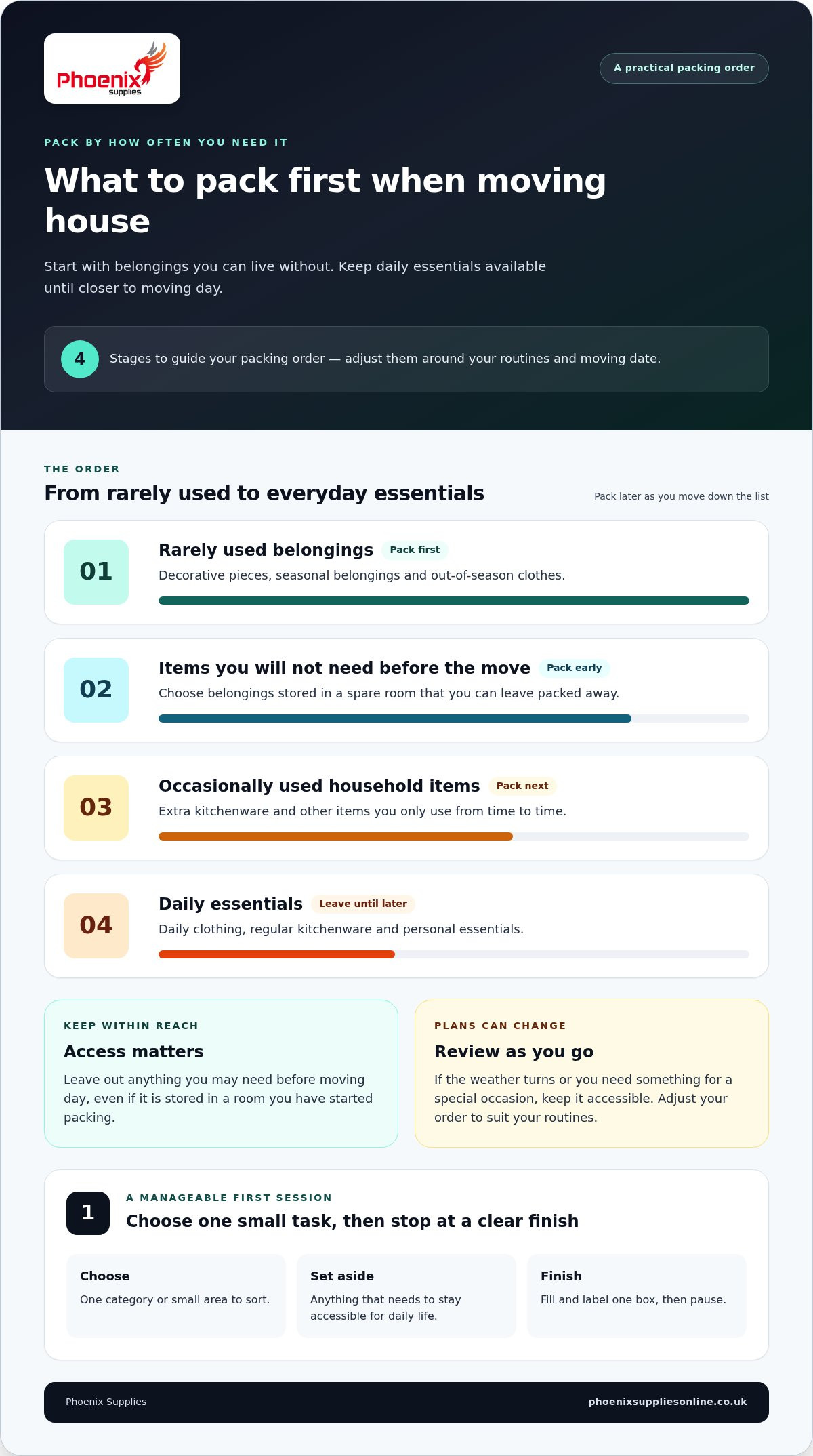
A simple order might look like this:
- Rarely used decorative pieces and seasonal belongings.
- Items stored in a spare room that you won’t need before the move.
- Occasionally used household items and extra kitchenware.
- Daily clothing, regular kitchenware and personal essentials last.
Use this as a guide, not a strict schedule. Your routines determine what belongs at each stage.
Which belongings can usually be packed well ahead
Out-of-season belongings are often a sensible place to start, such as decorations for a particular time of year or clothes you won’t need before the move. You can also set aside decorative items you rarely use. Start with one defined group, such as the contents of a shelf, rather than emptying several rooms and losing track of what you still need.
Keep anything accessible if your plans might change. If the weather turns or you need an item for a special occasion, you’ll want to find it without opening several packed boxes. The aim is to reduce what’s in everyday use, not to make your home difficult to live in.
What to leave until closer to moving day
Keep daily clothing, frequently used kitchen items and personal essentials available for as long as you need them. A household that cooks most meals at home may want to leave more kitchenware out than one that relies on a few familiar items. The right time to pack these belongings depends on your routines and moving-day arrangements.
As the move gets closer, notice which items you’ve stopped using and add them to the packing queue. That way, you’re making decisions based on what you actually need, rather than guessing weeks in advance. Where to start when packing a house can change as your needs change, so review your plan and adjust it without treating a new order as a setback.
Once you know what can go first, you can work out which boxes suit those belongings. Browse moving boxes for your household belongings as one practical part of getting ready.
How to group and protect belongings when packing a house
Once you’ve chosen what to pack, decide how to group it. Packing by room is easy to follow and keeps belongings from one area together. Grouping similar items can work better when related belongings are spread around the home or will be used together at your new address. Choose a clear approach and stick with it, so each box has an obvious place in your plan.
There’s no single method for every household. If you’re still deciding where to start when packing a house, think about how you’ll want to find and use things after the move. Spare bedding may make more sense grouped together, even if it comes from more than one room. By contrast, keeping the contents of a desk area together can make unpacking that space easier.
| Method | Useful situation | Practical drawback |
|---|---|---|
| By room | You want belongings from one household area to stay together. | Related items used together may end up in different boxes. |
| By item type or use | Similar belongings are spread across rooms or belong together. | Boxes may contain items from more than one room. |
Room-by-room packing or grouping similar items?
Room-based packing is easy to understand: keep the study’s belongings together, then move on to another area. It’s useful when rooms have clear purposes or you want to unpack one space at a time. Grouping by type or use works well for things such as spare linen kept in different cupboards. To keep the system simple, choose one main method and use the other only when it solves a clear problem.
You can combine the two without making your plan confusing. Keep most boxes linked to a room, then make an exception for a useful group that belongs together, such as spare bedding from several rooms. Note the exception in your packing plan. This helps you remember why those belongings were grouped differently and where you’ll want to take them when unpacking.
Matching packing protection to the item
Use boxes to contain grouped belongings, then decide whether any items need extra protection. Bubble wrap can go around vulnerable belongings, while Furniture Removal Blankets can help protect furniture during a move. Match the material to the item rather than wrapping everything in the same way.
Keep the decision practical. Less delicate belongings may only need a box, while items with surfaces that could be marked may benefit from protective material. Furniture Covers are another option for furniture. Choose protection that suits what you’re moving, without making boxes harder to identify or separating items you’ll want to find together.
Your first house-packing session: a simple sequence to get started
A useful first session has a clear beginning and finish. You don’t need to pack a whole room or set aside a fixed amount of time. Choose one small task, complete it, then decide whether you’re ready to do another. This turns the question of where to start when packing a house into a straightforward routine you can fit around everyday life.
Follow these steps for each task:
- Prepare a clear work area. Choose a practical spot where you can set down a box and keep the supplies for this task together.
- Pick one small job. Choose a shelf, drawer or clearly defined group of belongings, rather than emptying a whole room.
- Pack the items you’ve decided to move. Keep everyday essentials separate and accessible, and use protective material where suitable.
- Label the finished box. Note what’s inside and where it should go, then set it aside before opening another box.
Finishing one box before starting the next helps stop half-packed piles spreading through the house. If you need to stop, you’ll know what’s done and what still needs attention. Keep the routine flexible: one finished box makes a useful session, even if you don’t continue that day.
Set up a small, repeatable packing area
Choose a spot with enough room to work without blocking a doorway or an area you use often. Bring over only what you need for the selected task, such as a box and suitable wrapping material. Keep everyday essentials elsewhere, ready to use. A simple setup makes it easier to return to packing without gathering supplies from around the house each time.
Make the first job specific. “Sort one drawer” is easier to start and finish than “pack the bedroom”. If the drawer contains belongings you still use, take out those essentials first and leave them somewhere familiar. Then pack only the items that are ready to go.
Label boxes so unpacking is easier
Write a clear description of the contents and the room where you want the box to go. For example, “spare towels, bathroom” gives you more information than “miscellaneous”. If a box contains fragile items, mark that clearly so anyone handling it can see the note. Use the same format on each box to make the labels easy to scan.
Finish the label before moving on. If the contents are a mixed group, name the main items instead of using a vague description. You don’t need a long inventory for every box; a few recognisable words can help you find what you need without opening several boxes after the move.
Once you’ve chosen your first task, gather supplies to match it. Choose moving boxes and packing materials for the belongings you’re ready to pack, then focus on finishing one box at a time.
Choose house-packing supplies for each task, then make your next move
Once you’ve chosen what to pack, match the supplies to the job. Having suitable materials ready makes it easier to work through one task at a time, without interrupting your plan to search for equipment. When deciding where to start when packing a house, think first about what you’re putting into boxes and which belongings need extra protection.
Which Packaging Materials support a first packing session?
Moving Boxes give you a practical way to contain grouped belongings. Bubble wrap can add protection for suitable items, while Furniture Removal Blankets and Furniture Covers can help protect furniture during a move. Choose what fits the task in front of you instead of gathering supplies for every room before you begin.
For example, if your first job is packing decorative items, set out a box and bubble wrap for anything that needs an extra layer. If you’re preparing furniture, consider a Furniture Removal Blanket or Furniture Cover. Connecting supplies to a specific task helps you prepare without crowding your work area or ordering materials you don’t need for that session.
A short supply check can help you get ready:
- Choose Moving Boxes for the belongings you’re grouping.
- Set aside bubble wrap for items that need added protection.
- Consider Furniture Removal Blankets or Furniture Covers for furniture.
Add to your supplies as your packing needs develop. This keeps ordering separate from deciding what to pack and lets you choose materials based on the belongings you’re preparing. If you are handling an international relocation or based in the Middle East, dedicated suppliers such as Duboxx Packaging LLC provide purpose-made moving boxes to protect household goods in transit.
How Phoenix Supplies UK can make ordering straightforward
Phoenix Supplies UK is a family run business supplying industry standard Packaging Materials to domestic and commercial customers. The range includes complete house moving packs, boxes, bubble wrap, Furniture Removal Blankets and furniture covers. The online shop is straightforward to navigate, and Phoenix Supplies UK offers competitive prices alongside helpful customer service. If you need help with your order, you can speak to a real person and get clear answers.
Most orders placed by 1pm are dispatched the same day on a free next working day delivery service, subject to geographical restrictions. This can help you plan when to order supplies around your move and keep your packing sessions focused on manageable tasks. The online shop makes it easy to choose materials for the belongings you’re preparing.
You don’t need to organise every supply before you begin. Start with materials for your first task, then add what you need as your plan progresses. Explore house-moving packing supplies to find boxes and protective materials for your next step.
Keep your next packing step within reach
As boxes begin to gather, decide where they’ll wait before being moved. Keeping them together in a suitable area can help you manage the space you still use and keep everyday routes through your home clear.
Think about what you’ll want close at hand when you arrive and where packed belongings should go first. Planning this transition can help you settle in without needing to organise every detail now.
Explore house-moving supplies from Phoenix Supplies UK and choose the boxes and protective materials that suit your move.
Frequently Asked Questions
How far in advance should you start packing for a house move?
Start once your moving date is reasonably clear, allowing time to sort, gather supplies and pack around your usual routines. There’s no single countdown for every home. A household with fewer belongings may need a different plan from a larger one. Check your calendar, choose packing sessions that fit and leave some flexibility in case your plans change.
What should you pack first when moving house?
Begin with belongings you won’t need before the move, such as reference books you’re not using or hobby equipment you can set aside. Keep the items that support your normal routine accessible. If you’re unsure where to start when packing a house, choose one small category and consider whether you’ll need any of it before moving day. That makes the first decision easier.
Can you leave clothes in drawers when moving house?
It’s usually simpler to empty drawers and pack clothes separately, particularly if they contain heavier items or the furniture needs to be lifted. Loose contents can shift, and a full drawer may make a piece harder to handle. If you’re considering leaving lightweight clothing inside, make sure it suits your moving arrangements and that the drawers can stay closed. Keep valuables and personal essentials with you.
What should go in a moving-day essentials box?
Pack items you’ll want soon after arriving, rather than searching through several boxes. Useful choices include phone chargers, toiletries, a change of clothes, medication you take regularly, basic cleaning items and important documents you need that day. Keep keys and anything you’ll need during the journey with you. Think about your household’s first evening and add the practical items that fit your plans.
How do you pack food when moving house?
Use up open, fresh or chilled food before moving where you can, as it may not be suitable to transport. Keep any sealed, non-perishable food you plan to take together, so it’s easy to find and unpack in the kitchen. Set aside snacks or drinks you’ll want on moving day instead of packing them away. Check cupboards and the freezer early to avoid leaving forgotten food behind.
Is it better to pack by room or by item type?
Choose the approach that makes your belongings easiest to locate and put away. Room-based packing can be useful if you plan to unpack one area at a time; grouping by item type may suit belongings stored in different places but used together. If several people are packing, agree on one shared system first. That helps everyone understand where a box belongs without relying on one person’s memory.
Can you pack a house in one day?
It may be possible in some situations, but packing an entire home in one day can be demanding, especially if sorting and preparation haven’t been done. The time needed depends on how many belongings you have, how ready they are to pack and how much help is available. If time is short, focus on the items that need to be ready first and keep essential belongings separate.


