

The easiest moving day is often decided before the van arrives. Knowing what to do the week before you move helps you avoid a last-minute rush, but it can be hard to know which jobs need your attention first.
Focus on the details that could hold things up: unfinished arrangements, essentials packed too soon or a shortage of boxes. A day-by-day plan gives you time to deal with these tasks and protect your belongings properly.
This checklist covers the final seven days, from confirming arrangements and packing items you can manage without to setting aside an essentials bag. It also shows when to check your boxes and protective Packaging Materials, so you can sort out any gaps before moving day. Phoenix Supplies sells moving boxes, bubble wrap, Furniture Removal Blankets and furniture covers to help protect your belongings as you prepare.
Key Takeaways
- Deal with deadlines and essential arrangements first. The final week does not need to be about perfecting every detail.
- Use a flexible seven-day plan to spread out jobs and leave routine packing until later in the week.
- Separate everyday essentials from belongings you can pack ahead.
- Label boxes consistently by room and mark anything you will need straight away.
- Check your remaining boxes and protective materials early, so you have time to fill any gaps.
Week Before Moving House: Set Priorities First
Use the final week to handle priorities, not to make every cupboard or box perfect. Start one list for deadlines, unfinished tasks and people or organisations you need to notify. Add practical details too, such as who will hold the keys, when you can access each property and what needs to happen at handover.
Separate fixed-date jobs from flexible ones. A key handover or agreed collection time needs to stay in the schedule; sorting a drawer can usually wait if something urgent comes up. Assign tasks to days, but leave space for delays, extra packing and household jobs that take longer than expected.
A short priority list helps you focus on the next useful step instead of trying to do everything at once.
How to make a realistic seven-day moving plan
Write down your confirmed moving date, then work backwards from the deadlines you already know. Put tasks that depend on other people, such as agreeing access or arranging a key handover, on the list early. Group similar calls, messages and household jobs together, so you spend less time switching between tasks.
Use the days as a guide, not a rigid timetable. Set aside a block for calls and address updates, another for household arrangements, then time later in the week for packing items you use less often. Leave open space for unfinished packing and unexpected jobs. A general overview of the moving process, including administrative considerations, is available in Relocation (moving house).
Keep the plan somewhere easy to see, such as on paper or in a shared note. Mark each job as done, moved to another day or waiting for a response. That last note shows what needs follow-up without making you repeat a call or message unnecessarily.
Which jobs should take priority before moving day?
Put access, keys and essential household arrangements near the top of your list. Record how you will enter and leave each property, who will hold the keys and any handover details you need to remember. Then schedule tasks that depend on someone else, such as confirming a time or sharing information. These can be harder to rearrange than packing a shelf.
Next, list the household updates that apply to you, including who needs your new address and which services need to know your moving date. Your list should reflect your household and circumstances, so include only the organisations and accounts you use.
Keep flexible home jobs lower down and adjust the order to suit your move. A renter may have different handover arrangements from a homeowner; a larger household may need to coordinate more people and belongings. Choose a few realistic priorities for each day, then leave room to adapt if plans change.
Moving Week Checklist: What to Do Seven Days Before
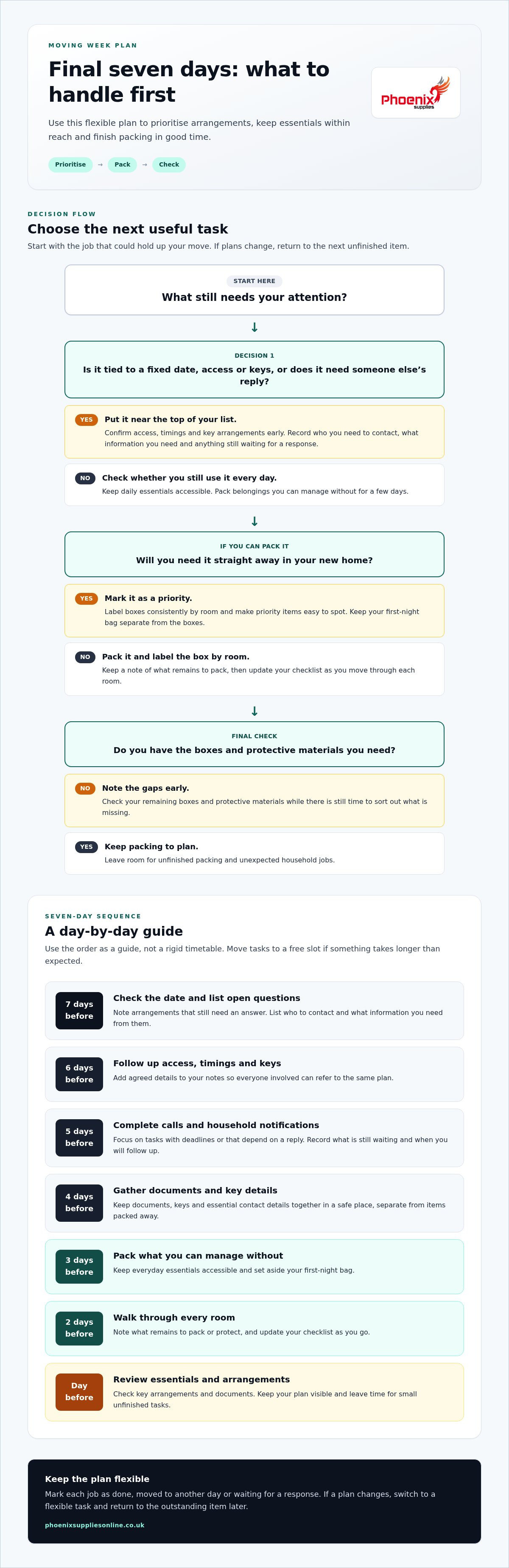
A seven-day plan gives you a useful order for the final jobs, but it is not a fixed timetable. Your moving date, household and outstanding arrangements will determine what fits each day. Use the sequence below as a guide: deal with confirmations and tasks that rely on other people first, then leave routine packing and room checks for later. If a task takes longer than expected, move it to a free slot rather than squeezing everything into one day.
Keep your checklist somewhere easy to update. Review what is still outstanding each day and mark off completed tasks. There is no need to start again from the top; pick up from the next unfinished item.
Seven to four days before: confirm plans and clear loose ends
Use the earlier part of the week for details that could affect other people or the move itself. Reconfirm practical arrangements, access information and how keys will be collected or handed over. Finish calls and messages that need a response, and keep important documents and moving-day details together somewhere safe and easy to reach.
- Seven days before: Check the moving date and note any arrangements that still need an answer. List who you need to contact and what information you need from them.
- Six days before: Follow up on access, timings and key collection. Add agreed details to your notes so everyone involved can refer to the same plan.
- Five days before: Complete outstanding calls, messages and household notifications with deadlines or that depend on a reply. Record anything still waiting and when you will follow up.
- Four days before: Put documents, keys and essential contact details in one safe place. Keep them separate from belongings you will not open until later.
Three days to the day before: finish the remaining essentials
As moving day gets closer, focus on jobs you can finish at home. Pack belongings you can manage without for a few days, but keep everyday essentials accessible. Set aside a first-night bag, and label boxes so you can spot priority items at a glance. The next section explains how to sort and label packed belongings without losing track of what you still need.
- Three days before: Pack items outside your daily routine and keep the first-night bag separate from the boxes.
- Two days before: Walk through each room and note what remains, including anything still to pack or protect. Update your checklist as you go.
- The day before: Review the remaining essentials, key arrangements and documents. Keep your plan visible and leave time for small unfinished tasks.
Adjust the sequence to suit your move. If you are waiting for a reply or dealing with a change of plan, switch to a flexible task and return to the outstanding item later. As you check what remains to pack, review moving boxes and packing supplies to see whether you have the materials you need.
How to finish packing without losing track of essentials
By now, you may have finished the larger packing jobs. The challenge is keeping track of things you still use while closing up the remaining rooms and cupboards. Divide what is left into two groups: items you can pack now and items you will need until the last day. This makes it less likely that everyday belongings will disappear into a box before you are ready.
Keep everyday essentials together and separate from packed belongings, so you can find what you need without opening box after box.
What should you pack now, and what should stay out?
Start with occasional-use belongings, such as books, spare bedding, decorations and clothes you will not need before the move. Leave daily essentials until nearer moving day, then pack them together once you have finished using them. Think through an ordinary morning and evening before deciding what can go into a box.
Set aside medicines, important documents, phone chargers and basic overnight items. Keep them in a clearly marked bag or container that stays with you, not with the packed boxes. Add the personal-care basics you will want for the last day and first night, such as a toothbrush, soap and a change of clothes.
Cleaning products and cloths may need to stay accessible until you have finished using them in each room. Keep only what you still need within reach, then pack it once the final clean or tidy-up is complete. If several people are moving, give each person a small space for their own last-use belongings to avoid mixing them into general boxes.
How to protect and label the last boxes
Choose a moving box that suits the items inside, and avoid filling it so heavily that it is difficult to lift. Small, medium and large moving boxes help you separate different types of belongings; wardrobe boxes are useful for clothing you want to keep together. Before taping a box closed, check that its contents are protected and that you have not packed anything you still need.
For fragile items, use bubble wrap to cushion them and position them so they cannot shift around inside the box. Furniture Removal Blankets can help protect furniture during the move. Match the material to the item instead of wrapping everything in the same way. Check your boxes, bubble wrap and blankets now, while there is still time to fill any gaps.
Keep labels simple and consistent. Write the destination room clearly, then add a short note if the contents are needed first, such as “kitchen, kettle” or “bedroom, first night”. Put priority notes in the same place on each box so they are easy to spot. If you are packing several rooms at once, keep a brief box list by room and update it as you seal each one. This gives you a quick reference without having to unpack to find something.
What to check before leaving your old home
As moving day approaches, set aside time for practical details that are easy to overlook among the boxes. Review who needs your new address, confirm agreed access and handover arrangements, and keep important records somewhere you can reach without unpacking. This part of what to do the week before you move is about closing off loose ends, not adding another round of major jobs.
Which address changes and notifications belong on your list?
Work through the organisations and accounts relevant to your household. These might include your bank, subscriptions, GP practice, energy supplier and the DVLA. Note which ones you have updated, which still need a message and what information you will need to provide. If you share the task with someone else, record who is handling each update to avoid missed messages or duplicates. If you are also managing bottled fuel or gas appliances during a move, consulting safety guidelines such as this guide to LPG cylinder exchange Cape Town can provide a practical model for safe disconnection and handling procedures.
Royal Mail redirection is another option if you are concerned about post reaching your old address. Royal Mail asks for at least five working days’ notice to set it up, so review the current requirements promptly if you want to use it. Keep any confirmation or reference details with your moving documents.
Put key contacts, confirmation messages and household records together in one accessible folder, either paper or digital. Include your new address, agreed access details and any handover information you may need. Keep the folder with you during the move rather than placing it in a box.
How to do a final walk-through before handing over
Once the main belongings are out, check each room in the same order. Open cupboards and drawers, look behind doors and check storage spaces, including areas you may not use every day. A phone torch can help you see inside dark cupboards or corners. If more than one person is checking, agree who will cover each area.
- Bedrooms and living areas: Check wardrobes, shelves, drawers and spaces behind furniture for belongings left behind.
- Kitchen and bathroom: Look through cupboards and drawers, then check that personal items and household essentials have been removed.
- Storage areas: Check sheds, loft spaces or other storage areas included in your move, as well as cupboards near the entrance.
- Final check: Gather all keys and note any agreed meter readings or handover details. Check windows, taps and lights before you leave.
Follow the agreed handover plan and pass on keys as arranged. If you are still preparing furniture or belongings for transport, browse moving protection supplies to find boxes and covers for the items that need them.
The final supply check: get ready for moving day
Before tackling the last packing jobs, take stock of what remains and what you already have. Clean, suitable boxes and household materials may cover some tasks, while other belongings need purpose-made protection. Focus on filling specific gaps rather than ordering supplies you will not use. A short check now can help prevent a pause in packing because you have run out of the right box or wrapping material.
Work from the items still to pack rather than estimating for the whole house again. Note what needs a box, what needs cushioning and which furniture needs a cover or blanket. Then compare that list with your available supplies.
How to decide whether you need more packing materials
Count the belongings still to pack and check your stock of boxes and protective materials. Consider the type and size of each item. Smaller belongings may suit small moving boxes, while larger items may need a different size. Clothing you want to keep together may be easier to pack in wardrobe boxes.
Match protection to the job. Bubble wrap can cushion fragile belongings, while furniture covers or Furniture Removal Blankets may suit furniture that needs protection during the move. Use clean, suitable materials you already have, then note what is missing. Gather your supplies in one place and check which boxes are usable and the right size before placing an order.
Where Phoenix Supplies UK fits into your final-week plan
Phoenix Supplies UK is a family-run supplier of packaging and moving supplies, including moving boxes, wardrobe boxes, bubble wrap, Furniture Removal Blankets and furniture covers. The website is easy to navigate, so you can find supplies to match the jobs on your list and place an order. The dedicated office team provides helpful customer service and clear communication.
Most orders placed by 1pm are dispatched the same day on a free next working day delivery service. Delivery times vary by product, and some products have a delivery time of up to three weeks, so allow for the timeframe shown for the items you choose.
Once you have identified any gaps, browse moving boxes and protective supplies for the remaining jobs. Choose the materials you need to finish packing and keep them close at hand.
Make space for a smoother first day
Once you arrive, take a moment to get your bearings before opening boxes. Choose a clear place for bags and coats, then set aside the things you will need straight away. Having space to move around can make the new home easier to manage from the start.
Keep your first unpacking goal modest. Set up one useful area, such as a place to sit or a clear surface for making a drink, then take a short break. Decide what to tackle next once you have settled in, and if you are preparing a supportive living space for an older relative, Find Memory Care offers products designed to create safe, dementia-friendly environments from day one.
The final week is about making room for a fresh start, not getting every detail right. Take the day one step at a time and let your new home come together at a pace that suits you.
Frequently Asked Questions
What should I do seven days before I move?
Seven days before moving, focus on tasks that could make the move harder if left until the last moment. Check whether bulky belongings need dismantling, whether you need to clear items you are not taking and whether you have enough space to organise packed boxes. List these less routine jobs, then decide which ones need attention first. The phrase what to do the week before you move should lead to practical priorities, not perfection.
What should I pack last when moving house?
Pack tools and small parts needed to take apart furniture only after you have finished using them. Keep screws, brackets and other fittings together in a labelled bag with the item they belong to, so they are easier to find when you reassemble it. If a piece of furniture can stay assembled safely, leave it that way. Keep accessible anything you still need to finish preparing the home.
When should I change my address before moving?
Update your address once your moving date is settled, then check for less obvious places that use your old details. These might include online shopping accounts, regular deliveries, loyalty schemes and personal correspondence. Review saved delivery addresses before placing another order, and note any updates you can complete only after moving. This helps reduce the chance of parcels and messages going to the wrong home.
What should I keep with me on moving day?
Alongside your personal essentials, consider what will make a long day of carrying and travelling more manageable. Keep water, easy-to-eat snacks, tissues and hand wipes somewhere you can reach. If children are moving with you, set aside a familiar small toy or activity. For a pet, have its usual lead or carrier ready and keep it close rather than packing it with household belongings.
Should I defrost my freezer before moving house?
Yes, if the freezer is travelling with you, empty and defrost it before it is moved. The time and steps can vary by appliance, so follow the instructions in its manual rather than guessing. Plan ahead to use or move the food, and allow the freezer to drain and dry as directed. If the appliance is staying behind, follow the arrangements agreed for the property instead.
How can I make moving day less stressful?
Keep the day’s practical needs within easy reach and build in short pauses to drink, eat and check what needs attention next. If children or pets are part of your household, decide who will be responsible for them while belongings are being moved. A clear route through the home also makes it easier to carry items without stepping around loose bags or boxes.
What packing materials should I have ready before moving day?
Alongside boxes and protective materials, keep packing tools in one easy-to-find place. Packing tape, scissors and a thick marker can help you close boxes and make clear labels. Check that you can reach these tools without opening packed cartons. If you are using materials from home, set aside only those that are clean and suitable for the belongings they will protect.


