

What if the items you pack first are the ones that should stay out of the moving boxes? Knowing what not to pack when moving house can help you avoid transporting unsuitable belongings and keep the things you need close at hand.
It’s easy to focus on wrapping and labelling, then overlook open food, household products, plants or important documents. Some items may be best used up, donated, disposed of safely or carried separately. Make a plan for anything that needs special handling before moving day, rather than packing it by default.
This guide explains what to leave unpacked, what to handle separately and how to sort belongings you no longer need. You’ll also find practical advice on keeping valuables and everyday essentials accessible, preparing suitable items for the move, and choosing boxes and protective materials for the belongings you’re taking.
Key Takeaways
- Decide what not to pack when moving house early, so you can keep essential belongings accessible and avoid filling boxes with items you won’t take.
- Keep important personal belongings under your own control and set aside what you’ll need straight after arrival.
- Make a plan for items that may need using up, handling separately or leaving behind, rather than assuming everything can travel in the same way.
- Sort belongings with a simple identify, decide, set aside and act routine before packing begins.
- Once you’ve chosen what to take, match it with suitable boxes and protective materials for the move.
What not to pack when moving house: why to decide early
Deciding what to leave out before packing starts can make moving day calmer and more organised. It gives you time to work out what needs to stay close, what should travel separately and what you’d rather not take to your new home. Consider how useful each item will be, how it needs to be handled and when you’ll need it.
In practice, what not to pack when moving house means belongings to keep accessible, carry separately, use up or pass on, rather than placing everything in a box for the move.
Is it better to leave an item unpacked or leave it behind?
Unpacked doesn’t always mean unwanted. You might need your keys, phone charger or a change of clothes during the move, while paperwork or a small valuable may be easier to keep under your own control. By contrast, heavy bedroom furniture or an awkward gadget might not be worth the effort of moving if you plan to refresh your space with a specialist like Belfast Bed Superstore. Let your household’s needs and plans for the new home guide the decision.
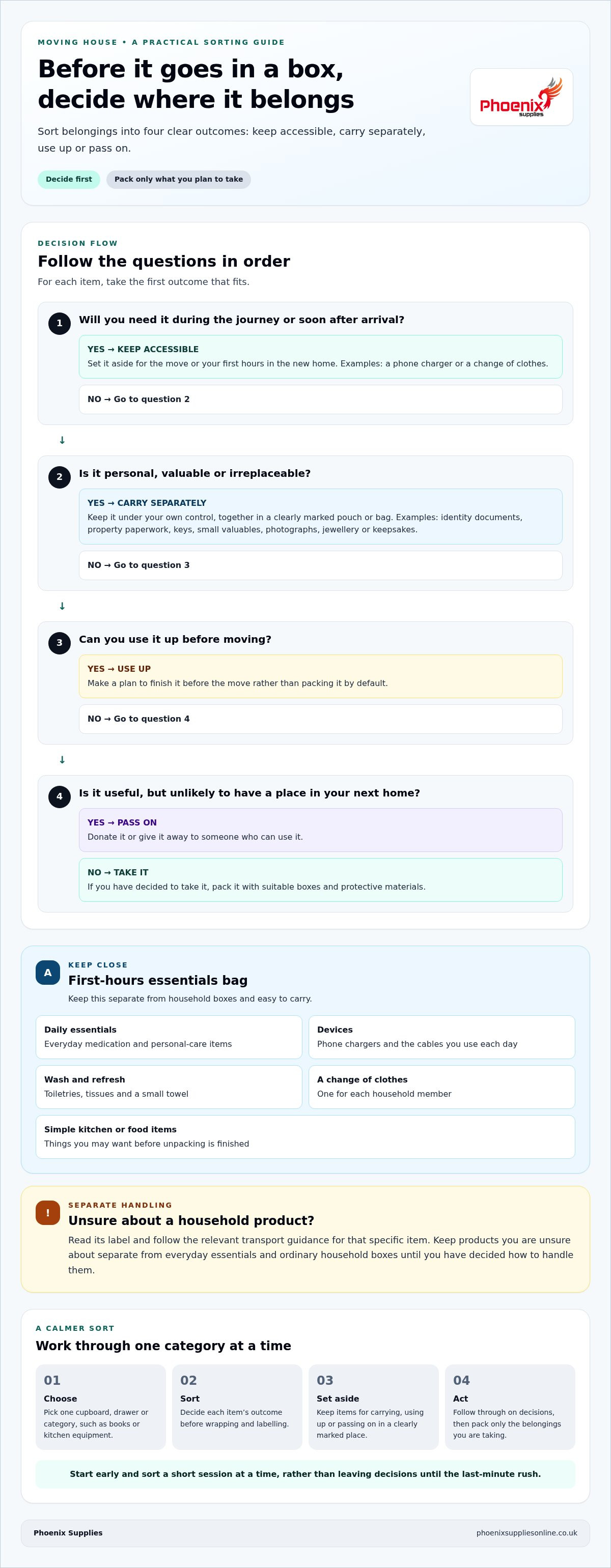
Give each item one of four outcomes:
- Keep accessible: Set aside anything you’ll need during the journey or soon after arrival.
- Carry separately: Keep personal or valuable belongings with you rather than burying them in a packed box.
- Use up: Make a plan for items you can finish before moving, rather than packing them by default.
- Pass on: Donate or give away useful belongings that don’t have a place in your next home.
Keeping valuables in your own care can also make it easier to know where they are throughout the move. For context on why people take care over moving arrangements, Understanding Moving Scams outlines examples of scams connected with moving.
Decide what not to pack before the last-minute rush
Leave time for decisions before you start filling boxes. Choose one cupboard, drawer or category at a time, such as books or kitchen equipment. Sort the contents first, then pack only the items you’ve decided to take. This keeps decisions separate from wrapping and labelling, when it can be tempting to put everything in a box just to clear a surface.
Keep a clearly marked place for items that need a different next step. Once you’ve sorted a category, act on those decisions promptly: set aside what you’ll carry, use up what you can and arrange to pass on anything you no longer need. If you’re planning supplies as well, The Ultimate Packing Materials List for Moving House in 2026 can help you think through what you’ll need for the belongings you are taking.
A short sorting session at a time is easier to manage than a whole-house clear-out at the end. Start early to give yourself room to make practical choices without rushing.
What should stay out of moving boxes: essentials, valuables and personal items
A box can be labelled clearly and still be the wrong place for something you need at short notice. Keep a separate bag for the move itself and your first hours in the new home, then keep irreplaceable belongings under your own control. This simple split makes it easier to find what matters without opening several boxes.
For this part of deciding what not to pack when moving house, think about access as well as protection. A sealed box may suit household belongings you won’t need straight away, but it’s less practical for documents, daily medication or anything you want to keep with you.
Which documents and valuables should you carry separately?
Gather identity documents, property paperwork, keys and small valuables in one clearly marked pouch or bag. Keep it somewhere you can reach easily, and return items to the same place after using them. Don’t put irreplaceable photographs, jewellery or personal keepsakes in general household boxes. Keeping these items together makes them easier to account for as you move between homes.
Think beyond official paperwork. A spare set of keys, a written note of important contact details or a small item with personal meaning may be easy to overlook during packing. Decide which belongings you’d rather keep close, and set them aside before boxes are taped shut.
What belongs in your first-day essentials bag?
Pack a separate bag for things you may need before the rest of the household boxes are unpacked. Make it easy to carry and distinct from boxes intended for the move. Include the basics that suit your household, such as:
- Everyday medication and personal-care items.
- Phone chargers and the cables you use each day.
- Toiletries, tissues and a small towel.
- A change of clothes for each household member.
- Simple kitchen or food items you’ll want before unpacking is finished.
Keep the bag with you, not buried among packed belongings. If clothing is travelling in boxes, decide which outfits you’ll need first and keep those accessible. Organising the rest of your wardrobe separately can make unpacking easier once you arrive.
Household products need their own plan. Read each product label and follow the relevant transport guidance for that specific item. Keep products you’re unsure about separate from everyday essentials and ordinary household boxes until you’ve decided how to handle them.
Phoenix Supplies UK is a family run business supplying moving boxes and protective materials. Browse moving-day packing supplies for belongings you’re taking.
Open food, plants and paint: items to use up or handle separately
Open food, plants and paint don’t all need the same answer. The practical choice depends on what the item is, how it should be handled and your plans for the move. “Do not box” can mean use something up, keep it separate or make another plan. It doesn’t automatically mean throwing it away.
Use this quick guide to decide what to do with common items before packing:
| Item | Why it needs thought | Practical next step |
|---|---|---|
| Open or perishable food | It may be awkward to pack or may not keep well during the move. | Plan meals around suitable food before moving day. Set aside anything you’ll take separately. |
| Liquids and household products | Containers may leak, and some products have specific handling guidance. | Read the label and relevant transport guidance. Keep products separate from ordinary belongings. |
| Houseplants | Plants have individual care needs and may be affected by how they’re moved. | Check care instructions and transport guidance, then decide how each plant will travel. |
| Paint | Its label may give storage or handling information that affects your plan. | Read the product label and applicable transport guidance before deciding whether to take it. |
How should you deal with open food and household products?
In the days before the move, look through your cupboards and fridge. Use suitable open food in meals where practical, and avoid packing items you’re unlikely to use at the new home. For food you do plan to take, make a separate plan rather than automatically putting it in a general household box.
Keep liquids and household products apart from ordinary boxed belongings. Check each label for storage and handling instructions, and follow applicable transport guidance for that specific product. Don’t assume every container can be packed in the same way.
Should you pack plants and paint when moving house?
Plants and paint need an individual decision, not a blanket rule. A plant you want to keep may need a plan based on its care instructions and how it will travel. For paint, read the label and relevant transport guidance before packing. If either item can’t be moved as planned, consider whether it can be used, passed on or handled another suitable way.
This is a useful part of deciding what not to pack when moving house: identify the item, check its needs, then choose whether to box it, keep it separate or leave it behind. A little preparation can help avoid leaks, wasted food and rushed decisions, while making sure useful belongings aren’t discarded by default.
How to sort belongings you will not pack before moving day
A clear sorting routine helps you keep useful belongings out of the discard pile and unwanted items out of moving boxes. Work through one cupboard, drawer or category at a time, and make decisions before packing that area. This keeps sorting separate from the pressure to fill boxes and gives each item a clear next step.
Use this sequence: identify what you have, decide whether it’s going with you, set it in the right place, then finish the action you’ve chosen. If something needs special handling, keep it apart from ordinary packed belongings until you’ve decided what to do with it.
Use a four-way sort: keep accessible, carry separately, use up or pass on
Set up four clearly marked spaces, bags or containers. Keep accessible is for things needed during the move or just after arrival. Carry separately is for belongings you want under your own control. Use up is for suitable items you can finish before moving. Pass on is for useful things your household no longer needs.
As you sort, place each item directly in its category rather than making a mixed “deal with later” pile. Put donations or other items for responsible disposal in a separate area, away from boxes you’re taking. This makes the difference visible and reduces the chance of an unwanted item being packed by mistake.
Make a short final check before sealing boxes
Before taping a box shut, pause and check its contents. Make sure daily essentials, important documents and valuables haven’t ended up at the bottom. Look for open food, liquids or anything that needs separate handling, and move it out if it doesn’t belong with the box’s other contents.
A simple label can help identify the box’s intended room or contents, but it won’t replace checking what’s inside. If you find something that needs another decision, set it aside and return to it once the box is closed. Don’t let one uncertain item turn into a last-minute reshuffle of everything you’ve packed.
This final check brings the earlier decisions together: keep what you need handy, separate what you’ll carry yourself, use suitable items where practical and pass on belongings you no longer want. If you’re planning the supplies for the items you are taking, How to Buy Moving Boxes Online in the UK: The 2026 Guide to Packing Kits offers a related next step.
Once you’ve sorted what’s staying, choose moving boxes and protective packing materials to prepare the belongings you’re taking to your new home.
Pack the right belongings with suitable moving boxes and protective materials
Once you’ve decided what should stay accessible, travel separately or be left behind, focus on the belongings going to your new home. Leave unsuitable items out of boxes, then choose packaging that suits what you’re taking. Matching materials to each item gives you a clear plan without adding supplies for things that won’t be packed.
Think about what each item needs: a container for household belongings, wrapping for items that need protection, or a cover for furniture. Group similar belongings together so it’s easier to organise boxes and find the right materials as you prepare each item.
Match packaging materials to the belongings you are taking
Moving Boxes provide a practical way to group suitable household belongings. Use them for items that can be packed together, and keep the contents focused so they’re easier to organise at the other end. Leave out anything you’ve decided to use up, carry separately or pass on.
For other belongings, consider which type of protection suits the item:
- Bubble Wrap can be used to wrap belongings that need protective packing.
- Furniture Covers provide a covering for furniture during a move.
- Furniture Removal Blankets offer another option for protecting furniture as it is moved.
Choose materials based on the belongings you’re taking, rather than packing every item in the same way. Keeping furniture protection separate from general boxes also helps you find the right material as you prepare each piece. For broader requirements such as custom printed labels or specialised boxing, commercial specialists such as printitza.co.za demonstrate how tailored print and packaging solutions can help keep inventory organised.
Choose a straightforward next step for your packing supplies
Make a short list of what you’re taking and the materials that suit those items. Phoenix Supplies UK is a family run business supplying packaging materials for household moves. Its website is clear and easy to navigate, making it straightforward to browse relevant categories and place an order. Most orders placed by 1pm are dispatched the same day on a free next working day delivery service, subject to geographical restrictions. Helpful customer service is available if you need support.
Once you’ve finished sorting, choose packaging that matches what remains. You can explore moving boxes and protective packaging for the belongings you’re taking.
Set up a clear plan for moving day
Before the final packing session, give the items that won’t go in boxes a clear place and purpose. Keep what you need close at hand, and set aside belongings travelling separately. A visible plan helps everyone in your home know what is ready to go and what should stay accessible.
Knowing what not to pack when moving house is part of getting ready. Once you’ve decided what’s going, choose packaging that suits those belongings and prepare them at a steady pace.
Phoenix Supplies UK is a family run business. Its range includes Moving Boxes, Bubble Wrap, Furniture Covers and Furniture Removal Blankets for belongings you’re taking to your new home.
Explore moving boxes and protective packaging and take the next step towards a more organised move.
Frequently Asked Questions
What should you keep with you when moving house?
Keep important documents, keys, medication and essential personal items with you, rather than in a box that may be hard to find. A small bag or folder can hold identity documents, property details, a phone charger and anything you’ll need during the journey. This is a practical way to apply what not to pack when moving house: keep vital belongings close, even if they’re coming to the new home.
Can you pack cleaning products when moving house?
Some cleaning products may be suitable to move, but the product and transport arrangements matter. Read each label and follow its storage and handling instructions. Keep products separate from ordinary belongings and follow the relevant guidance for that specific product. Make a separate plan for anything that should not be packed with household items.
Should you move open food to a new house?
You can decide item by item. Use suitable open food before moving if practical, and consider whether anything you plan to take can be kept as required during the journey. Don’t mix loose or open food with general household contents. For food you won’t use, choose a suitable way to pass it on or dispose of it. Check any storage instructions that apply to the food.
Can you take plants with you when you move house?
You may be able to take plants, but make an individual plan for each one. Check its care needs and the transport arrangements for your move. If a plant won’t suit the journey, consider passing it on to someone who can care for it rather than leaving the decision until the last moment.
What should you do with unwanted items before moving?
Separate useful belongings from anything you no longer want, then choose a next step for each item. Suitable possessions could be offered to someone who can use them, while items needing special handling should be kept apart from packed goods. For disposal advice, check your local council’s guidance, as arrangements can vary. Avoid leaving mixed piles until moving day, when it may be harder to keep track of what is going.
Should valuables go in moving boxes?
Keep irreplaceable or particularly important valuables out of general household boxes. Carry items such as jewellery, sentimental keepsakes and small personal treasures under your own control. A short written list can help you remember what you’ve set aside and check that it arrives with you. If an item is too large or awkward to carry personally, make a separate plan for it rather than placing it in a box without considering how it will be handled.
What should you pack last when moving house?
Pack the belongings you’re still using last, so they remain available until you’re ready to leave. This might include the final toiletries, everyday kitchen items or the bedding you’ll need on your last night. Once packed, label the box clearly and keep it accessible rather than placing it out of reach. Leave out anything needed for the journey or property handover, then check the space before you go.


