

A long-distance move is easier to manage when you plan the journey and unpacking together. These tips for a long distance move within the UK will help you decide what to organise early, what to keep flexible and how to keep essentials easy to find when you arrive.
There’s more to coordinate than packing when your new home is a long drive away. Consider travel times, access at both addresses and how your belongings will be loaded. A clear plan can help moving day feel less rushed and reduce the chance of items shifting in transit.
This practical checklist covers the key steps, from setting a timeline and preparing boxes to keeping everyday essentials separate. It also explains how useful Packaging Materials, including Moving Boxes, Bubble Wrap and Furniture Removal Blankets, can support careful handling.
Phoenix Supplies UK is a family run business. A clear, manageable plan can make your move easier to organise. Start with the tasks that need attention first, then use this checklist to prepare for the journey and your first day in your new home.
Key Takeaways
- Use these tips for a long distance move within the UK to plan journey timing, access and tasks in a sensible order.
- Pack and label belongings clearly, group items thoughtfully and keep boxes manageable to lift and stack.
- Compare a one-day move with a staged plan to understand how each affects coordination, access and overnight essentials.
- Use a final checklist for packing, travel and arrival, and keep personal essentials within easy reach.
- Choose suitable Moving Boxes, Bubble Wrap and Furniture Removal Blankets to prepare belongings for the journey.
Why a long distance move within the UK needs a different plan
A longer journey affects the order of your decisions. Travel time influences when you leave, when you can reach the property and how much room you have to handle delays. Access at both ends matters too. Key collection, entry arrangements and a place to unload all need to fit the travel plan. A change to one detail can affect several others.
Long-distance planning brings travel, access and belongings into one sequence. Keep that connection in mind as you organise the move. There is no single mileage threshold that makes every UK household move long-distance. Consider how long your journey is, who is travelling and how your belongings will reach your new home.
Keep a shared note or paper checklist of decisions, dependencies, contact details and outstanding tasks. Record what is settled, what depends on another arrangement and when you’ll follow up. These practical tips for a long distance move within the UK can help you spot clashes early instead of trying to resolve them on the road.
Which details should you settle before packing?
Before filling boxes, write down the arrangements that shape the move. A shared reference helps everyone prepare belongings in the right order and stay up to date.
- Record the confirmed moving date, key collection arrangements and access details for both properties.
- Note who is travelling, how each person will get to the destination and how household goods will travel.
- List decisions still pending, name the person responsible for each and set a follow-up date.
If you’ll arrive separately from your belongings, for example, note who can access the new property and when. Connecting the people, keys and delivery arrangements can prevent a gap in the plan. For larger moves requiring dedicated transport, working with a specialist road freight provider like Evolve Haulage makes it easier to coordinate collection times, journey schedules and safe arrival.
How can you make a long move feel manageable?
Break preparation into short stages, such as confirming arrangements, sorting belongings, packing and final checks. Give each stage a clear next action. Separate must-do arrangements, such as access and travel plans, from flexible preferences, such as which non-essential items to unpack first. This makes it easier to adapt if a date or journey detail changes.
A general moving-house checklist can cover routine jobs, but add a section for distance-specific decisions. Include travel timing, arrival arrangements, contact details and anything that depends on another person or event. Review the list regularly, updating completed tasks, new decisions and follow-up dates. A simple record turns a complicated move into manageable steps.
How to pack belongings for a longer journey
For a longer trip, packing needs to do more than fit everything into boxes. Belongings may be handled at several stages, so clear organisation makes loading, unloading and finding items easier. Choose suitable boxes, close them securely and group belongings by the rooms they’re going to.
Clear labels identify each box’s room, contents and handling needs. Write on more than one visible side so the information can still be read when boxes are stacked. Mark fragile items clearly, but remember that a label supports careful handling rather than guaranteeing it.
Distribute weight sensibly. Put heavier items in smaller boxes and lighter belongings in larger ones, so each box stays manageable to lift and stack. Avoid empty space that lets contents shift, but don’t overfill boxes or make them difficult to carry. These tips for a long distance move within the UK can help you prepare belongings for longer transit and keep unloading straightforward.
How should you organise boxes for loading and unloading?
Group items by destination room and keep similar belongings together where practical. Pack kitchen items together, for example, rather than mixing them with bedroom contents. Label at least two visible sides with the room and a brief description, and mark fragile contents clearly. Keep a simple box list and note priority items, so you can find what you need without opening every box after arrival.
For televisions and clothing, follow guidance suited to those items rather than packing them like ordinary household contents. A separate list of packing materials can help you gather the right supplies before you begin.
Which supplies help protect furniture and fragile belongings?
Wrap suitable fragile items in Bubble Wrap, then position them so they’re supported and less likely to move inside the box. Use Furniture Removal Blankets to protect furniture and appliances during moves. Keep related parts or accessories together in a labelled bag or box, and note where you’ve packed them. Plan clothing separately so garments are easier to unpack and put away.
Choose supplies to suit what you’re packing. Bubble Wrap and Furniture Removal Blankets are among the options Phoenix Supplies UK supplies for preparing belongings for a move.
One-day or staged move: compare the logistics before deciding
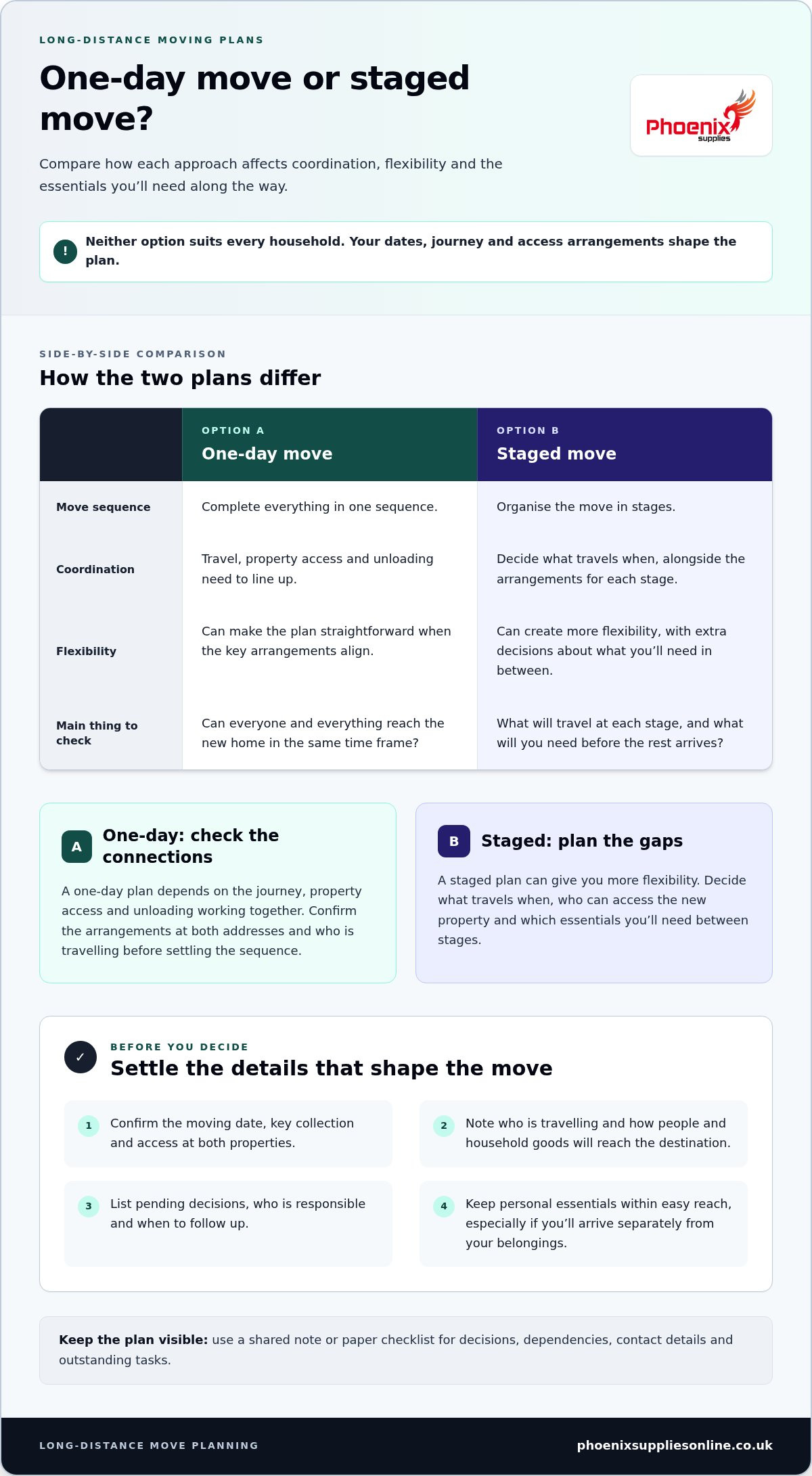
A one-day move and a staged move organise the same journey in different ways. Completing everything in one sequence can make the plan straightforward, but it depends on travel, property access and unloading lining up. Staging the move can create more flexibility, though you’ll need to decide what travels when and what you’ll need in between.
Use this comparison to consider the practical differences. Neither option suits every household. The right arrangement depends on your confirmed dates, journey plans, property access and whether everyone and everything can reach the new home in the same time frame.
| Planning point | One-day move | Staged move |
|---|---|---|
| Coordination | Loading, travel and unloading follow one planned sequence. | People and belongings may travel at different times, so track timings separately. |
| Overnight essentials | Keep a small set of essentials handy in case arrival or unloading takes longer than planned. | Set aside what you’ll need between stages, including an overnight bag if required. |
| Access dependencies | Key collection and access at the new property need to fit the arrival plan. | Plan who can enter the property and when each part of the move takes place. |
| Flexibility | A change in timing can affect the rest of the day’s sequence. | Separate stages may give you more room to adjust, but add arrangements to manage. |
Use the table as a prompt, not a fixed rule. Write down which arrangements are confirmed and where a change could affect the next step. These tips for a long distance move within the UK are most useful when they reflect your actual schedule, rather than an assumed distance or standard moving day.
When might a one-day plan suit your circumstances?
A one-day plan may suit you if loading, travel and unloading can happen in a clear sequence. Work backwards from your expected arrival time, allowing for the journey, key collection and access to the property. Set out a backup plan if timings change, including who to contact and which belongings must stay accessible if unloading is delayed.
What should you plan if the move is staged?
If people and belongings travel at different times, decide what stays with each person and what goes with the household goods. Plan an overnight stay or temporary gap if your household needs one. Keep essential documents, medication and valuables with the person responsible for them, rather than placing them in the main load.
- Set aside a change of clothes, toiletries and chargers for the gap between stages.
- Keep keys and important contact details easy to reach.
- Note which essential items are travelling with each person.
A long-distance moving checklist for the final preparation and journey
Use this sequence to carry your plan from the last checks at your old home through to settling into the new one. Tick off each step as you complete it, and keep the list somewhere everyone involved can find it. A general moving-house checklist can cover routine tasks. Add these journey and arrival checks for the extra coordination a longer trip requires.
What should you check before leaving the old home?
Do a final walk-through before setting off. Check each room and storage space, then confirm the agreed access arrangements have been followed. Keep keys, contact details and essential documents together in a clearly identified personal bag, not among the household goods. If a final task depends on someone else or access to the property, note who is handling it and how you’ll know it’s complete.
What should stay accessible during the journey and on arrival?
Pack medication, chargers, toiletries, a change of clothes and basic first-night essentials separately from the main load. If you’re travelling with a pet, keep its supplies and travel arrangements with the person responsible for it. Mark priority boxes clearly so you can find them at your destination without unpacking everything first.
- Confirm the day’s arrangements. Check your travel plan, key collection details, access at both properties and the contact information you may need on the way.
- Finish and identify the packed boxes. Close each box securely, check that labels are visible and note which boxes contain priority items.
- Set aside personal essentials. Keep documents, medication, valuables and first-night items in a bag that stays with the person responsible for them.
- Walk through the old home. Check rooms, cupboards and storage spaces. Complete any agreed access task and note anything still outstanding.
- Keep travel needs to hand. Make sure chargers, toiletries, a change of clothes and any pet supplies are accessible during the journey.
- Check the new home on arrival. Follow the access plan, locate priority boxes first and keep essentials nearby while the rest of the load is unloaded.
Keep essential personal items accessible, not buried in the load. This simple step can save time when you arrive tired or need something before unpacking. These tips for a long distance move within the UK work best when you adapt the sequence to your travel and access arrangements.
Once your checklist is ready, gather the boxes and protective materials you need for final packing. Browse Moving Supplies for options to prepare for moving day.
Prepare your packing supplies for a smoother move with Phoenix Supplies UK
With your journey, access arrangements and packing plan in place, the right supplies can help you prepare belongings in an organised way. Phoenix Supplies UK is a family run business supplying Packaging Materials for household moves, including Moving Boxes, Bubble Wrap, Furniture Removal Blankets and complete house moving packs.
Start with a room-by-room list. Note what needs boxing, what needs wrapping and which furniture or appliances need a protective covering. This gives you a practical view of what to gather before packing begins, rather than relying on guesswork.
Which packaging materials can help with a household move?
Choose supplies to suit the belongings you’re preparing. Moving Boxes help you group household items for transport. Bubble Wrap is a wrapping option for suitable fragile belongings, while Furniture Removal Blankets protect furniture and appliances during moves.
- Moving Boxes: Choose boxes to suit the belongings and rooms you’re packing.
- Bubble Wrap: Wrap suitable fragile items before placing them securely in a box.
- Furniture Removal Blankets: Use these for furniture and appliances that need protection during the move.
- Complete house moving packs: A pack can bring together supplies for a household move.
Make your list specific. Note the rooms you’re packing, the fragile items that need wrapping and the larger furniture pieces that need covering. This makes it easier to keep track of supplies as the move takes shape.
How can you make ordering and preparation straightforward?
Keep your supplies list beside your packing plan and update it as you sort each room. The Phoenix Supplies UK website is clear and easy to navigate, so you can browse relevant categories. If you need help, the team provides friendly customer service from real people, with clear communication.
Group your list into boxes, wrapping and furniture protection. Then set supplies aside by room or packing stage, so they’re easier to find as you work. Complete house moving packs can bring together supplies for a household move in one practical option.
The planning and packing steps in these tips for a long distance move within the UK help you decide what to prepare. Phoenix Supplies UK supplies the packaging materials. Browse Moving Supplies for options for your household move.
Take the next step towards moving day
Before the move starts to feel like one enormous job, turn your plan into a short list of actions you can complete in order. Set aside time to check dates and access arrangements, then decide what to prepare next. One clear next step is easier to manage than trying to solve every detail at once.
Keep your notes somewhere easy to update as plans develop. If a journey detail changes, you can see which arrangements depend on it and adjust the relevant tasks. If others are helping, make sure everyone knows their responsibilities and where to find the latest plan.
Use these tips for a long distance move within the UK as a starting point, then shape the plan around your household, travel and belongings. When you’re ready to prepare your packing supplies, browse Moving Supplies for your move.
With a practical plan and the right preparation, you can take moving day one step at a time and look forward to settling into your new home.
Frequently Asked Questions
How far in advance should I start planning a long-distance move?
Start as soon as your moving date is likely, so you have time to arrange travel, access and help with the move. For a longer relocation, allow around six to eight weeks where possible, especially if you’re moving during the busier summer months. Treat this as a guide, not a fixed rule. If your date is uncertain, begin with tasks you can do early, such as sorting belongings and listing arrangements to confirm.
Can I travel to my new home separately from my belongings?
Yes. If you’ll travel separately, share your expected journey times with the people involved and agree how you’ll update each other if plans change. Save the route and key contact numbers somewhere you can access without relying on a phone signal. These tips for a long distance move within the UK can help everyone know when to expect you and what to do if travel takes longer than planned.
How do I move house with pets over a long distance?
Prepare your pet for the journey before moving day. If it’ll travel in a carrier, let it spend calm, short periods in it beforehand so the space feels more familiar. Ask your vet for advice if your pet has health or travel needs, and plan suitable breaks around its usual routine. Check that its identification details are current, and give it time to settle quietly once you reach your new home.
Can I take houseplants with me on a long-distance move?
Often, yes, if the plants can travel safely and remain accessible. Keep them upright, protect pots from tipping and avoid placing heavy items on top. Consider how long they may be in transit and whether conditions inside the vehicle could be unsuitable. If you have a large collection, decide which plants are practical to move and prepare a separate space for them at your destination.
What should I do if my moving date changes?
Tell everyone whose arrangements depend on the date as soon as you know it has changed. Review key collection, property access, travel plans and any help you’ve arranged, then update your central task list so the latest information is clear. Check which tasks can stay as planned and which need new dates. If you’ve ordered packing supplies, review the delivery details against your revised schedule.
How can I keep important documents safe during a house move?
Make digital copies of key paperwork before moving day and store them securely, separate from the originals. This gives you a reference if you need details while the originals are packed away or temporarily misplaced. Keep a short inventory of the originals you’re taking, such as identity, tenancy or property paperwork, and check the list once you’ve arrived. Avoid sharing copies through unsecured messages or public devices.


