

Packing isn’t the only thing that can make moving day stressful. The things to do before moving out of a rental UK tenants need to plan also include checking the tenancy agreement, recording the property’s condition and arranging the handover. A checklist helps keep these jobs visible while you sort your belongings.
Start with your agreed move date and work backwards. This practical guide covers what to do before you leave, from checking your tenancy documents and taking condition photos to organising keys and notifying relevant services.
A simple plan can also keep packing and address changes under control. Use boxes, wardrobe boxes and bubble wrap to sort and protect your belongings, and keep a written record of the handover. Work through the steps at your own pace so the final days feel more manageable.
Key Takeaways
- Start with your agreed move date and tenancy paperwork, then build a clear plan around them.
- Compare the property with your original inventory and record its condition room by room.
- List household services and address updates, and note when each change is complete.
- Use this checklist to pace your packing and keep everyday essentials easy to find.
- Finish with a final property check and a written record of how you returned the keys.
Moving Out of a Rental: Start With Your Tenancy
Start with the move date you’ve agreed, then work backwards. This gives you a fixed point for planning the handover, packing and household administration. First, gather the paperwork that sets out what you’ve agreed to do.
Read your documents before setting tasks or assuming how much notice you need to give. Look for the arrangements that apply to your tenancy, any property requirements and instructions for returning keys. If a date or instruction is unclear, write down the question and ask your landlord or agent in writing. Keep the reply with your other tenancy records.
Which tenancy documents should you find first?
Put your signed tenancy agreement together with any later written changes or renewal documents. Add the check-in inventory, condition report and original property photographs. These give you a starting point for checking the home’s condition and identifying details that may matter at handover.
Keep messages about repairs and maintenance with the relevant records. A digital folder or paper file makes it easier to find information when you need it. Rental processes differ across England, Scotland, Wales and Northern Ireland, so refer to current official guidance for the nation where the property is located. For background on the wider framework, see this overview of Rent regulation in England and Wales.
How can you make a move-out timeline?
Turn the dates and instructions in your paperwork into a short plan. Keep tenancy handover tasks separate from general moving jobs, such as changing your address or arranging belongings. That way, you can see what affects leaving the rental and what helps the move go smoothly.
- Write down the key dates. Record the agreed move date and any notice or handover dates in your documents.
- Schedule early administration. Add tasks that need attention ahead of the final days, such as arranging help and planning how to move your belongings.
- Set out the final tasks. Allow time for cleaning, last-minute packing and key return, following the arrangements in your documents.
- Share the plan. Put tasks in one list for household members and anyone helping with the move. Add who is responsible and when each job needs to be done.
Keep the list somewhere everyone can find it, and update it when arrangements change. A clear timeline makes potential clashes easier to spot and keeps handover details visible alongside the moving-day plan.
Rental Property Checks: Record the Condition Before You Leave
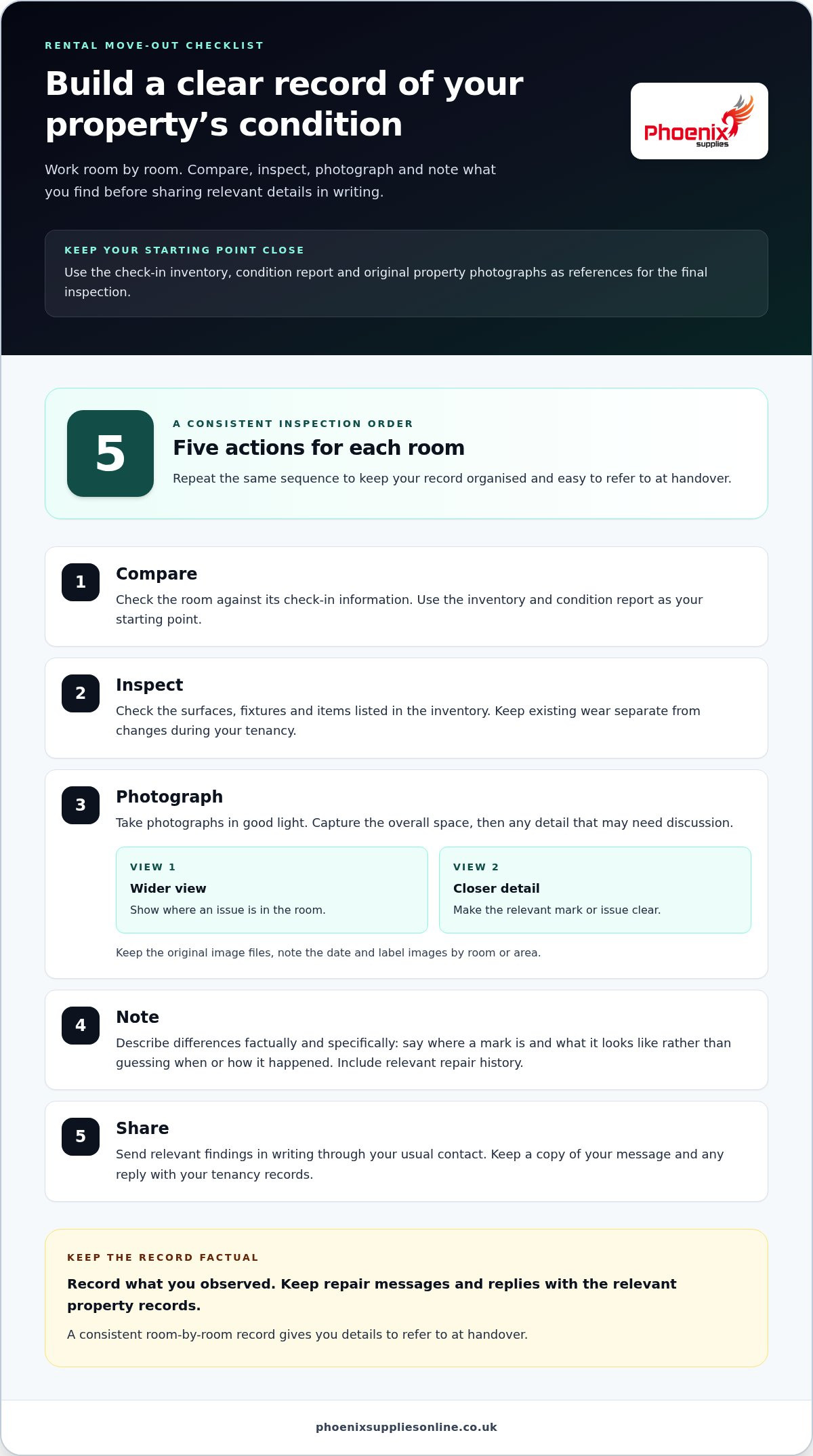
A methodical inspection gives you a clear record of the property at the end of your tenancy. In each room, compare the current condition with the check-in inventory, inspect the details, take photographs and note any differences. Share relevant findings through your usual contact and keep a copy. This gives you a factual record to refer to at handover.
How should you compare the property with the check-in inventory?
Use the original inventory and condition report as your starting point. Work room by room, checking listed items and surfaces against their recorded starting condition. Note existing wear separately from changes during your tenancy. Keep descriptions neutral and specific: record where a mark is and what it looks like rather than guessing when or how it happened.
Take photographs in good light. Start with a wider view to show where an issue is, then take a closer image of the detail. Photograph anything that may need discussion, such as a damaged fixture or a mark that isn’t clear in the inventory. Keep the original image files, note the date and label images by room or area so they’re easy to find.
Keep records of repairs or maintenance you reported during the tenancy, including relevant messages and replies. If an item was repaired, make a brief note of that too. GOV.UK’s guidance on Tenant rights and responsibilities in the UK provides official background for private renters. Your agreement and records are useful references for your specific handover.
What should you do about cleaning and repairs?
Check your agreement for move-out cleaning or property-care instructions. Then plan the work around the rooms and areas you’ve recorded. Requirements can differ between tenancies, so use your own documents as a guide. A room-by-room cleaning list helps you keep track without leaving everything until the final day.
As you clear each room, check the areas you’ve used, including cupboards and appliances. Note any outstanding maintenance concerns factually and send relevant details in writing through your usual contact. Keep a copy of the message and any reply with your tenancy records. Avoid assuming a particular deposit outcome: your evidence can help explain what you observed, but the result depends on the circumstances and the process that applies.
Complete your record in a consistent order:
- Compare the room with its check-in information.
- Inspect surfaces, fixtures and items listed in the inventory.
- Photograph the overall space and any areas that may need discussion.
- Note differences and relevant repair history using factual descriptions.
- Share relevant findings in writing and keep a copy.
Once you’ve recorded the inspection, focus on clearing your belongings without losing track of the property details. Moving boxes and furniture covers can help you organise and protect items as you pack.
Moving Out of a Rental: Sort Utilities, Post and Address Changes
Once your tenancy dates are clear, make a separate list of services and organisations linked to your old address. Mark each item as close, transfer or update. Add the date you contacted the organisation and any next step. This tracker shows what’s complete and what still needs attention, without mixing household administration with the property handover.
Which household services need attention before moving?
Review the services connected with your home, including energy, water, broadband, telephone and television. Follow each provider’s instructions for ending an account, transferring a service or changing the address. If you’re moving to a new property, don’t assume an existing service will move with you automatically.
If the property has meters, plan when to take final readings in line with your move arrangements. Record each reading with the date and keep a copy of anything you submit to the relevant provider. Add useful details to your tracker, such as the contact date, a reference number, the action requested and whether you’re waiting for a response. This makes follow-ups easier and saves you searching through old messages.
How do you keep address changes organised?
Group address updates by type, then work through them one at a time. Your list could include:
- Money and work: banks, building societies, employers and other organisations that need your current contact details.
- Health: healthcare contacts and services you use. Follow their process for updating your address.
- Public services: relevant services and the local councils connected with your old and new homes.
- Personal contacts: friends, family and anyone who may need to reach you soon after the move.
Write a completion date beside each organisation and note any confirmation or action still outstanding. Update your details through the organisation’s own process, and use a secure method for personal or account information. This record can help if a letter or message later goes to your previous address.
For council tax, contact the council for the home you’re leaving with your move-out date and forwarding address. Then contact the council for your new home about your move-in date and account. There’s no automatic transfer between councils, and arrangements can differ across the UK, so follow the relevant council’s current guidance. If your tenancies overlap, check how that affects your circumstances with the councils involved.
If you want letters sent on from your old address, consider arranging Royal Mail redirection to your new one. It can help catch post from organisations you haven’t updated yet, but it doesn’t replace notifying them directly. Add these address and service updates to your checklist so you can see what’s been done and what remains.
A Rental Move Checklist for Packing and the Week Before Moving Day
A steady packing plan helps you keep everyday life going while you prepare to leave. Start with belongings you rarely use, then pack more as moving day gets closer. Group boxes by room and label each with its destination and a short description, such as “kitchen, mugs”. This makes it easier to find what you need when you arrive.
What should you pack first when leaving a rental?
Begin with books, seasonal belongings and items you won’t need before the move. As the date approaches, pack spare kitchenware, ornaments and other non-essentials. Keep everyday clothing, toiletries, important documents and essential chargers accessible until the final stage. Put daily necessities in a separate bag so you don’t have to search sealed boxes for them.
Choose boxes that suit the contents and wrap fragile belongings for protection. Bubble wrap can help cushion items such as glassware, while furniture covers can help protect larger pieces during the move. Where practical, pack heavier items in smaller boxes and fill gaps so contents are less likely to shift. For a separate supplies overview, see The Ultimate Packing Materials List for Moving House in 2026.
Label boxes with more than just the room. Add a short description such as “bedroom, bedding” or “study, books” so you can prioritise them after arrival. Keep similar items together and mark fragile contents clearly. These small steps make packing easier to manage and unpacking less of a guessing game.
What is worth doing during the final week?
Use the last week to finish non-essential packing and confirm practical arrangements. Check timings with household members and professional movers, such as JAS Removals & Storage, or anyone helping with the move. Keep the plan in one shared place so everyone can see changes. Set aside an essentials bag with clothing, toiletries, documents, any medication you need and chargers.
Leave time for cleaning and your final property check. Pack cleaning items last, or keep a small set accessible until you’re ready to clean. Don’t pack keys, documents or anything else you’ll need for the handover. Aim to have most belongings packed while keeping the final tasks within reach.
Use this simple countdown as part of your moving plan:
- First: Pack books, seasonal items and belongings you rarely use.
- As moving day gets closer: Pack room by room, label boxes and protect fragile items.
- During the final week: Confirm timings, finish packing non-essentials and keep daily essentials separate.
- Before leaving: Leave time for cleaning and the property condition check.
Browse moving boxes and packing materials to organise your belongings and protect them during the move.
Final Rental Handover: Keys, Records and Moving Supplies
Once your belongings are cleared, take a final walk through the rental before you leave. Check the property separately from your general moving-day tasks, and record the handover as you go. This final check helps you confirm what’s been done and keep a clear account of the property’s condition.
- Check each room. Look inside cupboards, storage spaces and any external areas included in your agreement. Check for belongings you may have left behind, including in less-used spaces.
- Take final photographs. Photograph the rooms and any areas where you need a record of the condition. Note relevant meter readings and the date, then keep them with your other move-out records.
- Return the keys as agreed. Follow the key-return method in your tenancy documents or handover arrangements. Keep written confirmation of when and how you returned them, such as a message or acknowledgement.
- File your records. Keep the tenancy documents, inspection notes, photographs, key-return record and relevant service details together after moving. If a question comes up later, you’ll have the information to hand.
Keep your handover message clear and factual. Note that you’ve completed the final walk-through, returned the keys using the agreed method and recorded the property’s condition. Keep a copy of what you send and any reply. This gives you a written record of the inspection and key return.
Suitable packing supplies can make the final stages easier to manage. Use boxes to group and label belongings by room, wardrobe boxes for hanging clothes, and bubble wrap or furniture covers to protect items that need careful packing. Keep anything you’ll need during the final check accessible rather than packing it away too soon.
If you need a refresher on packing clothes or choosing supplies, see How to Pack Clothes for Moving in Boxes: The Complete 2026 British Guide and The Ultimate Packing Materials List for Moving House in 2026. For ideas on buying boxes, read How to Buy Moving Boxes Online in the UK: The 2026 Guide to Packing Kits.
Phoenix Supplies UK is a family run business supplying boxes, wardrobe boxes, bubble wrap and furniture covers for household moves. Free delivery is available on every order with no minimum spend, subject to geographical restrictions. To organise supplies for your move, browse moving boxes and protective materials.
Make Your Next Move Easier
Leaving a rental is a big change, but a clear order of tasks can make the final stretch more manageable. Keep key dates and handover notes close at hand, and leave space between finishing the old home and settling into the new one. You’ll find the things to do before moving out of a rental UK tenants need to manage easier to handle when you can see what’s done and what still needs attention.
Once you arrive, focus on making your new space comfortable rather than unpacking everything at once. Keep essentials accessible, then work through boxes as you find a place for each item. A steady start can make the first few days feel less rushed.
If you still need boxes or protective supplies, browse moving boxes and supplies for your move. Phoenix Supplies UK offers help from a real person, without voice menus or answering machines. Choose supplies that suit your belongings and get your packing underway.
Frequently Asked Questions
What should I do before moving out of a rented property in the UK?
Use your things to do before moving out of a rental UK checklist to identify jobs that need extra time, not just the tasks you can finish in a day. Decide what you’ll take, give away or dispose of, and make separate plans for bulky or unwanted items. Keep valuables, important documents and anything you’ll need straight after arrival apart from your general packing so they’re easy to find.
How clean does a rental property need to be when you move out?
In England, you can’t be automatically charged for professional end-of-tenancy cleaning. Under the Tenant Fees Act 2019, a landlord may seek reasonable cleaning costs if the property is less clean than it was at the start, allowing for fair wear and tear. This is different from requiring a particular cleaning company. Keep your check-in information and your own records so you can refer to them if cleaning is raised later.
Should I take photos when moving out of a rental?
Yes. Take them once your belongings are out of the way, where possible. Clear floors and empty worktops make surfaces easier to see, while open cupboard doors show the inside. Use a wide view to show the room, then closer images for details. If a box or piece of furniture blocks an area, photograph it again after moving the obstruction rather than assuming the first image shows everything.
When should I tell utility companies I am moving out?
Give providers your move date once it’s settled, then ask how they’ll issue the final account and where it will be sent. Check that they have a forwarding address and a suitable email address or phone number for queries. If you pay by direct debit, ask what to do with the payment arrangement while the final bill is being prepared. Keep account references with your moving records.
Do I need to tell my landlord before moving out?
Yes, but the notice period depends on your tenancy and where you live. In England, from 1 May 2026, tenants on an assured periodic tenancy must give at least two months’ notice in writing. This rule doesn’t describe every tenancy across the UK. Check current official guidance for your nation and the arrangements that apply to your tenancy before choosing a notice date.
What should I do with my keys when leaving a rental?
Return all access items issued for the property, not just the front-door key. Check for window locks, gates, garages, communal entrances or mailbox keys if they were provided. If an item is missing or damaged, tell your landlord or agent promptly and keep a record of the message. This gives you a written record of the issue before the handover is complete.
How far in advance should I start packing to move out of a rental?
There’s no set number of weeks that suits every move. Base your start date on how much you own, how many rooms you need to clear and how much time you can set aside around work and family commitments. Allow extra time to prepare fragile or awkward items carefully. A few short packing sessions may fit a busy routine better than one long push.


