

Packing earlier isn’t always better. Most households can start one to two months before moving day, beginning with belongings they rarely use. Starting more than two months ahead can create stress if you have nowhere to store packed boxes. To decide how to start packing for a move early, match your schedule to the space you have and what you can comfortably pack away.
A useful plan fits your home, routine and available storage. Before choosing a start date, consider how much you need to sort and which rooms you can manage without first. This guide turns those decisions into a clear packing order, from decluttering and labelling boxes to keeping daily necessities close at hand. Use it as a starting point and adapt the pace to your move. Steady progress helps you prepare without packing things you still need or filling every room with boxes too soon.
Key Takeaways
- Begin with seasonal and rarely used belongings, then adjust your packing pace to your home and available storage space.
- Pack clothes gradually and keep one to two weeks’ worth accessible for the final stretch.
- Set aside valuables, important papers, toiletries and pet supplies to travel with you on moving day.
- Label each box with its destination room and a clear note of what it contains.
- Declutter before packing, and choose suitable box sizes for different belongings to make sorting and unpacking easier.
When is it too early to start packing?
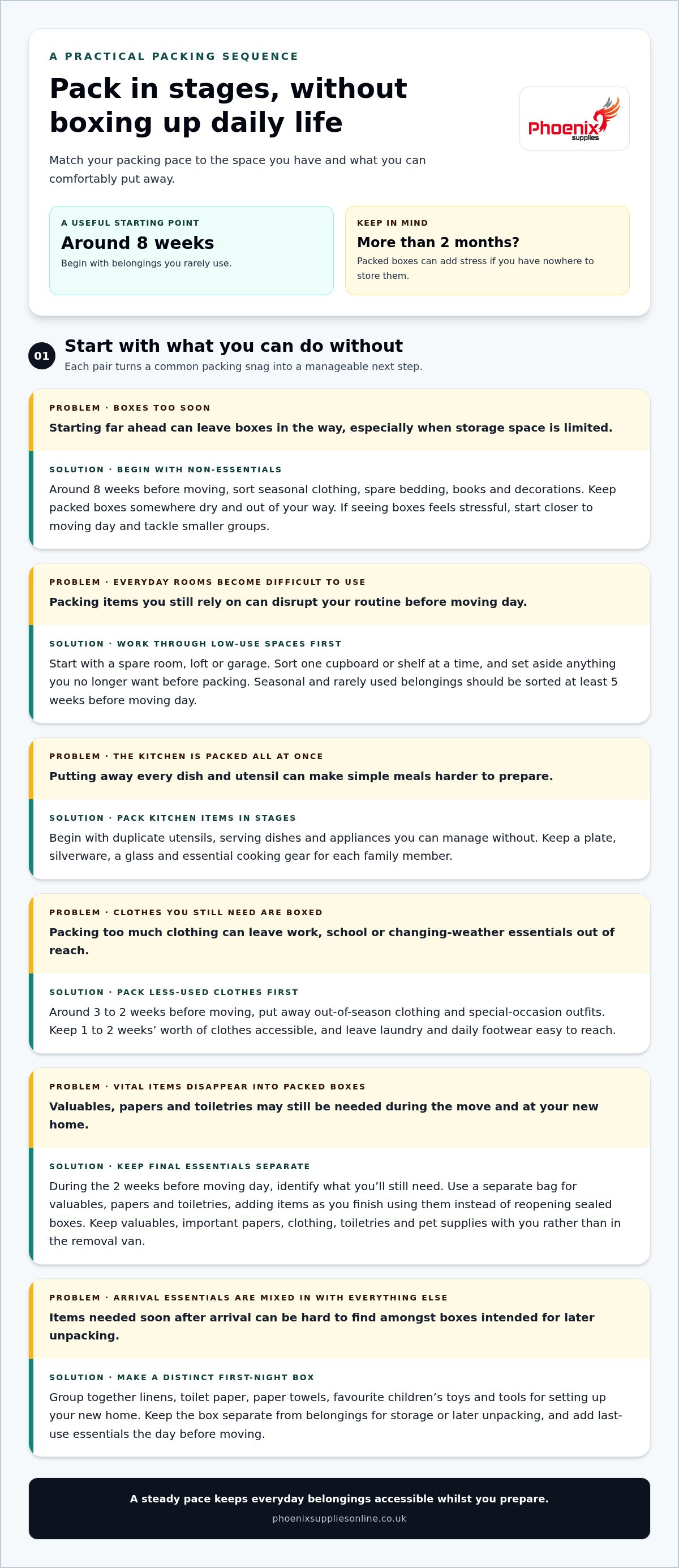
Start with non-essentials around eight weeks before moving day. Packing more than two months ahead can be stressful if you have nowhere to store the boxes. Choose a pace that suits your storage space and keeps everyday belongings accessible.
Pack yourself if you want control over each box and can fit the work around your schedule. For a UK move, keep valuables, important papers, clothing, toiletries and pet supplies with you rather than putting them in the removal van.
- Begin with items you rarely use. Around eight weeks before moving, sort seasonal clothing, spare bedding, books and decorations. Pack belongings you won’t need before the move, but leave boxes somewhere dry and out of your way. If seeing boxes around your home feels stressful, start closer to moving day and tackle smaller groups of items.
- Work through low-use rooms first. A spare room, loft or garage may contain items you can pack without affecting your routine. Sort one cupboard or shelf at a time, and set aside anything you no longer want before packing. Seasonal and rarely used belongings should be sorted at least five weeks before moving day.
- Pack kitchen items in stages. Start with duplicate utensils, serving dishes and appliances you can manage without. While packing kitchenware, keep a plate, silverware, a glass and essential cooking gear for each family member. This lets you continue preparing simple meals whilst other items are packed.
- Pack clothes you won’t need first. Around three to two weeks before moving, put away out-of-season clothing and special-occasion outfits. Keep one to two weeks’ worth of clothes accessible, including what you need for work, school or changing weather. Leave laundry and daily footwear easy to reach.
- Keep the final essentials separate. During the two weeks before moving day, identify what you’ll still need and keep it apart from packed belongings. Use a separate bag for valuables, papers and toiletries. Add items to it as you finish using them, rather than reopening sealed boxes.
- Prepare a first-night box. Put items you’ll need soon after arrival together, such as linens, toilet paper, paper towels, favourite children’s toys and tools for setting up your new home. Keep the box distinct from belongings intended for storage or later unpacking, and add last-use essentials the day before moving.
Some households start non-essential packing at 8 weeks, while others use 4-6 weeks or pack infrequently used belongings at 3 weeks. At 2 weeks, households can pack the rest of their belongings and identify essentials; keep a week's worth of clothing, dishes and toiletries separate. Begin packing everything else 1-2 weeks before moving day, keeping essential items apart.
Decluttering before a move
Begin decluttering seven weeks before moving day, sorting belongings before they join the packing pile. For leftover hazardous materials, contact your local community about a safe drop-off centre or event.
-
Clean and declutter before packing
Choose one small area, such as a bathroom cabinet, pantry shelf or hall cupboard, and empty it onto a clear surface. Check each item’s condition and use-by date, then separate what you’ll keep from what you no longer need. For example, remove expired toiletries before cleaning the cabinet, and wipe the shelves once they’re empty.
Keep the supplies needed to clean each area nearby, but don’t pack them until the room is ready. Check drawers, corners and the space beneath shelves for overlooked items. Finish one area before opening another. This makes it easier to see what remains and reduces the risk of mixing unwanted belongings with items you plan to take.
-
Downsize belongings before the move
Set aside four to six weeks before moving day to decide what to do with items that take up space but see little use. Review one category at a time, such as paperwork, pantry goods, decorations and duplicate household tools. Ask whether each item suits your next home and whether you’d keep it if you weren’t already storing it.
Sort belongings into clear groups: keep, pass on, recycle or discard. For example, retain the paperwork you need, but separate old instruction booklets for items you no longer own. Decluttering before a move can reduce the packing pile by up to 25%. Use a written list to record decisions that need discussion, so uncertain items don’t hold up sorting an entire room.
-
Dispose of unwanted items
Decide what to do with each unwanted group before moving on. Usable items can be offered to someone who needs them, while recyclable materials can be separated from general rubbish. Keep each group in a distinct, marked area, such as a shelf or corner, so it doesn’t end up in a moving box.
Handle hazardous leftovers separately. Contact your local community about a safe drop-off centre or event, and keep these materials apart from household rubbish and belongings for the move. Don’t put them with donations or recycling. Once they’re removed, check the cupboard, shed or garage for similar products before closing off the area.
Keeping vital items accessible on moving day
Set aside what you’ll need during the journey and immediately after arrival instead of packing it with household belongings. A simple timeline helps keep essentials, boxes and final tasks organised.
- Choose a bag for items that stay with you. Keep valuables, important papers, clothing, toiletries and pet supplies with your household rather than loading them with the movers. Use a secure bag or case you can carry yourself. Add identity documents, keys and medication you already use, then keep the bag in a familiar place until you leave.
- Make a moving-day essentials list. Write down the items you’ll need during the journey and on arrival, such as a phone charger, snacks, water, a change of clothes and your pet’s lead. Add any family-specific needs, such as children’s comfort items. Use the list to check your bag before leaving, rather than relying on memory during a busy morning.
- Keep essentials separate from packed boxes. Use a clearly marked bag or container for your personal items, and keep it away from boxes intended for the removal van. If you’re travelling by car, place it where you can reach it without unloading other belongings. Tell everyone in the household which bag holds the keys, papers and daily necessities.
- Follow a short final-week timeline. The final packing phase runs from one week before moving day through moving day. Pack remaining essentials the day before, after you’ve finished using them, and leave the items needed overnight in your separate bag. Set aside a free day before the move for last-minute tasks, such as checking cupboards and gathering loose belongings.
- Reduce loose clutter and choose boxes with purpose. Before packing the last rooms, separate items you’ll take from belongings you can donate or recycle. Pack similar items together, such as books with books and kitchen equipment with kitchen equipment. Choose a box that suits the contents, and avoid mixing unrelated items just to fill spare space. This makes boxes easier to identify and helps keep your essential bag distinct.
- Do one final access check before leaving. Check your essentials list, then confirm that valuables, papers, toiletries and pet supplies are still with you. Look in the places used during the morning, including the bathroom, kitchen worktop and bedside table. Keep the bag accessible throughout the journey, so you can find what you need without opening packed boxes.
Labelling boxes and tracking their contents
Cushion fragile items, fold clothing into suitable boxes and place books flat in smaller boxes. Label each box with its destination room and a brief contents note, so you can find what you need without opening several boxes.
- Write the destination room clearly. Mark each box for the room it belongs in at your new home, such as kitchen, main bedroom or study. Add a short contents description, such as “mugs and tea towels” or “rarely used baking dishes”. This gives you and the movers a clear instruction when boxes are unloaded. Put the label where it’s easy to see when boxes are stacked.
- Make labels useful at a glance. Use the same room names throughout your home, and avoid vague notes such as “miscellaneous”. A label reading “hall cupboard, scarves and shoe-care items” is more helpful than “hall stuff”. Add a clear “fragile” note to boxes holding breakable items, such as glasses or ornaments. Keep the description accurate, so the label helps you locate contents later.
- Track contents in a simple list. Keep a notebook or digital list with each box’s room and main contents. Give boxes a short identifier, such as “Kitchen, mugs and glasses”, and record it beside the room name. This makes it easier to find a specific item without unpacking several boxes. Update the list as you pack, rather than trying to remember everything weeks before moving.
- Keep box weight manageable. Put books and other dense items in smaller boxes, then use larger boxes for lighter belongings such as bedding or cushions. Avoid filling a large box entirely with books. A box should be comfortable to lift and carry, with contents settled rather than shifting when moved. If it feels awkward, remove some items or split them between boxes.
- Protect the contents before sealing. Wrap fragile crockery individually, cushion gaps with soft packing material, and place heavier pieces at the bottom. Fold clothing neatly and keep it separate from breakable items. Stack books flat or with their spines supported, rather than leaving them loose. Close each box securely once its contents are settled.
- Check labels and stacking before moving day. Before the move, check that every box is taped shut and labelled. Keep fragile boxes visible and avoid placing heavy boxes on top of them. Stack boxes so labels can still be read, and leave access to furniture or belongings you’ll need before loading. A final check takes a minute and can prevent a missing label from slowing unloading.
Choosing a packing start date based on the move
Choose your packing start date based on your home’s size, belongings, storage space and available time. Most households can start one to two months before moving day, but your schedule should reflect the work involved. To decide how to start packing for a move early, consider what you can store without disrupting daily life.
- Estimate the amount you need to pack. A sparsely furnished studio takes less preparation than a large home filled over many years. Count rooms, cupboards, loft spaces and garage contents, then note which areas hold the most belongings. A full garage or packed loft can take longer to sort than a room with few possessions, even if both rooms look similar.
- Choose a start date that suits your storage space. Packing more than two months ahead can create stress when sealed boxes have nowhere to go. If you have a clear, dry place for them, you can begin sorting earlier. If boxes would block everyday rooms, plan first, then pack items once you can store them sensibly.
- Separate sorting time from packing time. Downsizing can begin four to six weeks before moving day, while supplies can be gathered five to seven weeks ahead. This gives you time to decide what will move before filling boxes. For example, sort seasonal items and garage shelves first, then pack belongings you won’t need before moving house.
- Use a flexible packing timeline. Some schedules place non-essential packing around eight weeks before the move, while others begin it three weeks beforehand. Treat these as planning guides, not a reason to pack everything at once. Start with items you rarely use, then increase the pace as moving day approaches.
- Plan the main packing period around your routine. Packing most belongings three to two weeks before moving can leave time for final jobs. Set a small task for each available evening, such as one cupboard or a shelf of books. If work, childcare or limited storage makes that difficult, spread those tasks across more days and keep daily-use items unpacked.
- Set a finish point and protect unpacking time. Aim to finish packing one week before moving day, leaving the final stretch for essentials and last checks. For a larger home, deciding how to start packing for a move early means allowing time for rooms like the garage and loft. Choose dates on a calendar and mark which rooms should be packed by each point.
Once your timeline is clear, plan the moving supplies you’ll need around the rooms and belongings you’re packing.
Phoenix Supplies UK: Small Moving Boxes
Phoenix Supplies UK offers Small Moving Boxes, Medium Moving Boxes and Large Moving Boxes for different packing needs. Choosing a box size that suits its contents can help you group similar items and keep boxes manageable. Extra Large TV Moving Boxes are an option for packing a large television.
Use your room-by-room list to work out which box sizes suit the belongings you’re taking. Small boxes are suitable for compact items, while larger sizes give you options for grouping more substantial contents. The range supports a practical packing plan, whether you’re moving a few rooms or a whole home.
Browse the moving box options at Phoenix Supplies UK and choose what suits your move.
Get your packing plan ready for the next step
Turn your plan into a manageable first task: choose one area to pack, gather your supplies and set aside anything you’ll use before moving day. A practical way to start packing for a move early is to make steady progress without filling your home with boxes you can’t yet store.
As you prepare, match box size to the belongings you’re packing. Phoenix Supplies UK offers Small Moving Boxes, Medium Moving Boxes and Large Moving Boxes for different contents. Keep your packing list nearby to work out what you need and keep each room organised.
When you’re ready to choose packing supplies for your move, contact Phoenix Supplies UK. Take the next step at a pace that suits your home, and you’ll be better prepared for moving day.
Frequently Asked Questions
How far in advance should you start packing for a move?
Most households can start packing one to two months before moving day, beginning with items they rarely use. Your start date depends on how much you own, how much storage space you have and how quickly you can sort your belongings. If moving day is approaching, focus on non-essentials rather than trying to pack every room at once. Leave frequently used items unpacked until you can manage without them.
What is a week-by-week packing timeline for moving house in the UK?
Use the weeks before moving day as a guide, adjusting the order to suit your home. Around eight weeks out, begin with non-essentials; five to seven weeks out, gather supplies. From four to six weeks out, declutter. In the two to three weeks before moving, pack more of your belongings. Aim to finish a week before moving day, then pack the remaining essentials the day before.
Which rooms and items should you pack first when moving?
Start with spaces holding belongings you don’t use daily, such as a spare room, loft or garage. Pack seasonal decorations, hobby equipment, spare bedding and books before everyday kitchenware or work items. Ask yourself whether you’ll need each item before moving day. If not, pack it and note its destination room. Keep a clear route through each space so boxes don’t block access.
What should you keep out until moving day when packing early?
Keep valuables, important papers, clothing, toiletries and pet supplies with you rather than putting them with the movers. Also set aside daily medication, keys, phone chargers and anything you’ll need during the journey. For the last few days in the kitchen, retain basic crockery and cooking equipment. Put these belongings in an accessible bag or container, not a box that could be loaded early.
How should you label and organise boxes when packing for a move?
Write the destination room and a short contents note on each box, such as “study, desk supplies”. Use the same room names on every label, and clearly mark fragile contents. A simple list matching each box to its contents can help you find less obvious items, such as spare cables or seasonal decorations. Before moving day, check that every box is labelled and taped shut.


