

Four weeks gives you a practical window to declutter before moving house. If you’re working out how to declutter before moving house in the UK, sort belongings into four groups: keep, donate, sell and discard. Tackle a different category or area each week, starting with things you can live without and leaving everyday essentials until nearer moving day.
It’s easy to feel overwhelmed when cupboards, the loft and spare rooms all need attention. A steady plan makes the job manageable: focus on one small area at a time, decide what deserves space in your new home, and give every unwanted item a clear next step.
This guide explains how to make those decisions, where usable belongings can go and when it may help to keep an item temporarily while you decide. You’ll also find a four-week plan that keeps decluttering on track without packing everyday essentials too early. Start with what you know you won’t need, and work through one space at a time.
Key Takeaways
- Sort belongings into clear keep, donate, sell and discard groups so every item has a next step.
- Make decisions as you pack, and leave everyday essentials until nearer moving day.
- Set aside usable items you’re not ready to part with, then review them once you know what fits your new home.
- Use a four-week plan to break decluttering into manageable tasks instead of tackling the whole house at once.
- Start with a small area and get help if making decisions or keeping to the plan feels difficult.
Sorting belongings into keep, donate, sell and discard categories
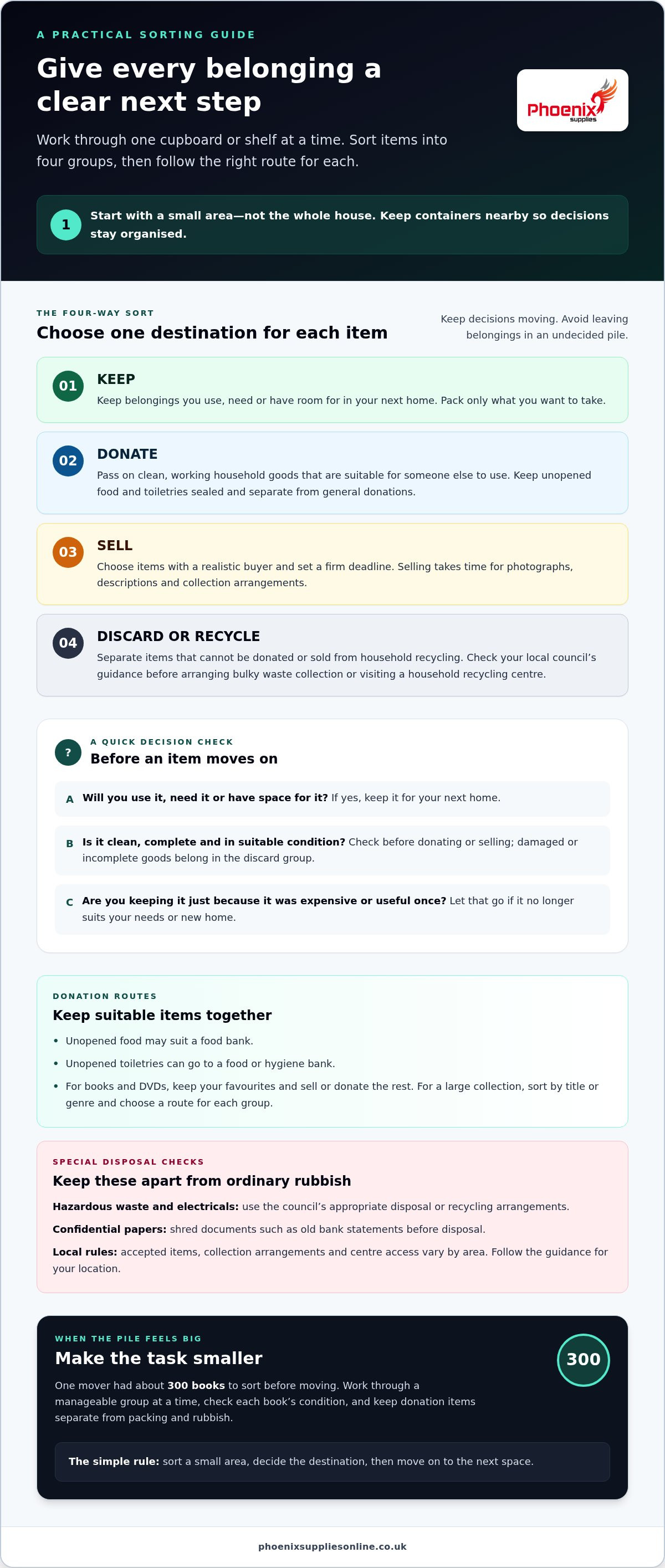
Use four clear categories to decide what moves with you and what needs another destination. Work through one cupboard or shelf at a time instead of emptying the whole house.
-
Assign keep, donate, sell or discard categories
Label four boxes or containers: keep, donate, sell and discard. Keep belongings you use, need or have room for in your next home; set aside usable items for donation or resale. Check each item’s condition before passing it on, and don’t keep something just because it was expensive or useful once.
-
Choose donation and resale routes
Donate clean, working household goods only if they’re suitable for someone else to buy or use. Unopened food may suit a food bank, while unopened toiletries can go to a food or hygiene bank. Keep favourite books and DVDs, then sell or donate the rest. If you have a large collection, sort it by title or genre first and choose a route for each group.
-
Recycle and dispose of unwanted items
Separate items that cannot be donated or sold from household recycling. Check your local council’s guidance before arranging bulky waste collection or visiting a household recycling centre. Rules vary by area, including accepted items, collection arrangements and centre access, so follow the instructions for your location.
Keep hazardous waste and electricals apart from ordinary rubbish, and use the council’s appropriate disposal or recycling arrangements. Shred confidential papers, such as old bank statements, before disposing of them.
- Check the condition of books, clothes and household goods before donating. Charity shops need items that are clean and suitable for someone else to use, so put damaged or incomplete goods in the discard group instead. Keep unopened food and toiletries sealed for donation and separate them from general household donations.
- Set a firm deadline for deciding what to sell. Selling takes time for photographs, descriptions and collection arrangements, so focus on belongings with a realistic buyer. If a book or DVD is unlikely to sell, donating it or recycling it where accepted may be a simpler way to clear space before moving.
Keep containers nearby as you sort, and make each destination clear: belongings for your next home go with packing, suitable goods with donations, and unwanted items with rubbish. Separate containers for packing, donations and rubbish help keep decisions organised. If you’re unsure about an item, check its condition and whether it has a use or place in your next home instead of leaving it in an undecided pile.
Books can take time to sort, especially when there are many of them. One participant said they had about 300 books to deal with before moving. Work through a manageable group at a time, deciding which books to pack and which are suitable to donate. For each donation, check that its condition is good enough for someone else to reasonably buy it at a charity shop. Keeping the sorting process steady can make a large collection easier to handle without mixing donation items with belongings intended for packing or rubbish.
Sorting belongings while packing
Use each packing session to review what you own, not just fill boxes. Work through one room at a time and keep items you still use accessible until moving day.
- Choose one cupboard, shelf or drawer, then assess its contents before packing. Group similar items, such as kitchen utensils or bathroom linen, to spot duplicates and things you no longer use. Pack only what you want in your new home. Keep daily essentials aside, including the kettle, medicines and work clothes, rather than sealing them away too soon.
-
Sort sentimental belongings
Set sentimental items aside before deciding which ones to pack, such as children’s drawings, inherited ornaments or photographs. Choose the pieces you most want to keep, then photograph other objects to preserve the memory without moving them all. A small, defined keepsake box can help set a limit. Avoid making rushed decisions about family belongings during a tiring packing session.
- Pack by destination as well as by room. Label each box with its new room and a brief contents note, such as “hallway, scarves and gloves”. Keep fragile keepsakes apart from everyday belongings so they’re easier to find and handle. If you’re unsure whether something belongs in a box, ask yourself whether you’ll use it, value it or have a suitable place for it in the new home.
-
Set aside out-of-season clothes
Review clothes as you pack each wardrobe, starting with items for another season. Keep pieces that fit, hang well and get worn; set aside clothes that fail those checks. For example, pack summer clothing during a winter move only if you expect to wear it again. Check coats, occasion wear and children’s clothes individually, since size and use can change before they’re needed.
- Keep a small group of essentials unpacked until the final packing stage. Include clothes you wear regularly, chargers, toiletries and what you need for the first night. Put them together in a clearly marked bag or box, separate from seasonal clothing and packed linen. This makes practical necessities easy to find while you sort less-used belongings room by room.
- Finish each session by checking the space you’ve cleared. Look behind drawers, under the bed and on wardrobe shelves for overlooked items, such as a spare belt or an old school jumper. If something has stayed unused through several packing decisions, reconsider whether it deserves space in your new home. Make a deliberate choice instead of packing it automatically.
Using storage for items you are not ready to discard
Keep uncertain belongings temporarily if you need more time to decide or lack space. Don’t discard essentials, important documents or items you’ll use in your new home.
- Choose one small group of uncertain belongings, such as seasonal decorations or spare kitchen tools. Ask whether each item is useful, has a place in your next home, or would be straightforward to replace. A decluttering expert’s test is whether finding another would take less than 20 minutes. If so, consider letting it go rather than storing it indefinitely.
- Set aside belongings that matter but don’t need an immediate decision. Use a clearly labelled container for items such as inherited ornaments, hobby equipment or children’s keepsakes. Write a short contents list and keep it with the container so you can review everything after moving. Don’t add unrelated items just because there’s room; that only makes the later decision harder.
- Review kitchen and utility cupboards before packing. Check for duplicate tools, worn cloths, unused gadgets and cleaning supplies you no longer need. Three sets of measuring spoons, for example, may be more than your household uses. Keep the set you reach for and separate usable extras for resale or passing on.
- Choose where usable belongings will go before they become a pile. Pass suitable items to friends or family, a charity shop or a local group. Online marketplaces and car boot sales can work for goods with a likely buyer, such as an unused lamp or a set of tools. Set a date to review sale listings, then find another home for suitable unsold items.
- Take a limited number of uncertain items to your new home only when they have a clear review point. For example, label a box “review after unpacking” and list what it contains. Once settled, check whether each item fits the room, suits your routine and has been used. If a spare toaster stays boxed and unused, pass it on rather than moving it again.
- Keep practical essentials out of temporary storage. Set aside the kettle, daily cookware, medication, chargers and documents you need during the move. Store these separately from uncertain belongings so they’re easy to find. For useful objects, such as a step stool for changing a light bulb, consider where they’ll live before deciding whether to keep them.
A four-week decluttering plan
Start with stored belongings in the loft, garage or shed before turning to everyday rooms. A four-week plan can help you decide how to declutter before moving house in the UK, one category at a time.
-
Choose what to declutter first
Begin in spaces holding things you rarely use, such as loft boxes, garage shelves or garden tools. These areas let you make decisions without disrupting daily routines. Move on to easier categories, such as books and clothing, before tackling sentimental items. Avoid starting with the kitchen, where you’ll still need many things during the move.
-
Work through a four-week plan
Assign a group of belongings to each week and note the tasks on your calendar. About three weeks before moving day, start clearing areas as you pack. Work in short, planned sessions instead of waiting for one big clear-out. Keep the freezer, kitchen cupboards and most-used belongings accessible until nearer moving day.
- Week one: Clear the loft, garage or shed. Sort stored boxes, old tools and garden items, then arrange a destination for anything leaving your home.
- Week two: Review books, clothing and spare household items. Start with straightforward choices, such as clothes you no longer wear or books you’ve finished.
- Week three: Declutter bedrooms, living areas and other rooms as you pack. Measure large furniture against the new home’s rooms, and set aside pieces that won’t fit.
- Week four: Focus on the kitchen, utility area and final essentials. Use up food in the freezer and cupboards, and remove out-of-date or unwanted items.
At the end of each week, check what remains and carry unfinished tasks forward. Leave sentimental belongings until easier categories are complete, so those decisions don’t hold up packing. If children are moving too, ask whether younger toys and games will suit their new bedrooms. Give each task a clear area and finish point.
Leave daily essentials until the final packing stage. Keep the kettle, regular cookware, toiletries and the clothes you wear most often accessible. Mark these items clearly so they don’t get packed with belongings you can set aside earlier. If you’re working out how to declutter before moving house in the UK, use the weekly list to choose your next manageable task.
As moving day approaches, review each remaining room and pack only what you intend to take.
Decluttering help before moving house
Get practical help when decisions stall or the move feels hard to manage. A second person can help you stay focused on what will actually travel to your new home.
-
Get help with decluttering
Choose someone who can help you stay on task, such as a friend or family member. Agree on one area before you start, such as a hallway cupboard or a set of shelves. Ask them to carry items, read labels or note decisions, rather than decide what matters to you. Make the final choices about sentimental belongings yourself.
If you find it hard to begin, set a 20-minute timer and clear one small space. Put on music, work through a single drawer, then stop when the timer ends. This gives you a defined task instead of an open-ended clear-out. If you know you won’t make progress alone, arrange a focused session with someone who can help you stay on track.
-
Declutter before requesting a removal quote
Reduce the volume of belongings before arranging a removal quote, then describe only what you intend to take. List bulky furniture separately from smaller possessions and leave out anything that won’t fit in your new home. For example, a bookcase that won’t fit in the new room needn’t be included among the belongings to move.
Check less obvious spaces before finalising your list. Loft boxes, garage shelves and garden storage can hold items that are easy to miss during a room-by-room check. Write down what remains in each area, including larger objects and packed containers. This gives you a clearer picture of the load and avoids including belongings you plan to pass on.
- Share the work with other household members by assigning clear tasks. One person might sort kitchen cupboards while another checks the garden shed. If children are involved, ask them to choose toys they still use and identify those they’ve outgrown. Let people make decisions about their own family keepsakes rather than making hurried choices for them.
- Use a written list to avoid making the same decisions twice. Note what’s been sorted, what still needs attention and which items are leaving the home. If a task feels too large, break it down: clear one shelf, then one drawer. A five-hour session can cover several defined areas if you take short breaks and avoid switching between rooms.
Phoenix Supplies UK: Small Moving Boxes
Phoenix Supplies UK offers moving boxes to help pack the belongings you’ve chosen to take. Choose Small Moving Boxes for compact items, Medium Moving Boxes or Large Moving Boxes for larger household contents, and Extra Large TV Moving Boxes for televisions.
Most orders placed by 1pm are dispatched the same day on a free next working day delivery service. If you need help choosing, the team provides friendly customer service, so you can get clear guidance while organising your move.
When you’re ready to organise boxes for your move, visit phoenixsuppliesonline.co.uk or contact Phoenix Supplies UK.
Make room for a fresh start
Your move is a chance to decide what deserves a place in your next home. Keep the decision practical: think about how you live, what you’ll use and where your belongings will go. This simple test can help you avoid bringing clutter with you and make room to settle in.
If you’re still planning how to declutter before moving house in the UK, choose one action to take today. Set aside a shelf, measure a piece of furniture or list what you need to pack. Small decisions turn moving preparations into steady progress.
Once you know what’s coming with you, Phoenix Supplies UK offers Small Moving Boxes, Medium Moving Boxes and Large Moving Boxes for household belongings. Choose the next step that suits your move and keep your plans moving at a manageable pace.
Contact Phoenix Supplies UK today to discuss moving boxes for your move. You’re ready to make a fresh start, one clear decision at a time.
Frequently Asked Questions
What Is Decluttering?
Decluttering means reviewing your possessions and choosing what to keep, pass on, sell, recycle or discard. Unlike simply tidying a room, it means deciding where each item belongs. Try it with one small area, such as a bedside table, before your move. You’ll see what you use, what you can let go and what needs a proper destination.
What is the best timeline for decluttering before moving house in the UK?
Start as soon as you know you’re moving, ideally four to six weeks before moving day. If your move is sooner, begin with stored areas and belongings you rarely use, then tackle rooms as you pack. Leave the kitchen and daily essentials until later. Schedule short sessions so the work fits around your other moving tasks.
How should I sort belongings into keep, sell, donate, recycle and dispose piles?
Set up five labelled areas or containers, then assess items individually. Keep what you use or need; set aside items likely to attract a buyer for sale. Donate clean, usable goods, recycle materials accepted locally, and separate damaged or unsuitable items for disposal. For example, a working lamp might be sold or passed on, while broken parts need another route.
Where can I donate unwanted furniture, clothes and household items in the UK?
Consider charity shops, local community groups, or friends and family for clean, usable belongings. A local group can be useful for offering a chair or kitchen item to someone nearby. Charity shops generally need donations in saleable condition, and larger furniture may not suit every collection point. Unopened food and toiletries may also go to suitable food or hygiene banks.
How can I sell unwanted items quickly before moving house?
Choose items with a clear buyer, such as a usable appliance or furniture in good condition, and prepare them together. Take clear photographs, write an accurate description and state when collection is possible. Selling takes time for messages and arrangements, so set a firm deadline. If an item remains unsold, choose another route rather than letting it delay packing.


