

A bathroom is easier to move when you sort it first, secure liquids and keep everyday essentials within reach. Knowing how to pack a bathroom for moving means standing bottles upright in a sturdy cardboard box lined with towels, sealing open containers in separate bags and filling gaps to prevent movement. Pack the bathroom last so toiletries and cleaning supplies stay accessible until moving day.
It’s easy to underestimate how many small, fragile and leak-prone items are tucked into bathroom cupboards. Sorting before you pack helps you avoid moving empty or out-of-date products and makes it easier to find what you need when you arrive.
This guide explains how to protect toiletries and delicate items, what to consider with perfume and aerosols, and how to set aside daily essentials. You’ll also learn how to label boxes clearly so bathroom belongings are easier to handle and unpack.
Key Takeaways
- Sort toiletries before packing and keep bottles upright in a towel-lined box to help contain spills.
- Wrap glass bottles and other fragile bathroom items, then fill gaps so they’re less likely to shift.
- Read hazard warnings on cleaning products, perfume and aerosols before deciding how to handle them.
- Set aside daily essentials and medicines so you can reach them during the move and on your first night.
- Seal delicate-item boxes securely and label them clearly to help prevent rough handling.
How do I prevent toiletries from leaking during a move?
These steps explain how to pack a bathroom for moving while keeping toiletries and medicines accessible. Pack the bathroom last so useful items stay within reach until moving day.
- Empty bathroom cupboards before sorting their contents. Group toiletries, cosmetics, medicines, first-aid supplies, linens and cleaning products separately. Check every bottle for leaks or damage. Discard empty, dried-out or expired products, and set aside anything whose smell, colour or consistency has changed. Sorting first shows what you’re keeping and which containers need extra care.
- Keep useful products in their original, clearly labelled containers. Close every lid securely, then place open bottles individually in sealed bags to contain leaks. Stand bottles upright in a sturdy cardboard box tall enough to keep them vertical. Line the box with towels to absorb liquid if a container spills, and don’t leave bottles loose where they can tip over.
- Once the bottles are arranged, fill gaps with towels or cloths so the contents cannot shift. Cover the items with another towel, then seal the box with packing tape. Deal with leaking or damaged bottles before packing them, rather than relying on towels to contain a steady leak. Keep liquid products upright when carrying or setting down the box.
- Pack medicines and first-aid supplies separately from toiletries, and keep them with you during the move. Leave medicines in their labelled packaging and follow the supplied storage instructions. Check expiry details, including after opening: some medicines expire within a few months or even a couple of weeks. Keep necessary doses accessible instead of putting them in a box with other belongings.
- Set aside a small toiletry bag for items you’ll need on moving day. Include toothpaste, shampoo, conditioner and soap, plus a towel and facecloth for your first night. Leave toilet paper, hand soap and a hand towel in the bathroom until the final moments. Label the bag clearly and keep it easy to reach.
- Use a separate toiletry bag for makeup and hair accessories. Put brushes, clips and make-up pencils in compartments or smaller pouches so they stay together and are easy to find. Return liquid cosmetics to their original containers, close them tightly and seal them in individual bags. Keep this bag with your essentials, away from heavier items.
In the UK, return unwanted or out-of-date medicines to a pharmacy for safe disposal. Don’t put them in household rubbish or flush them down the toilet. Separate usable products from items you’re discarding, and recycle suitable empty packaging where local recycling accepts it.
How to pack your bathroom correctly?
A clear plan for how to pack a bathroom for moving starts with emptying and sorting the cupboards. The time needed depends on how many belongings you need to sort and how much wrapping fragile items require.
-
Protect fragile bathroom items
Wrap glass bottles, soap dishes and other breakable bathroom items individually in bubble wrap before placing them in a sturdy box. Add padding between pieces, then fill gaps with towels or cloths to stop items knocking together in transit. Choose a small box and keep its weight manageable, especially if it holds several glass containers.
Place heavier wrapped items beneath lighter ones. Check that lids and sharp edges cannot press against other items. Add a final layer of towels before closing the box. These steps make it easier to protect mixed, delicate contents when packing a bathroom for moving.
-
Protect mirrors and ceramic accessories
Wrap ceramic accessories, such as a toothbrush holder or soap dish, separately so their edges cannot chip against each other. For a removable mirror, protect its face, edges and corners. Keep packing tape off the glass and frame, as adhesive can leave marks or damage the finish.
For a framed mirror or picture, make an X across the glass with packing tape to help hold fragments if it breaks. Use a mirror box for a mirror larger than a small vanity mirror. Keep the package upright where possible and mark it as fragile.
-
Pack bathroom and medicine cabinets
Remove everything from bathroom cabinets before sorting, including products behind bottles or on high shelves. Pack cabinet contents by type, and wrap small glass or ceramic pieces before boxing them. Keep medicine cabinet items in their labelled packaging and grouped separately from toiletries, so you can identify them easily when unpacking.
If you’re moving a bathroom cabinet itself, empty it completely and secure loose shelves separately. Check drawers and corners for small items before closing it. Keep prescription medicines accessible instead of burying them among packed bathroom belongings. This is another practical step for packing a bathroom safely and in an organised way.
-
Estimate bathroom packing time
Allow time based on the number of cupboards, the volume of products and the fragile items that need individual wrapping. Sorting several cabinets of assorted cosmetics takes longer than preparing a bathroom with only a few everyday belongings. Check each shelf, drawer and storage basket before deciding how much time to set aside.
Work in stages: empty one cabinet, sort its contents, then wrap and pack that group before moving on. This keeps similar items together and helps you notice anything needing extra protection. If you need boxes for grouped belongings, small moving boxes can keep bathroom loads easier to handle.
Can I include perfume and aerosols in a house move?
Check each product’s label before packing. Perfume and aerosols may carry hazard warnings, and some cleaning products need separate handling.
- Read the label on each perfume bottle, aerosol and cleaning product before sorting it for the move. Look for hazard symbols shown as red diamonds, which the UK Health and Safety Executive explains can indicate dangers such as flammable or corrosive contents. Keep the label visible and readable. Don’t pack unlabelled containers or products with labels you can’t read clearly.
- Check the warnings on perfume and aerosols before deciding how to pack them with your belongings. Close each container securely and put it in a separate plastic bag. Tie or tape each bag shut, then keep the products upright in a sturdy box. Keep them apart from ordinary toiletries so you can identify the contents and handle them according to their labels.
- Keep cleaning chemicals in their original containers with their labels intact. Don’t pour them into unmarked bottles or mix products together. In particular, keep bleach and ammonia-based cleaners apart because they can react with each other. Pack cleaning supplies upright in a sturdy box, separate from toiletries such as a toothbrush and other everyday bathroom items.
- Contain leaks before packing any liquid product. Tighten caps and lids, then put each open bottle in its own sealable plastic bag. This includes perfume, shampoo and liquid cosmetics. Stand bagged containers upright and use towels or cloths around them to limit movement. Bubble wrap alone won’t contain liquid if a bottle opens during the move.
- Combine duplicate open products only when they are the same item, such as two partly used bottles of identical shampoo. Keep the remaining product in its original labelled container, and don’t mix different formulas or cleaning chemicals. Wipe the outside, close the lid securely and seal the bottle in a bag. If the label is damaged or unreadable, set the product aside instead of packing it.
Once sorted, keep cleaning supplies separate from perfume and personal toiletries. Mark the box clearly, and make sure its containers stay upright when it’s carried or placed in the vehicle. If a product’s warning label identifies a hazard, handle it separately from ordinary bathroom liquids.
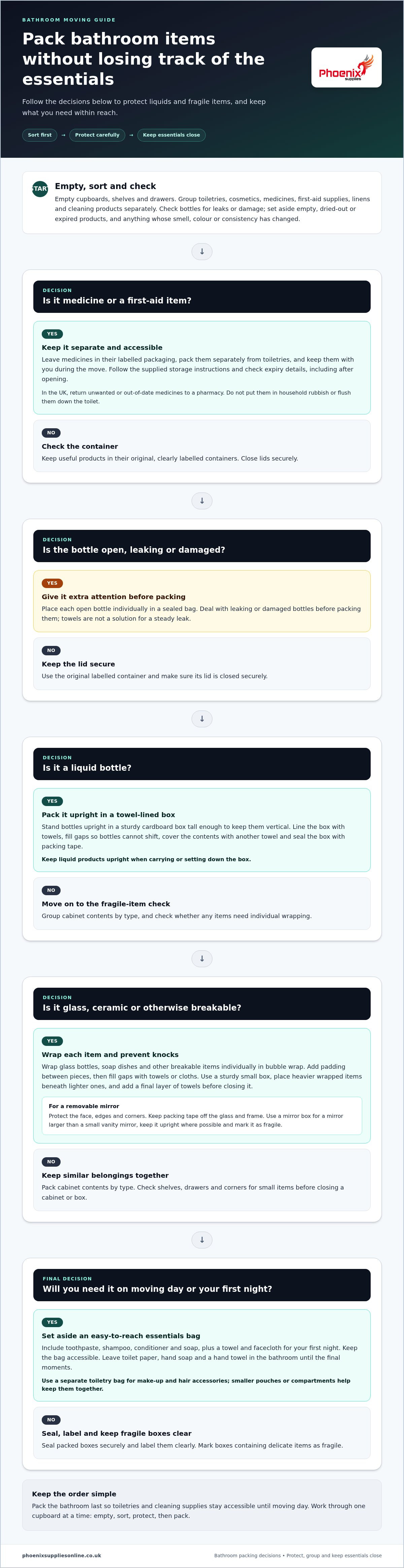
Setting aside daily bathroom essentials
Set aside what you’ll need between leaving your old home and settling into your new one. A clearly labelled essentials bag keeps these items separate from boxes and ready to hand.
- Choose a washbag or small, easy-to-carry bag for moving-day essentials. Add toiletries you use each morning and evening, such as toothpaste, a toothbrush, shampoo and skincare products. Include any daily-use items you’ll need before the bathroom is unpacked. Keep this bag apart from the boxes used to pack your bathroom, so it stays accessible during loading and arrival.
- Make a separate first-night list before filling the bag. Include oral care, skincare, toilet paper and prescription medicines, then add a towel and facecloth. Think through the routine you’ll follow after reaching your new home, from washing your hands to getting ready for bed. This helps you choose useful items without packing every bottle or product from the bathroom cupboard.
- Keep medicines with you rather than putting them in a moving box. Leave each medicine in its labelled packaging and follow its supplied storage instructions. Put any doses you’ll need during the move somewhere easy to reach. Check the medicine’s expiry details, including after opening, since some products expire within a few months or even a couple of weeks.
- Leave toilet paper, hand soap and a hand towel in the bathroom until just before you leave. Put them in your essentials bag or a clearly marked first-night bag at the last moment. If several people are moving together, check that the bag contains enough for everyone’s needs. Keep it with personal belongings, not beneath heavier boxes or packed bathroom items.
- Label the bag clearly and decide where it will travel before packing the rest. Keep it in your own car or another accessible place, rather than among boxes that may be unloaded first. At your new home, place the bag in the bathroom or another easy-to-reach room. That way, you can find essentials while cupboards, toiletries and other household boxes are still packed.
Labelling boxes containing delicate items
Use small, sturdy boxes for fragile bathroom containers, protect each item, then seal and label every box clearly. Useful supplies include bubble wrap, packing paper, towels, packing tape and a marker.
- Choose a sturdy box that suits the contents instead of filling a large moving box with heavy bathroom items. Small boxes are easier to carry and help limit movement when packed carefully. Check the base and corners before use. If the box feels weak or is already damaged, choose another so glass bottles and ceramic accessories have firm support.
- Wrap each fragile item separately before placing it in the box. Use bubble wrap for glass bottles, mirrors and ceramic accessories, then add packing paper or towels between wrapped pieces. Keep soap dishes and other small bathroom items from touching. Fill empty spaces with soft material so containers don’t knock together when the box is lifted.
- Pack the box in a stable order, placing heavier wrapped items beneath lighter ones. Keep bottles upright and avoid putting pressure on lids or delicate edges. Add a towel over the contents before closing the flaps. Check that nothing shifts when you gently move the box, then adjust the padding before sealing it with packing tape.
- Mark each sealed box “Fragile” in clear, readable writing. Add “Bathroom” and a short contents note, such as “glass bottles” or “mirror”, to make it easier to identify during unloading. Write the label where it will be visible when boxes are stacked, and repeat it on another side. Keep the box upright if its contents need to stay in that position.
- Finish by checking that the base is secure, the tape holds the flaps closed and the label matches the contents. Separate delicate boxes from heavier moving boxes, such as those containing books or cleaning supplies. Keep fragile bathroom items together where practical, but don’t overfill the box to save space. If you need suitable packaging, choose small moving boxes for grouped bathroom belongings.
Phoenix Supplies UK: Small Moving Boxes
Phoenix Supplies UK offers Small Moving Boxes for grouping bathroom items, from toiletries to wrapped glass bottles. Smaller boxes can help keep delicate contents together without creating an awkward, heavy load. Choose Medium Moving Boxes for grouped bathroom supplies, or Large Moving Boxes for lighter, bulky items such as towels.
For this part of your move, match the box to its contents: cushion fragile containers, leave space for padding and label the box clearly. Phoenix Supplies UK also offers Extra Large TV Moving Boxes for televisions, not bathroom belongings.
Visit phoenixsuppliesonline.co.uk to view the moving box options and choose what suits your packing needs.
Make unpacking easier from the start
Knowing how to pack a bathroom for moving can also help you plan your new space. Think about where toiletries, towels and cleaning products will go, then label boxes by destination or contents. This gives you a simple unpacking plan instead of leaving every box to be opened at once.
Choose box sizes to suit what you’re packing. Small Moving Boxes can hold grouped bathroom items, while Medium Moving Boxes or Large Moving Boxes may suit less fragile, bulkier contents. Matching box size to its contents makes each load easier to place and sort when you arrive.
Phoenix Supplies UK offers these box options for different parts of a household move. If you’re choosing supplies for your move, contact Phoenix Supplies UK today. A clear plan and suitable boxes can help you settle into your new bathroom with less unpacking to do.
Frequently Asked Questions
Are plastic moving boxes good for bathroom items?
Yes, clean, dry plastic boxes can hold bathroom items if they close securely and suit the contents. Separate glass containers with padding, and keep liquids upright to reduce the chance of spills. Don’t overload a box, as heavy containers can shift when lifted. For cardboard boxes, a towel lining can help absorb small leaks. Choose a container based on what you’re packing and how it will be carried.
Can I pack damp towels or a wet shower curtain?
Dry towels and washable shower curtains fully before packing them. Damp fabric sealed in a box or bag can develop an unpleasant smell and transfer moisture to nearby belongings. Hang the curtain and towels to air, then check folds and thicker hems before packing. If they’re still wet when you leave, keep them separate from dry bathroom items and unpack them promptly at your new home.
How should I pack shampoo and shower gel for moving?
Close shampoo and shower gel bottles firmly, then check their caps for residue or damage. Put each opened bottle in its own sealable bag to help contain drips if a lid loosens. Keep bottles upright in a container that prevents them tipping, and place them away from items that must stay dry, such as a toothbrush or facecloth. Leave the shampoo you’ll use next accessible if you need it before unpacking.
How should you sort out your toiletries and bathroom items?
Empty bathroom cupboards and drawers first, then sort items into groups such as toiletries, cosmetics, medicines, linens and cleaning supplies. Keep daily-use products apart from occasional items, such as a spare soap bar or hair treatment. This makes it easier to pack similar belongings together and find them later. Check storage baskets and shelves too, as small products can sit behind larger bottles or containers.
How should you sort and declutter bathroom items before a move?
Set aside empty, dried-out or expired products before packing. Discard toiletries that have changed smell, colour or consistency, and remove unwanted items such as used disposable razors or an old toilet brush. Return unwanted or out-of-date medicines to a pharmacy for safe disposal in the UK. Check product labels before discarding anything, and separate recyclable packaging where your local collection accepts it.
How do you pack toiletries and liquids to prevent leaks?
Keep liquids in their original labelled containers and tighten each lid before packing. Put opened bottles in separate sealed bags, then arrange them upright in a box with towels or cloths around them. Don’t pack a bottle that is already leaking or damaged; deal with it before it goes near other belongings. Fill gaps so bottles stay in place, and keep the box upright during handling.
How should you pack bathroom cleaning products safely?
Keep cleaning chemicals in their original, clearly labelled containers, and read each product’s hazard warnings before packing. Don’t decant them into unmarked bottles or mix products. Keep bleach and ammonia-based cleaners apart, and place cleaning supplies upright in a separate box. If you’re using a removal company, hazardous products such as bleach, aerosols and ammonia-based cleaners may not be transportable with other household belongings.
How do you pack fragile bathroom items such as mirrors, glass bottles, and ornaments?
Wrap glass bottles and small ornaments separately, then place padding between them to prevent contact in transit. Protect a removable mirror across its face, edges and corners, keeping adhesive tape off the glass and frame. A mirror box suits mirrors larger than a small vanity mirror. Mark the sealed box as fragile, and position it so the label remains visible while boxes are moved.


