

Plastic moving boxes can work well for bathroom items, especially cleaning supplies, but toiletries need careful packing. How to pack toiletries for moving starts with sealing open bottles, standing them upright and keeping everyday essentials separate.
A sealed box alone may not prevent a spill from affecting everything around it. Bag open bottles, cushion fragile containers and label the box clearly so you can find it quickly.
This guide explains how to sort toiletries, choose and label boxes, handle medicines and cleaning products, and keep essentials within reach on moving day. You’ll also learn what to pack separately so your bathroom basics are ready when you arrive.
Key Takeaways
- Contain leaks by sealing open toiletries and bagging bottles separately before placing them upright in a lined box.
- Choose a sound box that keeps bottles upright, then cushion gaps and label it before sealing.
- Sort bathroom items before packing, and return unwanted or out-of-date medicines to a pharmacy for safe disposal.
- Read hazard labels on cleaners and aerosols, and keep moving-day toiletries and medicines accessible rather than buried in packed boxes.
- Set aside a small first-night kit so you can find your bathroom essentials as soon as you arrive.
Are plastic moving boxes good for bathroom items?
Plastic moving boxes can hold bathroom items if bottles are sealed, upright and cushioned. Line the box with a towel to help contain leaks. In hot or cold weather, keep toiletries away from direct sunlight and extreme cold, and follow each product’s storage instructions.
-
Pack toiletries in separate sealable bags
Put each open bottle in its own large sealable sandwich bag. Close the bottle securely first, then seal the bag and keep it upright. The separate bag helps contain leaks before they reach other items. Group products by type, such as shampoo, conditioner and shower gel, so you can find them without opening every bag.
If you have two or more open bottles of the same product, combine them in one suitable container before packing. Keep small plastic containers handy for toiletries that need transferring, and don’t pack loose lids beside the bottles they belong to.
-
Prevent leaks from bottled liquids
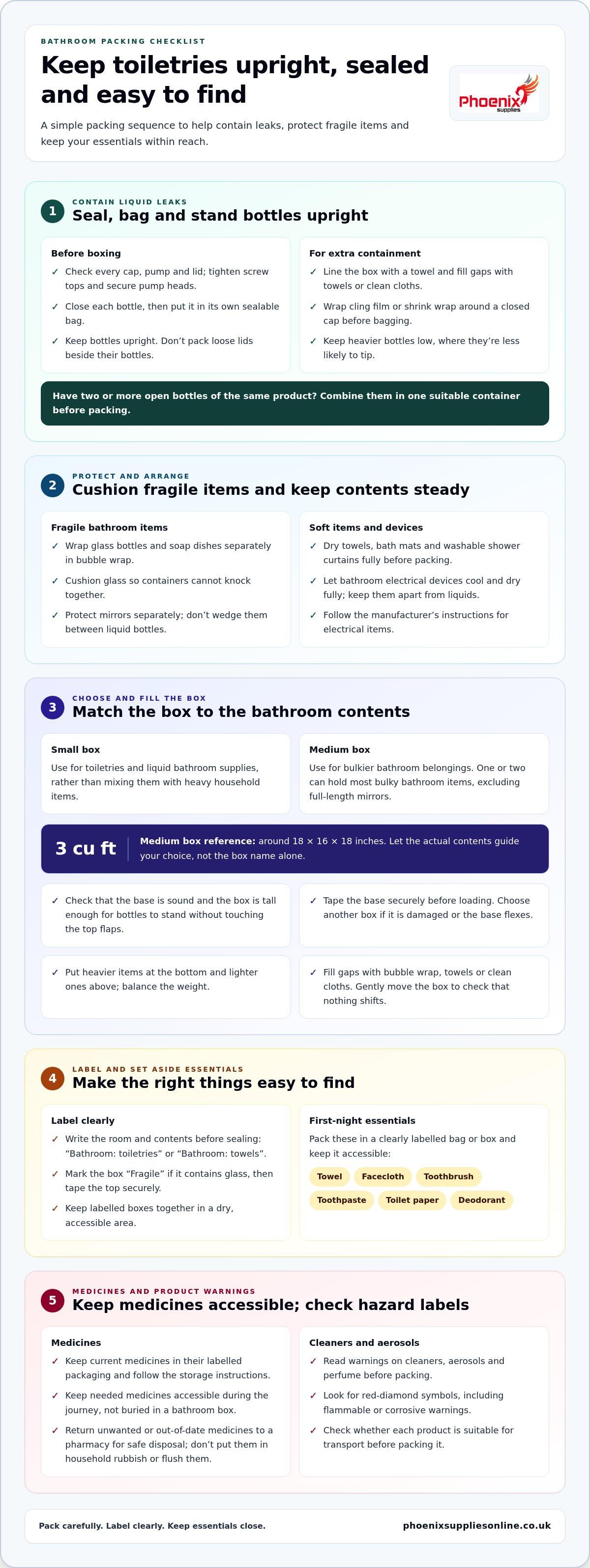
Check every cap, pump and lid before packing liquid toiletries. Tighten screw tops and secure pump heads so they can’t press open against nearby items. Line the box with a towel, then stand bottles upright with their bases flat on the bottom. Keep heavier bottles low, where they’re less likely to tip.
For an extra barrier, wrap cling film or shrink wrap around a closed cap, then bag the bottle individually. Fill gaps with towels or cloths to stop containers shifting in transit. Don’t rely on the box alone to contain shampoo, lotion or mouthwash if a lid loosens.
-
Protect toiletries during packing
Wrap glass bottles, soap dishes and other fragile bathroom items separately in bubble wrap. Cushion glass containers to prevent them knocking together, then place them upright among softer items. Protect mirrors separately rather than wedging them between liquid bottles. Keep the box stable as you pack, and don’t leave fragile pieces loose on top.
Let bathroom electrical devices cool and dry fully before packing. Follow the manufacturer’s instructions and keep electrical items apart from liquids that could leak. This protects the devices and stops spills soaking nearby toiletries or packing materials.
-
Pack dry towels and bath mats
Dry towels, flannels, bath mats and washable shower curtains fully before putting them in a box or bag. Damp fabric can wet other belongings during the move, so air each item before folding it. Use clean, dry towels to cushion sealed toiletries, but keep them separate from anything that has leaked.
Set aside a towel and facecloth for your first night, along with a toothbrush, toothpaste, toilet paper and deodorant. Pack these essentials in a clearly labelled bag or box and keep it accessible, rather than burying it beneath bathroom items.
Choosing and labelling moving boxes
Choose a box that suits the bathroom items it will hold. Use a sound container with enough height for bottles, then organise the contents before sealing it.
- Choose a small box for toiletries and liquid bathroom supplies, rather than mixing them with heavy household items. Use a medium box for bulkier bathroom belongings. A medium moving box is around 18 x 16 x 18 inches, or 3 cubic feet. One or two medium boxes can hold most bulky bathroom items, excluding full-length mirrors. Let the actual contents guide your choice, not a box’s name alone.
- Inspect the box before filling it. The base should be sound, and the box should be tall enough for bottles to stand upright without pressing against the top flaps. Securely tape the base before loading. If the box is damaged or its base flexes, choose another: a weak bottom can give way when lifted.
- Stand bottles upright with their bases flat on the box floor, and arrange them so they’re supported rather than leaning. Put heavier bathroom items at the bottom and lighter ones above. Balance the weight, and don’t pack so tightly that the top flaps press on bottle caps.
- Fill gaps with bubble wrap, towels or clean cloths to limit movement in transit. Add padding around the sides and between items, then gently move the box to see whether anything shifts. Don’t fill spare space with unrelated objects: keeping bathroom items together makes the box easier to identify and unpack.
- Write the room and contents on the box before sealing it, for example, “Bathroom: toiletries” or “Bathroom: towels”. Mark it “Fragile” if it contains glass. Close the flaps and tape the top securely. Store labelled boxes together in a dry, accessible area, and keep fragile items where heavier boxes won’t be stacked on top.
Handling expired medicines and restricted cleaning products
For a long move or a move using a removals company, separate medicines and potentially hazardous products from ordinary toiletries. Read product labels, keep needed medicine with you, and establish which cleaning supplies can travel before packing them.
- Sort medicines before packing. Set aside anything unwanted or out of date and return it to a pharmacy for safe disposal. Don’t put these medicines in household rubbish or flush them down the toilet. Keep current medicines in their labelled packaging and follow the storage instructions on each pack.
If a medicine needs special temperature control, ask a pharmacist how to transport it. Keep it accessible during the journey, not buried in a bathroom box. This makes it easier to follow its storage instructions and take it at the right time.
- Read the hazard warnings on cleaners, aerosols and perfume before packing. Look for red-diamond symbols, including warnings about flammable or corrosive contents. Check the product name alongside its warning: the container’s shape or familiar bathroom use doesn’t show whether it’s suitable for transport.
Pay particular attention to bleach, disinfectants, acids, ammonia, nail polish and nail polish remover. Aerosol cans and products containing bleach may be excluded from a removals vehicle for safety reasons. Keep these items separate from fragile bathroom goods until you know how they’ll be handled.
- If a removals company is transporting your belongings, ask whether it can carry each flagged product before adding it to the load. Give the exact product name, such as “bleach cleaner” or “hair aerosol”, and describe any red-diamond warning. Transport rules may exclude some cleaning products, aerosols or perfume. Sealed packaging doesn’t necessarily make a restricted item acceptable.
Separate anything the company won’t carry and plan how to handle it without mixing it with your packed bathroom supplies. Keep the decision clear: put products approved for transport in their labelled box, and leave excluded items out. This avoids confusion when boxes are collected.
- For a DIY move, seal each cleaning container tightly, then place it in its own tied or taped plastic bag. Pack containers upright in a sturdy medium moving box or reusable plastic box. For added containment, put the bag inside a plastic tub, and keep cleaners away from toiletries, towels and fragile items.
Close and label the cleaning-supplies box so its contents are easy to recognise. Keep it upright in transit, and don’t stack it above glass bottles or other fragile bathroom items. Follow each product’s label, and keep incompatible cleaners separate rather than combining or decanting them.
Sorting and decluttering toiletries
Sort bathroom cupboards before packing to make room for the products you’ll use. A clear keep, use-first and discard system also helps prevent forgotten items from travelling to your new home.
- Gather toiletries from every bathroom storage spot before sorting. Check mirrored cabinets, drawers, the space under the basin, shower shelves and the laundry basket. Include travel washbags and products kept in bedroom drawers. Seeing everything together makes duplicates easier to spot, such as several partly used shampoos or hand washes.
Make a short list of groups as you go, such as hair care, dental care, shaving and bath products. A useful first step in how to pack toiletries for moving is knowing what you own. The list also helps you revisit overlooked shelves without starting the sort again.
- Separate products you plan to keep from those you no longer use. Check whether each still suits your routine instead of packing it just because it’s in the cupboard. For example, keep the shampoo you use regularly, but set aside products that have dried out, changed texture or no longer work for you.
Discard bathroom items that are used up, damaged or no longer useful. Keep the discard pile away from your packing area so unwanted items don’t end up in a box by mistake. If an unopened product is still suitable and someone else wants it, set it aside for them rather than mixing it with rubbish.
- Group the toiletries you’re keeping by purpose. Put toothbrushes, toothpaste and mouthwash together; keep shampoo and conditioner with shower products; and group shaving items separately. This makes specific products easier to find later and shows what should stay accessible until moving day.
Leave daily-use products out until you’re nearly ready to go. Keep your toothbrush and face wash beside the basin, for example, then add them to your essentials bag before leaving. This avoids opening a sealed box just to retrieve something you still need.
- Check the packaging and condition of each item before adding it to the keep pile. Set leaking or damaged containers aside, and don’t pack products you no longer want just because they’re nearly full. Keep loose accessories, such as combs, hair ties and nail clippers, together so they don’t disappear among bottles.
Finish by making a “use first” group of open products, such as your current shampoo or hand wash. Keep these where you can reach them before the move. This gives you a practical order for using them and helps you decide how to pack toiletries for moving without carrying unnecessary duplicates.
Keeping moving-day toiletries and medicines accessible
Keep items you need during travel and on arrival out of sealed bathroom boxes. A separate, clearly labelled essentials bag lets you reach medicines and basic toiletries without searching through packed belongings.
- Make one essentials list for the journey and your first week in your new home. Include daily toiletries such as a toothbrush, toothpaste and deodorant, plus any medicine you need. Add a towel and facecloth for your first wash. Use the list to check the bag before leaving, rather than relying on memory while other rooms are being cleared.
Choose a small, easy-to-carry container or bag that stays with you. Keep it separate from bathroom boxes so it won’t be loaded away or hidden in storage. Label it clearly, for example, “Moving-day essentials”, and put it somewhere you can reach during the journey.
- Keep medicines with you in their labelled packaging, following their storage instructions. Don’t put them in a box that could be loaded onto a vehicle or left out of reach during the move. If a medicine needs special temperature control, ask a pharmacist how to transport it safely. Keep the relevant instructions with the medicine so you can follow them throughout the move.
Keep regular medicines in their original containers with the labels attached. This helps you identify them and follow their directions without opening multiple boxes. Store them apart from toiletries that could leak, and don’t transfer them to an unlabelled container.
- Pack bathroom belongings last, once the other rooms are ready. Keep the products you use in your normal routine accessible until you’re close to departure. Then add those final items, such as your toothbrush or the face wash beside the basin, to your essentials bag. This prevents you packing something you still need and having to search through boxes for it.
Keep the bag near your keys or travel items, not with boxes waiting for collection. At your new home, bring it inside and set it aside before unpacking. You’ll have the basics ready even if the bathroom is still full of unopened boxes.
- Check the bag once more before leaving the old bathroom. Look in the mirrored cabinet, beside the basin and on the shower shelf for daily-use items you may have missed. Make sure medicines remain in their labelled packaging, and confirm the bag has what you need for the first week. Keep fragile or leak-prone products apart from medicines.
For the rest of your bathroom belongings, organise your moving supplies so packed items stay distinct from essentials you’re carrying.
Phoenix Supplies UK: Small Moving Boxes
Phoenix Supplies UK sells Small Moving Boxes for toiletries and other compact bathroom items. A smaller box can keep bottles together and make the contents easier to handle, while Medium Moving Boxes can suit bulkier bathroom belongings. Choose a size that fits your packed items without leaving them loose inside.
For a wider house move, Large Moving Boxes and Extra Large TV Moving Boxes are also available. Keep your labelled toiletries box separate from your first-night essentials so you can unpack each at the right time. Browse the options and choose boxes to suit the items you’re moving.
Visit phoenixsuppliesonline.co.uk to explore the moving boxes, or contact Phoenix Supplies UK with your enquiry.
Get set for a smoother unpack
Before your move, make a simple packing list of the bathroom items you’ve decided to take. Note which need a compact box, which need more room, and what must stay with you. This turns your plan for how to pack toiletries for moving into a clear next step: choose boxes that fit your belongings and keep first-day essentials separate.
Phoenix Supplies UK offers Small Moving Boxes, Medium Moving Boxes and Large Moving Boxes for different loads. Choose a box size that suits the items you’re packing rather than leaving bottles and other contents loose in an oversized box.
Ready to organise your supplies for moving day? Contact Phoenix Supplies UK about packing supplies and take the next step towards settling into your new home with confidence.
Frequently Asked Questions
Can I include perfume and aerosols in a house move?
It depends on the product and the removals company’s transport rules. Keep perfume and aerosols out of the general load until you know whether they can travel. Give the company the exact product names and describe their packaging, rather than asking about “toiletries” as one broad group. This helps distinguish perfume from ordinary bathroom products when planning the move.
Can I pack damp towels or a wet shower curtain?
Wait until towels and shower curtains are fully dry before packing them. If moving day arrives before they’re dry, keep them separate from boxed belongings instead of sealing them in with clean items. For example, hang a shower curtain over the bath or a door, and spread towels out rather than leaving them folded in a laundry basket.
Can I pack my aerosols?
Don’t assume an aerosol can travel with your household load. Whether it’s accepted depends on the removals company’s rules and the product label. Give the company the product name and warning details when discussing transport. If you’re moving without a removals company, keep the can in its original packaging and follow the handling instructions printed on it.
How do I prevent toiletries from leaking during a move?
Before packing, wipe each bottle clean and check for cracks, residue or a loose cap. A bottle that feels sticky may be leaking, so keep it apart from other belongings and decide whether it’s worth taking. Once packed, keep toiletry boxes upright and away from items that could crush them, such as heavy kitchenware or books.
How should I pack shampoo and shower gel for moving?
Pack shampoo and shower gel according to their container type. Flip-top, pump and screw-cap bottles each need different checks before travel. For a pump, make sure the dispenser can’t be pressed accidentally; for a flip-top, check that the catch closes fully. Keep the product name visible so you can identify it without opening the container at your new home.
How should you sort out your toiletries and bathroom items?
Make a simple inventory using categories that match your new bathroom storage, such as basin cupboard, shower area and first-aid shelf. This helps you decide where each group will go before the boxes arrive. Keep small accessories, such as hair grips and nail clippers, in a separate container within their category so they’re easier to find when unpacking.
How should you sort toiletries before moving house?
Use a “keep”, “use before moving” and “remove” list, then review each bathroom shelf against it. Set aside a clear space for items you’ll use before departure so they don’t get packed by mistake. If household members share products, mark which items belong to each person. This helps prevent confusion when unpacking in a shared bathroom.
What toiletries should you use up, donate or throw away before a move?
Use products you still want before the move, especially opened items that would otherwise need packing. You can offer unopened toiletries to someone who wants them, provided they’re suitable for that person. Discard items that are empty, damaged or no longer useful. Treat medicines separately from ordinary toiletries, and follow the appropriate pharmacy route for unwanted or out-of-date medicines.


