

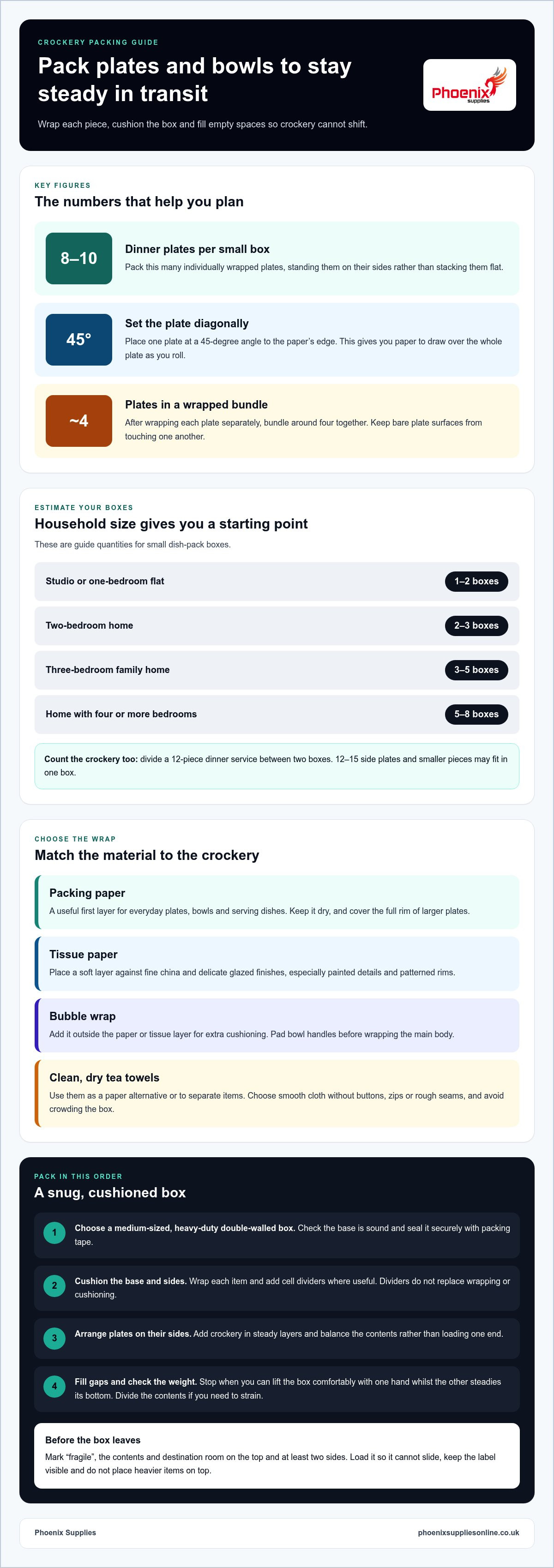
For a small box, pack 8-10 individually wrapped dinner plates, standing them on their sides rather than stacking them flat. The best way to pack plates and bowls is to wrap each piece securely, cushion the box and fill empty spaces so the crockery can’t shift in transit.
It’s easy to assume a flat stack is the safest way to move plates. Packing them on their sides helps them absorb knocks, while careful wrapping and a snug fit add protection. Bowls need the same steady approach, with cushioning between each one.
This guide shows you how to choose between packing paper, bubble wrap and household linens, then use the diagonal-roll method to wrap plates neatly. You’ll also learn how to cushion the base and sides of a box, arrange plates and bowls, and fill gaps before sealing it. A few practical steps can make packing feel more manageable and help your crockery arrive ready to use.
Key Takeaways
- Choose a medium-sized, double-walled box for crockery, and use dividers when you need to keep individual pieces apart.
- Match the wrapping to the crockery: use paper for everyday pieces, with extra care for delicate china and glazed finishes.
- Try the diagonal-roll technique to wrap plates neatly, with the paper secured around each piece.
- Cushion the base and sides of the box, then fill gaps so plates and bowls stay in place during transit.
- Avoid overfilling, loose packing and unclear labels; mark the box as fragile and identify its destination room.
Can you pack plates without packing paper?
Yes. Clean tea towels or bubble wrap can replace packing paper, but wrap each plate separately and cushion every gap. For household box recycling, follow your local council’s guidance, as collection arrangements vary across the UK. Reuse sound boxes and separate clean cardboard and paper for the appropriate collection.
- Choose a manageable box. Use a medium-sized, heavy-duty double-walled box for crockery. A large box can become awkward to lift once it holds plates and bowls. Check that the base is sound, then seal it securely with packing tape before adding anything.
- Add cell dividers when separation helps. Dish-pack boxes with cell dividers keep individual pieces apart, which can be useful for smaller plates and bowls. Wrap crockery before placing it into a cell, and make sure each item fits without force. Dividers organise the contents, but don’t replace wrapping or cushioning around the box’s base and walls.
- Wrap and group plates carefully. Without packing paper, use clean, dry tea towels or bubble wrap around each plate. Keep the wrapping secure, then bundle around four plates together. Avoid placing bare plate surfaces against one another. As a practical limit, pack 8-10 individually wrapped dinner plates in a small box, leaving room for cushioning.
- Estimate boxes from your crockery. Count plates, bowls and serving pieces before choosing how many boxes to prepare. A 12-piece dinner service is best divided between two boxes, while 12-15 side plates and smaller pieces may fit in one. A studio or one-bedroom flat may need 1-2 small dish-pack boxes; a two-bedroom home, 2-3. A three-bedroom family home may need 3-5, and a home with four or more bedrooms may need 5-8.
- Keep each box comfortable to handle. Add crockery in steady layers, balancing the contents rather than concentrating heavy pieces at one end. Stop when the box is light enough to lift comfortably with one hand whilst the other steadies its bottom. If you need to strain, divide the contents between boxes.
- Label and load with care. Write “fragile”, the contents and the destination room on the top and at least two sides. Seal the box with packing tape, then load it so it cannot slide or have heavier items placed on top. Keep the label visible when boxes are stacked.
Choosing packing paper, bubble wrap, or linens
- Choose paper for everyday crockery. Packing paper makes a useful first layer for plates, bowls and serving dishes. It separates surfaces and is easy to fold around different shapes. Use fresh sheets for pieces with sauces or food residue, and keep the paper dry before wrapping. For larger plates, check that the paper covers the full rim, rather than leaving an edge exposed.
- Use tissue for delicate finishes. Fine china and delicate glazed pieces need a soft layer against their surfaces. Tissue paper is suitable for this first wrap, particularly around painted details and patterned rims. Place a sheet over the face, fold it gently around the edge, then secure the overlap without pressing on raised decoration. Keep tissue between any two pieces that could rub during handling.
- Add bubble wrap outside the first layer. Bubble wrap provides another cushioning layer around wrapped crockery. Put paper or tissue against the item first, then wrap bubble material around the outside. This arrangement keeps its textured surface away from delicate decoration. For a serving bowl with handles, fold padding around each handle before covering the main body, so the protruding parts aren’t left exposed.
- Make household linens work without adding pressure. Clean, dry tea towels can wrap a small group or separate items inside a box. Choose smooth cloth without buttons, zips or rough seams. Fold a towel into a broad pad for a serving dish, or wrap it around a securely paper-wrapped item. Linens are thicker than paper, so avoid using so much that the box becomes crowded.
- Match the material to the piece. Consider the crockery’s finish, shape and space in the box. A plain plate may need a paper wrap, while a patterned china dish benefits from tissue against its surface and cushioning outside. Bubble wrap suits areas that need extra padding; a tea towel can fill a broad space. Keep each layer even, so delicate rims and handles receive support without being squeezed.
- Keep supporting materials ready. Set out paper, tape and suitable cushioning before you begin, then prepare one piece at a time. This makes it easier to notice an uncovered edge or a loose fold before boxing. For wider household packing, bubble wrap and furniture covers can help protect other items alongside your crockery. Keep wrapping materials clean and dry until you need them.
The diagonal-roll method for wrapping plates
- Set up a clear wrapping station. Choose a flat, stable surface around waist height, such as a clear kitchen table. Keep packing paper, tape and a marker within reach. A steady surface helps you control the plate as you wrap it, rather than letting it slide towards the edge. Check each plate for chips before covering it, so you can keep damaged pieces separate.
- Position one sheet of paper diagonally. Lay a sheet flat, then place a plate at a 45-degree angle to the paper’s edge. The corners of the sheet should point towards the plate’s rim. This angle gives you paper to draw over the whole plate as you roll. Use a larger sheet for a wide dinner plate, so its rim won’t remain exposed.
- Bring the first corner over the plate. Pull the nearest paper corner across the plate’s face. Keep the paper smooth, but don’t press hard on the centre or rim. Turn the plate as you draw the next section of paper over it. Work around the circumference, keeping the plate centred and covered rather than pulling the sheet tight in one direction.
- Continue rolling across the sheet. Rotate the plate and roll it diagonally through the paper, bringing the side edges in as you go. Each turn should cover a fresh section of the plate. Pause if a rim becomes visible, then reposition the paper before continuing. A complete wrap covers both faces and the edge, which is often the first part to meet a neighbouring plate.
- Secure the finished wrap. Fold any remaining corners over the plate and secure the paper with a short piece of packing tape. Keep tape on the paper, not on the crockery. For dinner plates over 28 cm in diameter, use three sheets of packing paper. Add another sheet if the rim or face still shows through after rolling.
- Check the protection before packing. Hold the wrapped plate gently by its edges and look for gaps, loose folds or exposed decoration. Add paper where the wrap has shifted. A double-wrap takes an extra 30 seconds per dinner plate, and gives you another layer where a single sheet feels thin. Keep each wrapped plate separate until you arrange it in the box.
- Repeat the same method for each plate. Use a fresh sheet for every plate, including smaller side plates. Consistent wrapping makes the bundles easier to arrange and inspect. When the plates are ready, place them on their edges in the box, with cushioning supporting them. Avoid forcing wrapped plates together; the paper should protect each piece without being crushed.
Box cushioning and gap filling
- Prepare the box base. Use a sound, double-walled box and tape its bottom seam securely. Line the base with 5-7 cm of crumpled packing paper, spreading it evenly into the corners. This soft layer supports the crockery and helps absorb knocks from below. Keep the centre as well cushioned as the edges, so the first plate doesn’t rest directly on cardboard.
- Cushion the internal walls. Line the sides with bubble wrap or layers of packing material before loading crockery. Cover each wall from the base upwards, especially where plate edges may sit close to the cardboard. Keep the lining flat rather than bunched into the box. That leaves a clear space for the crockery and reduces the chance of hard contact with the sides.
- Place wrapped plates steadily. Set plates on their edges within the cushioned box, then arrange them so they stand securely. Add soft padding around the row to stop it leaning or sliding. Avoid wedging plates tightly against the wall; compressed edges can take the force of movement. The paper lining should support the row without bending or pressing on the rims.
- Separate each bowl with paper. Put a layer of packing paper between every bowl to help prevent chips where rims meet. Wrap the bowls, then bundle three or four together before placing them in the box. Sit the bundle on a cushioned layer and add padding around its sides. Keep the bowl group stable, without forcing it into a narrow space beside plates.
- Fill side gaps as you load. Use scrunched-up tissue paper to fill open spaces around the crockery. Tuck it gently into gaps between the contents and the box walls. Add small pieces where a plate row or bowl bundle could shift, rather than pushing one large wad against the crockery. The aim is a snug fit, not pressure on delicate edges.
- Check for movement before closing. Once the box is filled, gently test whether the contents can move. If you hear or feel crockery shifting, add tissue paper to the loose area. Don’t push down on the contents to make room. Remove an item or rearrange the packing if the box feels crowded or the top padding cannot sit level.
- Add a protective top layer. Cover the crockery with at least 5 cm of crumpled packing paper before closing the flaps. Keep the top layer even, with extra paper over any exposed edges. Close the flaps without forcing them down. If they bulge or resist, adjust the contents so the box can close without putting pressure on plates or bowls.
- Separate stacked layers when needed. If fragile glasses share a box in two layers, place a sheet of cardboard between the layers. Make sure the divider lies flat and supports the upper layer evenly. Add cushioning above and below it, then fill gaps around the glasses with tissue paper. This keeps the upper layer from resting directly on the glassware beneath.
What are common packing mistakes that cause plates and bowls to break?
- Leaving parts of a plate exposed. A loose sheet or uncovered rim leaves a weak point where a knock can chip the crockery. Wrap each plate fully, including its edge, and inspect both faces before boxing. Use three sheets of packing paper for dinner plates over 28 cm in diameter. For bowls, add a paper layer between each piece, including where their rims meet.
- Stacking plates flat. A tall, flat pile puts pressure through the lower plates and can shift as the box moves. Instead, pack plates on their sides, with their edges supported by padding. Keep the row steady, rather than leaning plates against the box wall. If you’re packing different sizes, group similar plates together so smaller pieces don’t slip between larger ones.
- Putting crockery directly against cardboard. A bare box base or wall gives plates and bowls little protection from knocks. Line the base and internal sides with cushioning before loading. Keep padding even beneath the crockery, rather than leaving a thin centre and thick corners. Add paper or bubble wrap where wrapped edges sit near the cardboard.
- Leaving gaps inside the box. Empty spaces let plates rattle or slide into one another during transit. Fill gaps with scrunched-up tissue paper as you load, including spaces beside the box walls. Don’t push a large wad hard against a plate. Aim for a close fit that stops movement without compressing rims or forcing bowls out of position.
- Overfilling or choosing a box that’s too large. A large box packed with crockery can become awkward to lift, while a full box gives you little room for cushioning. Keep to a small box for 8-10 individually wrapped dinner plates. Stop if the box becomes uncomfortable to lift, then divide the contents before sealing it.
- Using a damaged box or weak closure. A split seam or soft base can give way under crockery weight. Check the bottom and corners before packing, then seal the base securely with packing tape. Close the top without forcing the flaps down. If they bulge, remove or rearrange items and restore a level layer of cushioning.
- Loading fragile boxes carelessly. Heavy items placed on top can press down on plates, and an unsecured box can slide during transit. Mark the box “fragile”, name its contents and destination room, and write on the top and at least two sides. Load it where labels stay visible, and keep heavier boxes off it. Use suitable packing materials for your move to protect crockery and help prevent shifting.
Phoenix Supplies UK: Small Moving Boxes
Phoenix Supplies UK sells moving boxes to help you organise crockery and other household items for a move. Small Moving Boxes can keep a carefully packed set of plates and bowls manageable. Choose Medium Moving Boxes for a mix of crockery and other belongings, or Large Moving Boxes when you need more room.
Match each box to its contents, leaving room for protective wrapping and cushioning. Extra Large TV Moving Boxes are available for televisions, so you can keep that separate packing need distinct from your crockery.
Browse the box range at phoenixsuppliesonline.co.uk, or contact Phoenix Supplies UK with your packing questions.
Make your next move easier to organise
Before moving day, decide where your crockery will go in your new kitchen. Planning its destination makes unpacking easier and helps keep everyday items within reach. It also gives you a practical way to choose which boxes to open first.
The best way to pack plates and bowls is a method you can follow carefully from wrapping to loading. Keep your packing area organised, work through one group at a time, and leave room to handle each box safely.
If you’re preparing for a move and need suitable boxes, Phoenix Supplies UK can help you find options for your packing plans. Contact Phoenix Supplies UK for packing help, and take your next step with confidence.
Frequently Asked Questions
How many plates can go in one box?
There’s no fixed number of plates or bowls for every box: capacity depends on their size, shape and wrapping. Count your crockery by type, then compare your largest plates with the box’s usable space. Include serving platters and unusually shaped dishes in your plan instead of assuming they’ll fit with standard dinner plates. Keep related sets together where practical to make unpacking and matching easier.
How do you pack crockery for moving?
The best way to pack plates and bowls for a move is to start by sorting what you’ll need first in your new home. Group crockery by cupboard or use, such as breakfast bowls, everyday plates and special-occasion pieces. Keep each group easy to identify and note its destination in your room plan. This creates a useful unpacking order and helps you find essential kitchen items without opening every box.
Should you wrap plates in paper or bubble wrap?
For most household plates, paper is practical; use bubble wrap when the shape or finish needs extra padding. Check each item before choosing: smooth plates are easy to cover with paper, while raised edges or unusual contours may need a more flexible outer layer. You can combine materials, tailoring the protection to each piece rather than wrapping everything the same way.
What packing materials are best for plates and bowls when moving?
Choose materials to suit your crockery and box. Set out wrapping sheets, tape, a marker and a clean surface. Keep a separate cloth handy to remove dust or moisture before wrapping, and don’t seal damp crockery in a box. For a mixed collection, sort your materials first so you can easily change methods for delicate or unusually shaped pieces.
How should you wrap plates individually to prevent breakage?
Centre the plate on a sheet and fold the paper over its face, turning the plate as needed to cover the whole outline. Tuck loose corners flat so they don’t catch on neighbouring wraps. Secure the paper to itself, not to the plate. Handle the wrapped plate gently and check that the covering stays in place when you turn it.
Should plates be packed flat or vertically in a moving box?
Pack plates vertically, balancing each one securely rather than laying them in a flat pile. This avoids putting the weight of the stack on the lowest plate. Keep the row upright as you add plates, and prevent them from pressing against a box corner. If the box has fitted compartments, ensure each plate sits properly and doesn’t rock when you gently move the box.
How do you pack bowls safely for a house move?
Before wrapping each bowl, check for a separate lid, handle or delicate foot that may need individual protection. Pack lids separately and label them with their matching bowls for easier use later. For bowls with an irregular shape, adjust the wrapping to follow the contours instead of pulling it tight across the rim. This protects distinctive details and makes the set easier to identify.
How much cushioning should you put between plates and bowls?
Use enough cushioning to stop hard surfaces touching, but not so much that crockery is forced out of position. A delicate, thin-rimmed piece needs more careful separation than a sturdy everyday bowl. Check the fit as you pack: cushioning should sit evenly between items and stay in place when the box is handled. If it shifts easily, adjust the layers before closing the box.


