

Protect a glass’s stem before wrapping the rest. To pack glasses for moving safely, wrap each one separately, cushion the stem with several layers of bubble wrap, and fill every gap in a sturdy box so the glasses cannot shift. Tape the box securely and keep it upright during the move.
It’s easy to focus on the bowl and leave the narrow stem exposed, even though it can take the strain if glasses knock together. Extra care when wrapping and arranging each glass helps protect these delicate parts and keeps the contents settled.
This guide covers choosing packing materials, wrapping glassware and protecting wine-glass stems. You’ll also learn how to cushion the box, fill empty spaces and label it clearly, making packing more organised and unpacking easier.
Key Takeaways
- Choose a sturdy box that’s easy to lift, and prepare its base before adding glassware.
- Match your wrapping materials to the glass, with extra attention to delicate stems.
- Keep glasses from knocking together by cushioning empty spaces around and above them.
- Label the finished box clearly so it can be handled and placed with care.
How do you pack glasses safely for moving?
For a UK move, follow any packing conditions in your insurance policy, as requirements can vary. Choose a strong box, wrap each glass separately, keep the load manageable and label it clearly for transit.
-
Choose and reinforce moving boxes
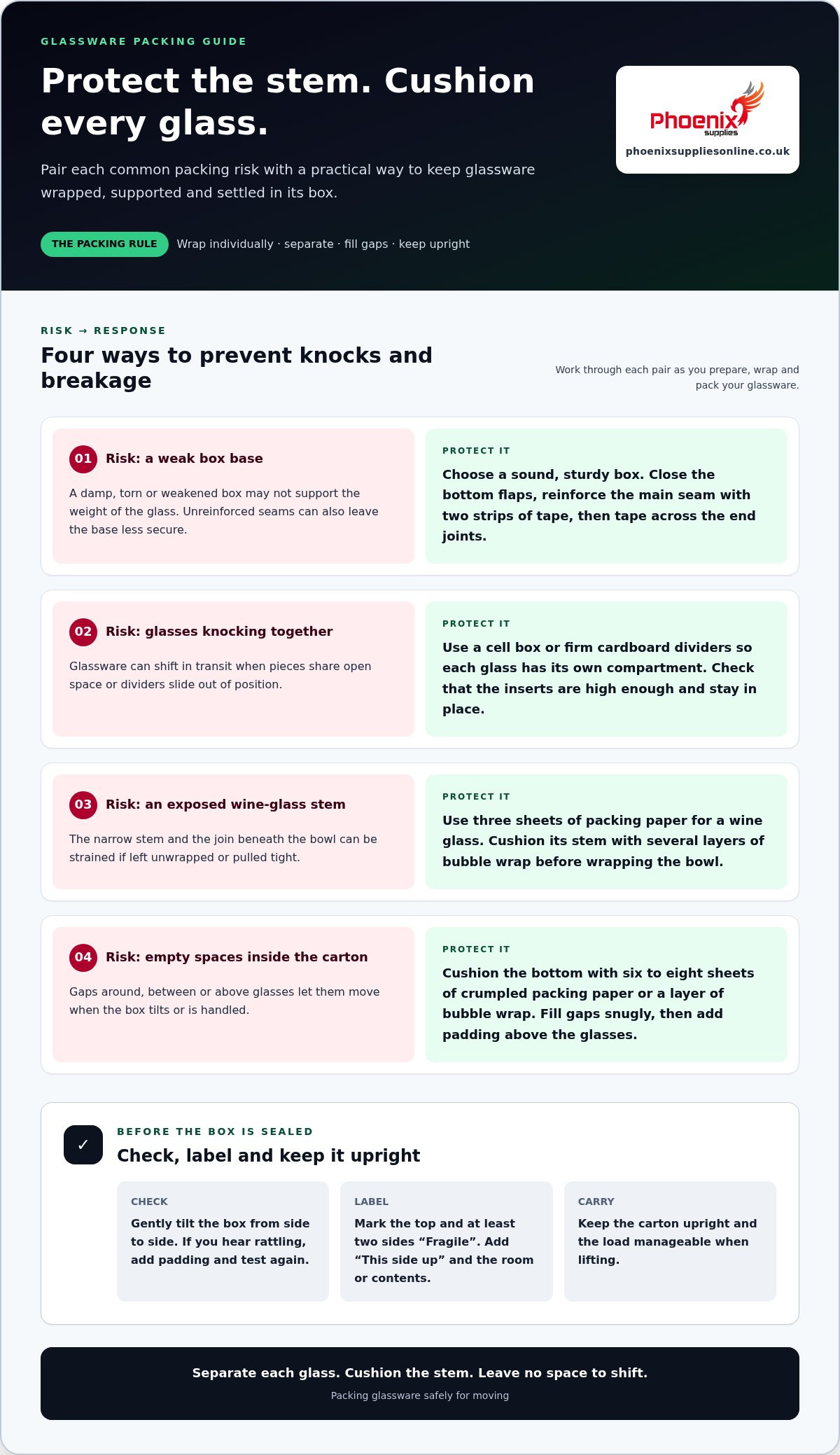
Use a strong cardboard box, preferably small or medium-sized, to keep the glassware load manageable. Before packing, check for damp patches, torn corners or a weakened base; choose another box if you find damage. Close the bottom flaps and reinforce the main seam with two strips of tape, then tape across the end joints. This supports the base under the weight of the glass.
-
Use cell boxes and cardboard dividers
Fit a cell box or cardboard dividers inside the carton before adding fragile items. Each glass gets its own compartment, reducing the chance of pieces knocking together in transit. Use dividers for wine glasses and other stemmed glassware where possible. Check that the inserts sit firmly and are high enough to separate the glasses, rather than sliding aside when the box moves. Put heavier glasses at the bottom and lighter, more delicate pieces above.
-
Keep fragile boxes light and liftable
Pack only as many glasses as you can lift steadily, leaving room for protective sheets and cushioning. The box should feel manageable when lifted, not strained or awkward to hold. If it feels too heavy, split the contents between another carton. Balance the weight across the bottom so the box doesn’t tip as you carry it, and leave room at the top for a final padded layer before sealing.
-
Avoid incompatible items in fragile boxes
Keep heavy or hard objects, such as books, tools and cookware, out of a glassware box. Their weight can press down on glasses, and movement in transit may cause knocks. Pack other individually protected fragile items together only if they fit securely and cannot shift into the glasses. Once closed, label the top and at least two sides “Fragile”, add “This side up” and name the destination room or contents, such as “Wine glasses”. Transport the box upright.
Packing materials for glassware
Match the wrapping to each glass’s shape. Use three sheets of packing paper for a wine glass. Wrap other glasses individually, then add another sheet in a different direction. Cushion each stem with several layers of bubble wrap.
- Set up a clear, comfortable packing area before you begin. Choose a stable table with enough room for the box, paper and each glass. Keep packing paper and bubble wrap within reach, and move clutter, food and drinks away. A clear surface makes it easier to wrap glassware without knocking it against nearby objects.
-
Estimate wrapping material needs
Wrap each glass in one sheet of packing paper, then wrap it again from another direction to cover the rim and base. Use three sheets for a wine glass. For its narrow stem, add several layers of bubble wrap before wrapping the bowl. Adjust the wrapping to each glass’s size and shape. Don’t leave areas exposed or rely on a loose, single layer.
- Put heavier items below delicate ones in a mixed box. Place heavier ceramics at the bottom, with lighter glassware above, and keep hard items from pressing against fragile pieces. Bundle three or four individually wrapped plates, then stand them on their edges. Bundle three or four bowls with the wrapping secured around each piece.
-
Protect valuable or heirloom glassware
Give heirloom and delicate glasses extra protection: wrap them in paper first, then add bubble wrap around the outside. Secure the wrap without pressing hard on thin rims or stems. Keep each valuable glass separate from other items, and use a divider to stop it shifting against neighbouring pieces. Set these glasses aside as you pack so they don’t get mixed into a heavier bundle.
- Before sealing the box, check that every glass is wrapped and that no rim, base or stem is exposed. Keep spare sheets nearby for any glass that needs another layer. Separate packing paper from bubble wrap as you work, so you can choose the right material quickly and finish packing without rushing.
Filling gaps to prevent movement
- Start by cushioning the bottom of the box. Use six to eight sheets of crumpled packing paper or a layer of bubble wrap to soften knocks in transit. Stand each wrapped glass upright, leaving a little space around it for padding. Packing glasses for moving safely means cushioning them without pressing them against the cardboard walls, where bumps can transfer directly to the contents.
- Fill the spaces between glasses as you arrange them. Add crumpled paper between items, including gaps beside the box walls and around the corners. Aim for a snug fit, without squeezing the glass. If a glass shifts when you gently move the box, add more padding in that spot before packing another item.
- Check the top of the box once the glasses are packed. Fill open spaces with crumpled paper or bubble wrap, then add a final cushioning layer above the contents to prevent them moving upwards if the box tilts. Keep the padding level with the top edge so the flaps close without pressing on rims or stems.
- Test the packed box before sealing it. Gently tilt it from side to side and listen for rattling. If you hear movement, fill the remaining gaps with paper and test again until the glasses stay in place. This final check is an important part of packing glasses safely: close the flaps, tape the seam securely and keep the carton upright so its contents stay settled.
Protecting glass stems
- Inspect each wine glass before wrapping, especially where the stem joins the bowl and foot. Look for hairline cracks or chips that could worsen during handling. Set damaged glasses aside rather than packing them with sound pieces. Clear the table, then work with one glass at a time to reduce the chance of catching a stem on another item.
- Hold the bowl gently while covering the stem, keeping your fingers away from the narrow join. Use paper or bubble wrap that won’t slip as you work. Wrap from the foot upwards, overlapping each turn to support the stem evenly. Avoid pulling the material tight, as pressure at the join can strain the glass.
- Once the stem is cushioned, check the glass’s overall shape in your hands. The wrapped stem should no longer be a thin point that could take pressure on its own. Add a little padding where the stem meets the bowl or foot, without making either end bulky enough to press against a neighbouring glass.
- Arrange each protected glass so its stem is supported along its length. A divider should sit beside the wrapping, not press into the stem. Before closing the box, check that no stem can slide into an empty compartment or catch beneath another item. Fill any narrow gap with soft paper rather than wedging the glass in place.
- Lift the packed box carefully from its base and keep it level as you move it. Tilting can shift the contents to one side and put uneven pressure on delicate stems. Once in its transport position, keep the box upright and avoid placing other items on top. These handling steps help the wrapping protect the glasses throughout the move.
Phoenix Supplies UK: Small Moving Boxes
Phoenix Supplies UK offers Small Moving Boxes for packing a manageable amount of glassware without overfilling a larger carton. Choose a box size to suit the number of glasses, leaving room for wrapping and cushioning. Medium Moving Boxes and Large Moving Boxes can suit other household items, while Extra Large TV Moving Boxes are designed for a different packing need.
For wine glasses, the box is only part of the protection. Wrap each glass individually, cushion the stems, use dividers where possible and fill gaps to limit movement. A suitably sized carton helps keep fragile items organised and makes the packed box easier to lift steadily.
For moving boxes to support your packing, contact Phoenix Supplies UK or visit its website.
Plan your packing before moving day
Before you start, set aside the glasses you’ll need straight after the move. Keep them together so you can unpack them first, rather than opening several boxes to find everyday essentials. A short packing list can also help you choose suitable boxes and keep fragile items separate from general household goods.
Knowing how to pack glasses for moving safely makes this task easier to plan around the rest of your move. Phoenix Supplies UK offers Small Moving Boxes, Medium Moving Boxes and Large Moving Boxes to suit different packing needs.
Choose the box size that suits your glassware, then get your packing supplies in place before you begin. Contact Phoenix Supplies UK about packing supplies and get ready to pack at your own pace.
Frequently Asked Questions
Should I pack glasses upright or upside down?
Pack ordinary drinking glasses with their bases flat on the box floor, not upside down. Avoid nesting glasses, even if they appear to fit closely, because one glass’s rim can press against another’s base. If a glass has an unusually wide rim or narrow foot, check that it sits steadily before filling the space around it.
What about other fragile glasses?
Sort delicate glassware by shape before packing. Keep handled glasses, coloured glass and decorative pieces apart from everyday tumblers so each type can be arranged without awkward contact. Remove detachable lids or stoppers and pack them separately. Group matching pieces together and note the contents on the box to make unpacking and checking the set easier.
What materials are best for packing glassware?
Choose clean, dry packing paper, bubble wrap and a sound cardboard carton. Paper covers surfaces, while bubble wrap adds a separate cushioning layer where needed. Cardboard inserts can divide the box for different shapes. Have all materials ready and keep them dry: damp paper can tear more easily and leave glassware unpleasant to unwrap.
What packing materials are best for safely moving glasses?
For a mixed collection, prepare a sturdy carton, packing paper, protective wrap and cardboard separators before sorting the glasses. The best combination depends on the shapes: broad tumblers need room to sit flat, while tall glasses need enough height to avoid pressing against the top. Avoid loose household items that could shift or leave hard edges against the glass.
What is the safest way to wrap drinking glasses for a move?
Wash and dry each glass fully before wrapping, especially around the base where water can collect. This helps prevent stale smells or marks during storage. Check for chips before packing and set damaged glasses aside rather than bundling them with sound ones. Leave enough room in the carton for wrapped glasses to sit without being forced into a tight fit.
How should you pack stemware and wine glasses to prevent breakage?
Choose a carton deep enough for the tallest glass, such as a champagne flute, without forcing it against the closed flaps. Sort tall and short stemware separately so each type sits securely. Keep wine glasses together by shape or set, and note the contents. Careful labelling makes unpacking simpler and helps you spot any missing piece.


