

Knowing how to pack small appliances starts with preparing each item and choosing protection that suits its shape and delicate parts. Keep accessories together, secure the appliance in a suitable box, and label the package clearly. A steady process helps protect everyday kitchen equipment without making packing more complicated than necessary.
Packing a toaster, kettle or coffee machine brings different challenges from packing larger household items. Appliances may have loose fittings, glass parts, cords or surfaces that can be marked if they shift. Consider what each item needs before packing, rather than treating every appliance the same way.
This guide covers preparation, protective wrapping, box selection and final checks before sealing a carton. Follow the steps to keep components together, decide between original packaging and other materials, and make boxes easier to identify in your new home. Whether you’re packing a few kitchen essentials or preparing for a full move, you can work at a manageable pace.
Key Takeaways
- Clean and dry appliances thoroughly, then keep detachable parts organised so they’re ready to pack.
- Choose the original box where possible, or wrap each appliance carefully with extra protection for delicate parts.
- Select a box that leaves room for cushioning, then seal it securely and label its contents clearly.
- Fill empty spaces to prevent movement, helping appliances and their parts stay in place during the move.
Cleaning and drying appliances before packing
- Unplug, clean and dry each appliance. Wipe away crumbs, grease and dust from kitchen items such as a toaster, kettle or coffee machine. Empty water reservoirs and removable trays, then let every part dry completely before packing. Moisture trapped inside a closed appliance can encourage mould or mildew. For storage, clean appliances and leave them to dry for a whole week beforehand.
- Remove loose parts and organise the cords. Take detachable pieces off blenders, food processors and coffee machines. Put small accessories in a labelled bag and keep it with the matching appliance. Coil each cord neatly, then secure it with a twist tie or cable organiser. For a complicated coffee machine setup, photograph the connections before unplugging anything. Remove batteries and store them separately.
- Prepare a microwave separately. Take out the glass turntable and its support ring before moving the microwave. Clean and dry both pieces, then wrap the glass plate carefully to protect it from knocks. Secure the power cable against the back of the appliance so it won’t drag or catch. Place the microwave upright, as it normally sits on a kitchen counter, and keep its removable parts with it.
- Consider the journey. For a flight or checked luggage, wrap the appliance and detachable parts separately, then cushion them in a firm case so they cannot shift. Keep cords secured and protect switches or sharp attachments from knocks. Airline baggage rules vary, so check your carrier’s requirements for the appliance and any batteries before travelling. For a house move, use packing paper or bubble wrap and keep each appliance’s parts organised.
Choosing original packaging or protective wrapping
Protect each appliance without forcing it into an unsuitable box. Use its original packaging where possible; otherwise, wrap it securely and cushion delicate parts.
-
Choose original packaging when it fits
Use the original box and inserts for a kettle, food processor or coffee machine if they remain in good condition. The shaped inserts help hold the appliance in place. Check that the box closes without pressing against switches, handles or other parts. If the packaging is missing, wrap the appliance in two to three layers of protective material. Bubble wrap for moving can cushion surfaces and edges.
-
Wrap appliances and fragile components
Wrap each kitchen appliance separately, covering corners and exposed surfaces evenly. Add extra cushioning around glass, removable attachments and delicate controls. Protect sharp blades with a firm layer of packing material, keeping cutting edges covered and away from loose accessories. Don’t place an unprotected blade beside a cord or plastic attachment. Ask a friend to check that the wrapping stays secure when you gently handle the appliance.
-
Wrap the toaster
Wrap a clean, dry toaster in two layers of packing paper. Secure the first layer at each end with tape, then add another sheet around the body. Keep tape on the paper, not directly on the toaster. Check that the crumb tray is in place and the controls aren’t pressed by tight wrapping. This method also helps when you pack small kitchen appliances, keeping loose parts from catching in openings.
-
Sort packaging for recycling
Separate cardboard, paper and plastic wrapping instead of mixing them. UK recycling collections vary by council, so follow your local council’s guidance on accepted materials. Keep reusable original boxes and inserts for future moves. Where practical, remove tape and labels from cardboard, and keep wrapping clean to make sorting easier.
Sealing and labelling boxes
During transport or storage, appliances can be damaged by knocks, crushing, moisture or movement inside a loose box. Knowing how to pack small appliances also means choosing a suitable carton and labelling it clearly for handling.
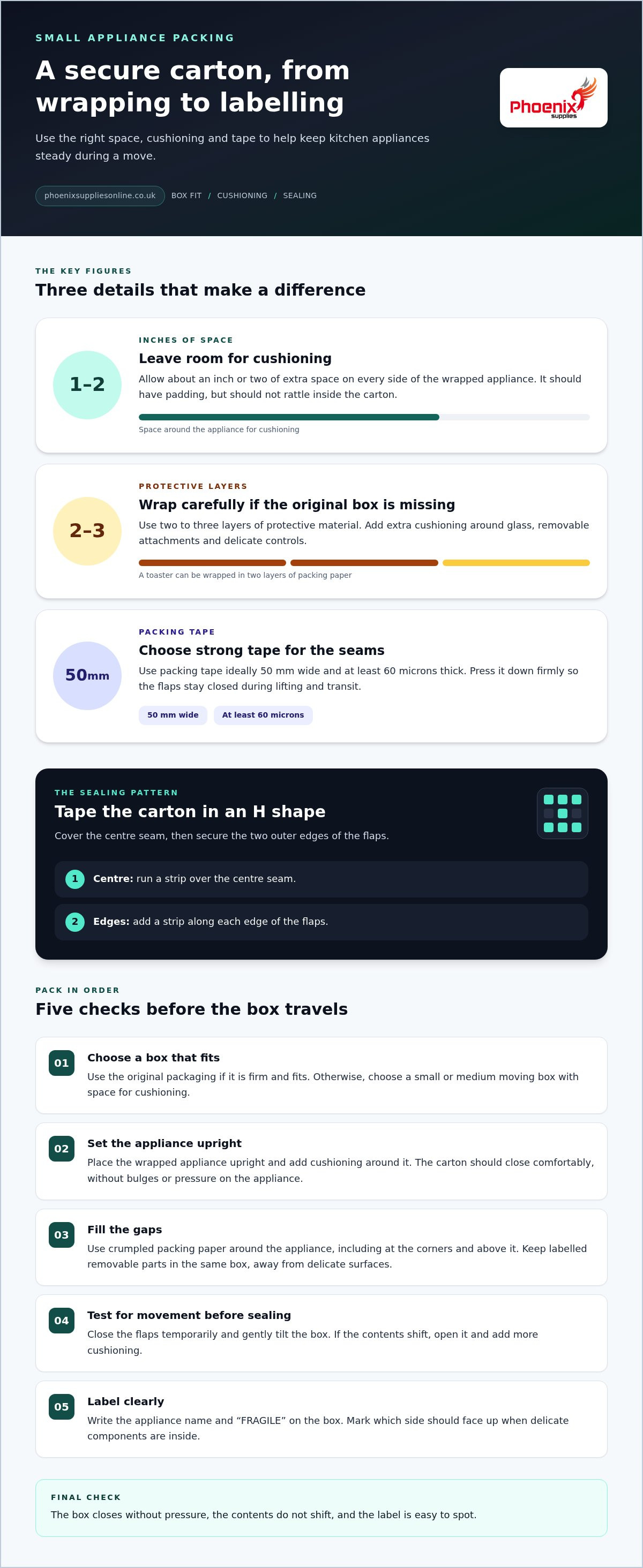
- Choose a suitable box. Keep the original packaging if it remains firm and fits the appliance. Otherwise, choose a small or medium moving box with room for cushioning. Leave about an inch or two of extra space on every side. A coffee maker needs enough space for padding, but shouldn’t rattle inside the carton.
- Check the fit before sealing. Place the wrapped appliance upright and add cushioning around it. The box should close comfortably without bulges or pressure on the appliance. If you’ve disassembled a coffee maker, keep its labelled removable parts in the same box, where they won’t press against delicate surfaces.
- Fill spaces and test for movement. Add crumpled packing paper around the appliance, including gaps at the corners and above it. Close the flaps temporarily and gently tilt the box. If the contents shift, open it and add more cushioning before sealing. This helps prevent knocks and accessories moving into the appliance during transport.
- Seal the flaps securely. Use strong packing tape, ideally 50 mm wide and at least 60 microns thick. Apply the H-taping method: run one strip over the centre seam, then one strip along each edge of the flaps. Press the tape down firmly so the seams stay closed during lifting and transit.
- Label and organise each box. If you’re deciding how to pack small appliances for a move, make each label clear and easy to spot. Write the appliance name, such as “coffee maker”, and “FRAGILE” on the box. Mark which side should face up when delicate components are inside. Group boxes by room or appliance type to identify kitchen items quickly when unpacking.
Filling gaps to prevent movement
Cushioning should keep a packed appliance steady without crushing it. Fill gaps with soft materials, then test that the appliance doesn’t shift before the box travels.
- Build a soft base. Place a layer of crumpled packing paper at the bottom of the box before lowering in the wrapped appliance. This helps absorb knocks from below and keeps the appliance clear of the cardboard. A medium box gives room for padding around a small kitchen appliance, but don’t choose a box so large that filling it becomes difficult.
- Fill the side gaps evenly. Add crumpled paper between the appliance and each box wall. Work around all sides, including narrow spaces near handles and corners. The aim is to stop the appliance leaning or sliding, not to press hard against it. If one side has a wider gap, add paper there until the appliance sits centred.
- Pack removable parts separately within the same box. Put a coffee maker’s light accessories in a labelled bag, then cushion the bag so it can’t rattle against the machine. Heavier components belong at the bottom; lighter pieces sit above them. Keep sharp attachments covered and away from appliance surfaces to prevent a scratch during handling.
- Use clean household padding where suitable. Kitchen towels or clothes can fill remaining gaps, provided they’re clean and dry. Fold them around the appliance rather than pushing fabric into openings or controls. Avoid using items that shed fibres or could snag on a plug, blade or removable part.
- Test the packed box before closing it. Gently tilt the box from side to side. If you feel movement, add more crumpled paper or folded fabric, then test again. Leave enough room for the flaps to meet without force. For extra room around a wrapped appliance, choose a medium moving box suited to its shape, then pack the remaining spaces carefully.
Phoenix Supplies UK: Small Moving Boxes
Phoenix Supplies UK offers Small Moving Boxes and Medium Moving Boxes to pack protected appliances securely. Choose a box that leaves room to cushion your wrapped kettle, toaster or coffee machine without excessive empty space. For larger kitchen appliances or several well-organised cartons, Large Moving Boxes can suit the broader packing needs of your move. Extra Large TV Moving Boxes are intended for televisions, not small appliances.
Match the box to the item, add suitable padding and label it clearly before moving day. Phoenix Supplies UK supplies packaging and moving materials for household moves and business needs, available to order through its website.
Visit phoenixsuppliesonline.co.uk to explore the moving box options or contact Phoenix Supplies UK.
Get your moving boxes ready
As you prepare for moving day, think beyond getting appliances safely into boxes. Decide where each item will go in your new kitchen and keep your move plan handy. Knowing where things belong makes unpacking easier and helps you avoid searching through boxes for something you need.
Before packing, note which appliances you’ll need soon after arrival. Keep any information you’ll need to reconnect them, especially equipment with a particular setup. In your new home, unpack carefully and return each appliance to a suitable place.
If you need help choosing packaging for your move, contact Phoenix Supplies UK. A little planning now can make the move-in feel more manageable. Take it one box at a time, and you’ll be ready to get your kitchen back in working order.
Frequently Asked Questions
How to prepare small appliances for packing and moving?
If you're working out how to pack small appliances, unplug each one and let it cool completely first. Empty and dry removable water tanks, crumb trays and other containers. Clean off food or dust, then detach parts such as blender jugs and mixer attachments. Keep each appliance’s accessories together in a labelled bag, and take a quick photo of complicated cable connections before disconnecting them.
How to pack small appliances safely step by step?
Pack each appliance separately and follow a simple order. Place a cushioning layer in the bottom of a snug box. Wrap the dry appliance and position it upright if that’s how it normally sits. Fill gaps to prevent movement, and put removable accessories in a separate, labelled bag inside the box. Close and tape the carton, then mark it as fragile if it contains breakable parts.
What packing materials are best for small appliances?
Choose a sturdy cardboard box, cushioning wrap and paper or other soft material to fill empty spaces. Bubble Wrap can protect smooth housings from knocks, while crumpled paper can stop a wrapped item moving inside the carton. Separate multiple components with a layer of packing material, and keep tape away from appliance surfaces. Phoenix Supplies UK stocks Bubble Wrap for packing items of different sizes.
Should small appliances be packed in their original boxes?
Yes. Use the original box if it’s clean, dry and still holds its shape, especially if the inserts keep the appliance steady. Make sure the cable and detachable parts fit without pressing against the casing. If the box is crushed, torn or missing its protective inserts, choose a close-fitting cardboard carton and add cushioning so the appliance can’t move during handling.
How can I protect fragile parts such as glass bowls and blades?
Separate fragile or sharp parts from the main appliance before wrapping them. Cushion a glass bowl inside and out, then place it in a snug box where it won’t touch other items. Cover removable blades with a firm cardboard sleeve, secure the sleeve with tape, and label the package clearly. Don’t leave blades loose in a bag where they could cut through the wrapping.
Can small appliances be packed with batteries or liquids?
Remove batteries if the appliance allows it, and pack them separately so they can’t touch loose metal items. Check the appliance instructions for battery-specific guidance, and don’t pack damaged or leaking batteries. Empty liquid reservoirs, bottles and drip trays, then let them dry fully. For example, drain a coffee machine’s water tank and pack it only when no moisture remains.


