

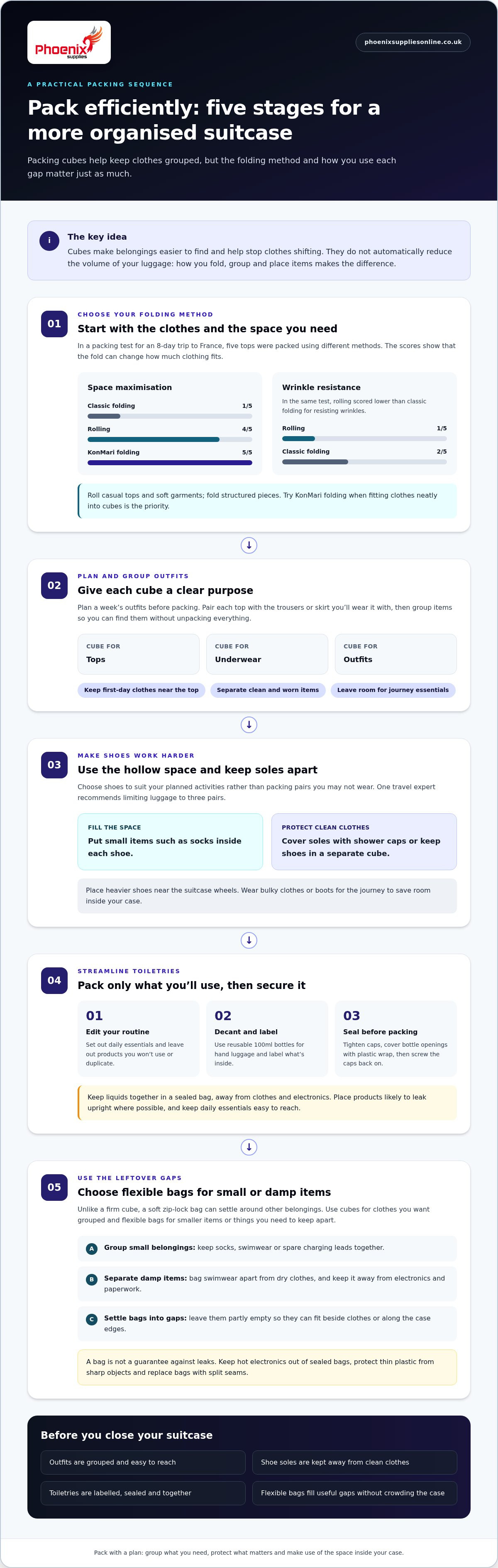
Packing cubes can keep clothes organised and stop them shifting, but they don’t automatically make a suitcase smaller. In one packing test, rolling scored 4/5 for space-saving, compared with 1/5 for classic folding, while the KonMari method scored 5/5. The most useful packing hacks to save space combine a suitable folding method with clever use of every gap, including the space inside your shoes.
If you’ve ever packed neatly, zipped your case and still struggled to fit the essentials, you’re not alone. Packing cubes can make it easier to find what you need, but how you pack them matters just as much as whether you use them.
Here, you’ll learn when cubes help, how to streamline toiletries and use flexible zip-lock bags, plus practical ways to pack shoes without wasting their hollow space. A few small changes can make your luggage easier to organise and leave more room for what you actually need.
Key Takeaways
- Choose a folding approach that suits your clothes, then arrange outfits so they’re easy to reach during a longer trip.
- Streamline toiletries by bringing only what you’ll use and packing bottles carefully to help prevent leaks.
- Use flexible zip-lock bags to separate damp or dirty items, and keep small belongings grouped together.
- Pack fewer pairs of shoes and use their interiors for small items, keeping soles away from clean clothes.
1. Do packing cubes actually save space?
Packing cubes help organise clothes and stop them shifting, but they don’t automatically reduce their volume. Their value depends on how you fold, roll and arrange each item. For a week’s travel, use separate cubes for tops, underwear and outfits, rather than filling every cube just because it’s there. Leave space for items you’ll need during the journey.
A packing test for an 8-day trip to France included five tops. Classic folding scored 1/5 for space maximisation, while rolling scored 4/5. The KonMari folding method scored 5/5 for space, so try it if you want to fit clothing neatly into cubes. These results show that the folding method can matter as much as the organiser.
Rolling can condense clothing and help keep creases at bay, but it isn’t always the best choice for every garment. In the same test, rolling scored 1/5 for wrinkle resistance, compared with 2/5 for classic folding. Roll casual tops and soft garments, then fold structured pieces. Place rolled items vertically to see each one without unpacking the whole cube.
Plan a week’s outfits before packing. Pair each top with the trousers or skirt you’ll wear it with, and put your first day’s clothes near the top. Keep clean items apart from worn clothing in separate cubes. This makes it easier to find a fresh outfit and keeps the rest of your suitcase orderly.
Wear your bulkiest clothes or boots for the journey to save luggage space. Choose layers you can remove comfortably rather than carrying a coat or heavy shoes inside your case.
Vacuum bags can reduce the volume of soft clothing by squeezing out air, which may help with bulky jumpers. They don’t reduce your luggage’s weight, and compressed items can be harder to access and repack. They’re less useful for structured garments that need to keep their shape.
Keep shoe soles away from clean clothes by covering them with shower caps or placing shoes in a separate cube. Put heavier shoes near the suitcase wheels, and use the space inside each shoe for small items such as socks.
2. Streamlining toiletries and decanting skincare
Start with the routine you’ll follow away from home. Set out your cleanser, moisturiser, shampoo and any daily essentials, then remove products you won’t use. Decant skincare into reusable 100ml bottles for hand luggage, and label each bottle so you can identify its contents quickly. Smaller containers take up less room than full-size packaging and help keep your suitcase organised.
Choose toiletries to suit the length and needs of your trip. A small amount of face cream may be enough for a short break, while a longer stay might call for more shampoo or conditioner. Choose travel-size versions of products you use regularly, but don’t automatically pack duplicates. A solid cleanser or shampoo bar can replace a liquid bottle and leave more room for other essentials.
Leaks can spread through a suitcase and damage clothes, so secure each container before packing. Tighten the cap, place a piece of plastic wrap over the bottle opening, then screw the cap back on. Put liquids together in a sealed bag, separate from clothing and electronics. Squeeze excess air from soft toiletry pouches so they lie flat, and keep products likely to leak upright where possible.
Avoid full-size bottles you won’t finish, heavy glass containers and loosely capped products. They can take up space, add weight or spill onto other belongings. Pack only the toiletries you need, and leave out anything that could break or leak in transit.
Before closing your suitcase, check that each bottle is labelled, sealed and easy to reach. Keep daily items such as a toothbrush and cleanser near the top, so you won’t need to unpack everything on arrival. For a house move, rather than travel, keep bathroom essentials together in moving boxes and separate from fragile belongings.
3. Using flexible ziplock bags instead of packing cubes
Flexible zip-lock bags work well for separating small groups of belongings. Put worn socks in one, swimwear in another and spare charging leads in a third. Unlike a firm cube, a soft bag can fit around other items in a suitcase. Leave bags partly empty so they can settle into narrow gaps beside clothes or along the case’s edges.
Use separate bags for clean and used items during travel. After a swim, put damp swimwear in its own bag to keep it apart from dry clothes. The bag helps contain moisture, but isn’t a guarantee against leaks. Keep wet items away from electronics, paperwork and anything else that could be damaged by dampness.
A zip-lock bag can also help protect electronics from sand. Before a beach visit, put small devices such as earbuds or a charging cable inside a clean bag, then seal it. Keep sand-covered items separate from clean clothes when you return. Don’t put hot electronics into a sealed bag, and keep devices away from wet swimwear.
Packing cubes suit clothes you want grouped and easy to find. Use one for tops and another for underwear, then place both where you can reach them in checked luggage. Flexible bags work better for loose accessories, damp items or small belongings that might otherwise get lost between clothes. Combine both methods without filling every space with organisers.
Before closing your case, check what each bag contains. A label or a clear view through the plastic can help you find a cable or clean pair of socks without unpacking. Reuse clean bags on the return journey for laundry or swimwear. Keep sharp objects away from thin plastic, and replace any bag with a split seam before packing it.
For a tidy system, group similar items, seal anything damp and place each bag where it’s easiest to reach. This gives you flexible separation without relying on a cube for every part of your luggage.
4. Packing shoes and using the space inside them
Start with your itinerary, not your shoe collection. Choose pairs suited to the activities planned at your destination, such as walking, formal evenings or outdoor plans. A travel expert recommends limiting luggage to three pairs of shoes, while another guide suggests taking no more than two extra pairs. Treat these as practical prompts: leave behind pairs with no clear purpose.
Choose footwear that serves more than one purpose. Clean trainers may work for both a travel day and casual sightseeing, while a smart, comfortable pair can suit meals and daytime plans. If one pair matches only a single outfit, consider whether that outfit is worth the luggage space.
Arrange shoes as a pair before placing them in your case. Alternate their direction, with one toe beside the other shoe’s heel, to create a neater shape. This can reduce the awkward gaps left when both shoes face the same way. Flat sandals can sit together as a slim layer, while bulkier footwear needs a space of its own.
Stop shoes pressing against delicate items by placing firmer belongings between them. For example, position a toiletry pouch or a folded, sturdy garment between a pair of shoes. Avoid putting anything fragile where shifting footwear could press against it during travel. A separate shoe bag keeps the pair together and makes them easier to lift out at your destination.
Before closing your case, check that each pair has a purpose and that nothing is wedged tightly against its shape. If you’re also organising a house move, keep travel luggage separate from household belongings and plan cartons around what you’ll need first. This simple separation makes both journeys easier to manage.
For a house move alongside your trip, organise your packing so travel essentials stay easy to reach.
Phoenix Supplies UK: Small Moving Boxes
Phoenix Supplies UK supplies Small Moving Boxes to keep compact belongings together during a house move. They’re useful for books, kitchen items and smaller household essentials that can be difficult to organise in larger cartons. Choose Medium Moving Boxes or Large Moving Boxes when your belongings need more room, and Extra Large TV Moving Boxes for televisions.
As you sort your belongings, group items by room or purpose and label each box clearly. This makes it easier to find what you need when unpacking, without mixing smaller items with larger household goods. Choosing the right box size helps you organise everything from individual belongings to larger items.
For boxes that suit your moving plans, contact Phoenix Supplies UK for help choosing the right options.
Make your next packing plan work for you
Before your next trip, set aside time to plan what you’ll actually use. Build outfits around your destination and activities, then leave out anything without a clear purpose. A short list helps you pack intentionally instead of adding last-minute items that make your case harder to manage.
Try these packing hacks to save space on your next journey, and notice which choices also make unpacking easier. Your ideal system may change with each trip, so note what worked and adjust your approach next time. If you’re also preparing for a house move, choose boxes that suit the items you need to pack.
Contact Phoenix Supplies UK today to discuss moving boxes for your household belongings. A little planning can make your next move feel more manageable.
Frequently Asked Questions
Is it better to roll or fold clothes in a suitcase?
To see which method works better for your suitcase, test both before packing everything. Arrange the same set of clothes as rolls, then as folded layers, and compare how much unused space remains. Check whether you can reach the items you need without disturbing the rest. This practical trial helps you choose a layout that suits your case and travel plans.
What is the best way to pack a suitcase?
The best approach is to pack around your itinerary and make each item earn its place. Write down what you’ll need for each planned activity, then remove anything without a clear purpose. Keep documents and valuables in your personal bag rather than buried in your suitcase. These packing hacks to save space also make essentials easier to find during the journey.
What is the least wrinkly way to pack clothes?
The bundle method can help reduce creases by wrapping garments around a soft centre, rather than making separate tight folds. In a packing test, it scored 5/5 for wrinkle resistance, though only 2/5 for space maximisation. Lay out the pieces first, place delicate garments near the centre, and wrap the remaining items around them without pulling fabric taut.
What to do if you packed too many things?
Pause before forcing the zip closed. Take everything out and sort it into essentials, useful extras and items with no clear purpose. Remove the last group first, then look for duplicates, such as spare toiletries or accessories you can share. If the case is still full, wear a suitable bulky layer for the journey and keep your hands free to manage your luggage.
What are the best ways to save space when packing a suitcase?
Start by reducing what goes into the suitcase, rather than trying to compress every item. Choose clothes that work across several plans, and leave out pieces that need a separate outfit or accessory. Keep the case’s expansion section closed, if it has one, as extra room can encourage unnecessary additions. Packing hacks to save space work best when you plan before filling the case.
Is rolling or folding clothes more space-efficient for packing?
Rolling can use space more efficiently in a suitcase with narrow gaps or curved corners, while folded layers may sit neatly across a broad, flat base. The result depends on the case’s shape and how much clothing you’re taking. Try arranging the same pieces both ways, then keep the layout that leaves fewer unusable gaps and still lets the case close comfortably.


