

The space-saving magic of a vacuum bag might actually be the biggest risk to your favourite suit or silk dress. When deciding on wardrobe boxes vs vacuum bags for moving, it's a common dilemma; do you squish everything into tiny plastic pouches or invest in sturdy upright containers? Moving house is already a juggle of logistics, and the thought of spending your first night in a new home ironing out deep creases is far from ideal. Many of us have experienced that sinking feeling when a vacuum bag fails, expanding slowly in the back of a van and putting pressure on everything around it.
In this comparison, you're really choosing between sheer volume and superior protection. We understand that your clothes are an investment, and you want them to arrive in the same condition they left. This 2026 guide explores whether heavy-duty wardrobe boxes or compact bags are the better fit for your specific needs. We'll look at how to transfer items directly from the rail to the van, ways to keep your garments dust-free, and how to maximise your loading space without risking a structural collapse of your boxes.
Key Takeaways
- Understand the key differences between wardrobe boxes vs vacuum bags for moving to protect your favourite clothes from crushing or unexpected leaks.
- Learn why industrial-strength double-wall cardboard is vital for keeping your suits and dresses crease-free and ready to wear.
- Discover the 'deep-seat' technique for locking rails securely into place to prevent hangers from falling whilst in transit.
- Compare the space-saving benefits of compression against the structural safety of upright boxes to find the best fit for your removal van.
- Gain straightforward advice on securing your packing supplies with high-quality tape to ensure every box holds its weight safely.
The Logistics of Moving Clothes: Wardrobe Boxes vs Vacuum Bags
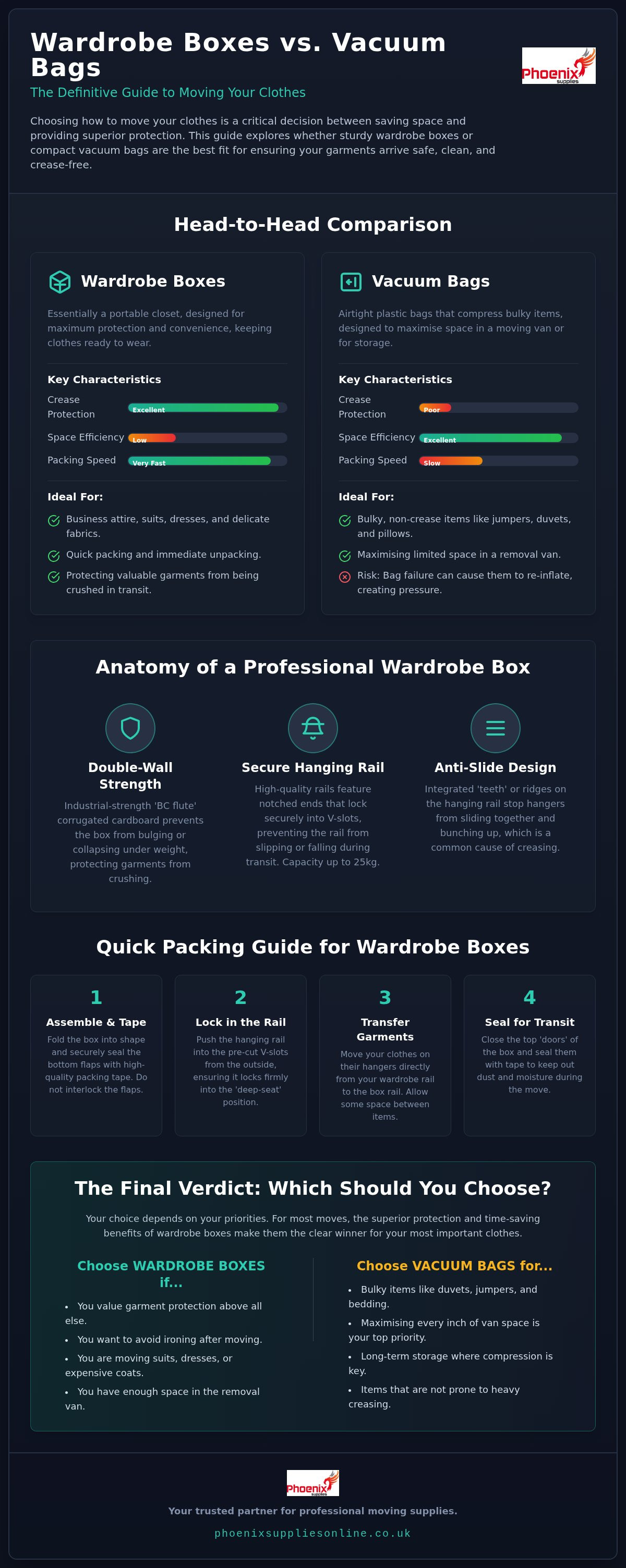
Packing your clothes is often one of the most time-consuming parts of a house move. To simplify this, most people choose between two very different tools: heavy-duty wardrobe boxes or compression vacuum bags. A wardrobe box is a tall, double-walled container designed with an integrated hanging rail. It essentially acts as a portable closet, allowing you to move clothes directly from your bedroom to the van. Vacuum bags, by contrast, are airtight plastic sleeves that use a vacuum cleaner to suck out air, shrinking bulky items like jumpers and duvets into flat, dense packages.
The core trade-off when comparing wardrobe boxes vs vacuum bags for moving comes down to protection versus space. If you are moving a short distance and have plenty of room in your vehicle, the speed of a wardrobe box is hard to beat. However, if you are limited by van capacity or moving into a small flat, the space-saving nature of vacuum bags might seem tempting. Your final choice should depend on three main factors: the value of your garments, the total distance of your relocation, and how much floor space you have available in the removal van.
Eliminating the Post-Move Ironing Pile
One of the biggest advantages of using a wardrobe box is the preservation of your clothes. When items hang vertically, they maintain their natural shape and avoid the deep-set creases that occur when fabrics are crushed together. This is particularly important for business attire, delicate dresses, or expensive coats that are difficult to iron. To reduce the stress of moving, consider the time you'll save at the other end. You can transfer 20 to 30 items from your rail to the box in under a minute. Compare this to the intensive ironing and steaming required after clothes have been compressed in vacuum bags for several days; the time saved on the first night in your new home is significant.
Protection Against the Elements
Moving vans aren't always the cleanest environments. Dust, road grime, and moisture can easily find their way into standard boxes or open bags. Sealed wardrobe boxes provide a robust barrier amongst these elements, keeping your fabrics clean and ready to wear. Because the hanging rail keeps garments suspended, they stay well away from the dirty van floor, even if the box is tilted slightly. For long-distance UK moves or periods in storage, using industrial-strength double-wall cardboard is essential. This thick construction ensures the box won't buckle under the weight of other items, providing a safe, dry micro-environment for your entire wardrobe.
Anatomy of a Professional Wardrobe Moving Box with Rail
A standard cardboard box isn't designed to carry the vertical load of a full rail of clothes. When comparing wardrobe boxes vs vacuum bags for moving, the physical engineering of the box is what sets it apart. A professional wardrobe box is built to stay rigid, even when supporting a rail capacity of up to 25kg of heavy winter coats or formal suits. Without the right structural features, a tall box can easily buckle or lean, which risks damaging the garments inside or making the box impossible to stack safely in the removal van.
Double-Wall Strength vs Single-Wall Bulging
Vertical integrity is everything. Professional-grade wardrobe boxes use double-wall corrugated cardboard, which consists of two layers of fluting sandwiched between three layers of linerboard. This construction is essential because single-wall boxes often bulge outwards under the weight of hanging items. If a box bulges, it loses its ability to support anything placed on top of it and can become a hazard in the van. Look for 'BC flute' strength indicators; this specific combination of fluting provides the industrial-strength protection needed to withstand impacts from other furniture whilst in transit. This level of durability is a key part of The Essential Guide to Cardboard Moving Boxes for any successful relocation.
The Engineering of the Hanging Rail
The hanging rail is the heart of the box. High-quality rails feature notched ends that lock into pre-cut V-slots in the cardboard. This design ensures the rail won't slip or drop, even when subjected to the vibrations of a long road journey. Many rails also include integrated 'teeth' or ridges. These small details stop your hangers from sliding together and bunching up, which is a common cause of creasing. When you follow expert tips for packing your wardrobe, you'll find that these small mechanical features make a massive difference in how your clothes look when they arrive at your new home.
Safe handling is another priority. Hand-holes are a non-negotiable feature, as they allow you to maintain a firm grip whilst navigating narrow hallways or stairs. Finally, consider the height of your garments. Standard boxes are perfect for shirts and jackets, but you'll need extra-tall options for long dresses and overcoats to prevent the hems from dragging on the bottom of the box. If you're planning your pack, you can find our range of heavy-duty wardrobe boxes designed for these exact needs.
Head-to-Head: Which Method Suits Your Move?
Choosing between wardrobe boxes vs vacuum bags for moving often comes down to the financial value of your wardrobe versus the physical space in your van. Whilst vacuum bags are inexpensive and excellent for shrinking down bulky textiles, they aren't a universal solution for every garment. If you're moving expensive wool coats or delicate silk dresses, the cost-per-item of a wardrobe box is a small price to pay for peace of mind. In a professional move, where van space is managed by experts, the vertical room is often under-utilised, making wardrobe boxes a logical choice. For DIY movers using a smaller transit van, the 'space vs safety' debate is more pressing. However, saving space shouldn't come at the expense of your clothes. Structured items like tailored suits or leather jackets should never be placed in a vacuum bag. The intense pressure of compression can cause leather to crack and permanently distort the padding in suit shoulders, which is a major concern for high-quality garments from providers like Frank Casey. Natural fibres like down feathers can also be damaged, as the stems may snap when forced into a flattened state.
Planning your order accurately prevents last-minute stress and ensures you don't overspend on supplies. A standard 18-inch box typically holds 15-20 thin hangers or 8-10 heavy coats. To calculate your needs, simply measure the total width of your current wardrobe rails in inches and divide that number by 18. We recommend categorising your clothes by length before you start. Putting all your waist-length jackets in one box and full-length coats in another ensures you aren't leaving empty space at the bottom of the tall containers. This simple organisation makes the loading process much more efficient on moving day and helps maintain the structural balance of the boxes when they are stacked.
When to Choose Vacuum Bags Instead
Vacuum bags still have a vital role to play in a well-organised move, provided they are used for the right items. They are the superior choice for high-volume, low-risk textiles such as duvets, pillows, and casual knitwear that doesn't crease easily. Using these bags for your bedding can free up several cubic feet of van space, which is especially helpful for DIY moves in smaller vehicles where every inch counts. When you weigh up wardrobe boxes vs vacuum bags for moving, remember that vacuum bags can sometimes leak, causing them to expand mid-move and potentially crush other boxes. Once you've arrived at your new home, these bags are perfect for seasonal storage, keeping your winter wardrobe tucked away and dust-free until the weather turns. If you're focusing on the hanging side of your wardrobe, you'll find more detailed advice in How to Pack Clothes for Moving in Boxes: The Complete 2026 British Guide.
Step-by-Step Guide to Packing Your Wardrobe Boxes
Assembling a wardrobe box correctly is the first step toward a stress-free moving day. Start by flipping the box upside down and securing the base flaps with several strips of high-quality packing tape. You should apply tape across the centre seam and also along the edges to ensure maximum load-bearing capacity. Once the base is solid, flip the box over and identify the pre-cut cardboard V-notches at the top. The 'deep-seat' technique is crucial here; you must press the plastic rail firmly into these notches until it seats fully at the bottom of the V-shape. This prevents the rail from popping out when you're comparing the stability of wardrobe boxes vs vacuum bags for moving on a bumpy road.
When you begin hanging your clothes, focus on balance. Group your garments by weight and alternate between heavy coats and lighter shirts to keep the rail from bowing in the middle. Once the rail is full, seal the top flaps with tape. This creates a completely dust-proof environment, which is a major advantage when choosing wardrobe boxes vs vacuum bags for moving for long-term storage or long-distance transits. If you need to stock up on the right tape or extra containers, you can order heavy-duty wardrobe boxes directly from our family-run shop.
Loading Techniques for Maximum Efficiency
Small adjustments during the packing process can save you a lot of frustration later. We recommend facing all your hangers in the same direction. This simple step prevents the hooks from tangling together whilst the box is in motion. For extra stability, use elastic bands to group five or six hangers together on the rail; this stops individual items from sliding and bunching. Always assemble and pack these boxes in the bedroom where the clothes are located. A fully loaded wardrobe box is tall and can be awkward to move through the house, so it's much easier to pack it exactly where it stands.
Utilising the Dead Space at the Bottom
The space beneath your hanging clothes is a valuable resource if used correctly. You can safely place light, soft items like pillows, cushions, or shoes at the base of the wardrobe box to make the most of every square inch. However, you must never place heavy items like books or kitchenware at the bottom. Doing so shifts the centre of gravity and can cause the box to become unstable or difficult for two people to carry safely. For a complete overview of what else you might need, check out The Ultimate Packing Materials List for Moving House in 2026.
The Phoenix Supplies Difference: Quality You Can Trust
Choosing between wardrobe boxes vs vacuum bags for moving is a lot simpler when you have a reliable partner by your side. At Phoenix Supplies UK, we take pride in being more than just an automated e-commerce platform. As a family-run business, we understand that you aren't just shifting cardboard; you're moving your life's belongings. We've seen first-hand how flimsy high-street alternatives often fail under the pressure of a real house move, which is why we focus on industrial-strength materials that domestic movers can depend on. Our wardrobe boxes are designed to work as part of a complete protection system, integrating perfectly with our removal blankets and bubble wrap to ensure every item in your bedroom stays pristine from the old house to the new one.
Why Board Grade Matters for Your Clothes
The strength of our boxes comes from our commitment to heavy-duty double-wall board grades. Whilst many budget suppliers offer single-wall versions that easily buckle, our double-wall construction provides the vertical rigidity needed to support a hanging rail capacity of up to 25kg. This extra thickness means our boxes are built to be stacked safely in a professional removal van. You can place lighter items on top of them without worrying about the structure collapsing onto your suits or dresses. This focus on durability and structural integrity is a cornerstone of How to Buy Moving Boxes Online in the UK: The 2026 Guide to Packing Kits.
Expert Support for Your Relocation
We believe in straightforward, honest advice that makes your life easier. Our dedicated office team acts as a helpful neighbour, ready to assist you in calculating the exact number of boxes required for your specific wardrobe size. Whether you're moving a single flat or a large family home, we offer the convenience of national UK delivery for both individual boxes and bulk moving kits. Our online ordering process is intentional and transparent, designed to build your confidence without the high-pressure tactics found elsewhere. We're here to guide you through the process, from selecting the right board grade to ensuring your supplies arrive exactly when you need them. If you're ready to start your packing journey with professional-grade tools, you can order your heavy-duty wardrobe boxes with rails from Phoenix Supplies UK and experience the difference that quality makes.
Ready to Pack Your Wardrobe with Confidence?
Deciding between wardrobe boxes vs vacuum bags for moving doesn't have to be a struggle when you understand the strengths of each method. For your suits, dresses, and delicate coats, the structural safety of a double-wall wardrobe box prevents deep creases and saves you hours of ironing. Meanwhile, vacuum bags remain a handy choice for shrinking down bulky duvets or cushions to save precious van space. As a family-run British business, we're committed to providing the industrial-strength cardboard and reliable supplies you need to protect your belongings during transit. We offer national UK delivery on all orders, ensuring you have the professional tools for a successful relocation no matter where you're headed. By choosing high-quality materials and following a methodical packing plan, you can ensure your clothes arrive at your new home clean, organised, and ready to wear. Browse our range of heavy-duty wardrobe boxes today and take the first step toward a stress-free moving day. We're here to support you as you settle into your new home.
Frequently Asked Questions
How many suits can I fit in one wardrobe moving box with rail?
You can typically fit between 15 and 20 suits on thin hangers inside a single wardrobe box. If you're packing heavier wool suits or bulky overcoats, this capacity usually drops to around 8 or 10 items. We recommend grouping your suits by thickness before you start. This ensures you don't overload the rail beyond its standard capacity of 20kg to 25kg, which is the limit for our industrial-strength hanging rails.
Are wardrobe boxes strong enough to be stacked in a removal van?
Yes, our heavy-duty double-wall wardrobe boxes are designed to be stacked safely in a professional removal van. The industrial-strength cardboard prevents the sides from bulging or buckling under the weight of other items. For the best results, always place these boxes on a level van floor and avoid putting extremely heavy furniture directly on top of them. Using removal blankets between stacked items can provide an extra layer of protection during transit.
Do vacuum bags damage delicate fabrics like silk or wool?
Vacuum bags can cause permanent damage to delicate natural fibres like silk and wool. The intense pressure of compression can break or distort fibres, leading to deep creases that are nearly impossible to remove. When weighing up wardrobe boxes vs vacuum bags for moving, choose boxes for these high-value items. This allows the fabrics to breathe and maintain their natural shape, ensuring your expensive garments arrive at your new home in pristine condition.
Can I reuse wardrobe moving boxes for seasonal storage after my move?
Our wardrobe boxes are excellent for long-term seasonal storage once your move is complete. Because they are made from thick, double-wall cardboard, they provide a sturdy, dust-proof environment for your winter coats or summer dresses. Simply keep the rail in place and seal the top flaps with high-quality packing tape. This keeps your clothes organised and protected from moths and dust in a loft or spare room until the seasons change.
Do I need to take the clothes off the hangers before putting them in the box?
No, you don't need to take your clothes off their hangers. The primary benefit of using a wardrobe box is that you can lift garments directly from your wardrobe rail and hook them onto the plastic rail inside the box. This saves a significant amount of time and effort compared to folding every item into standard moving boxes. It also ensures your clothes stay crease-free and ready to wear immediately after your move.
How do I stop my clothes from sliding around on the rail during the move?
To stop clothes from sliding, ensure you are using a hanging rail with integrated notches or ridges designed to grip the hangers. These small ridges prevent your garments from bunching together at one end of the box during transit. It's also helpful to fill the box comfortably; if the rail is too sparse, items have more room to move. Keeping the box full helps maintain a steady balance throughout your journey across the country.
Are wardrobe boxes waterproof if it rains on moving day?
Cardboard wardrobe boxes are not waterproof and will absorb moisture if they are left in heavy rain. Whilst the thick double-wall board offers a short-term barrier against light drizzle, it's vital to keep them dry to maintain their structural strength. If it's raining on moving day, we recommend using our mattress and furniture covers or large plastic sheets to protect the boxes during the walk from the house to the removal van.
Can I fit long evening dresses in a standard wardrobe box?
A standard wardrobe box is often too short for full-length evening dresses or long overcoats. In these cases, the hems of your dresses will bunch up at the bottom, leading to deep creases in the fabric. When comparing wardrobe boxes vs vacuum bags for moving for formal wear, it's better to choose an extra-tall box option. This ensures your garments hang freely without touching the base, preserving the delicate structure of the dress. This is also a vital consideration for ecclesiastical robes and vestments, which are often full-length; for those moving items sourced from specialists like Mary Collings Church Furnishings, an extra-tall box is the only way to ensure they remain in perfect condition.


