

Stretch wrap is best used to secure furniture, not to shield it from knocks. If you’re using stretch wrap for moving furniture, you may be wondering whether it can go directly onto a surface, or whether it could loosen or leave marks in transit. Used with care, it can hold drawers, doors and protective coverings in place. It shouldn’t be pulled tight around every item or treated as a replacement for cushioning.
This guide explains which furniture may be suitable for direct wrapping, when to add a protective layer and how to apply the film without over-tightening. You’ll also learn when Furniture Removal Blankets, bubble wrap or furniture covers may be a better fit, and how these materials can work alongside stretch wrap. Follow the steps from preparing each item to checking that coverings stay secure before loading. With the right material in the right place, you can protect delicate finishes, keep loose parts from shifting and prepare your furniture with less guesswork.
Key Takeaways
- Know when stretch wrap can hold loose parts or protective layers in place, and when cushioning is needed instead.
- Prepare furniture by emptying it and setting removable parts aside.
- When using stretch wrap for moving furniture, overlap each pass gently and avoid pulling the film too tight.
- Choose between Furniture Removal Blankets, covers and bubble wrap according to the protection each item needs.
- Plan your Packaging Materials around the furniture you’re moving, then inspect, wrap and label each item before loading.
Using stretch wrap for moving furniture: what it protects and what it does not
Stretch wrap is a flexible film that clings to itself as you wind it around an item. When moving furniture, its main job is to hold removable components or protective layers in place. It can help limit dust and stop a cover slipping, but it won’t cushion a knock or prevent damage if furniture strikes another object. In short: stretch wrap secures; cushioning materials protect against knocks.
Before using stretch wrap for moving furniture, consider the surface and shape. A sturdy item covered with a blanket is different from a freshly finished cabinet or a chair with delicate upholstery. Curves, projecting handles and uneven edges can also make the film harder to position neatly. For a general overview of the material, see What is stretch wrap?
When stretch wrap is useful for furniture moves
Use the film to secure parts that are already prepared for moving. For example, you could wrap a removable cushion to keep it with its chair, or hold a suitable cover around a table. Empty drawers first, then secure them only if they’re staying in place and the film won’t mark the finish. If a part can be removed safely, setting it aside may be a better option.
Stretch wrap can also hold a Furniture Removal Blanket in position around a cabinet or appliance. Apply it over the blanket rather than treating the film as padding. This is for preparing furniture, not for securing a heavy item inside a moving vehicle. Position and restrain loads appropriately for the journey. Stretch wrap alone isn’t a substitute for suitable load-securing equipment.
When to avoid wrapping a surface directly
Take extra care with delicate, freshly finished or easily marked surfaces. Film may cling to a surface or leave pressure marks, particularly if it’s pulled tightly or left in place. Put a suitable protective layer between the film and sensitive finishes. A blanket or furniture cover can provide a barrier, while bubble wrap may suit some smaller or more delicate areas. Choose a layer that fits the item, and avoid letting the film press directly against vulnerable details.
Make sure furniture is dry before covering it. Wrapping damp wood, upholstery or other materials can trap moisture, especially if the item will be stored. Let surfaces dry fully, and don’t use stretch wrap to seal damp furniture inside a protective covering. Check the shape as you work, too. Film can catch on corners, feet and handles, so guide it around these areas without pulling hard. If a section won’t stay in place without strong tension, use a better-fitting cover or blanket instead.
How to prepare furniture before using stretch wrap
A few minutes of preparation makes wrapping easier and helps you spot anything that needs extra care. Work on one piece at a time, with enough space to reach around it safely. Clear a route for moving the item, and gather any covers or blankets before you start. Don’t wrap around contents, dust or damp patches, as these can get in the way of protecting the furniture properly.
Empty each piece, let surfaces dry, then protect the finish before wrapping. This gives you a clean starting point and helps prevent loose contents or trapped moisture from causing problems during the move.
Empty, clean and assess each piece
Take everything out of drawers, cupboards and cabinets. Even light contents can shift when furniture is lifted, and removing them makes each piece easier to handle. Wipe away loose dust with a suitable cloth, then check that the surface is fully dry. Look for loose fittings, delicate details, existing marks and areas that may need a protective layer.
Pay particular attention to handles, glass panels, decorative edges and projecting parts. Note anything that could catch on a cover or be pressed by film. If you find a loose fitting, decide whether it can be secured or should be removed and kept separately. A quick inspection helps you choose a suitable wrapping approach before you begin.
- Empty drawers, cupboards and cabinets.
- Remove loose dust and make sure surfaces are dry.
- Check for fragile details, loose fittings and delicate finishes.
- Set aside any parts that need separate protection.
Protect removable parts and delicate finishes
Remove detachable shelves or legs only when it’s practical and safe. Keep screws and other small fittings together in a labelled bag, and store that bag with the furniture it belongs to. If a part is awkward to remove or feels stuck, don’t force it. Instead, consider how to protect it in place and make a note so it’s easy to identify during loading.
Place a suitable cover or Furniture Removal Blanket between stretch wrap and a finish that could mark easily. Make sure the protective layer sits smoothly, without folds pressing into corners or decorative details. For glass or other delicate areas, add appropriate protective material before covering the item. Prepare the surface first, then use film only where it helps keep that protection in place.
For your move, choose furniture covers and removal blankets to suit the pieces you’re preparing. Once each item is empty, dry, inspected and protected, it’s ready for wrapping.
How to apply stretch wrap to furniture step by step
Start with a stable piece of furniture that already has its protective layer in place. Keep the film under control as you work, using only enough tension to hold the covering or prepared parts steady. You should be able to smooth the wrap into position without pulling the furniture, crushing padding or pressing film against a delicate finish.
- Set the item securely. Work on a steady surface with room to move around it. If the furniture rocks or shifts, stabilise it before wrapping.
- Find a suitable starting point. Begin at a secure part of the protective covering, such as a lower edge. Keep the film on the covering rather than directly on a sensitive surface.
- Make a steady first pass. Guide the film around the item without yanking it. Keep it clear of fragile details, handles that need to remain accessible and openings that should not be sealed.
- Overlap each pass. Continue around the furniture, overlapping the previous layer enough to hold the cover in place. Keep the film close to the protective layer, but don’t pull so tightly that soft padding compresses.
- Adjust as you go. Pause if the film pulls a cover out of position, distorts a cushion or presses against a vulnerable detail. Ease it off and reposition the layer before continuing.
- Finish and check. Secure the end against the wrapped layer, not a delicate finish. Check that the covers and any parts being held in place haven’t shifted.
Wrap evenly without pulling too tightly
Even coverage matters more than a tight finish. Keep the roll close to the furniture and guide it around corners in a controlled line. Overlap passes to hold the blanket or cover, but stop if the material starts to pinch or compress. If a section feels loose, adjust the film’s path or the protective layer instead of pulling harder.
Finish, check and remove the film carefully
Before moving the item, check the whole covering. Make sure the film hasn’t slipped over a handle, trapped a loose part awkwardly or blocked an opening you need to reach. Stretch wrap holds protective layers and prepared components in place. It doesn’t replace suitable equipment for securing heavy furniture inside a vehicle.
After the move, remove the film slowly. Use scissors or a suitable cutter with the cutting edge facing away from the furniture, and keep it clear of the surface beneath. Cut a small opening in the film first, then peel it back by hand where possible. Take extra care around corners and fabric, where a blade could catch.
For a steady wrapping process, match the protective layer to the item before you begin. Furniture Removal Blankets and covers provide a barrier beneath the film, while careful, even passes help keep that layer in position without over-tightening.
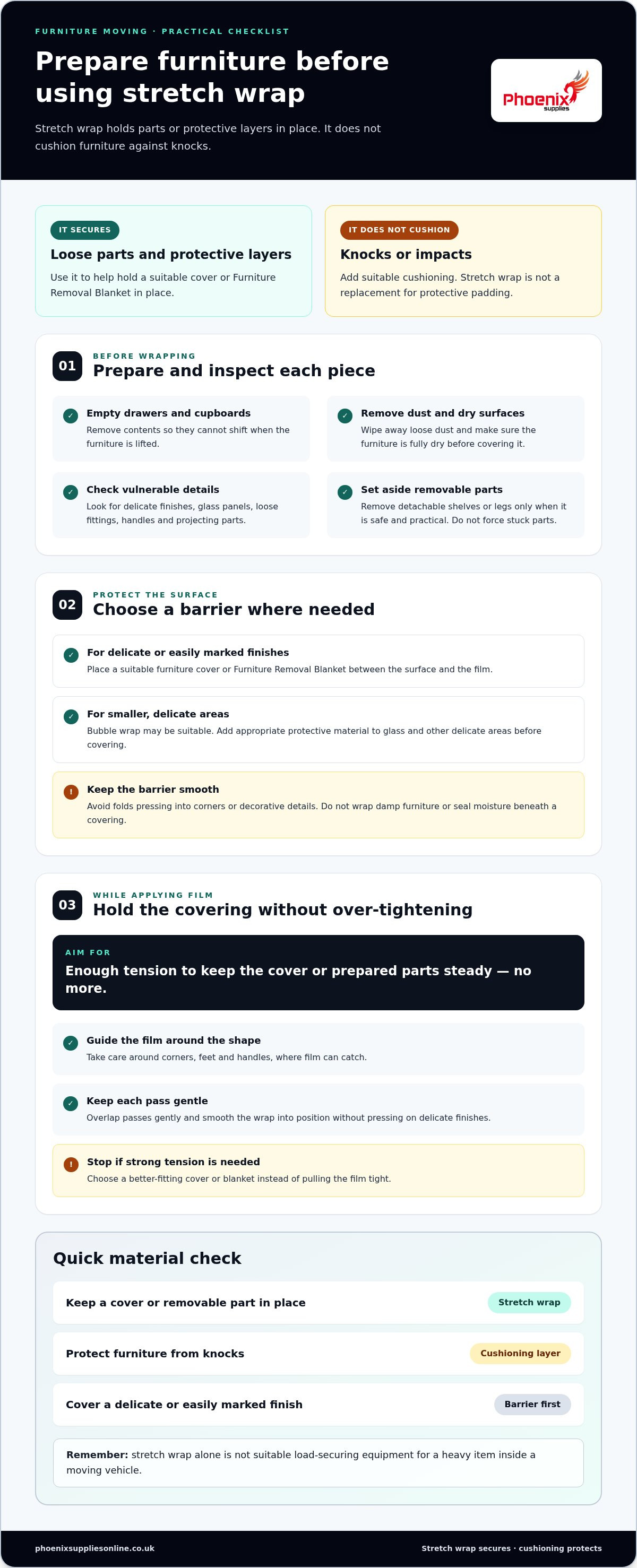
Stretch wrap, Furniture Removal Blankets and covers: choosing the right combination
Choose each layer for a clear purpose. Stretch wrap can hold a cover or prepared loose component in place. A blanket or furniture cover provides a barrier around the item, while bubble wrap can be useful for selected smaller or vulnerable details. No single layer suits every piece. A combination may make more sense for furniture with a delicate finish, projecting parts or surfaces that need different kinds of protection.
Before wrapping, consider what the item needs protection from: contact with other objects, surface marking or dust. This keeps your choices practical and avoids relying on film to do a job it isn’t designed for. For a fuller look at cover options, the guide to furniture covers for moving can help you assess the outer layer.
Match the material to the protection needed
For a covered table or cabinet, stretch wrap can help keep the outer layer in position. Furniture Removal Blankets provide a protective layer for furniture and appliances during a move. If the item has a particularly delicate detail, use bubble wrap on that area where suitable, rather than trying to cover a whole large piece with it. Keep the film from pressing directly onto a sensitive finish.
- To hold: use stretch wrap over a suitable cover or around a prepared component.
- For a protective layer: choose a Furniture Removal Blanket or furniture cover that suits the item.
- For selected details: add bubble wrap where a smaller, vulnerable area needs its own layer.
Check that the materials sit smoothly together. A folded blanket can create pressure points, and film pulled too tightly may press through a soft layer. Adjust the layers if they bunch around a corner or leave a delicate feature exposed.
Choose a layered approach for larger moves
Think of protection in stages. First, place a suitable barrier against the furniture surface if it needs one. Next, add a blanket or cover for broader surface protection. Then use stretch wrap to help keep that layer in place. For example, a sideboard may need a surface barrier beneath a blanket, with film holding the blanket around the body while leaving handles and openings accessible.
Different pieces may need different combinations. A sturdy item with a simple shape may need less coverage than furniture with glass, upholstery or projecting details. Avoid adding layers without a purpose, and make sure they don’t hide a feature you need to inspect or handle. The packing materials list for moving house can help you plan materials for different furniture, rather than assuming every item needs the same setup.
Once you’ve matched the layers to each piece, gather the Furniture Removal Blankets, covers and bubble wrap you need for your move.
Get furniture ready for moving day with the right Packaging Materials
A simple plan helps you prepare each item without using the same materials for every surface. Inspect the furniture, decide which layers it needs, apply them carefully, then check and label the finished piece. The right choice depends on the number and type of items you’re moving. A household with upholstered chairs and a wooden table may need a different mix from a business moving display units or office furniture, which is why professional relocation teams like MK MOVERS AND PACKERS LLC tailor their wrapping and packing methods to the specific requirements of each piece.
A simple furniture-wrapping checklist
Before using stretch wrap for moving furniture, work through this checklist for each item. It helps catch missed details before loading and keeps the process consistent across a home or workplace move.
- Inspect: Check for loose parts, delicate details and areas that need extra care.
- Prepare: Make sure the item is empty, clean and dry before adding protective materials.
- Choose layers: Set aside a suitable cover or Furniture Removal Blanket, and add bubble wrap where a smaller, vulnerable area needs it.
- Wrap: Use stretch wrap to hold the chosen protective layer in place, without pulling it so tightly that it presses into the furniture.
- Check and label: Make sure coverings stay in place and don’t obstruct safe handling. Add a clear label if it will help identify the item or its parts at the other end.
Keep the route from the preparation area to the loading point clear, and group labelled fittings with the furniture they belong to. These small steps help keep furniture and removable parts organised.
Find suitable moving materials for your move
Plan your materials around the quantity and variety of furniture. Count larger items, then note which have delicate finishes, upholstery, glass or parts that need to stay together. This helps you decide where Furniture Removal Blankets are useful, where furniture covers suit the job and whether bubble wrap is needed for particular details. Stretch wrap can then secure a layer, rather than being expected to cushion the whole item.
For a broader view of supplies, use the moving house packing materials list alongside your furniture notes. It can help you keep furniture protection separate from the boxes and other materials needed for belongings. The same approach works for a household move or commercial furniture handling: plan for the items in front of you, rather than assuming one combination fits all. If you are organising an extensive home or office relocation, professional moving and packing specialists such as QuickServe Relocations LLC can provide comprehensive support tailored to your inventory.
Phoenix Supplies UK offers moving materials for your furniture, including Furniture Removal Blankets, bubble wrap and furniture covers. Browse the Packaging Materials range to find suitable layers for your preparation.
Get your furniture and materials ready for the move
As you plan your move, set aside time to match the protection to each piece of furniture. A little preparation helps you handle delicate finishes thoughtfully and make clear packing decisions, whether you’re moving home or preparing furniture for business use. Remember that using stretch wrap for moving furniture is about holding covers and prepared parts in place, not replacing layers that provide cushioning.
Phoenix Supplies UK is a family-run business serving domestic and commercial customers, with helpful customer service from its office team. Most orders placed by 1pm are dispatched the same day on a free next working day delivery service, helping you organise your materials ahead of moving day.
Ready to choose what you need? Browse Packaging Materials for your move, including Furniture Removal Blankets, bubble wrap and furniture covers. Choose the materials that suit your furniture and get your move preparations under way.
Frequently Asked Questions
Can stretch wrap damage wooden furniture or leave marks?
Yes, stretch wrap can mark wood if it’s applied directly, especially on a delicate or freshly finished surface. Tight film may leave pressure marks, and the finish may react to prolonged contact. When using stretch wrap for moving furniture, put a clean, dry protective layer between the film and the wood. Take extra care with polished, waxed or painted areas, and avoid leaving tightly wrapped furniture covered for longer than needed.
Should I put stretch wrap directly on leather furniture?
It’s safer not to apply stretch wrap directly to leather. Close contact and pressure may affect the surface, particularly if the wrap is pulled tight or left on during storage. Keep the leather clean and dry, then place a suitable furniture cover or blanket over it before using film to hold that layer in place. Make sure the covering sits smoothly, without seams or folds pressing into the leather.
Does stretch wrap protect furniture from knocks during a move?
No. Stretch wrap can keep a covering in position, but it doesn’t absorb the force of a bump against a doorframe, another item or the vehicle interior. A wrapped chair leg, for example, still needs a suitable cushioning layer if it could be struck. Consider where each item will be handled and placed, and use padding where contact or impact is a concern.
Can I wrap furniture if it is still damp?
No, let the furniture dry fully before wrapping or covering it. Film can trap moisture against wood, upholstery or other surfaces, which may cause problems during storage or transit. Check less visible areas too, such as beneath cushions, inside drawers and around joints. If you’ve wiped an item down, give those spots time to dry before adding protective material.
How do I stop stretch wrap from unrolling during a move?
Finish by pressing the loose end against the wrapped film, then make another pass around the covered section to hold it down. The film should cling to itself rather than being taped to a furniture finish. Before moving the item, check exposed edges and corners where the end could lift during handling. If it loosens, reposition the film instead of pulling it tighter.
Should I use stretch wrap with Furniture Removal Blankets?
Yes, they can work well together when each has a separate purpose. A Furniture Removal Blanket provides a layer around the item, while stretch wrap can help keep the blanket in position. This can be useful for a cabinet with a broad, flat surface or an appliance with a cover that might shift during handling. Check that the blanket stays smooth and the film isn’t pressing hard against the item.
What is the safest way to cut stretch wrap off furniture?
Keep the furniture still, lift the film away from its surface and cut only the film, not the layer beneath it. Use scissors or a suitable cutter carefully, directing the blade away from the item and your hands. Start in an open area, away from upholstery, corners and delicate details. Once you’ve made a small opening, peel the wrap back by hand where possible.


