

What if moving day felt less like a race and more like the final step in a plan? If you’re wondering how to have a stress-free move, you may be juggling bookings, belongings, packing and a growing list of jobs to remember. Packing often takes longer than expected, and small details are easy to overlook when everything competes for your attention. The answer isn’t to do it all at once. It’s to decide what needs doing, then give each task a place in your plan.
This guide breaks the process into manageable stages, from planning and sorting your belongings to packing and preparing for moving day. You’ll find a simple way to group, label and track boxes, plus practical reminders for tasks such as updating your address with key organisations and checking parking arrangements. We’ll also cover how to choose boxes and protective materials to keep belongings organised and protected. With a clear order of tasks, you can make fewer last-minute decisions and focus on settling into your new home, leaving you free to enjoy styling your new spaces with canvas wall art from Panther Print.
Key Takeaways
- Learn how to have a stress-free move by turning your to-do list into a clear plan, with urgent tasks handled first.
- Sort, group and decide what to pack one room or category at a time to keep decisions manageable.
- Label boxes with their destination room and a brief contents note so you can find what you need more easily.
- Keep documents, medication and chargers within reach, and use a simple routine to check access and track loaded items.
- Prepare boxes and protective materials before packing so they’re ready when you need them.
How to have a stress-free move starts with a clear plan
A house move brings together dozens of small decisions: what to sort, when to pack, which jobs need booking and what must stay accessible. Trying to remember them all makes it harder to see what needs attention first. A written plan gives each task a place and turns a long list into a sequence you can work through.
Staged planning reduces last-minute decisions by giving each task a clear place and deadline. It also helps you see which jobs depend on others. For example, sort what you’re taking before estimating the boxes and protective materials you’ll need.
Turn the move into a simple timeline
Work backwards from your confirmed moving date. Set personal deadlines for sorting, packing and final checks rather than leaving everything until the last few days. Build the schedule around your household and the time you have available. A larger home, work commitments or caring responsibilities may call for a different pace from a smaller move with more free time.
Make each deadline clear and achievable. Instead of writing “pack the house”, break it into jobs such as “sort the spare room” or “pack the books”. Smaller tasks are easier to fit around everyday life, and you can see what progress looks like. If a deadline proves unrealistic, move it and adjust the next steps rather than letting one missed task derail the plan.
Choose one place to track the details
Use a notebook, calendar or digital document, whichever you’re most likely to keep updated. Record important dates, key contacts and outstanding tasks in the same place. Add a short note when details change, so you’re not piecing together the latest plan from messages, scraps of paper and memory.
Mark jobs as complete as you go. The finished tasks show your progress, while the remaining list makes it easier to decide where to focus next. Review it regularly and change priorities when arrangements shift. If a job is waiting on a decision or delivery, note that and move on to something you can complete now.
For a quick check, make sure your plan answers these questions:
- What needs to be done before packing begins?
- Which rooms or belongings will you tackle first?
- What must remain accessible on moving day?
- Which tasks are finished, and what still needs attention?
There’s no single schedule that suits every household. The best starting point for how to have a stress-free move is a plan you can follow and update. Once the tasks are in order, you can focus on sorting and preparing your belongings without trying to solve every moving decision at once.
Prepare for moving house by sorting and organising before you pack
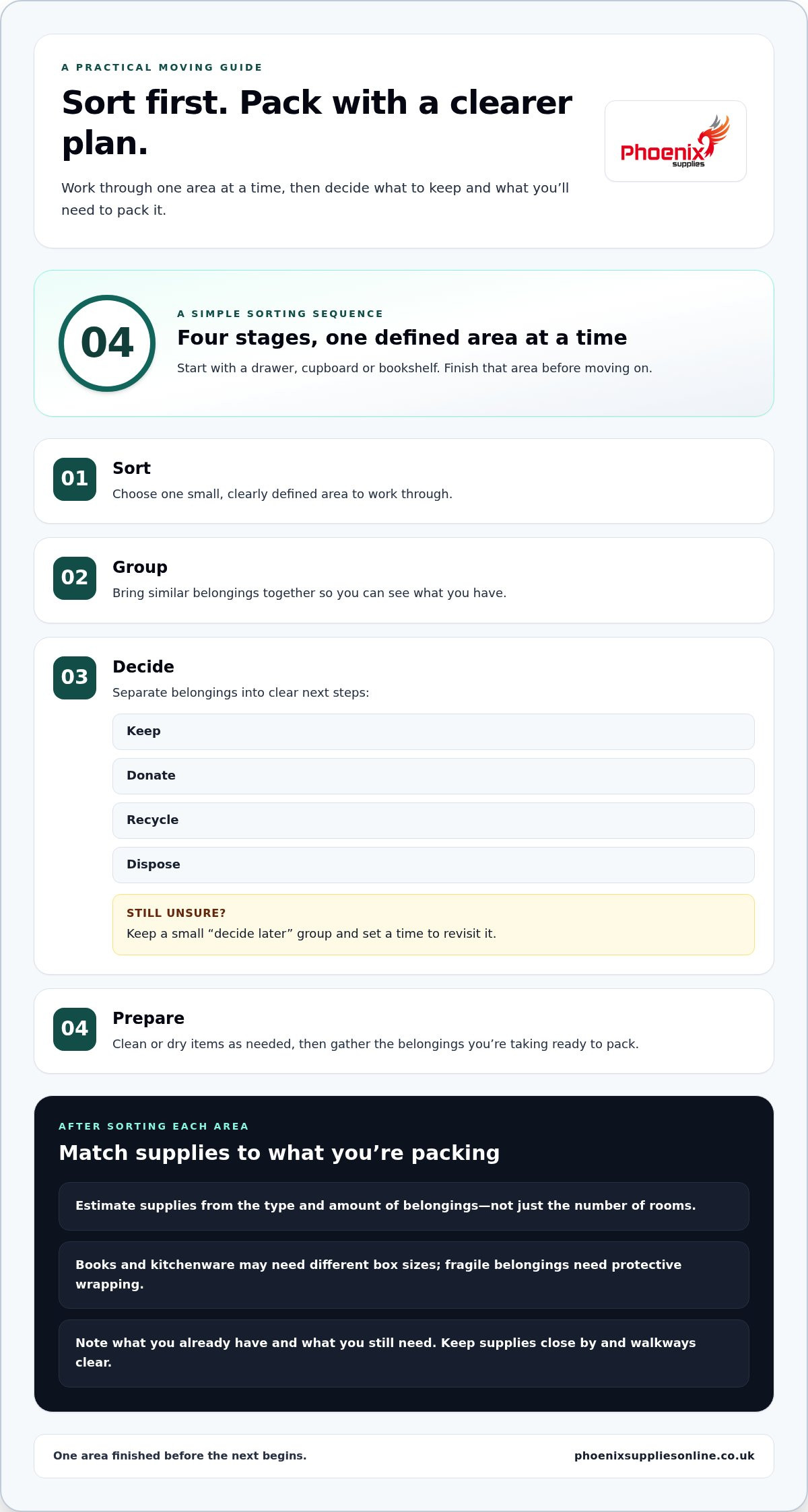
Sorting first helps you use your time and packing supplies more effectively. It also gives you a chance to decide what is coming with you, rather than sealing up belongings you no longer need. Legal & General discusses the stress of moving house, which is one reason a clear, repeatable sorting method can help. Keep the job contained: work through one room or category, finish it, then move on.
Use this simple order:
- Sort: Choose one defined area, such as a drawer, cupboard or bookshelf.
- Group: Bring similar belongings together so you can see what you have.
- Decide: Set aside what to keep, donate, recycle or dispose of.
- Prepare: Clean or dry items as needed, then gather the belongings you’re taking ready to pack.
Fewer undecided items mean a simpler packing workload.
Sort belongings without trying to do everything at once
Start somewhere easy to finish, such as one shelf or a small cupboard. Completing an area gives you a clear result and helps build momentum. Use separate bags or boxes for items to keep, donate, recycle and dispose of, then deal with each group before moving on. Avoid emptying several rooms at once. Unfinished piles take up space and make it harder to keep track of what you’ve decided.
If an item needs more thought, put it in a small “decide later” group and set a time to revisit it. Keep that group limited so it doesn’t become a second home for unsorted belongings. For books, clothes or kitchenware, comparing similar items together can make it easier to spot duplicates and choose what you’ll use in your new home.
Make a practical packing-supplies plan
Once you’ve sorted a room, estimate what you’ll need for the belongings left to pack. Think about the type and amount of items, not just the number of rooms. Books and kitchenware may need different box sizes, while fragile belongings need protective wrapping. Keep a running note of what you already have and what you still need, then update it as you finish each area.
Group boxes and protective materials close to where you’ll pack, but keep walkways clear. Having supplies within reach makes it easier to finish a packing session without searching the house. For moving boxes, wrapping and furniture protection, browse moving and packing supplies and choose materials to suit your belongings. The right supplies support your preparation; steady sorting and clear decisions keep the process on track.
Pack for a stress-free move with a system you can follow
A consistent packing routine makes it easier to see what’s finished and what still needs attention. Work on one room or defined area at a time, such as a kitchen cupboard or bedroom wardrobe. Finish packing that area before moving on, and keep its boxes together. This helps stop belongings from different rooms getting mixed up and gives you a clear place to restart if you need to pause.
Before sealing a box, check that its contents are protected and that the box is comfortable to lift. Use smaller moving boxes for dense items, and don’t fill a box with heavy belongings simply because there’s space. Wrap fragile items to reduce the chance of them knocking against one another in transit. Bubble wrap or other soft packing materials can cushion delicate belongings.
Label boxes so they are easy to place and find
Write the destination room and a short contents description on each box. “Bedroom, winter clothes” is more useful than “miscellaneous”, while “Kitchen, mugs” gives you a quick clue without opening the box. Put the label where it can be seen when boxes are stacked, and use the same clear format throughout.
Mark boxes that need careful handling in a visible, consistent way. Keep a simple written inventory of boxes containing essential or time-sensitive belongings. Note the box label, its contents and where it should go. This gives you a quick reference after arrival, especially if you need something before every box has been unpacked.
Protect clothes, books and fragile belongings appropriately
Match the box to its contents. Books become heavy when grouped together, so pack them in small moving boxes and keep each load manageable. Fold clothes neatly or use wardrobe boxes for garments you’d prefer to keep on hangers. Group similar items together and label the box with its contents and destination room, so you can find particular clothes without opening several boxes.
For fragile items, use suitable wrapping and fill empty gaps to reduce movement inside the box. Pack similar items together where practical, and mark boxes that need extra care. For a television, choose a purpose-made TV moving box and follow its packing instructions. Keep the screen protected and avoid placing heavy items on top of its box.
For a practical inventory, number each box and record a brief contents note beside that number. Mark a few boxes “open first” if they contain items you’ll need soon, such as bedding or a kettle. Keep the list accessible rather than packing it away. A clear packing system is a useful part of how to have a stress-free move: it makes boxes easier to place, belongings easier to find and unpacking less of a guessing game.
Keep moving day manageable with a short, practical routine
Moving day can bring changes you can’t control, such as delays or poor weather. A simple routine won’t prevent every change, but it can help you decide what to do next. Keep the steps in order and focus on one task at a time:
- Check access: Make sure entrances and pathways are clear, and note any access issues that could affect carrying belongings.
- Set essentials aside: Keep documents, medication, chargers and other immediate needs with you, not packed in the load.
- Track loaded items: Use your box list to mark what has gone, and flag anything that needs careful handling.
- Walk through the property: Check cupboards, storage spaces and each room before you leave.
This short check can catch practical details before they become distractions. Agree who is keeping the essentials and the inventory, so everyone knows where to find information.
Prepare an essentials bag for the first day
Pack a separate bag for things you may need before unpacking is complete. Include important documents, medication, phone chargers, toiletries, a change of clothes and everyday items your household relies on. Add personal items for each household member, such as children’s comfort items or supplies for a pet. Keep the bag with you throughout the move rather than loading it with the boxes.
Choose one easy-to-recognise bag and tell everyone what it looks like. If people are travelling separately, make sure each person has the essentials they need until you’re together again.
Have a simple back-up plan for delays or bad weather
Decide in advance which jobs can wait if timings change. Unpacking decorative items can usually wait; keeping essential belongings protected and accessible should come first. If the weather turns wet, keep vulnerable items covered until they can be moved safely, and make sure entrances and pathways remain clear for carrying boxes and furniture.
Identify a safe place for items that are ready to go but must stay inside until there’s room to move them. Keep the route to doors clear, and don’t leave loose packaging or belongings underfoot. If the schedule shifts, return to your routine: check access, keep essentials close and update the list of loaded items. You don’t need to solve the whole day at once.
These small steps make it easier to respond calmly if the original plan changes. If you still need protective wrapping or furniture covers, you can browse moving supplies and prepare the materials you need. A clear routine, an essentials bag and a final walk-through all support how to have a stress-free move, without expecting every detail to go exactly to plan.
Finish your stress-free move preparation with supplies ready to go
A final check helps you spot gaps before packing is finished. Look at what’s still to be packed, what needs extra protection and which materials you’ll need close by. Suitable supplies support your plan, but they can’t replace clear labels, careful sorting or keeping essential items accessible. Match materials to the remaining jobs rather than gathering more than you need.
Check that your packing materials match the remaining tasks
Walk through each room and compare the belongings still unpacked with the supplies you have. Set aside suitable moving boxes for the items left to pack, and protective wrapping for belongings that need cushioning. Consider Furniture Removal Blankets for furniture or appliances that need protection during the move. Keep boxes, tape and wrapping together near your packing area, while leaving clear space to work.
Keep commonly needed materials close to the rooms still being packed. Phoenix Supplies UK is a family-run source of Packaging Materials for home moves, including moving boxes, protective wrapping and Furniture Removal Blankets. Its online portal is clear and easy to navigate, making it straightforward to find and order supplies for the jobs on your list.
Make the final preparation steps easy to complete
Use a short final check to bring your preparations together. Confirm that boxes are labelled and grouped by destination room, and that your essentials bag and important information are still accessible. Make sure boxes aren’t blocking the routes you’ll need to carry belongings. If you spot a missing supply, add it to your list and address that specific need before moving on.
- Boxes: Check they’re ready for the belongings still to be packed.
- Protection: Keep suitable wrapping and furniture protection within reach.
- Organisation: Keep labels, your inventory and essentials bag easy to find.
You don’t need every detail to go perfectly for your preparation to help. A clear plan makes it easier to choose the next useful step if something changes, while suitable supplies help you carry it out. Together, they make how to have a stress-free move feel less like a last-minute scramble and more like a set of manageable tasks.
Most orders placed by 1pm are dispatched the same day on a free next working day delivery service. To prepare your move, explore Phoenix Supplies UK moving and packing supplies and choose the Packaging Materials that fit the jobs still on your list.
Take the next step towards your new home
A move doesn’t need to feel perfectly controlled to feel manageable. Focus on the next useful task, and let your plan guide your choices as you settle in. The same approach applies to supplies: choose what suits the belongings you still need to pack and protect, and look for good value without buying more than you need. That practical mindset is at the heart of how to have a stress-free move.
Phoenix Supplies is a family-run business established in 1920, with a dedicated office team ready to provide helpful customer service. Choose moving and packing supplies that fit your plans, from boxes to protective materials, with competitive pricing to help you get value from your order.
Explore moving and packing supplies for your move. Choose the boxes and protective materials that suit your packing list, and get ready for the next step in your move.
Frequently Asked Questions
Can a house move ever be completely stress-free?
Not always, but a move can feel much more manageable when you focus on what you can control. A change of timing or an unexpected job may still come up. Build some flexibility into your plans and decide which tasks can wait if the day changes. Learning how to have a stress-free move is less about avoiding every setback and more about having a calm next step.
What should I put in an essentials bag for moving day?
Pack anything you’ll want before you’ve unpacked the main boxes. Useful additions include a water bottle, snacks, loo roll, hand soap, a basic first-aid kit and a cloth for quick cleaning. Include personal necessities for everyone in your household, and keep the bag somewhere you can reach without searching through the load. If you’re travelling separately, make sure each person has what they need with them.
How can I help children feel settled during a house move?
Give children a simple explanation of what will happen next, using details they can understand, such as where they’ll sleep that night. Let them choose a few familiar belongings to keep close, perhaps a favourite book or soft toy. If possible, keep meals and bedtime routines familiar during the change. At the new home, help them arrange their room early so they have a recognisable, reassuring space.
How can I move house with pets more calmly?
Keep your pet’s routine as steady as you can, including usual feeding times and familiar bedding. On moving day, arrange a quiet, secure place away from open doors and the movement of boxes. Make sure everyone helping knows where the pet is, so they don’t open that space by mistake. At the new home, let your pet explore gradually, with familiar items nearby and fresh water available.
What should I do if it rains on moving day?
Check the forecast beforehand and have towels and suitable covers ready for belongings that could be affected by wet weather. Keep electrical items and other moisture-sensitive belongings protected, and separate anything that becomes damp so it can be dried. Make entrances and pathways as clear as possible, and take care on wet floors. If conditions make a task unsafe, pause it and focus on another job until it’s suitable to continue.
How can I stop furniture screws and small fittings getting lost?
As you take furniture apart, place each item’s screws and fittings in a small sealed bag. Label it with the piece of furniture and the room it belongs to, then keep the bag with that item. You could secure it to a non-delicate part of the furniture or place it in a clearly marked box that stays easy to find. Taking a quick photo before dismantling can also help when it’s time to reassemble.


