

What should you write on each box so it reaches the right room and you can find what you need without opening several? A moving box labelling system doesn’t need an app or a long inventory. A consistent format with a few useful details can do the job.
Boxes can end up in the wrong room when several people are unloading quickly. A label such as “Kitchen stuff” also leaves you guessing whether the kettle, mugs or less-used pans are inside. Clear room names and short contents notes help everyone sort boxes at a glance and find priority items sooner.
This guide explains what to write on each box, where to place the label and how to mark destinations, contents and handling needs. You’ll also learn when to flag essentials or number boxes, so you can unpack room by room without creating extra work while packing.
Key Takeaways
- Build a moving box labelling system around consistent room names and a few useful details.
- Make boxes easier to sort by placing the destination and number where helpers can see them.
- Choose handwritten labels, colour cues or QR codes to suit the size and needs of your move.
- Use clear priority and handling cues to spot essential or fragile boxes quickly.
- Prepare a simple room key and label boxes as you pack to keep the process manageable.
Why a moving box labelling system makes unpacking easier
A moving box labelling system is a consistent way to identify and sort packed boxes. Each label follows the same basic pattern, so you and anyone helping can quickly see where a box belongs and what might be inside. A label gives each box a clear destination and purpose, much like the concept of labels and their various applications in other settings.
When room names vary, boxes can be left in the wrong place or mixed together. A direct destination such as “Main bedroom” is more useful than “Upstairs”, which could refer to several rooms. Clear instructions save you from sorting a pile of boxes before you can start unpacking.
What information should a moving box label include?
Keep each label easy to scan. Include:
- Destination: the room where the box should go.
- Contents: a short description of what’s inside.
- Priority: a clear marker if you’ll need the box soon after arrival.
Be specific without listing every item. “Kitchen” alone doesn’t tell you which box to open first. “Kitchen, mugs and kettle, first night” is more helpful at a glance. Write in large, clear lettering, and keep the destination prominent so it’s readable while boxes are carried or stacked.
How labelling helps on moving day and after arrival
Room names turn labels into simple sorting instructions. Whether you’re carrying boxes yourself or hiring professional removal teams—such as smilesmovers.com if you are organising a residential move in Dubai—everyone can follow the same room key. This is especially useful when boxes are unloaded quickly or several people are placing them at once.
Priority markers help you find the boxes you’ll want first without opening each one. Use a consistent phrase such as “FIRST NIGHT” for items you’ll need soon, then keep other labels focused on their destination and contents.
The same approach works for a small flat, a family home or a business move. For larger commercial relocations that require clear departmental wayfinding and custom door signage, specialists like First Stop Signs Print can help ensure premises are easily navigated. Use only details that help you sort and find things. A few consistent words on each box can make arrival more manageable. Add a longer inventory only if it will help you locate specific items.
Build a moving box labelling system with four clear details
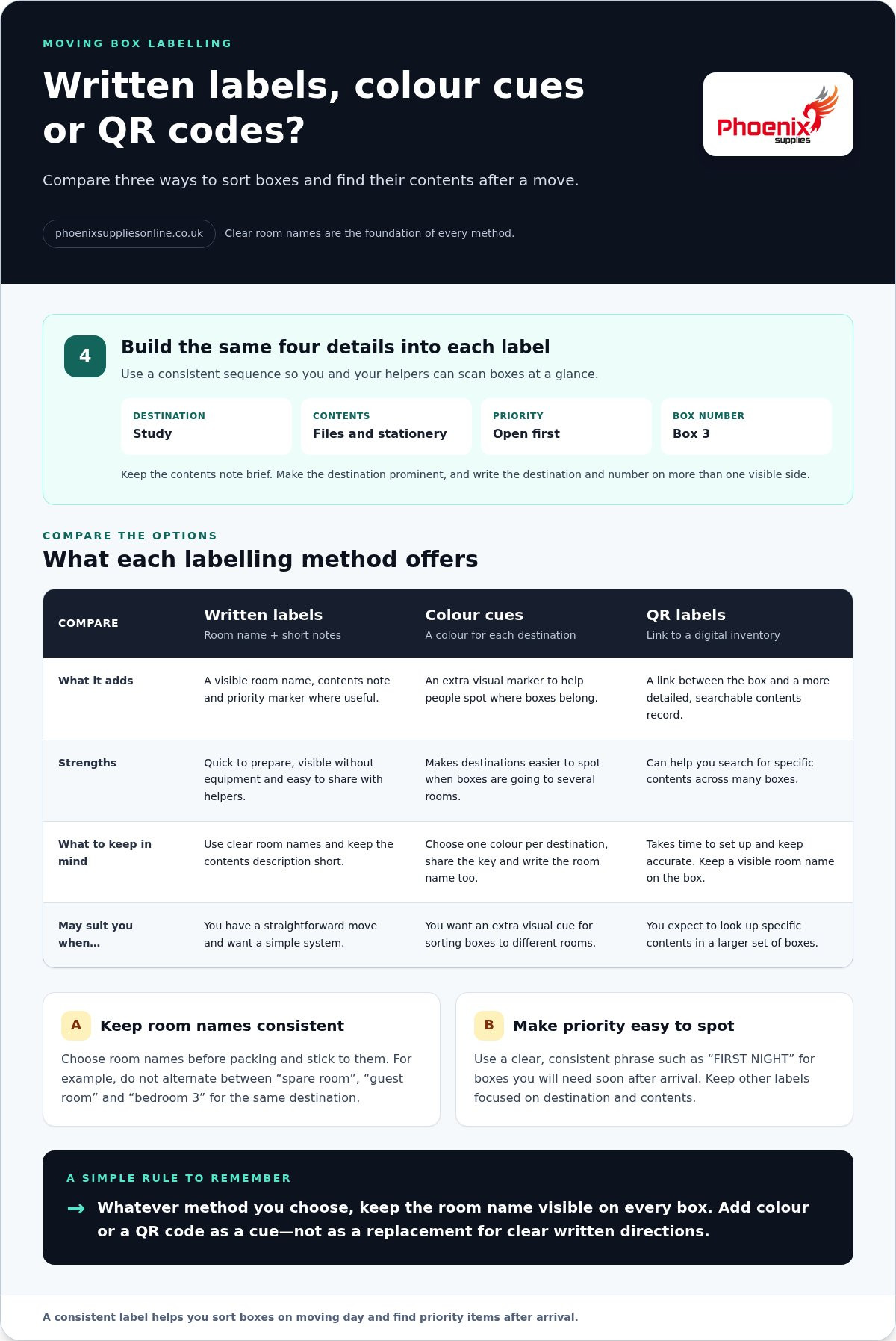
Use the same sequence for every box so labels are quick to write and read. Choose room names first, then add the contents, a priority cue if needed and a box number. This gives helpers clear sorting information without making each label difficult to scan.
- Destination: name the room where the box belongs, such as “Study” or “Main bedroom”.
- Contents: add a short description, such as “files and stationery”.
- Priority: mark boxes you’ll need soon, for example “First night” or “Open first”.
- Box number: use a number to identify the box or match it to a separate list.
A complete label might read: Study | files and stationery | Open first | Box 3. Keep the destination and number especially clear, and write them on more than one visible side. Boxes can be stacked or turned during the move, hiding a label on just one side. Keep the contents description brief enough to scan quickly.
Choose room names and colour cues that stay consistent
Settle on room names before you start packing. Use terms everyone understands and stick to them. Don’t alternate between “spare room”, “guest room” and “bedroom 3” if they mean the same place. If you add colour cues, assign one colour to each destination and write down the key. Keep the room name on the box too, so the instruction remains clear if someone misses the colour.
Number boxes and record contents when it will help
Choose one numbering method and use it throughout. Number boxes in sequence across the move, or start again for each room, such as “Study 1” and “Study 2”. If you need more detail, note selected contents beside each number in a notebook or spreadsheet. Skip the extra list if it won’t help you find anything. Labelling should keep packing moving, not become a separate project.
Try the format on one box before using it throughout the move. If the destination, contents and priority are easy to spot, repeat the same layout as you pack. Pair clear labels with suitable moving boxes in several sizes to keep packed belongings organised from room to room.
Do you need colour coding, QR labels or a simple written system?
The right moving box labelling system is one you can keep using as you pack. A handwritten room name is quick to prepare and easy for anyone to read. Colour cues make destinations easier to spot, while QR labels can link a box to a more detailed digital inventory. You don’t need to use every method.
Compare the options by what they require:
- Written labels: quick to prepare, visible without equipment and easy to share with helpers. They’re often enough for a straightforward move.
- Colour cues: an extra visual marker that can help people sort boxes quickly. Choose a colour for each destination and share the key.
- QR labels: a way to connect a box with a more detailed, searchable contents record. They take time to set up and keep accurate, and the box still needs a visible room name for quick sorting.
Consider how many boxes you’ll have, how many people are packing and how much detail you’ll need after arrival. A simple written approach may suit a smaller move. A colour key can help when boxes are going to several rooms. A digital inventory may be useful if you expect to search for specific contents across many boxes.
When are written labels or colour coding enough?
Written room names should be the foundation, whichever option you choose. For a simple move, add a short contents note and a priority marker where useful. If you use colour, pair it with the room name rather than relying on colour alone. A shared written format is easy to explain, so helpers can sort boxes without learning a complicated process.
For example, your key might assign one colour to the kitchen and another to the bedroom, while every box still names its destination in clear words. Keep the key somewhere accessible or tell everyone helping before boxes start moving.
When could QR labels or a digital inventory help?
A digital record can help when you have many boxes, several people packing or contents you’ll need to find later. It can hold more detail than is practical to write on a box. Allow time to create the records and update them as boxes are packed. If the contents change but the inventory doesn’t, searching it may be less useful.
Use QR codes as an extra layer, not a substitute for readable wording. The destination should still be clear to someone looking at the box, whether or not they scan anything. Choose the simplest method that gives you enough detail without slowing down packing.
Label fragile items, essentials and boxes for different rooms
A useful label does more than name a room. It helps people sort boxes, spot items that need careful handling and find what you’ll want soon after arrival. Keep the information plain, consistent and easy to see, even when boxes are stacked.
Use this checklist as you label each box:
- Destination: name the room clearly.
- Contents: add a short description to help identify what’s inside.
- Priority: mark boxes you’ll need soon with a consistent phrase such as “First night”.
- Handling: add a short note such as “Fragile” if the contents need care.
Write the key details on more than one visible side, especially if boxes may be stacked. A clear word or phrase is more useful than a note hidden against a wall. Consistent details also make your moving box labelling system easier for helpers to follow.
Mark fragile boxes clearly and consistently
Use the same clear wording, such as “Fragile”, on every box containing breakable items. Keep the note short and place it where it can be seen without moving the box. If another handling instruction is useful, make it equally direct. A label can draw attention to fragile contents, but it doesn’t replace suitable packing materials or careful packing.
For a practical overview of materials to prepare, refer to the packing materials list for moving house, including options such as boxes and bubble wrap.
Separate essentials from boxes that can wait
Choose one priority phrase and use it only for boxes you’ll want soon after arrival. “First night” or “Open first” can make these boxes stand out from those that can wait. You don’t need to list every household essential on the label. Pick the items you know you’ll need promptly and describe them clearly enough to recognise.
Group priority boxes by destination where it helps you unpack in order. For instance, mark a box for the kitchen or bedroom rather than gathering all urgent items under one vague label. If books are among your packed belongings, a guide to packing books safely can help you plan their contents and keep them organised.
Choose boxes that suit the belongings you’re packing, then label them as you go. Browse moving boxes and packing supplies to find useful options for keeping your move organised.
Put your moving box labelling system into practice
A simple routine keeps your moving box labelling system useful from the first packed box to the last one unloaded. Prepare your room key before packing, then label each box as you seal it. If you’re keeping a contents list, update it at the same time. This is easier than trying to remember what’s inside each box later.
Prepare the label key before packing begins
Write down the room names everyone will use, along with any colour assignments, in one shared place. Decide how you’ll mark priority boxes and fragile contents. For example, agree on one phrase for boxes you’ll need soon and use the same clear word for breakable items. Keep the key where helpers can refer to it, and make sure the method is straightforward for everyone to follow.
Before you begin, gather a marker and labels or tape that are easy to write on. Choose a consistent place for the room name and other details. As you pack each box:
- Write the destination and a short contents description.
- Add a priority or handling note if it applies.
- Record the box number and selected contents if you’re using a list.
- Check that the label is legible before setting the box aside.
Labelling as you pack keeps the information close to the contents. You can also update a label or list while you still know exactly what went into the box.
Keep the system useful through unloading and unpacking
Before loading, check that key details can still be read when boxes are stacked. Add another label on a visible side if the destination could be hidden. On arrival, use the same room names from your key when directing boxes. Consistent instructions from packing through to placement help prevent boxes gathering in the wrong room.
Keep your list handy if you made one. It can help you find a particular box without opening several, while priority labels show what to unpack first. If you’re still preparing, the guide to buying moving boxes online in the UK can help you plan the boxes and packing supplies for your move.
For boxes and other items to help protect and organise packed belongings, explore Phoenix Supplies UK packaging and moving supplies.
Make your next move easier to unpack
A clear moving box labelling system helps boxes reach the right rooms and makes priority items easier to find. Keep labels consistent: name the destination, add a brief contents description and mark boxes that need careful handling or should be opened first. Choose handwritten labels, colour cues or a digital list to suit your move, and keep the method easy for everyone helping to follow.
Prepare your room key before packing, then label each box as you go. Write the most useful details where they’ll be visible when boxes are stacked. If you’re keeping a contents list, update it as you pack so it stays useful after arrival. A few clear details can make sorting and unpacking more manageable.
Phoenix Supplies UK is a family-run business established in 1920, with a helpful customer service team and a straightforward online ordering experience. Most orders placed by 1pm are dispatched the same day on a free next working day delivery service. Explore Phoenix Supplies UK moving and packaging supplies as you prepare for your move.
With a simple plan and clear labels, you can unpack room by room and settle in with confidence.
Frequently Asked Questions
What should I write on moving box labels?
Write the destination room, a brief contents description and any useful priority or handling note. For example, “Kitchen, mugs and kettle, first night” gives more guidance than “Kitchen bits”. Keep the wording short and legible so you can scan it quickly and helpers can place the box correctly. If you’re numbering boxes or keeping a contents list, add the number consistently to match each box with your record.
Should I label moving boxes on more than one side?
Yes. Put the main label on more than one visible side so it’s easier to read when boxes are stacked or turned. Make the destination room prominent, followed by the contents and any priority or handling note. You don’t need to repeat a long inventory on every side. A clear room name and box number are often the most useful details to show.
Is colour coding moving boxes a good idea?
Colour coding can help you spot a destination quickly, especially if several rooms are being packed at once. Give each room one colour and write the room name on the box too. Keep a simple key where everyone helping can see it. Use colour as an extra cue, not the only instruction, so the destination remains clear if someone doesn’t know the key.
Are QR code labels worth using for a house move?
QR labels may help if you want a searchable record with more detail than will fit on a box. They can be useful for a large move or when several people are packing, but creating and updating the records takes time. Keep a visible written destination on each box too, so helpers can sort it without scanning. For a straightforward move, clear handwritten labels may be all you need.
How do I label fragile moving boxes?
Write “Fragile” clearly on boxes containing breakable items, and place the word on more than one visible side. Keep any extra handling instruction short and easy to read. Use the same wording throughout the move so helpers can recognise it quickly. A fragile label draws attention to the contents, but it doesn’t replace suitable packing. Wrap and secure items appropriately before closing and labelling the box.
Should I number moving boxes?
Numbering can help you identify boxes and match them to a contents list. Choose one approach, such as numbering all boxes in sequence or numbering separately by room, then stick to it. Add the number beside the destination so it’s easy to find. For a small move, numbering may be unnecessary. It’s most useful when you have enough boxes or detailed contents to make a record worthwhile.
How do I make sure boxes go to the right room?
Use clear room names that everyone helping understands, and keep those names consistent from packing through unloading. Write the destination prominently on each box, then share any colour key or room list before boxes are carried in. Make the room names easy to recognise at the destination. Check labels as boxes are unloaded and direct each one to the room written on it.
When should I label moving boxes?
Label each box as you pack and close it, rather than leaving every label until moving day. You’ll have a clearer idea of the contents and can update a list while the details are fresh. Prepare your room names and any priority or fragile wording first, then use the same format each time. Before loading, check that labels are readable and visible when boxes are stacked.


