

A calmer move with your toddler depends less on keeping everything familiar and more on protecting a few key routines. It’s understandable to worry about unfamiliar surroundings, disrupted naps and a curious little one among boxes. These tips for moving with a toddler UK families can use will help you plan around those concerns without expecting the day to go perfectly.
There’s plenty to organise when you’re packing and arranging childcare at the same time. A simple plan can help you prepare your toddler for the change, keep them away from moving-day activity and make space for comfort and play. Having suitable boxes and packing materials ready, then storing them safely out of reach, can also help keep your home organised.
This guide covers what to do before the move, how to keep moving day safer and how to help your toddler settle into their new home. You’ll find practical ways to involve them at their own pace, keep familiar essentials close and bring a little routine into each stage.
Key Takeaways
- Use practical tips for moving with a toddler UK families can follow to protect familiar routines and prepare for change.
- Pack less-used belongings first, keep daily essentials handy and store packing materials out of your toddler’s reach.
- Plan who will supervise your toddler on moving day so they have focused care while the move is under way.
- Make the first days in your new home feel more familiar with favourite belongings and everyday routines.
- Organise boxes by room so your toddler’s essentials are easier to find when you arrive.
How to prepare your toddler for a house move in the UK
A move can change the small things that make a toddler’s day feel familiar: where they eat, when they nap and which room they play in. Every child responds differently. Some may be curious, while others may need more reassurance or show changes in behaviour. Take your cues from your child rather than expecting a particular reaction. These tips for moving with a toddler UK families can use start with a few simple steps:
- Talk about the move: explain that you’re going to live in a different home, using words your toddler understands.
- Keep familiar routines: protect regular mealtimes, bedtime steps and comfort items where practical.
- Plan childcare: decide who can give your toddler attention while you pack and prepare the home.
Predictable routines give toddlers familiar points in the day while other things change. You won’t be able to keep everything as it was, and that’s all right. Focus on what matters most to your child and explain unavoidable changes calmly.
When and how to tell a toddler about moving house
Choose simple, truthful words that suit your child’s age and understanding. You might say, “We’re moving to a new home. We’ll take your toys and your bed with us.” A picture of the new home, a storybook about moving or a conversation about their new room can make the idea easier to talk about. Avoid promising that your toddler will love the move or feel happy straight away. Their response may change over time.
Give your child chances to ask questions, even if they repeat the same one. Answer briefly and gently. As moving day gets closer, repeat the main details, such as when the move is happening and which familiar belongings are coming along. A broad overview of the psychological effects of relocation on children can offer context, but your toddler’s own feelings and needs matter most day to day.
Which routines should stay familiar before the move?
Keep the parts of the day your toddler knows best as steady as you reasonably can. That might mean following the usual bedtime order, serving meals around familiar times and keeping a favourite toy or comforter close. If a routine has to change, explain what will happen in clear terms. For example, if their bedroom is being packed, tell them where they’ll sleep that night and keep their bedtime items together.
Plan who will be available for cuddles, play or a quiet break while the household is being packed. A familiar adult can give your toddler attention even when boxes and activity are all around. If you’re sharing childcare, agree in advance who is responsible at different points in the day. This helps your child know who is looking after them and gives you space to focus on packing.
How to pack safely and involve a toddler without adding stress
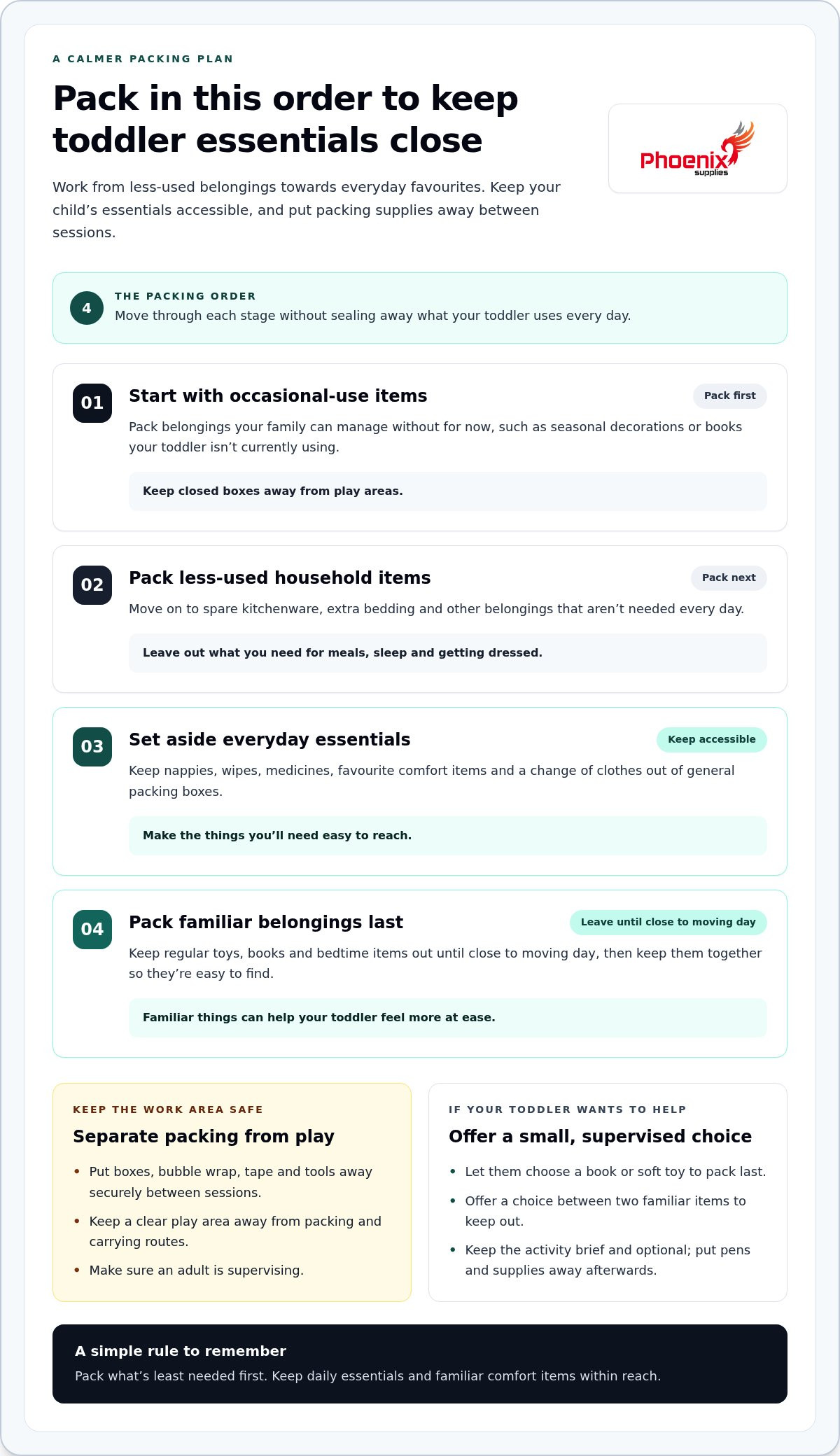
A packing plan can help you make progress without turning the whole home into a work area your toddler can wander through. Start with items they rarely use and keep their everyday things easy to reach. Treat involvement as a few short, supervised choices, not access to boxes, wrapping or tools. These tips for moving with a toddler UK families can adapt can help you keep packing manageable:
- Pack occasional-use items first. Start with belongings your family can manage without, such as seasonal decorations or books your toddler doesn’t currently use. Close boxes and store them away from play areas.
- Move on to less-used household items. Pack spare kitchenware, extra bedding and other non-daily belongings. Leave out what you’ll need for meals, sleep and getting dressed.
- Set aside everyday essentials. Keep nappies, wipes, medicines, favourite comfort items and a change of clothes accessible instead of sealing them in a general box.
- Pack familiar belongings last. Leave out the toys, books and bedtime items your toddler uses regularly until close to moving day. Keep them together so they’re easy to find.
Safety reminder: Let your toddler take part beside a supervising adult, but put packing supplies away when they’re not in use.
How to keep packing materials and work areas child-safe
Put boxes, bubble wrap, tape and tools away securely between packing sessions. Keep a play area clear for your toddler, separate from packing and carrying routes, and make sure an adult is supervising. Don’t present empty boxes or packaging as toys, especially if you’ll be busy with another task. Keeping play and packing areas separate makes it easier to manage both.
If your move raises questions about parental responsibility, you can read relocation advice from Child Law Advice UK. For packing, having suitable boxes and protective materials ready can help you keep work contained and supplies put away after each session.
Simple ways a toddler can take part
Offer a choice that doesn’t involve handling packing materials. Your toddler could choose which book or soft toy goes into a box last, or pick between two familiar items to keep out until moving day. You could also let them decorate or label a small box while you supervise closely, then put pens and other supplies away. Keep the activity brief and optional. If they lose interest, let them return to play or spend time with you instead.
Keep your packing area organised with moving boxes and protective materials, and store them out of your toddler’s reach between sessions. Separating packing from play helps you make steady progress while your child stays safely occupied.
How to organise moving day with a toddler
Moving day can bring unfamiliar people, open doors and changes to the usual flow of the day. A simple plan gives your toddler a familiar adult and keeps their immediate needs within reach while you coordinate the household. Adapt these tips for moving with a toddler UK families can use to suit your child, home and moving-day plans.
- Prepare your toddler’s essentials. Pack a separate bag with familiar food and drinks, comfort items, spare clothes, wipes and anything else your family normally needs close by.
- Arrange focused supervision. Agree who will stay with your toddler during busy periods, especially while belongings are being carried in or out.
- Choose a calm place to spend time. Set up a quiet, supervised area away from carrying routes and open external doors. Keep the essentials bag with the supervising adult, not among the household boxes.
- Build in familiar pauses. Plan for food, drinks and breaks around your child’s usual pattern where possible, then adjust if they need a rest or reassurance sooner.
What to keep in a toddler’s moving-day bag
Think of the bag as a small collection of things that will be hard to manage without, not a full supply of everything in the house. Include a favourite comforter or toy, spare clothes, wipes, familiar snacks and drinks that suit your child’s age. Add daily essentials your family relies on, such as nappies or other care items. Keep the bag close to the adult supervising your toddler so it doesn’t get loaded with the rest of your belongings.
How to manage supervision around moving activity
Choose a familiar adult whose main focus can be your toddler during the busiest parts of the move. It can be harder to keep a close eye on your child if that person is also taking on other moving tasks. A quieter room or clearly defined area can offer a break from activity, provided your toddler remains supervised and away from doors and routes used to carry belongings.
Explain changes as they happen in short, calm phrases: “The boxes are going outside now” or “We’re going to sit here with your snack.” Check in with your toddler and watch for signs they need a pause. A dedicated adult can respond without expecting your child to wait until a task is finished.
Keep the order flexible. A nap may happen earlier than usual, a planned snack may be refused, or your toddler may want extra time with their supervising adult. The aim isn’t to follow a rigid timetable. It’s to have essentials and support in place, then respond to what your child needs as the day unfolds.
How to help your toddler settle into the new home
Arriving in a new home can feel like a big change, even when your toddler has familiar people and belongings nearby. Make the first hours easier by unpacking their everyday essentials before tackling less urgent boxes. You don’t need to finish every room. A familiar place to sleep, play and find comfort gives your child recognisable parts of the day while you organise the rest of the home.
Familiar belongings and routines can make your toddler’s first day in a new home feel more predictable.
What to unpack first for your toddler
Set up a small, usable space before opening boxes that can wait. Clearly label a box with your toddler’s essentials so you can find it without searching through several containers. Start with:
- Sleep items your child uses as part of bedtime.
- Everyday clothes and any items needed for changing.
- Favourite books, soft toys and familiar playthings.
- Daily essentials your family needs close at hand.
Arrange these belongings in a familiar way where you can. A favourite book beside the bed or toys in an accessible spot can help the new room feel less unfamiliar. Keep the first play area simple. Add more as you unpack and learn how your toddler uses the space.
How to rebuild familiar routines after the move
Once the essentials are within reach, return to familiar mealtime and bedtime steps as the new home allows. The surroundings may be different, but repeating a recognisable order, such as washing, changing, reading and settling down, can help your toddler know what comes next. Keep expectations flexible. A disrupted day may affect naps, appetite or bedtime, and each child responds in their own way.
Explore the home together at your toddler’s pace. Use simple explanations for new spaces, such as where meals happen or where their toys are kept. Let them look around, come back to you and ask questions as they arise. You might revisit the same room or explain the same detail more than once. Calm, familiar answers are more useful than expecting them to feel at home straight away.
There’s no need to set a fixed settling-in timetable. Some parts of the home may become familiar quickly, while others take longer. Keep comfort items easy to find and make room for quiet play or time together between unpacking tasks. These practical tips for moving with a toddler UK families can adapt are about creating a few secure, familiar moments, not making the new home perfect at once.
Make it easier to keep your toddler’s belongings organised with moving boxes for your household essentials.
How Phoenix Supplies can help you organise toddler-friendly packing
Good packing supplies help you sort household belongings and keep your toddler’s everyday items easy to find. Match the box or protection to what you’re packing, then group boxes by room so you can focus on setting up your child’s space after arrival. These tips for moving with a toddler UK households can adapt work best when your packing plan supports family routines rather than adding another task to moving day.
Which packing materials can make household packing easier?
Choose small, medium or large boxes to suit the belongings you need to pack. Bubble wrap can help protect suitable breakable items, while furniture covers help protect larger household pieces. Keep a small, clearly marked group of boxes for your toddler’s everyday essentials, such as sleep items, clothes, books and familiar toys. Store unused boxes and other packing materials safely away from children between packing sessions.
Phoenix Supplies UK is a family-run supplier of boxes and moving protection, including bubble wrap and furniture covers. Having the materials you need ready can help you pack in stages and keep toddler essentials separate from belongings you can put away earlier.
How to make the final packing plan easier to follow
Separate what your family will need on moving day from items you can pack ahead. Keep daily essentials together and accessible, rather than mixing them into boxes you’ll open only after arrival. Group other belongings by destination room. A simple label such as “bedroom, books” or “kitchen, everyday items” makes boxes easier to direct and unpack.
Use clear descriptions without marking boxes with details that draw attention to valuable contents. For toddler essentials, use a label an adult can recognise, such as “child’s room, bedtime items”. This helps you find the right box without opening several containers, while keeping the label practical and discreet.
A short packing note for the adults in your household can also help. Record which boxes contain essentials and who is responsible for keeping them accessible. The plan is easier to follow if one person is focused on your toddler while someone else organises the move. Keep the note straightforward and update it as boxes are packed.
Phoenix Supplies UK offers moving boxes and protective materials to support an organised household move. Browse Phoenix Supplies UK’s moving and packaging materials to find options for packing your home and keeping your toddler’s essentials easy to locate.
Take your next step with confidence
A house move with a toddler doesn’t need to go perfectly to be a good start in a new home. Treat your plan as a guide and leave room to respond to how your child feels on the day. These tips for moving with a toddler UK families can use are a starting point, not a test of whether you’ve managed every detail. Once you arrive, choose a small moment to enjoy together, such as sharing a favourite story in the new space.
Having the right boxes and protective materials to hand can help you organise your belongings and keep essentials easy to find. Established in 1920, Phoenix Supplies UK provides moving boxes and protective packaging materials for households across the UK.
Browse Phoenix Supplies’ moving and packaging materials to plan the packing that suits your household. Take it one step at a time. You’re building a new home together.
Frequently Asked Questions
How do I prepare a toddler for moving house?
Prepare your toddler with short, calm conversations and small chances to picture what will happen. You could make a simple picture calendar showing packing days, moving day and the first night in the new home. Point to it as the move gets closer and answer questions with the same clear wording. These tips for moving with a toddler UK families can use are most helpful when they suit the child’s age and understanding.
What should I pack in a toddler’s moving-day bag?
Pack the items your child may need before the household boxes are unpacked. Alongside a comfort item and spare clothes, consider a familiar cup, bib, nappies or other daily care items, and snacks your toddler already enjoys. Add a small toy or book for waiting periods. Keep the bag with the adult caring for your child, and check it before leaving so essential items haven’t been packed elsewhere.
How can I keep my toddler safe while packing?
Keep your toddler in a supervised space away from boxes being carried and doors being used to move belongings. Put tape, tools and wrapping away as soon as you finish using them, rather than leaving them on the floor or within reach. Don’t stack boxes in play areas, and ask another adult to watch your child if you need to focus on a packing task.
Can my toddler help pack when we move house?
Yes. Offer a brief task that doesn’t involve handling packing supplies. Your toddler might choose which of two soft toys goes in a box, or place a favourite book beside the box while you pack it. Stay with them throughout, and keep tape, scissors and other tools in your hands and out of reach. If your child loses interest, let them stop without pressure.
How do I help my toddler sleep in a new home?
Make bedtime as familiar as you can with the same sleepwear, stories and bedding your toddler knows. If possible, set up their sleeping space before the evening gets late, so you’re not searching through boxes at bedtime. Stay nearby while they get used to the room, and reassure them calmly if they wake or need extra comfort. Give the new sleep space time to feel familiar.
When should I start packing before moving with a toddler?
Start once your move date is clear enough for you to plan, then break packing into short sessions that fit around family life. Begin with belongings you rarely use instead of trying to pack several rooms in one go. Keep a simple note of what’s packed and what must stay accessible. This helps you avoid reopening boxes for everyday items as moving day approaches.
What should I unpack first when moving with a toddler?
Unpack what your child needs for their next meal, change and rest before sorting less urgent household items. A clearly marked first-open box can help you find those things quickly. Then make one small area usable for your toddler, even if the rest of the room is still being arranged. Keeping the floor clear gives them a safe place to use familiar belongings.


