

What if a calmer move for your cat starts with slowing things down? Moving house can bring unfamiliar sounds, smells and open doors, so it’s understandable to worry about stress or an escape. A few simple moving house with a cat tips can help you prepare in stages and make the day more manageable for both of you.
This checklist takes you from helping your cat get used to their carrier to setting up a secure room at the new home. You’ll find practical ways to keep your cat safe during travel and the busiest parts of moving day, then give them time to settle at their own pace.
Set your cat’s carrier and familiar essentials aside from household packing materials, so they’re easy to reach. A little preparation can keep the move organised without asking your cat to adjust to everything at once.
Key Takeaways
- Plan the move in stages and keep familiar routines and cues where you can.
- Prepare the carrier and set aside your cat’s familiar bedding and everyday essentials before packing.
- Use these moving house with a cat tips to reduce escape risks during travel and busy moving-day activity.
- Start your cat in a quiet room at the new home, then let them adjust gradually.
- Keep your cat’s carrier and essentials separate from household packing materials so they’re easy to find.
Moving house with a cat: why a staged plan helps
A house move involves plenty to organise, but you don’t need to handle every cat-related detail at once. Divide the plan into preparation, travel, arrival and settling in. This helps you decide what to do and when, while keeping familiar routines where practical rather than changing everything at the same time.
Packing, unfamiliar people, noise and altered surroundings can affect some cats, though every cat responds in their own way. The aim isn’t to promise a stress-free move. Instead, keep familiar cues such as usual mealtimes and bedding, and make the busiest parts of the day more predictable. A safe space is a quiet, familiar room with your cat’s everyday essentials.
Make a note of your cat’s usual habits to guide your plan. General information about feline behaviour and needs can also help you think about how your cat may respond to changes in their surroundings. Use these moving house with a cat tips as a starting point, then adapt them to your pet.
Which parts of a house move can unsettle a cat?
Rooms filling with boxes, familiar smells fading and daily routines shifting can all make home feel different. Some cats may hide or act cautiously around unfamiliar sounds and people; others may seem to carry on as usual. Hiding alone doesn’t tell you exactly how a cat feels. Give them space and watch for changes in their normal behaviour, without assuming every cat will react alike.
Build a simple moving timeline around your cat
Give each stage a clear focus. Write down your cat’s usual routine, including mealtimes, favourite resting places and any needs that could affect travel. Keep the plan flexible so you can adjust it to your cat rather than expecting them to follow a fixed schedule.
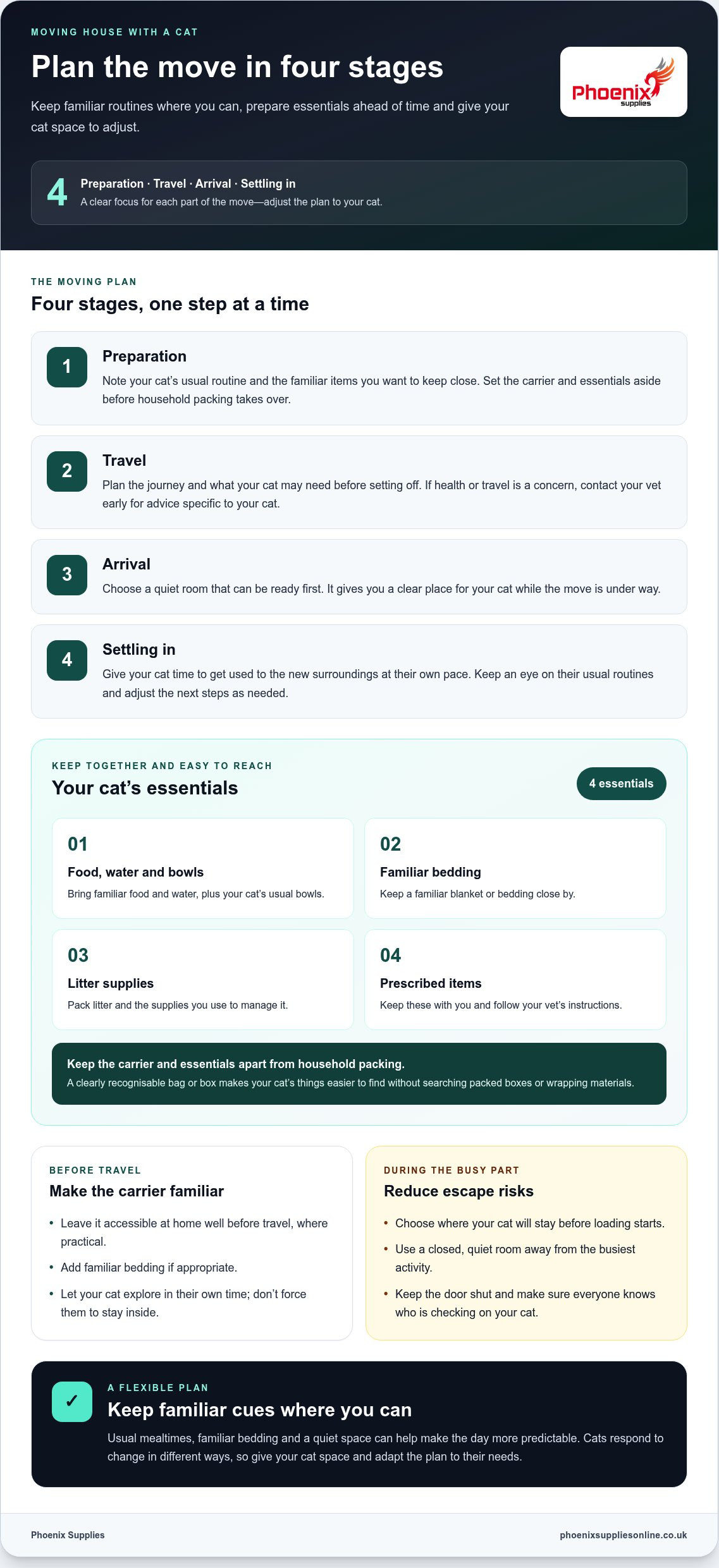
- Preparation: Note which familiar items and daily habits you want to keep consistent. Set aside the carrier and essentials before household packing materials take over.
- Travel: Plan the journey and what your cat may need before setting off. If health or travel is a concern, contact your vet early for advice specific to your cat.
- Arrival: Choose the quiet room that will be ready first, so you have a clear place for your cat while the move is under way.
- Settling in: Give your cat time to get used to the new surroundings at their own pace. Watch their usual routines and adjust the next steps as needed.
Household boxes and wrapping materials can help keep non-pet belongings organised, but keep your cat’s carrier and familiar essentials apart from them. This makes it easier to find what you need at each stage.
Prepare your cat and their essentials before moving day
Preparing in advance makes it easier to keep familiar cues in place while the rest of the household is being packed. Note your cat’s usual routine and individual needs, then decide where their carrier and essentials will stay. Keep these items out of general household boxes so they’re easy to reach as rooms change around them. These moving house with a cat tips are a starting point, not a rulebook. Adapt the plan to suit your pet.
Help your cat become familiar with their carrier
Where practical, leave the carrier accessible at home well before travel rather than bringing it out only when it’s time to leave. Familiar bedding inside can make it feel less unfamiliar. Let your cat explore in their own time. Don’t assume they’ll accept the carrier straight away or force them to spend time in it. If travel or health may be a concern, ask your vet for advice suited to your cat. The ASPCA Guide to Moving with Pets also covers preparing pets for a move.
Keep a separate bag of cat essentials
Pack a clearly recognisable bag or box for your cat’s everyday needs, and keep it with you rather than amongst the removal load. Include:
- Familiar food and water, plus their usual bowls
- Familiar bedding or a blanket
- Litter and the supplies you use to manage it
- Any prescribed items, kept in line with your vet’s instructions
Keep familiar items close rather than burying them in the removal load. You’ll be able to find what your cat needs without opening packed boxes or searching through wrapping materials. Keeping the carrier separate from household packing also makes it easier to locate when it’s time to travel.
For non-pet belongings, a separate household packing plan can help keep boxes and supplies in order. The article The Ultimate Packing Materials List for Moving House in 2026 covers packing materials for the rest of your home. Keep your cat’s things apart from those items.
Work through this simple sequence before moving day:
- Plan: Note your cat’s routine, travel needs and any questions for your vet.
- Prepare: Leave the carrier accessible and add familiar bedding when appropriate.
- Set aside: Pack food, bowls, litter supplies and prescribed items in one easy-to-reach place.
- Review: Check that the essentials and carrier haven’t been packed away with household items.
Organising household boxes and packing materials can leave fewer things to search for as moving day approaches. You can browse moving boxes and packing materials for your non-pet belongings, while keeping your cat’s carrier and essentials close at hand.
Keep your cat secure during travel and the busiest part of the move
Moving day brings people, boxes and activity. Doors may be left open as belongings are carried out, and visitors may not know where your cat is. Even a cat that usually stays close could slip into a hallway or outside while attention is elsewhere. Plan where your cat will be before loading starts, and make sure everyone knows who is responsible for checking on them.
A closed, quiet room gives your cat space away from the busiest activity. This is one of the most practical moving house with a cat tips: choose the room in advance, then keep its door shut while people are moving in and out. For general feline health and welfare information, the Cornell Feline Health Center Resources may also be useful.
Set up a quiet room before the main move begins
Choose a room that can stay closed while packing and loading take place. Before activity picks up, bring your cat into the room and set out familiar bedding, water and the litter tray. Tell everyone involved, including visitors helping with the move, that the door must stay shut. A clear reminder on the door can stop someone opening it without realising your cat is inside.
Keep the room calm and check on your cat without repeatedly letting people in and out. If someone needs to access the room, agree who will do so and make sure the door is closed again straight away. Keep the carrier nearby, away from loose boxes and routes where it could be knocked during loading.
Make the journey a planned part of moving day
Decide when your cat will leave the old home and who will carry them to the vehicle. Keeping this step separate from the main loading activity helps avoid last-minute searching or carrying your cat through a busy doorway. Keep your cat in their carrier for the journey and handle it calmly. Don’t open the carrier somewhere your cat could get out unexpectedly.
- Keep the carrier within easy reach, not buried behind packed belongings.
- Place it somewhere stable and away from loose boxes that could shift or fall against it.
- At the new home, take the carrier directly to the prepared quiet room before opening it.
Never leave your cat alone in a vehicle. The temperature can rise quickly, so stay with them and keep the journey plan practical. If you have questions about travel, medication or a health condition, speak to your vet before moving day. They can advise based on your cat’s individual needs.
Help your cat settle into the new home at their own pace
When you arrive, start your cat in the quiet room you prepared rather than opening up the whole home straight away. New smells, unfamiliar sounds and people unpacking can make a large space feel like a lot to take in. A smaller, familiar base gives your cat somewhere to pause while the rest of the house is still changing.
A familiar base room gives your cat a steady place to eat, rest and use the litter tray whilst new rooms, sounds and smells become familiar. Keep food, water, litter and bedding easy to find, and try not to move them repeatedly during the first stage of settling in.
Set up a familiar base room first
Arrange the room before bringing your cat in, using bedding and other familiar items from home. Choose an accessible spot for food and water, and make sure the litter tray is easy to reach. Keep the room as calm as you can while unpacking continues elsewhere. Familiar surroundings won’t make every cat settle at the same speed, but they give your pet a consistent place to return to.
- Keep the door closed while boxes and furniture are being moved around.
- Leave your cat’s familiar bedding and essentials in their chosen places.
- Give your cat time to rest without encouraging them to explore before they seem ready.
Avoid using the room as a temporary storage space. If you need to bring something in or take something out, do it carefully and make sure your cat can’t slip through the doorway. Keep household packing materials in other areas so the base room stays familiar and calm.
Let your cat explore gradually
There’s no need to introduce every room at once. When your cat seems settled in their base, let them explore another part of the home at a time, while keeping access to their familiar room. Watch how they respond. If they retreat or seem unsure, give them space to return to their base and try again later.
Keep an eye on doors and windows as you continue unpacking. People may still be carrying items in and out, so check that routes outside are secure before allowing access to another room. Each cat has their own pace. Avoid comparing their progress with another pet’s or pushing exploration to fit your moving schedule. These moving house with a cat tips work best when you adapt them to your cat’s behaviour.
If you’re concerned about your cat’s behaviour or wellbeing, contact your vet for advice. For the rest of the household, organised moving boxes and packing supplies can help you maintain a clear, calm space for your cat. Browse moving boxes and packing materials for your non-pet belongings.
Final moving-house-with-a-cat checklist: finish packing without losing track
A final check helps you leave the old home with your cat secure and their essentials within reach. Moving house with a cat tips are easier to follow when the carrier, familiar items and moving-day plan are kept separate from last-minute packing. Use this checklist before setting off, then check that the new home is ready for your cat’s arrival.
Use a last-check list before leaving the old home
Before doors open for loading, make sure your cat is in the room you’ve set aside and the door is closed. Tell everyone involved in the move where your cat is and what the plan is. This reduces confusion at a busy moment, especially when people are carrying boxes in and out.
- Confirm your cat is secure before loading begins and the room door is closed.
- Keep the carrier and essentials accessible, not buried among boxes or wrapping materials.
- Agree who will collect the carrier and when your cat will leave the old home.
- Before departure, check that your cat is safely in the carrier and ready for the journey.
Keep the carrier somewhere it won’t be knocked by loose belongings, and don’t pack it into the vehicle before it’s needed. Familiar food, water, bedding and litter supplies should travel with you, not out of reach in a packed load. At the new home, have the quiet room ready so you can take your cat there without searching through boxes first.
Keep household packing organised around your cat
Use suitable boxes and protective materials for household belongings, and keep packing activity out of your cat’s quiet room. Moving supplies are for organising and protecting household items. They aren’t a substitute for a suitable carrier or other pet equipment. Keep your cat’s items clearly separate so no one mistakes them for belongings to load or pack away.
For help planning the rest of your household packing, How to Buy Moving Boxes Online in the UK: The 2026 Guide to Packing Kits covers choosing boxes and packing materials. Keep those supplies in the areas where you’re working, rather than beside your cat’s familiar bedding, food or litter.
- At the old home: Your cat is secure, the carrier is easy to reach, and everyone knows the plan.
- For the journey: Your cat is in the carrier, with familiar essentials kept close by.
- At the new home: The quiet room is ready, with food, water, litter and bedding in place.
Once your cat’s needs are set aside, you can focus on packing the rest of your home. Browse moving boxes and packing materials for your household belongings.
Make your next step a little easier
Your cat’s move is one part of settling into a new home. Give yourself room to find a new rhythm too, without expecting everything to feel familiar straight away. Keep your moving notes somewhere handy so you can make decisions as you go. The moving house with a cat tips that work best are the ones you can adapt to your household and your pet.
For the rest of your home, well-organised packing materials can help keep belongings in order while your cat’s essentials stay separate. Phoenix Supplies UK is a family-run business established in 1920. Most orders placed by 1pm are dispatched the same day on a free next working day delivery service, subject to the free delivery exclusion zones list.
Keep your cat’s essentials close and your household packing organised. Browse moving boxes and packing materials for your household move.
Frequently Asked Questions
Should I move my cat before or after the furniture?
Move your cat after the main loading activity at the old home, then take them to their prepared room before unloading begins at the new one. This keeps them away from the busiest periods at both ends of the journey. Moving house with a cat tips work best when you plan a clear handover: decide who will carry your cat and when, rather than fitting this around the last box.
Can two cats travel in the same carrier when moving house?
It’s generally safer to use a separate, secure carrier for each cat, unless your vet advises otherwise. Even cats who usually get along may react differently to travel or an unfamiliar environment, and separate carriers let you manage each cat individually. They’re also easier to position and carry. If either cat has health or travel needs, ask your vet how to prepare for the journey.
Is it safe to give my cat a sedative for moving day?
Don’t give your cat a sedative unless your vet has advised it. Sedation can affect balance and the ability to regulate body temperature, and it may not reduce travel anxiety. Speak to your vet well before moving day about your cat’s health and any travel worries. They can advise whether medication is suitable and, if prescribed, whether it should be tried before the journey.
When can I let my cat outside after moving house?
What should I do if my cat hides after we move?
Give your cat space and don’t pull them out of a hiding place. Keep food, water and the litter tray accessible, and make sure the hiding spot is safe. Check quietly that they’re eating, drinking and using the tray. A new home can take time to feel familiar. If you’re concerned about your cat’s health or wellbeing, or notice a worrying change, contact your vet.
Should I keep my cat in one room after moving?
Yes, start with one quiet room, then allow access to more of the home as your cat appears ready. There’s no set timetable that suits every cat. Some may investigate quickly; others may prefer to stay near familiar bedding and essentials for longer. Keep their base room available as you open up other areas, so they can retreat to a familiar place rather than being pushed to explore.
How can I keep my cat from escaping while the removal van is being loaded?
Put your cat in a closed room before loading starts, and tell everyone helping that the door must stay shut. Choose one person to check on the cat and manage their move to the carrier. A note on the door can alert anyone who might otherwise open it. Keep the carrier ready but out of the loading route, and only bring your cat out once the route to the vehicle is clear.
For your household packing, browse moving boxes and packing materials from Phoenix Supplies UK.


