

The best document storage boxes aren’t necessarily the biggest ones. They’re the ones that fit your paperwork, your filing routine and the space you have available. When files are spread across desks, cupboards and old boxes, it can be difficult to keep track of what’s stored where.
A simple system starts with a clear purpose for each box. Group papers you want to keep, label them so you can find them again and store the boxes where they’re easy to reach when needed. This guide explains how to compare storage options, organise paperwork and choose a box for home or office records.
Phoenix Supplies UK is a family-run Packaging Materials supplier, established in 1920, with archive boxes for keeping grouped paperwork together. Ordering is straightforward, and the helpful office team provides customer service and clear communication. Most orders placed by 1pm are dispatched the same day on a free next working day delivery service.
Key Takeaways
- Choose document storage boxes based on the paperwork you need to store and how often you’ll retrieve it.
- Sort and group papers before packing so your labels make files easier to locate.
- Compare storage boxes, box files and general storage options by their purpose and access needs.
- Measure your available space and compare it with the dimensions shown on the product page.
- Explore how an archive box with an integral lid could fit your home or office filing system.
What Are Document Storage Boxes, and When Are They Useful?
A document storage box keeps related paperwork together and identifiable. It’s useful for papers you want to retain but don’t need on your desk every day. Sort the documents into groups, put each group in a suitable box and label it so you can locate the contents later.
This differs from using a desk organiser. Trays, holders and drawers keep current papers close to hand, such as forms awaiting attention or notes for a meeting. A storage box is better suited to files you want to put away for occasional reference. The right option depends on how much paperwork you have, how often you use it and where you plan to store it.
At home, you might group instruction booklets, household paperwork or completed project files. In an office, you could organise records by team, subject or completed task. In a storage area, clear labels help keep separate groups of files identifiable among other stored items. For a specialised archival example, the Hollinger box is associated with document storage in archives.
Document storage boxes and everyday desk organisers
First decide whether you need to use a paper regularly or simply keep it together for occasional reference. A desk organiser suits active paperwork, such as invoices awaiting processing or forms you’re working through. A box can hold completed office files or household records you want to put away, while keeping each group identifiable. Some papers belong within reach; others are easier to manage when stored together.
For example, a home paperwork tray might hold a bill that needs attention, while a labelled box could contain completed household files. In a small business, current paperwork can stay near the person handling it, with finished files grouped separately. For commercial organisations establishing broader workplace systems, specialists such as NextGen Trading F.Z.E. | B2B Supplier UAE provide dedicated office filing solutions. Keep the distinction clear in your routine, rather than moving every paper out of sight.
When should you move paperwork into a storage box?
Review your papers when a desk, shelf or cupboard becomes difficult to keep organised. Separate documents you use regularly from those you only need occasionally. Keep active items somewhere convenient, then group less frequently used papers by household topic, project or department.
Give each group a clear label before putting it away. Choose wording you’ll recognise later, rather than a vague description such as “miscellaneous”. If you expect to retrieve a particular file often, keep it accessible instead of placing it under papers you rarely need. This makes it easier to decide what belongs in a desk organiser and what can be stored together.
Storage doesn’t have to mean losing track of paperwork. Choose a place where you can reach the box, and keep its label visible. Separating papers in current use from files kept for reference creates a practical arrangement for a home, office or storage area.
How to Match Document Storage Boxes to Your Paperwork
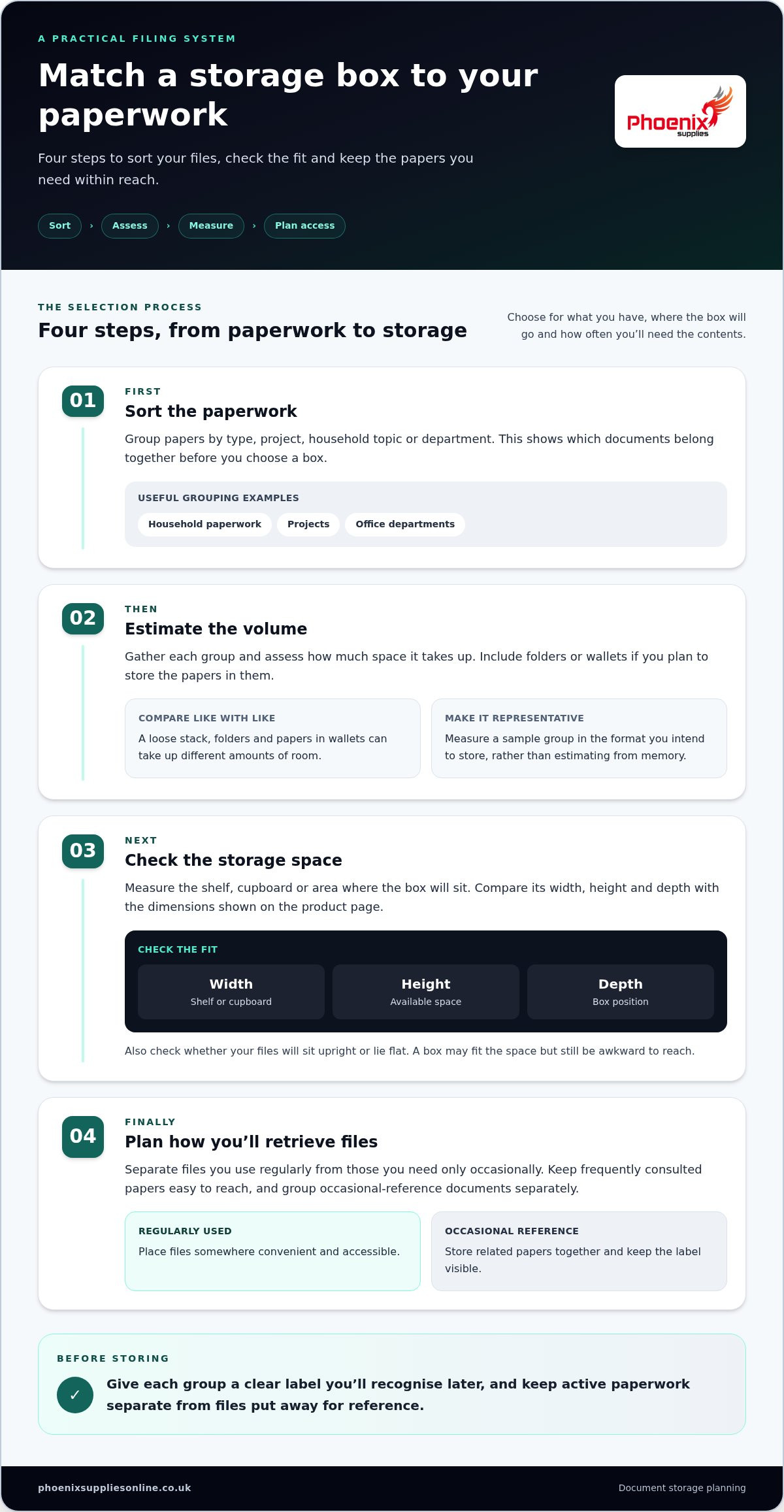
Choose a box by considering the papers you have, where the box will sit and how often you’ll need to access its contents. Planning these details helps you compare options on more than appearance alone. Use these four steps to narrow down a suitable choice:
- Sort the paperwork. Group documents by type, project, household topic or department so you can see what needs to be stored together.
- Estimate the volume. Gather each group and assess how much space it takes up. Include folders or wallets if you plan to store the papers in them.
- Check your storage space. Measure the shelf, cupboard or area where the box will go, and consider whether you can reach it easily.
- Plan retrieval. Separate files you use regularly from those you only need occasionally, then decide where each group should sit.
Start with document volume, format and access frequency
Paperwork takes up different amounts of room depending on how it’s arranged. A loose stack, a group of folders and files kept in wallets can have different shapes, even if they contain a similar amount of paper. Sort by type first, then measure a representative group in the format you intend to store. This is more reliable than estimating from memory.
Next, think about how often you’ll retrieve each group. Files you consult regularly should be easy to reach; occasional-reference documents can be grouped separately. Compare your paperwork with the product dimensions shown on the product page. Check the measurements that matter for your filing arrangement, including whether the files will sit upright or lie flat. This helps you assess fit without assuming one box suits every filing system.
Check where the document box will be kept
Measure the available space before choosing a box. Note the shelf or cupboard width, height and depth, and consider how you’ll position it. If the box will sit behind other items or above regular working height, think about how you’ll take it out and return it. A box that fits the space may still be awkward to access.
Consider the route to the paperwork, too. If you’ll need to move one box to reach another, place the files you consult most often in the easiest position. For more guidance on archive storage, read the archive box buying guide.
In short, sort your papers, estimate their volume, measure the storage space and plan how you’ll retrieve each group. Then browse archive boxes for document storage and compare the listed dimensions with your measurements.
Document Storage Boxes Compared with File Boxes and General Storage
The right option depends on how your paperwork is arranged and how you’ll use it. A document storage box can keep a group of files together, a box file can suit papers you need to consult individually, and a general storage box can hold mixed items. Compare the intended use and access pattern, then check the product dimensions against your documents and available space.
| Type | Intended use | Access pattern | Organisation needs | Space fit |
|---|---|---|---|---|
| Document storage box | Keeping related paperwork together | Occasional or planned access to a group of documents | Labels and clear groupings help identify contents | Compare the product dimensions with your files and available space |
| Box file | Filing papers you may need to retrieve individually | Regular access to particular papers | A consistent filing order makes individual documents easier to locate | Check the listed dimensions against your papers and shelf space |
| General storage box | Storing mixed items, which may include paperwork | Varies according to what you store | Paperwork still needs grouping and clear identification | Check the product dimensions and the space where it will sit |
These are practical distinctions, not fixed rules. A category name alone doesn’t tell you a product’s dimensions, capacity or suitability for a particular set of papers. Read the product information and compare it with your documents and the place you plan to store them.
When does a document storage box make more sense than a box file?
Choose according to how you group and retrieve your files. A document storage box can suit a related set of papers that you only need to access occasionally. A box file may work better for papers you refer to individually, especially if you maintain a clear filing order. Neither option is automatically better; your filing habits should guide the decision.
For instance, you might keep completed project paperwork together, while filing current papers separately so you can consult them one by one. Consider whether you’ll usually take out a whole group or look for one particular document. This difference can help you choose a format that’s straightforward to use.
When might general storage be enough?
General storage can work if you’re putting away mixed items and don’t need a formal filing arrangement. If you include paperwork, keep it grouped rather than loose among unrelated contents. Add a clear label so you can identify the documents without searching through the box each time you need a particular set.
For a document-led system, document storage boxes make the filing purpose clear. For mixed household or office storage, a general box may suit your needs. Either way, choose according to your paperwork and routine, then check the product dimensions, available space and ease of access.
How to Organise Documents Before Putting Them into Storage Boxes
A clear system starts before the papers go into a box. Sorting and labelling each group first makes it easier to find a file later, whether you’re organising household paperwork or office records. Work through the documents in a consistent order:
- Separate active papers from reference documents. Keep papers you’re currently working with accessible. Put documents you’re keeping for occasional reference to one side for storage.
- Group papers by a useful subject. Choose categories that make sense to you, such as a household area, project, department or type of file. Keep related papers together.
- Arrange each group. Put documents in an order that will help you use them later, such as by topic or project. Keep any folders or dividers you already use with the relevant papers.
- Label and place each group. Use clear wording on the box and store it where you can reach it without moving frequently used items.
Sort and group paperwork before storing it
Start with one manageable pile or shelf rather than trying to reorganise every file at once. Separate current tasks from papers being kept for reference, then group the latter under headings you’ll recognise. An office might separate completed project files from current paperwork, while a household could group papers by room, appliance or ongoing project. Keep the labels and groups consistent as you add documents.
As you sort, don’t decide whether to discard papers based on a general rule. This process is about organising the documents you’ve decided to keep, not setting retention periods. If you’re unsure whether a particular record should be retained, address that separately before placing it into storage.
Label boxes so documents are easier to find
Make each label short, consistent and specific enough to distinguish one group from another. “Completed projects” is more useful than “papers”, but a broad heading may still need a contents list if the box holds several groups. A simple list kept with the box can note the categories inside, helping you find the right section without unpacking everything.
Keep visible labels discreet. Use general descriptions rather than names, account details or other private personal information. If a box contains paperwork on different subjects, label it with a neutral category and keep the fuller contents list separately in a place you can access.
Before closing the box, check that frequently needed documents aren’t buried beneath files you rarely consult. Keep active paperwork within easy reach, and place reference groups where you can retrieve them without shifting other boxes. For a practical option for grouped documents, browse archive boxes and choose one that fits your filing arrangement.
Choosing Phoenix Supplies UK Archive Boxes for Document Storage
Once you’ve sorted your paperwork and planned how you’ll retrieve it, choose a box that suits your filing routine. Phoenix Supplies UK is a family-run Packaging Materials supplier serving domestic and commercial customers. Its archive box with an integral lid offers a way to keep grouped paperwork together at home, in an office or in a storage area.
A practical archive-box option for home and workplace paperwork
Phoenix Supplies UK sells an archive box with an integral lid, standard size. It can suit a filing system where you group papers by subject, project or department and label them for reference. Compare the product details with your files and the space where you plan to store the box. This helps you judge whether it fits your documents and storage arrangement.
At home, you could use an archive box for grouped household paperwork. In a workplace, it could hold a collection of completed files. Labels and a contents list can help you identify each box later. Keep active paperwork accessible, and use stored boxes for documents you need less often.
Ordering document storage boxes from Phoenix Supplies UK
Browse the online product selection, review the archive box listing and its details, then place your order through the website. The site is straightforward to navigate, so you can compare the product information with your filing needs and available space. Phoenix Supplies UK’s helpful office team provides customer service and clear communication.
Most orders placed by 1pm are dispatched the same day on a free next working day delivery service.
With your files grouped and your storage space measured, you’re ready to choose a box for your filing system. Browse the Phoenix Supplies UK website to view the archive box details.
Make Your Filing System Easier to Maintain
A storage system works best when it stays useful after the first tidy-up. Set aside a regular moment to review new paperwork, file it with the right group and update a label or contents list if things change. This routine can help prevent files from drifting back onto desks and shelves. It also makes it easier for anyone sharing the filing system to put papers away consistently.
Before choosing document storage boxes, think about who will use them and how they’ll know where a file belongs. Agreeing simple category names across a household or team can make the system clearer. Start with one group of documents, establish a labelling approach, then use the same method for the next. Adjust it as your filing needs change.
Ready to choose a box for your paperwork? Browse document storage options and find a practical fit for your filing system.
Frequently Asked Questions
Are document storage boxes the same as archive boxes?
The terms can overlap, but the product’s intended use is the best guide. “Document storage box” broadly describes a box for keeping paperwork together, while an archive box commonly holds grouped documents kept for reference rather than daily desk use. For example, you might store completed project papers in an archive box and keep current working files close to hand. Check the product description against your files and available space.
Can I use a document storage box for lever arch files?
It depends on the box’s internal dimensions and the size of your lever arch files. Measure the files, including any parts that extend beyond the paper, then compare your measurements with the dimensions on the product page. Allow enough room for the files to sit without being forced into place. Don’t rely on a category name alone to confirm fit, as sizes and layouts can vary between products.
How should I label document storage boxes?
Use a brief, consistent label that identifies the general subject, such as “supplier records” or “equipment manuals”. If a box contains several groups, keep a separate contents list so you can locate a section without unpacking everything. Avoid putting names, account details or other sensitive information on a visible label. A numbering system can help track several boxes, as long as the matching list stays accessible to you.
Can document storage boxes be stacked?
Don’t assume a box is designed for stacking or for holding a particular load. Check the product information and follow any handling guidance provided. If you’re arranging several boxes, keep the ones you need most often in an easy-to-reach position. Arrange any stack neatly, and avoid putting heavy items somewhere that makes a box awkward to handle. The product details should guide your decision for each specific box.
How do I choose the right size document storage box?
Group the papers you plan to store and measure a representative set of files, including folders if you’ll use them. Then measure the shelf, cupboard or other space where the box will sit. Compare both sets of measurements with the product dimensions. Consider whether you’ll add more paperwork and how often you’ll need to retrieve it. A general size label alone won’t tell you whether a box suits your files.
Is cardboard suitable for storing documents at home or in an office?
A cardboard box can be a practical way to keep paperwork together, but suitability depends on the box and where you store it. Choose an orderly, dry area and follow the product information. Don’t assume a cardboard box protects documents from damp, heat or other environmental conditions unless its description specifically states this. Consider the conditions in a cupboard or storage area before placing important paperwork there.


