

A removal blanket is only as effective as the tension you apply to it; without the right technique, even the thickest padding won't prevent a nasty scratch. It's a common sight during a house move: a heavy sideboard wrapped loosely in fabric, only for the blanket to slide off the moment the van hits a speed bump. If you're worried about ruining expensive sofas or family heirlooms, you aren't alone. Most people find themselves confused about how to use removal blankets properly or exactly how many they should buy to keep their belongings safe.
We understand that your furniture isn't just a collection of wood and fabric; it's the heart of your home. That's why we've put together this guide to help you master professional wrapping and securing techniques for a completely damage-free move. You'll learn which items require the most protection, how to stop blankets from slipping during transit, and the best way to use webbing straps for a secure finish. By the time you've finished reading, you'll have the confidence to pack your life into a van with the skill of a seasoned specialist, ensuring every piece arrives in its new room exactly as it left the old one.
Key Takeaways
- Learn the difference between heavy-duty quilted blankets and standard textile versions to ensure you choose the right level of protection for your valuables.
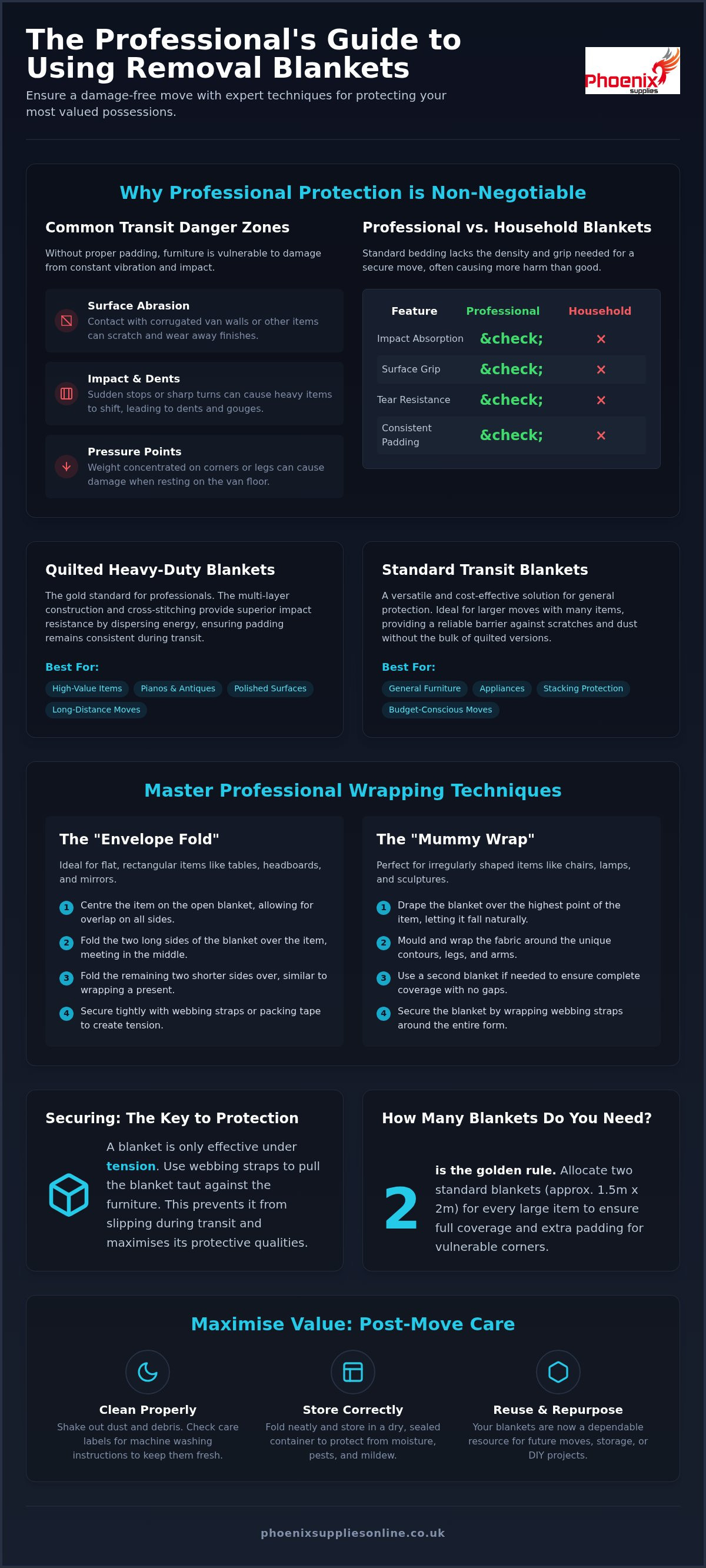
- Discover the professional "Envelope Fold" and "Mummy Wrap" methods to understand exactly how to use removal blankets on everything from polished tables to upholstered chairs.
- Master the art of securing your padding with webbing straps to create tension that prevents slipping without leaving marks on your furniture.
- Use our simple quantity guide to calculate exactly how many blankets you need, typically allowing two for every large item in your home.
- Find out how to properly clean and store your blankets after the move so they remain a dependable resource for future projects or storage.
Understanding the Vital Role of Removal Blankets in Transit
Think of a removal blanket as a heavy-duty fabric shield for your home's most precious contents. These aren't just for decoration; they are engineered tools designed to prevent scratches, deep dents, and the inevitable dust that comes with a house move. When you're learning how to use removal blankets, it's helpful to view them as a dual-action insurance policy. They provide a physical cushion against sudden impacts and create a barrier that stops surface-to-surface abrasion when items rub together in the back of a moving van.
In any transit scenario, there are specific "danger zones" where your furniture is most at risk. These include:
- Contact points where furniture meets the corrugated metal walls of the van.
- Areas where two polished surfaces, like two dining chairs, are packed tightly together.
- The base of heavy items resting directly on the van floor.
Without professional padding, the constant vibration of the road can cause these contact points to wear through wood finishes or delicate fabrics in minutes. Professional-grade blankets, typically measuring around 1.5m x 2m, provide the necessary coverage to wrap these areas completely.
Professional removal firms such as Let's Move London utilise these heavy-duty blankets as a standard part of their residential and commercial relocation services in London to guarantee the highest level of protection.
Why Standard Household Blankets Aren’t Enough
It's tempting to grab an old duvet or a few bedsheets from the linen cupboard, but these domestic fabrics often fail under the pressure of a move. Standard sheets lack the fabric density required to stop a sharp corner from piercing through. They're also made from silky or smooth materials like cotton or polyester, which slip easily during transit. Professional-grade blankets are designed with a textured surface that stays exactly where you put it. While a duvet might provide some cushioning, it's far more likely to tear or bunch up, leaving your furniture exposed at the most critical moment.
The Science of Impact Absorption and Surface Protection
There's a reason removal firms rely on quilted blankets with specific cross-stitched fibres. This pattern is designed to disperse energy. If the van has to make a sudden stop or a sharp turn, the energy of that movement is spread across the blanket's surface rather than being concentrated on one small area of your furniture. This is especially important for modern flat-pack items, where "veneer peel" is a constant risk. A well-placed blanket ensures that the delicate outer layer of your furniture isn't tugged or chipped. Mastering how to use removal blankets properly also protects the van itself, ensuring you don't leave unsightly marks or gouges on the interior walls during the loading process.
Selecting the Correct Grade: Quilted vs Textile Blankets
Choosing the right protection starts with understanding that not all fabric shields are created equal. You'll usually choose between quilted heavy-duty blankets and standard textile versions. The main difference lies in the weight and the internal padding. Quilted blankets are significantly thicker and heavier. This means they offer superior impact resistance, though they will take up more space in your packing stack. If you're wondering how to use removal blankets efficiently, remember that this thickness affects your packing density. Thicker blankets provide the best cushion but require more room in the van.
A reliable rule of thumb for any move is to allocate two blankets for every large item of furniture. This allows for full coverage and extra padding on vulnerable corners. For upholstered items like light-coloured sofas, ensure you select lint-free materials. Standard textile blankets can sometimes shed small fibres. These are a nightmare to brush off a velvet or suede couch. By learning how to use removal blankets of different grades, you can tailor your protection to your budget and the specific needs of your belongings.
Quilted Heavy-Duty Blankets for High-Value Items
These are the gold standard for professional removal companies across the UK. Their multi-layer construction makes them the only choice for high-value items like pianos, antiques, or polished mahogany dining tables. The quilting keeps the inner padding from shifting. This ensures the protection remains consistent even during long-distance transit where items might vibrate against each other for hours. If you have heirlooms that require a "belt and braces" approach, these provide the peace of mind you need for a stress-free move.
This level of protection is essential for your most delicate items; if you are also moving a collection of artwork or planning to redecorate your new home, you can visit First4Frames Gallery to explore their range of fine art prints and bespoke framing services.
Standard Transit Blankets for General Furniture
Standard textile blankets are incredibly versatile and cost-effective for larger moves involving many lower-value items. They're perfect for bed frames, dining chairs, and flat-pack desks. While they are thinner than quilted versions, you can simply double-layer them over sharp corners to increase protection. They are easier to fold and store, making them a practical addition to your essential moving kit alongside boxes and tape. Their lighter weight also makes them easier to handle if you're packing a whole house by yourself.
Professional Wrapping Techniques for Different Furniture Types
Learning how to use removal blankets is about more than just throwing fabric over a table. Professionals use specific folds to ensure every centimetre of a piece is covered. For flat surfaces like dining tables or desks, the "Envelope Fold" is the standard. You place the blanket over the top, fold the sides down, and tuck the corners in like a parcel. For upholstered chairs, a "mummy wrap" approach works best. You start at the top and spiral the fabric downwards, ensuring the padding overlaps at every turn. This prevents the chair's fabric from touching anything else in the van.
If you are planning a more complex transition, such as a business relocation, it can be helpful to visit Anspach Removals & Storage to understand how professional teams handle large-scale furniture and equipment moves.
Always wrap your furniture in the room where it currently sits. It's much safer to carry a padded item through a narrow hallway than to risk a scuff on the way to the van. This simple habit prevents those heart-sinking moments when a wardrobe corner clips a door frame.
Protecting Large Surfaces: Sideboards and Wardrobes
For extra-wide items like sideboards or tall wardrobes, one blanket won't be enough. You'll need to overlap multiple blankets by at least 20cm to ensure no gaps appear during transit. It's vital to secure any doors or drawers underneath the blanket layer. This stops them from swinging open and catching on the van's interior. If you're moving a wardrobe, make sure you've already followed a guide on how to pack clothes for moving in boxes so the unit is empty. An empty wardrobe is much easier to wrap and significantly lighter to handle safely.
Safeguarding Fragile Corners and Vulnerable Legs
Corners are the most common point of failure in any move. They take the brunt of every bump and turn. To prevent damage, "pad out" the corners by folding a smaller piece of fabric or a dedicated off-cut over the edge before applying the main wrap. For delicate chair or table legs, create a protective "boot". Wrap a small section of blanket around the base of the leg and secure it tightly. This prevents the wood from splintering if the item is dragged or shifted slightly on the van floor. Knowing how to use removal blankets to target these specific weak points is what separates a basic DIY effort from a professional-standard move.
Securing Your Blankets with Webbing Straps and Tape
You can have the thickest padding in the world, but if it shifts during the first five minutes of the drive, it's effectively useless. Learning how to use removal blankets correctly involves mastering the art of the secure "lock". Without proper tension, a blanket will simply slide down, leaving corners exposed to the very scuffs you're trying to avoid. The goal is to create a snug, immovable layer that stays put from the moment you lift the item until it's safely placed in your new home.
For items with awkward shapes or multiple pieces, many professionals also use a layer of stretch wrap over the blanket. This acts as a secondary skin, locking the fabric in place and providing a moisture barrier if it's a typical rainy British moving day. It's a simple step that adds a significant level of security to your packing process.
Using Webbing Straps to Prevent Slippage
Webbing straps are the primary anchor for any heavy furniture in a transit van. Once your item is wrapped, you should thread these straps through the van’s tie-points to pull the blanketed item tight against the wall. The strap applies pressure to the blanket, which in turn grips the furniture. This synergy ensures that even on winding roads or over speed bumps, your sideboard or wardrobe stays perfectly still. High-quality webbing straps for moving are essential for a safe DIY move, as they provide the structural support that tape alone cannot offer.
The Correct Way to Apply Packing Tape
There is one golden rule when it involves adhesive: the "Tape-to-Blanket" rule. Never let packing tape touch a polished wood, leather, or painted surface. The adhesive can leave a stubborn residue or even pull up the finish when removed. Instead, apply the tape in a continuous "belt" around the middle of the blanketed item. This keeps the fabric snug against the furniture without any risk of damage. To make your life easier at the other end, fold the end of the tape over itself to create a small "pull tab". This allows you to remove the tape without having to use a blade that might tear the blanket fibres or nick the wood underneath. If you want to ensure your belongings are truly protected, you can order professional-grade securing supplies to complete your kit.
Maximising Value: Care, Storage, and Reusing Your Blankets
One of the biggest advantages of investing in professional-grade protection is that these items aren't single-use products. Unlike thin plastic film or bubble wrap that often ends up in the bin after one trip, a high-quality blanket is a durable asset for your home. Knowing how to use removal blankets effectively during the move is vital, but understanding how to maintain them afterwards ensures you get the best value for your money. These blankets are designed to withstand the rigours of transit multiple times, making them a far more environmentally friendly choice than disposable alternatives.
Whether you're planning to keep them for a future move, use them for long-term storage, or repurpose them around the house, a little bit of maintenance goes a long way. Taking the time to clean and store them properly prevents the buildup of dust, prevents dampness, and ensures they are ready for action whenever you next need a bit of heavy-duty padding.
Cleaning and Maintenance After Your Move
Once the last box is unpacked, your blankets will likely have gathered a fair amount of dust or van debris. For standard textile blankets, a vigorous shake outdoors is usually enough to clear away loose fibres and grit. If you've opted for quilted versions, check the care label; many can be cleaned in a large capacity washing machine on a cool, gentle cycle. It's critical to ensure they are completely dry before you fold them. Storing a damp blanket in a loft or garage is a recipe for mould and unpleasant smells. Whilst you're folding them, check for any significant tears or thinning areas. Small snags can be stitched up, but a blanket with a large hole won't provide the consistent impact absorption you need for high-value furniture.
Creative Ways to Repurpose Removal Blankets
If you don't have space to store a full stack of blankets, there are plenty of practical ways to use them around the home. They make excellent heavy-duty floor protectors for DIY projects or painting. Their thick, absorbent nature means they catch splatters far better than thin plastic sheets. If you're moving items into a lock-up, you can use them to pad out the gaps between stacks of archive boxes for storage, providing a soft buffer that prevents the cardboard from rubbing or crushing.
Other popular uses include:
- Boot Liners: Protect your car's interior from muddy paws or garden centre trips.
- Soundproofing: Hang them in home studios or workshops to dampen echoes.
- Pet Bedding: Many local animal shelters are grateful for donations of clean, used blankets to keep their residents warm.
By treating your blankets as a reusable tool rather than a disposable cost, you're making a smarter choice for your wallet and the planet. Learning how to use removal blankets across their entire lifespan ensures your furniture stays protected today, and your home stays organised tomorrow.
Protect Your Belongings for a Stress-Free Move
Mastering how to use removal blankets is the single most effective way to shield your furniture from the inevitable bumps of transit. By selecting the right grade of quilted padding for your high-value items and applying professional securing techniques with webbing straps, you can move with the steady confidence of a specialist. These blankets aren't just one-off supplies; they're durable, reusable tools that will serve you well for years of storage and DIY projects to come.
As a family-run business, we take pride in providing the same heavy-duty materials used by leading removal firms across the country. We offer free national delivery on all orders to ensure you have exactly what you need without any unexpected costs. Browse our professional-grade removal blankets and webbing straps to build a complete protection kit that keeps your heirlooms and modern furniture safe. You've got the right techniques and a solid plan in place. It's time to get packing and make your next house move your smoothest and most successful one yet.
Frequently Asked Questions
How many removal blankets do I need for a 3-bedroom house move?
For a standard 3-bedroom house, you will typically need between 24 and 48 blankets. A practical rule of thumb is to allow two blankets for every large item of furniture, such as wardrobes, dining tables, or sofas. This ensures full coverage and provides enough fabric for extra padding on vulnerable corners. Having a few spares is always sensible for smaller items like bedside tables or lamps.
Can I wash removal blankets in a standard UK washing machine?
Most standard textile and quilted removal blankets can be washed in a domestic machine on a cool, gentle cycle. However, because they are heavy and highly absorbent, they become very heavy when wet. You should only wash one or two at a time to avoid overloading your machine's drum. Always check the specific care label first, as some high-density quilted versions may require industrial cleaning.
Is it better to use removal blankets or bubble wrap for furniture?
Removal blankets are generally superior for large furniture because they allow wood and leather to breathe, which prevents moisture buildup. Bubble wrap is excellent for smaller, fragile items like glassware or electronics, but it can trap heat against polished surfaces and damage the finish. When learning how to use removal blankets, you'll find they offer better impact protection and are much easier to reuse.
What is the best way to secure a blanket to a leather sofa?
The most secure method is to use webbing straps or a layer of stretch wrap over the blanket. Never apply packing tape directly to a leather sofa, as the adhesive can leave a permanent residue or pull the finish. Once the blanket is draped over the sofa, wrap a "belt" of stretch wrap around the middle to hold the fabric tight. This creates a secure shield without any risk of chemical damage.
Are removal blankets waterproof or only for dust and scratch protection?
Removal blankets are designed primarily for dust, scratch, and impact protection rather than being waterproof. Whilst the heavy fabric can absorb a small amount of light rain during the carry to the van, they will eventually soak through if exposed to a downpour. If you are moving in wet weather, it's best to apply a layer of waterproof furniture covers or plastic stretch wrap over the blankets to keep them dry.
Can I use removal blankets to protect my floors during a move?
Yes, these blankets are excellent for protecting hardwood, laminate, or tiled floors from scratches during a move. You can lay them down in high-traffic hallways or under heavy furniture whilst you are manoeuvring it. However, be cautious on stairs or smooth surfaces, as the fabric can be slippery. Always ensure the blankets are laid flat and aren't bunching up, as this could create a trip hazard for your moving team.
What is the difference between a transit blanket and a quilted moving blanket?
A standard transit blanket is usually a single layer of woven textile fibres, making it lightweight and flexible for wrapping smaller items. A quilted moving blanket features a multi-layer construction with internal padding held in place by cross-stitching. The quilted version provides significantly more impact absorption and is the preferred choice for high-value antiques or polished surfaces. Understanding how to use removal blankets of both grades helps you balance protection with packing space.
How do I stop my removal blankets from smelling musty in storage?
The key to preventing musty smells is ensuring the blankets are bone-dry before you fold them for storage. Even a tiny amount of moisture can lead to mildew in a damp loft or garage. Store them in breathable fabric bags rather than airtight plastic bins, which can trap stale air. If you are storing them for a long time, placing a few cedar blocks or lavender bags amongst the folds will keep them smelling fresh.


