

What if the most exhausting part of your move isn't the heavy lifting, but the three days you'll spend ironing crumpled shirts at the other end? With professional packing services for a small flat costing around £360 in 2026, many of us choose the DIY route, yet seeing a favourite suit emerge from a box looking like origami can ruin the excitement of a new home. When you are figuring out how to pack clothes for moving, the goal isn't just to get items from A to B; it's about ensuring they arrive ready to wear. We understand that your clothes are an investment, and you want them to stay clean, dry, and protected throughout the journey.
You probably agree that the old "stuff it in a bin bag" method is a recipe for disaster. This guide promises to change that by sharing the most efficient ways to organise and transport your entire wardrobe without a single crease. We will explore the best tools for the job, from using sturdy wardrobe boxes that let you keep clothes on their hangers to utilising removal blankets for your most delicate items. Whether you are moving a small studio or a large family house, these practical steps will help you maximise space in the van and keep your garments in perfect condition.
Key Takeaways
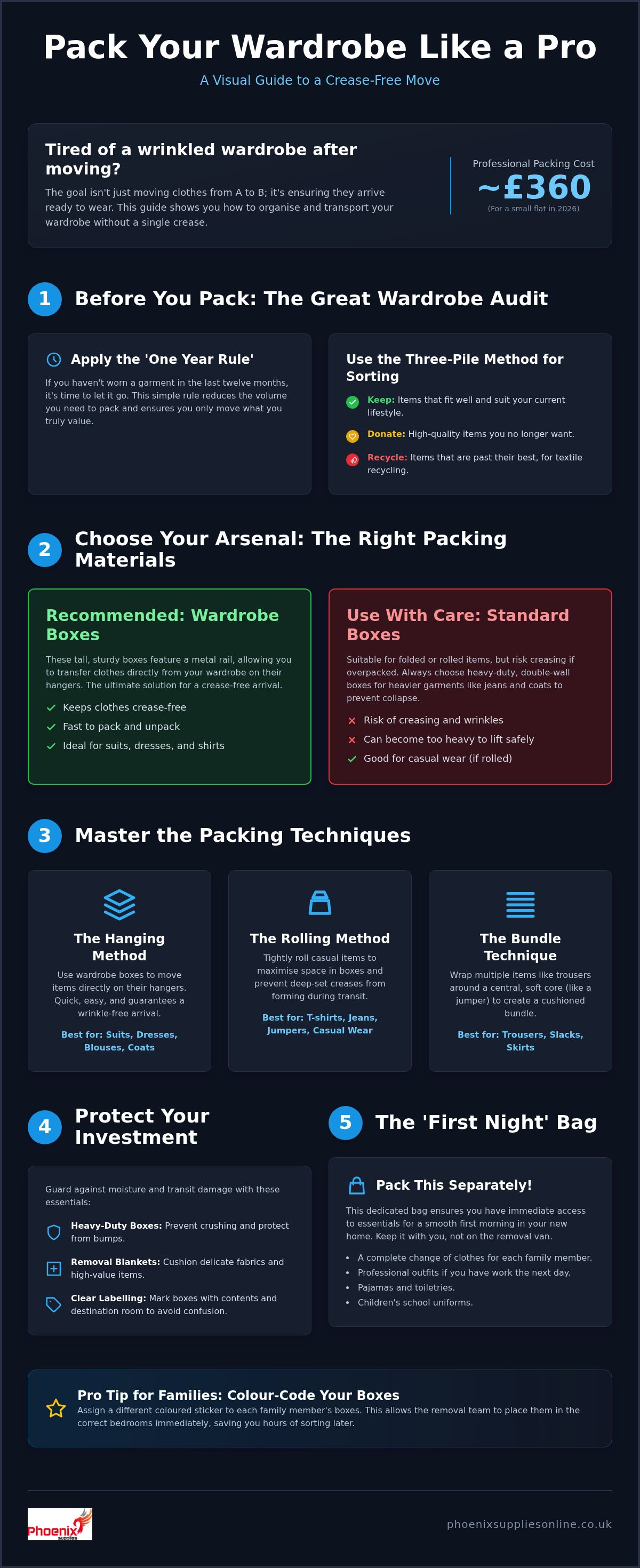
- Audit your wardrobe using the 'One Year Rule' before you begin to reduce the volume of items and ensure you only transport what you truly value.
- Discover how to pack clothes for moving using specialised wardrobe boxes that keep your suits and dresses on their hangers for a crease-free arrival.
- Apply the 'Rolling Method' for casual wear and 'The Bundle' technique for trousers to maximise space in your boxes and minimise the need for ironing.
- Guard against moisture and transit damage by using heavy-duty boxes, removal blankets, and protective furniture covers for your most delicate fabrics.
- Pack a dedicated 'First Night' bag to ensure your family has immediate access to clean clothes and professional outfits for a smooth first morning in the new house.
Decluttering and Organising Your Wardrobe Before the Move
Moving house is a significant life event that offers a rare opportunity for a fresh start. It is the ideal moment to assess what you actually wear and what is simply taking up valuable rail space. During a personal relocation, every extra box adds time and effort to your journey. By auditing your wardrobe now, you reduce the physical load and the mental clutter of unpacking things you no longer need. It's much easier to sort through your shirts in your current bedroom than it is to deal with bags of unwanted garments in a new, unfamiliar space.
The "One Year Rule" is a reliable benchmark for this process. If you haven't reached for a specific garment in the last twelve months, it's unlikely you will wear it in your new home. Be honest about those "just in case" items that have gathered dust since 2024. Group your clothes by season as you go. If you are moving during the summer, your heavy winter coats and woolly jumpers can be packed away first. These bulky items are best suited for medium moving boxes, which are easier to stack and won't become too heavy to lift safely.
A clear labelling system is your best friend during this transition. Instead of just writing "clothes" on a box, be specific about the contents and the intended bedroom. This prevents the removal van from being unloaded into a single, overwhelming mountain of cardboard in the hallway. When you are planning how to pack clothes for moving, remember that a little extra detail on the outside of the box saves hours of searching later.
The Three-Pile Method for Efficient Sorting
Sorting doesn't have to be a chore if you stay organised. Create three distinct areas: keep, donate, and recycle. The "keep" pile should only include items that fit well and suit your current lifestyle. High-quality items you no longer want can find a second life through local UK charities like the British Heart Foundation or Oxfam. For items that are past their best, look for textile recycling banks to avoid sending fabric to landfill. Prepare a separate pile for "Moving Day Essentials" as well. This should include a change of clothes for everyone and professional attire if you have work the following Monday. Understanding how to pack clothes for moving involves thinking about those first 24 hours in the new place.
Inventory Management for Large Families
Managing a whole family's wardrobe requires a methodical approach. Use a colour-coding system for your boxes to speed things up. Assign blue for Dad, red for Mum, and green for the kids. This makes it much easier to direct the removal team to the right bedrooms immediately. Create a master list for any high-value designer pieces or heirloom garments for your insurance records. It is often better to organise by "Room Destination" rather than where the clothes are currently kept. If your new house has a dedicated dressing room or a larger master suite, label the boxes accordingly. Include specific details on labels, such as "School Uniforms" or "Gym Gear," so you aren't digging through six containers to find a single pair of trainers. This level of detail ensures the first morning in your new home feels like a normal day.
Choosing the Right Packing Materials for Different Garments
Selecting the correct materials is the most critical step in protecting your wardrobe during transit. It's not just about finding any container; it's about matching the box to the weight and fragility of the fabric. For lighter items like t-shirts or linens, single-wall boxes are often sufficient. However, for heavier garments such as winter coats or thick denim, double-wall boxes provide the structural integrity needed to prevent the bottom from giving way under pressure.
We generally recommend using medium moving boxes for your folded items. Large boxes are tempting because they hold more, but they often become too heavy to carry safely once filled with jeans and jumpers. Learning how to pack clothes for moving efficiently means choosing sizes that remain manageable for you and your removal team. If you are preparing your supply list, consider browsing our range of heavy-duty moving boxes to ensure your belongings stay secure throughout the journey.
Wardrobe Boxes vs. Standard Moving Boxes
Wardrobe boxes are the gold standard for anyone concerned about how to pack clothes for moving without spending days ironing at the other end. These tall, sturdy containers include a metal rail that allows you to move clothes directly from your closet to the box whilst they are still on their hangers. This method saves a significant amount of time during both the packing and unpacking phases, as you simply lift the bundle and hang it in your new wardrobe.
Beyond the time-saving benefits, these boxes offer superior protection for expensive evening wear, suits, and delicate dresses. They prevent the crushing and deep creasing that inevitably occurs in standard cartons. A practical tip for maximising space is to utilise the bottom of the wardrobe box. Once your hanging items are inside, there is usually plenty of room at the base for bulky, lightweight items such as handbags, scarves, or even a few pairs of shoes in their original boxes.
Protective Supplies for Delicate Fabrics
Standard cardboard is excellent for structure, but some fabrics require an extra layer of care. For high-value items like wedding dresses or silk blouses, acid-free tissue paper is essential. It prevents yellowing and protects delicate fibres from the natural acidity found in some standard packing materials. This small step ensures your most precious items remain in pristine condition.
Moisture is another silent threat during a UK move. Lining your boxes with bubble wrap for moving house provides an effective barrier against dampness and sudden rain showers on moving day. For your most delicate fabrics, such as lace or velvet, consider wrapping them in soft removal blankets before placing them in the box for added cushioning. Finally, never underestimate the importance of high-quality packing tape. A strong, pressure-sensitive tape ensures that your boxes remain sealed and structurally sound even when stacked in the removal van, preventing box failure in cold or damp conditions.
Expert Methods: Folding, Rolling, and Hanging Techniques
Once you have your heavy-duty boxes ready, the next stage in learning how to pack clothes for moving is mastering the physical techniques that prevent damage. Proper packing is a balance between maximising every square inch of space and ensuring your garments don't require a professional steam clean upon arrival. Folding is the traditional choice, but it's often the least efficient for modern wardrobes. By using a mix of rolling and hanging, you'll find that you can fit more into your removal van whilst keeping your clothes in better condition.
Heavy winter coats and delicate knitwear require specific care. You should never hang heavy woollen jumpers on standard hangers for long periods, as the weight of the fabric causes them to stretch and lose their shape. Instead, fold these items loosely and place them at the bottom of your boxes. For trousers, "The Bundle" method is highly effective; lay your trousers flat and wrap them around a central core of softer items like t-shirts to prevent sharp creases from forming across the legs.
The Step-by-Step Rolling Technique
The rolling method is a favourite amongst frequent movers because it virtually eliminates the air pockets that lead to shifting and creasing. Start by laying your garment on a clean, flat surface and smoothing out any wrinkles with your hands. Fold the sleeves inward and then roll the item tightly from the bottom up. The Ranger Roll is a space-saving tactic where a garment is folded into itself to create a compact, self-contained cylinder that won't unroll in transit. This technique works best for casual wear, gym gear, and children's clothing, allowing you to see every item at a glance when you open the box.
Managing Your Hanging Space
If you're looking for the quickest way to empty a closet, you might have heard of the "bin bag hack" where you pull a bag over a group of hanging clothes. While this is cheap, it offers zero protection against crushing and often results in a tangled mess of hangers. A much more reliable approach is utilising wardrobe boxes for moving, which allow you to keep your shirts, suits, and dresses upright and spaced out. This keeps the fabric away from the sides of the container and prevents moisture from being trapped amongst the fibres.
Before you place your hanging items into the box, group your hangers together in sets of five or six and secure the hooks with a sturdy elastic band. This simple step prevents the hangers from clattering together or slipping off the rail during the journey. For your most expensive pieces, consider adding lightweight garment covers or even a clean old bedsheet over the top to provide an extra layer of dust protection. When you understand how to pack clothes for moving with these professional touches, you'll save hours of effort during the first week in your new home.
Protecting Your Clothes from Moisture and Damage
Moisture is the single greatest threat to your wardrobe during a move. Even if you have mastered the art of how to pack clothes for moving, a single damp day can undo all your hard work. Cardboard is naturally porous, meaning it can absorb humidity from the air or dampness from the floor of a removal van. This is particularly concerning during a typical British winter, where rain is almost a certainty. If moisture enters a sealed box, it creates a breeding ground for mildew that can ruin natural fibres like wool, silk, and cotton within days.
To guard against this, ensure you seal every seam of your boxes with high-quality packing tape. This doesn't just provide structural strength; it creates a barrier against dust ingress during the journey. For items that might come into contact with other household goods, consider using polythene mattress and furniture covers. These provide an impermeable layer of protection if a box is placed next to a damp garden chair or a bicycle. If you want to ensure total peace of mind, you can find our full range of protective furniture covers to keep your textiles dry and clean.
Preventing Mould and Mildew in Storage
Dampness often starts before the box is even taped shut. You must ensure every garment is 100% dry before it enters a container. Clothes that have been recently laundered may feel dry to the touch but can still hold residual moisture in the seams or waistbands. If you are moving items into long-term storage, placing a few silica gel packets inside each box can help manage humidity levels. Avoid storing your clothes in garages, sheds, or damp basements where temperature fluctuations are common. These environments lead to condensation inside the boxes, which quickly results in a musty smell that is difficult to remove from delicate fabrics.
Securing the Load in the Removal Van
The physical movement of the van is the second major cause of damage. Friction between boxes can lead to scuffs or even holes in the cardboard, exposing your clothes to the elements. Use webbing straps for moving to keep your wardrobe boxes upright and prevent them from sliding across the floor. These straps provide the tension needed to keep tall, narrow boxes stable during sharp turns or sudden stops.
Layering removal blankets between your containers is an excellent way to prevent this friction. These blankets act as a cushion, absorbing vibrations and protecting the integrity of the boxes. When loading the van, always place heavy items like archive boxes or kitchen crates at the bottom. Your clothes boxes, which are generally lighter, should be stacked on top. This prevents the lower boxes from collapsing under the weight. Understanding how to pack clothes for moving also means understanding how to stack them safely for the road ahead.
Moving Day Essentials: The 'First Night' Bag and Final Logistics
Moving day is the culmination of weeks of planning, yet it's often the moment when basic needs are overlooked. Most generic guides focus on the bulk of the move, but they often ignore the critical difference between immediate access items and long-term storage. When you are finalising how to pack clothes for moving, you must treat the first two days in your new home as a separate project. This ensures that even if the removal van is delayed or you are simply too exhausted to unpack, your family remains comfortable and prepared.
Before the removal team arrives, do a final sweep of every wardrobe and cupboard. It's surprisingly common to find stray items like belts, scarves, or single socks hiding in the dark corners of built-in units. If you find these late in the day, don't just throw them into a random kitchen box. Keep a few spare medium moving boxes on hand for these last-minute additions so they stay with the rest of your textiles. If you have a busy Monday morning ahead, pack your work attire in a separate, clearly marked container; this small detail is a vital part of how to pack clothes for moving successfully.
The Survival Suitcase Checklist
Your survival suitcase should act as a bridge between your old life and your new one. Each family member needs at least two days of comfortable clothing, essential toiletries, and fresh underwear. Don't forget to include pyjamas and a set of clean bedding for every bed in the house. There is nothing quite like the relief of climbing into a bed with fresh sheets after a long day of lifting and carrying. Keep this survival suitcase in your personal car rather than the removal van to ensure it stays within reach at all times.
Efficient Unpacking Strategy
Unpacking is best approached with a methodical mindset to avoid box fatigue. Start by setting up your wardrobe boxes and their rails immediately. Since your clothes are already on hangers, you can move them into your new wardrobes in minutes, instantly clearing floor space and making the bedroom feel more like home. Tackle one category at a time, perhaps starting with your most-used daily wear before moving on to seasonal items or formal attire. This structured approach helps you maintain a sense of order amongst the cardboard. Ready to start? Buy your moving boxes online today for fast UK delivery.
Step into Your New Home with Confidence
Moving house is a fresh start, and your wardrobe should reflect that. By auditing your clothes early and choosing the right materials, you've already done the hardest part. You now know that learning how to pack clothes for moving is as much about the tools you use as the techniques you apply. Whether you are rolling casual wear to save space or using wardrobe boxes to keep your best suits crease-free, these small steps ensure a smooth transition on moving day.
As a family-run British business, we take pride in helping our neighbours move safely. Our range features high-quality double-wall cardboard for maximum protection, ensuring your items stay dry and secure. We also provide free delivery on all orders to help keep your moving costs manageable. Shop our range of heavy-duty wardrobe boxes and moving kits today and get one step closer to a wrinkle-free arrival at your new front door. You've got this, and we're here to support you every step of the way.
Frequently Asked Questions
Is it better to fold or roll clothes for moving house?
Rolling is the superior choice for t-shirts, jeans, and synthetic fabrics as it saves significant space and prevents deep creases. For heavy knitwear or bulky winter coats, a loose fold is better to maintain the garment's shape. When you are deciding how to pack clothes for moving, use a mix of both methods to fill your boxes efficiently without leaving empty gaps that cause shifting during transit.
How many wardrobe boxes do I need for a standard wardrobe?
You will typically need one wardrobe box for every 1.5 to 2 feet (approximately 45 to 60cm) of hanging rail space in your closet. It's important not to overstuff these boxes, as the weight can make them difficult to carry and may cause the rail to bend. Leave a small amount of breathing room between hangers to ensure your items arrive at your new home without any fresh wrinkles.
Can I leave my clothes in the dresser drawers when moving?
It is generally best to empty your dresser drawers before the move to protect the structural integrity of your furniture. While leaving lightweight items like socks inside might seem easier, the extra weight puts immense pressure on the joints and drawer runners during transit. Removing the contents also makes the chest of drawers much lighter and safer for the removal team to manoeuvre through narrow hallways.
How do I pack delicate or expensive designer clothes safely?
Protect high-value designer items by wrapping them in acid-free tissue paper and placing them inside breathable garment covers. These should then be hung inside heavy-duty wardrobe boxes to keep them upright and away from other household goods. This method provides a physical barrier against dust and prevents the delicate fibres from being crushed, ensuring your investment pieces remain in showroom condition throughout the entire relocation process.
What is the best way to pack shoes so they don't get squashed?
The safest way to pack shoes is to keep them in their original shoeboxes or wrap them individually in clean packing paper to prevent scuffs. If you have run out of standard boxes, placing them at the bottom of your wardrobe boxes is a clever way to utilise empty space. Always place heavier footwear like boots at the base and lighter shoes on top to prevent them from being squashed.
Should I use vacuum bags for all my clothes to save space?
Vacuum bags are excellent for reducing the volume of bulky bedding and out-of-season knitwear, but they aren't ideal for every garment. The intense pressure can cause permanent creases in delicate fabrics and may damage natural fibres like wool or silk if left compressed for long periods. Use them selectively for items that don't crease easily and avoid using them for your most expensive professional or formal attire.
How do I prevent my clothes from smelling musty during a move?
Preventing a musty smell starts with ensuring every item is completely dry before it enters a container. Even a tiny amount of residual moisture can lead to mildew in the sealed environment of a moving box. Placing a few silica gel packets or a small sachet of dried lavender in each box helps to manage humidity and keeps your wardrobe smelling fresh until you are ready to unpack in your new home.
What should I do with the hangers when packing clothes in boxes?
If you aren't using wardrobe boxes, the best approach is to remove the hangers and bundle them together using sturdy elastic bands. This prevents the hooks from snagging your clothes or becoming a tangled mess at the bottom of a carton. For clothes that must remain on hangers, grouping them in sets of five and securing the hooks together makes them much easier to handle when you reach your destination.


